
Warning: Undefined variable $by_location in /home/odescxjtd641/public_html/beefound.in/bird-details.php on line 874

Streak-breasted Woodpecker
Picus viridanus
Last update: 26 Jul 2026
Read in:
English
Español
Português
हिन्दी
বাংলা
தமிழ்
മലയാളം
मराठी
ગુજરાતી
తెలుగు
French
Deutsch
Русский
日本語
简体中文
Italiano
Tiếng Việt
العربية
ಕನ್ನಡ
ਪੰਜਾਬੀ
Streak-breasted Woodpecker Basic Information
| Scientific Name | Picus viridanus |
|---|---|
| Status | LC Least Concern |
| Size | 23-25 cm (9-10 inch) |
| Colors |
Brown
White
|
| Type |
Tree-clinging Birds

|
| Family | Woodpeckers |
Introduction
The Streak-breasted Woodpecker (Picus viridanus) is a fascinating member of the Picidae family, known for its distinct plumage and specialized tree-clinging behavior. As a medium-sized woodpecker, typically measuring between 23 to 25 centimeters in length, it occupies a specific niche within the dense forest ecosystems of Southeast Asia. Often elusive, this species is highly valued by ornithologists and birdwatchers alike for its subtle beauty and its role in maintaining forest health. Despite its relatively widespread range, the Streak-breasted Woodpecker is frequently overlooked due to its preference for dense canopy cover and its cryptic coloration, which allows it to blend seamlessly into its surroundings. Understanding the biology and ecological requirements of this bird is essential for conservation efforts, as its presence often serves as an indicator of a healthy, functioning forest ecosystem. Throughout this guide, we explore the intricate details of its life, from its physical characteristics to its complex social behaviors.
Physical Appearance
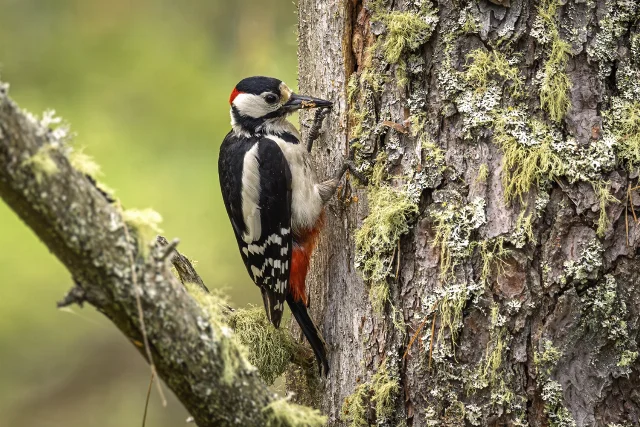
The Streak-breasted Woodpecker is characterized by its elegant, albeit subtle, color palette, primarily dominated by shades of brown and white. Measuring approximately 23 to 25 centimeters, it possesses the robust, streamlined build typical of tree-clinging birds. Its upperparts are generally a rich, earth-toned brown, which provides excellent camouflage against the bark of trees. The most distinguishing feature, as its common name suggests, is the distinct streaking pattern across its breast. These white streaks provide a striking contrast against the darker brown feathers, creating a textured appearance that helps break up the bird's outline when perched against mottled foliage. The bird features a strong, chisel-like beak designed for foraging in wood, and its zygodactyl feet—with two toes facing forward and two backward—offer the perfect grip for navigating vertical tree trunks. Both males and females share these general characteristics, although subtle differences in plumage, particularly around the crown, may be present depending on the individual's maturity and sex.
Habitat
The Streak-breasted Woodpecker is primarily found in tropical and subtropical moist broadleaf forests. It shows a strong preference for dense, evergreen, and semi-evergreen forest environments where large, mature trees are abundant. These trees are crucial for the bird, as they provide both the necessary foraging surfaces and the nesting hollows required for reproduction. The species is often spotted in the mid-to-upper canopy levels, though it occasionally descends to lower branches in search of food. They are adapted to humid climates and are generally found in lowland areas, though their range can extend into the foothills of forested mountain ranges where the environment remains sufficiently lush and undisturbed.
Diet
As a specialized forager, the Streak-breasted Woodpecker relies on a diet consisting primarily of insects and their larvae. Using its strong, powerful bill, it probes into the crevices of tree bark and dead wood to extract ants, beetles, termites, and wood-boring larvae. This foraging behavior is vital for controlling insect populations within the forest. Occasionally, the woodpecker may supplement its diet with small fruits or berries found within its habitat, particularly during seasons when insect activity is lower. Its long, sticky, and highly extensible tongue is perfectly adapted for reaching deep into narrow tunnels and galleries within the wood to capture hidden prey efficiently.
Breeding and Nesting
Breeding for the Streak-breasted Woodpecker is a meticulously timed process that typically aligns with the abundance of food resources in its habitat. Like most woodpeckers, this species is a cavity nester. They use their powerful bills to excavate nesting hollows in dead or decaying trees, which provides a safe environment for their eggs and developing chicks. Both the male and female often participate in the excavation process, demonstrating strong pair-bonding behaviors. Once the hollow is prepared, the female lays a clutch of white eggs. Both parents share the responsibilities of incubation and feeding the chicks once they hatch. The fledglings remain in the nest for several weeks, protected from predators by the sturdy walls of the tree, until they are ready to emerge and begin their lives in the canopy.
Behavior
The behavior of the Streak-breasted Woodpecker is defined by its solitary or pair-based nature. They are highly active during the daylight hours, spending most of their time climbing vertically up tree trunks, using their stiff tail feathers as a prop for stability. They are known for their distinct, rhythmic drumming, which serves as a method of communication to establish territory or attract a mate. While they can be somewhat shy, they are persistent foragers. They exhibit a cautious nature, often freezing in place when threatened, relying on their excellent camouflage to avoid detection by predators such as raptors or snakes.
Conservation Status - LC Least Concern
Currently, the Streak-breasted Woodpecker is categorized as a species of least concern; however, this status is contingent upon the preservation of its primary forest habitat. The greatest threat to this species is deforestation and the loss of mature, old-growth trees which are essential for nesting and foraging. As human encroachment into tropical forests continues, protecting large tracts of contiguous woodland is vital for the long-term survival of this species. Conservation initiatives focusing on habitat restoration and sustainable forest management are crucial to ensure that populations remain stable.
Interesting Facts
- The Streak-breasted Woodpecker can deliver rapid blows to wood without causing brain injury due to its shock-absorbing skull structure.
- Their tongue is so long that it often wraps around the skull when not in use.
- They play an essential role in forest health by managing insect populations.
- The stiff tail feathers act as a third leg, providing balance while they climb.
- They are often heard before they are seen, thanks to their characteristic drumming sounds.
Tips for Birdwatchers
For birdwatchers hoping to spot the Streak-breasted Woodpecker, patience is the ultimate virtue. Start by familiarizing yourself with their unique drumming patterns, as this is often the first clue to their presence in a dense forest. Use high-quality binoculars and focus on the mid-to-upper canopy levels, especially where large, decaying trees are present. Early morning is the best time for observation when the birds are most active in their foraging. Avoid making sudden movements or loud noises, as these birds are naturally skittish. If you manage to find a feeding area, stay quiet and observe; you may be rewarded with a clear view of their intricate foraging techniques.
Pro-Tip: To spot this bird in dense forest canopy, a 8x42 binoculars or telescope is highly recommended.
- [Check out our top recommended gear here]
Conclusion
The Streak-breasted Woodpecker (Picus viridanus) is a remarkable example of nature's adaptation to life in the dense tropical forests of Southeast Asia. From its specialized bill and tongue to its unique zygodactyl feet, every aspect of its biology is perfectly tuned to its niche as a tree-clinging insectivore. While it may not always be the most conspicuous bird in the forest, its presence is a testament to the health and biodiversity of its environment. By learning about its habits, habitat requirements, and the challenges it faces, we gain a deeper appreciation for the delicate balance of forest ecosystems. Conservation of these environments is not merely about saving one species, but about protecting the complex web of life that sustains these woodpeckers and countless other creatures. For birdwatchers and researchers alike, the Streak-breasted Woodpecker remains a rewarding subject of study, reminding us of the hidden wonders that reside within the canopy. As we continue to study this species, we uncover more about the resilience and beauty of the avian world, reinforcing the importance of protecting our planet's remaining wild spaces for future generations to explore and enjoy.
Tag:

200 Follower
is a writer who draws. He’s the Bestselling author of “Number of The Year”. Donec vitae tortor efficitur, convallis lelobortis elit.
Recent Posts






Subscribe For Daily Newsletter