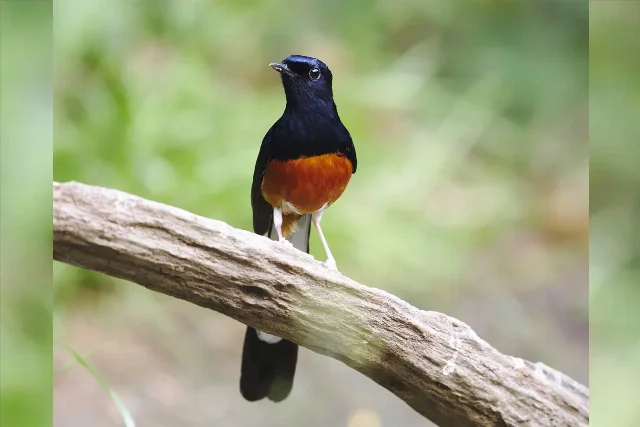
Bridled Titmouse Basic Information
| Scientific Name |
Baeolophus wollweberi
|
| Status |
LC
Least Concern
|
| Size |
11-13 cm (4-5 inch)
|
| Colors |
|
| Type |
|
| Family |
Tits and chickadees |
Introduction
The Bridled Titmouse (Baeolophus wollweberi) is a charming and distinctive member of the Paridae family, known for its charismatic presence and unique facial markings. As a small, active perching bird, it has captured the hearts of ornithologists and backyard birders alike. Primarily found in the oak-wooded regions of the southwestern United States and Mexico, this species stands out among its kin due to the intricate black and white patterns on its head, which give it a masked appearance—hence the name 'bridled.' These birds are highly social, often seen foraging in small groups or mixed-species flocks as they navigate the canopy in search of food. Their inquisitive nature, combined with their acrobatic foraging techniques, makes them a fascinating subject for wildlife observation. Understanding the life cycle, behaviors, and environmental requirements of the Bridled Titmouse is essential for appreciating the biodiversity of arid oak woodlands. This guide provides a comprehensive look into the life of this lively avian species, offering insights into what makes it such a vital component of its ecosystem.
Physical Appearance
The Bridled Titmouse is a small, compact bird, measuring approximately 11 to 13 centimeters in length. Its most defining characteristic is its striking plumage, which is dominated by shades of gray on the back, wings, and tail, contrasted by a lighter, off-white to gray underside. The head is where the bird truly shines, featuring a bold, black-and-white 'bridle' pattern that extends across the face and throat, accentuating its dark, intelligent eyes. A prominent, pointed crest atop its head can be raised or lowered depending on the bird's mood, adding to its expressive nature. Both males and females look remarkably similar, sharing these classic titmouse features. Their bill is short, stout, and dark, perfectly adapted for handling seeds, nuts, and small insects. The wings are relatively short and rounded, suited for short, agile flights between tree branches. Their legs and feet are sturdy and gray, providing excellent grip as they cling to twigs and bark while foraging. Overall, the Bridled Titmouse is a masterclass in subtle, elegant avian design, perfectly camouflaged for life among the flickering shadows of oak tree canopies.
Habitat
The Bridled Titmouse is primarily a bird of the high-elevation oak and oak-pine woodlands. Its distribution is closely tied to the presence of mature oak trees, which provide both essential food sources and nesting cavities. These birds are most commonly found in the mountainous regions of southeastern Arizona, southwestern New Mexico, and throughout the highlands of Mexico. They prefer mixed woodland environments where they can find a variety of tree species, although they show a strong preference for areas dominated by evergreen and deciduous oaks. Unlike some other titmouse species, the Bridled Titmouse is rarely found in low-lying deserts or open grasslands, favoring the cooler, more sheltered microclimates provided by mountain canyons and slopes. Their reliance on these specific forest types makes them sensitive to habitat fragmentation and changes in land management, as they require continuous canopy cover to forage and travel safely between nesting sites.
Diet
As a versatile forager, the Bridled Titmouse consumes a varied diet consisting of both plant and animal matter. During the warmer months, their diet is heavily composed of insects, including caterpillars, spiders, beetles, and small larvae, which they glean from the leaves and bark of trees. This insectivorous habit makes them beneficial to the health of the oak woodlands they inhabit. As autumn approaches and temperatures drop, they shift their focus toward plant-based foods. Acorns are a staple of their winter diet; the birds are skilled at holding an acorn with their feet and hammering it against a branch to break it open and reach the nutritious meat inside. They are also known to visit bird feeders, where they readily consume sunflower seeds, peanuts, and suet, especially when natural food sources are scarce. Their ability to switch between insect protein and seed energy is a key survival strategy in their variable mountain environment.
Breeding and Nesting
Breeding for the Bridled Titmouse typically occurs in the spring, when they form monogamous pairs that often remain together for multiple seasons. They are secondary cavity nesters, meaning they do not excavate their own holes but instead rely on existing cavities in trees, such as those abandoned by woodpeckers or created by natural decay. Once a suitable site is found, the pair works together to line the interior with soft materials, including moss, lichen, feathers, and animal fur. The female typically lays a clutch of five to seven white eggs with fine reddish-brown spots. She handles the majority of the incubation, which lasts about two weeks, while the male brings food to the nest to support her. Both parents are highly dedicated, working tirelessly to feed the nestlings once they hatch. The young birds remain in the nest for about 18 to 21 days before fledging, during which time the parents defend their territory against intruders with surprising ferocity for such small creatures.
Behavior
The behavior of the Bridled Titmouse is characterized by high energy and constant movement. They are exceptionally social birds, frequently observed traveling in small, tight-knit family groups or joining mixed-species flocks alongside nuthatches, chickadees, and warblers. This sociality is thought to provide better protection against predators, as more eyes are available to detect threats. When foraging, they exhibit impressive acrobatic skills, often hanging upside down from branches to reach insects on the undersides of leaves. They are also quite vocal, possessing a variety of calls, including a distinctive, high-pitched 'tsic-a-dee' or a series of whistled notes. They are generally curious birds and may approach humans if they are quiet and still, often investigating their surroundings with a series of quick, jerky head movements that highlight their alertness and intelligence.
Conservation Status
-
LC
Least Concern
Currently, the Bridled Titmouse is listed as a species of Least Concern by the IUCN. While their populations appear stable across their primary range, they remain vulnerable to localized threats. The primary concern for this species is the loss and degradation of their specialized oak-woodland habitats. Factors such as severe wildfires, prolonged droughts, and urban development in mountain canyons can significantly reduce the availability of nesting cavities and food sources. Conservation efforts focused on preserving mature oak forests and managing fire risks are vital for ensuring the long-term survival of this unique bird, as they cannot easily adapt to heavily disturbed or non-wooded environments.
Interesting Facts
- The Bridled Titmouse is the only species of titmouse that possesses a distinct facial 'bridle' pattern.
- They are known for their intelligence and have been observed using tools, such as hammering acorns against hard surfaces.
- They often store food in crevices of bark to survive during winter months.
- These birds are highly vocal and use a complex language of calls to communicate with their flock.
- They are known to be 'secondary cavity nesters,' meaning they rely on old woodpecker holes to raise their young.
- Bridled Titmice are very social and often form lifelong pair bonds with their mates.
- They are frequently seen hanging upside down while foraging for insects on tree branches.
Tips for Birdwatchers
To successfully spot a Bridled Titmouse, birdwatchers should focus their efforts on high-elevation oak woodlands, particularly in southeastern Arizona. The best time for observation is during the early morning hours when the birds are most active and vocal. Because they are social and often travel in flocks, listening for their high-pitched, whistled calls is the most effective way to locate them. Once you hear them, remain still and quiet, as they are curious but skittish. Using a pair of binoculars with good light-gathering capabilities is recommended, as they spend much of their time in the dense canopy where shadows can make identification difficult. If you are in a residential area near their habitat, setting up a feeder with sunflower seeds or suet can draw them out into the open, providing an excellent opportunity to observe their unique facial markings and energetic behavior at closer range.
Conclusion
In conclusion, the Bridled Titmouse (Baeolophus wollweberi) is a remarkable example of avian adaptation and social complexity within the high-elevation woodlands of the American Southwest and Mexico. From its striking, masked appearance to its agile, acrobatic foraging style, this bird offers a delightful experience for any nature enthusiast. Their reliance on healthy oak ecosystems highlights the importance of environmental stewardship and the preservation of our natural mountain forests. By understanding their needs, protecting their nesting sites, and appreciating their role in the local food web, we can ensure that these lively birds continue to thrive in their rugged, beautiful habitats. Whether you are an experienced birder or a casual observer, taking the time to watch a Bridled Titmouse is a rewarding experience that deepens one's connection to the natural world. As we continue to face challenges such as climate change and habitat loss, the presence of the Bridled Titmouse serves as a reminder of the intricate beauty and fragility of the avian species that share our planet. Let us cherish and protect these small, spirited creatures for generations to come.
Bridled Titmouse Distribution Map & Range
The distribution map for this species will be available soon.
We are working with our official data partners to update this information.