Flutist Wren Distribution Map & Range
The distribution map for this species will be available soon.
We are working with our official data partners to update this information.

Sign in with your Google account to access all features

| Scientific Name | Microcerculus ustulatus |
|---|---|
| Status | LC Least Concern |
| Size | 14-16 cm (6-6 inch) |
| Colors |
Brown
Chestnut
|
| Type |
Perching Birds

|
| Family | Wrens |
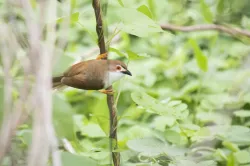
The Flutist Wren (Microcerculus ustulatus) is one of the most enigmatic and melodious members of the Troglodytidae family. Often heard before it is seen, this small perching bird is celebrated for its complex, flute-like vocalizations that echo through the dense undergrowth of its natural environment. As a species shrouded in mystery, it occupies a specific niche within the Neotropical rainforests, where its cryptic lifestyle makes it a prized sighting for dedicated ornithologists and birdwatchers alike. Unlike more common backyard wrens, the Flutist Wren prefers the seclusion of high-altitude forests, maintaining a low profile that protects it from predators while allowing it to forage undisturbed. Understanding this bird requires patience and a deep appreciation for the delicate balance of the ecosystems it inhabits. In this guide, we will explore the intricate life cycle, physical characteristics, and ecological importance of this remarkable avian species, shedding light on why it remains a subject of fascination for researchers worldwide.
The Flutist Wren is a small, compact bird, typically measuring between 14 to 16 centimeters in length. Its plumage is a masterpiece of camouflage, dominated by rich shades of brown that allow it to blend seamlessly into the leaf litter and shadowed understory of the forest floor. The primary brown coloration is complemented by deep, warm chestnut hues, particularly concentrated on the wings and the rump, which give the bird a sophisticated, earthy appearance. The body structure is typical of wrens, featuring a stout, rounded frame and a short, often cocked tail that adds to its expressive posture. Its beak is thin and slightly down-curved, perfectly adapted for probing into crevices and mossy surfaces in search of insect prey. The eyes are bright and alert, set against a subtle, darker facial mask that further aids in its concealment. Despite its modest size, the bird possesses a robust build that enables it to navigate the dense, tangled vegetation of its high-elevation habitat with surprising agility and speed.
The Flutist Wren is primarily found in the high-altitude cloud forests and humid mountain regions of South America. It favors areas with dense, undisturbed undergrowth, often near steep ravines or moss-covered slopes where humidity remains consistently high. These environments provide the necessary moisture and cover for the invertebrates that form the bulk of their diet. Because the Flutist Wren is highly sensitive to habitat fragmentation, it is rarely found in secondary forests or degraded landscapes. It thrives in the quiet, shadowed corridors of primary growth forests, where the thick canopy filters the sunlight and creates a cool, stable microclimate essential for its survival and daily foraging activities.
As an insectivorous species, the Flutist Wren plays a vital role in controlling insect populations within its ecosystem. Its diet consists primarily of a wide variety of small arthropods, including spiders, beetles, ants, and various larvae found hidden within the forest floor's debris. The bird uses its specialized, slender bill to forage methodically, turning over rotting leaves and investigating damp crevices in tree trunks and mossy rocks. By focusing on these hidden food sources, the Flutist Wren avoids direct competition with larger, canopy-dwelling birds, ensuring a steady supply of nutrients even during the drier months when insect activity may fluctuate slightly within the forest.
Breeding behavior in the Flutist Wren is a complex and highly territorial affair. During the nesting season, males become particularly vocal, using their namesake flute-like songs to establish and defend their territories against rivals. They construct elaborate, dome-shaped nests, typically well-hidden within mossy banks, tree cavities, or dense clusters of ferns. The female is responsible for the final interior lining, often using soft plant fibers and feathers to ensure the safety and warmth of the eggs. Typically, the clutch consists of two to three eggs, which are incubated by the female for approximately two weeks. Both parents are highly attentive, working diligently to provide food for the hatchlings until they are ready to fledge, ensuring that the next generation is well-prepared for the challenges of life in the dense forest understory.
The Flutist Wren is a notoriously shy and reclusive bird, characterized by its tendency to remain hidden within the shadows of the underbrush. Unlike more social bird species, it is often solitary or found in pairs during the breeding season. It is remarkably agile, hopping rapidly across the ground and climbing mossy trunks with ease. Its most distinctive behavioral trait is its song, which is characterized by long, slow, and hauntingly beautiful musical phrases. These songs are often delivered from a hidden perch, making the bird incredibly difficult to track visually, even for experienced observers who know exactly what to listen for in the dense mountain air.
Currently, the Flutist Wren is considered a species of least concern globally, though it faces localized threats due to habitat loss. Because it relies heavily on pristine, high-altitude cloud forests, any deforestation or climate-driven changes to these sensitive ecosystems could significantly impact its population. Conservation efforts focus on protecting the large, contiguous tracts of forest that this species requires. Maintaining the integrity of these mountain habitats is crucial for the long-term survival of the Flutist Wren, as it cannot easily adapt to human-altered landscapes or fragmented forest patches.
For birdwatchers hoping to catch a glimpse of the Flutist Wren, patience is the most essential tool. Because this species is highly elusive, the best strategy is to familiarize yourself thoroughly with its unique, fluted song before heading into the field. Once in its habitat, remain as still and quiet as possible, allowing the forest to return to its natural rhythm. Avoid sudden movements or loud noises, as the wren is hyper-alert to disturbances. Focus your search on the lower levels of the forest, particularly near mossy banks or rocky outcrops where the bird is most likely to be foraging. Using a high-quality directional microphone can help you pinpoint its location, but always prioritize the well-being of the bird by maintaining a respectful distance and avoiding playback of its song, which can cause unnecessary stress during the breeding season.
In summary, the Flutist Wren is a fascinating subject for both ornithologists and nature enthusiasts, representing the delicate and complex biodiversity of the Neotropical mountain forests. Its unique physical adaptations, such as its cryptic brown and chestnut plumage and specialized bill, demonstrate the evolutionary precision required to survive in a competitive and resource-heavy environment. Beyond its physical traits, its hauntingly beautiful song serves as a reminder of the hidden wonders within our world's most remote ecosystems. As we continue to study and document this species, we gain deeper insights into the health of the cloud forests and the importance of preserving these habitats from the encroaching threats of climate change and deforestation. Protecting the Flutist Wren is not just about saving a single bird; it is about safeguarding the intricate web of life that sustains these high-altitude regions. Whether you are an experienced birder or a curious nature lover, the Flutist Wren stands as a symbol of the quiet, persistent beauty found in the heart of the wild. By fostering a deeper understanding and appreciation for this elusive perching bird, we contribute to the broader mission of global avian conservation and the preservation of our planet's natural heritage for future generations to cherish and study.
We are working with our official data partners to update this information.
Tag:



Birds have their own beautiful world, we should not interfere in it. We should enjoy this beauty. Its beauty should be captured in the camera but be careful not to disturb them.
Tap a language to switch instantly.
Tap a language to switch instantly.