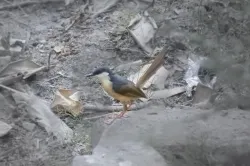
Pygmy Nuthatch Basic Information
| Scientific Name |
Sitta pygmaea
|
| Status |
LC
Least Concern
|
| Size |
9-11 cm (4-4 inch)
|
| Colors |
|
| Type |
|
| Family |
Nuthatches |
Introduction
The Pygmy Nuthatch (Sitta pygmaea) is a fascinating species of bird that captures the hearts of birdwatchers with its diminutive size and high-energy personality. As a member of the Sittidae family, this tree-clinging bird is a master of navigating the bark of coniferous trees with agility that few other species can match. Found primarily in the western regions of North America, these birds are known for their sociable nature, often traveling in tight-knit, noisy flocks that move rhythmically through the forest canopy. Despite their small stature, they play a crucial ecological role by managing insect populations within their wooded habitats. Understanding the Pygmy Nuthatch requires looking beyond its tiny frame to appreciate its complex social structures, unique foraging techniques, and remarkable adaptations to life in high-altitude pine forests. Whether you are an amateur bird enthusiast or a seasoned ornithologist, the Pygmy Nuthatch offers a captivating study of survival and cooperation in the avian world, making it a highlight for any nature lover exploring western coniferous woodlands.
Physical Appearance
Standing at a mere 9 to 11 cm in length, the Pygmy Nuthatch is among the smallest passerines in North America. Its physical appearance is characterized by a sleek, aerodynamic silhouette perfectly adapted for its life as a tree-clinging specialist. The primary color of this bird is a soft, slate-grey, which covers its back, wings, and crown, providing excellent camouflage against the bark of the pine trees it inhabits. A defining feature is the white patch on the nape of its neck, which contrasts sharply with the darker grey cap, creating a distinct visual marker. Its underparts are a clean, off-white or light buff color, offering a subtle contrast to the darker upperparts. The bird possesses a relatively long, sharp, black bill, which serves as an essential tool for prying insects from crevices. Its feet are exceptionally strong, equipped with sharp claws that allow it to traverse tree trunks head-first with remarkable ease. The overall appearance is rounded and compact, giving the bird an endearing, almost plush-toy-like quality while in flight or perched on a branch.
Habitat
The Pygmy Nuthatch is a quintessential inhabitant of mature, open coniferous forests, particularly those dominated by Ponderosa pine. Their range spans the western United States, British Columbia, and parts of Mexico. They are highly dependent on these specific forest types because they rely on the large, old-growth pine trees for both foraging and nesting. Unlike other species that migrate long distances, the Pygmy Nuthatch is largely sedentary, often remaining within its established territory throughout the year. They prefer higher elevations where the climate is temperate, utilizing the dense canopy for protection against predators and the elements. Because they require cavities for nesting, the presence of dead or dying trees within the forest ecosystem is absolutely critical for the long-term survival of local populations.
Diet
The diet of the Pygmy Nuthatch is primarily insectivorous, consisting of a variety of small arthropods, including beetles, caterpillars, spiders, and insect eggs found on the bark of trees. During the winter months, when insect activity declines, these birds shift their dietary focus toward seeds, particularly those of various pine species. They are highly skilled at harvesting seeds from pine cones, using their sharp bills to pry open scales and extract the nutritious kernels inside. Occasionally, they will visit backyard bird feeders, especially those offering suet or black oil sunflower seeds. This flexible feeding strategy allows them to survive in environments where food availability fluctuates significantly across the changing seasons.
Breeding and Nesting
Breeding and nesting behaviors in Pygmy Nuthatches are particularly unique, as they are one of the few bird species known to engage in cooperative breeding. During the nesting season, which typically begins in the spring, the primary breeding pair is often assisted by "helpers," which are usually offspring from previous years. These helpers assist in feeding the incubating female and the developing nestlings. The birds nest in cavities, either excavating their own holes in soft, decaying wood or occupying abandoned woodpecker holes. They line these cavities with soft materials like moss, feathers, spider webs, and animal fur. A typical clutch size consists of five to nine eggs, which are incubated by the female for approximately two weeks. This communal approach to raising young significantly increases the survival rate of the brood, demonstrating a sophisticated level of social intelligence.
Behavior
Pygmy Nuthatches are incredibly social and active birds, rarely seen alone outside of the breeding season. They are famous for their constant, high-pitched vocalizations, which serve to maintain contact within the flock as they move through the trees. They are master acrobats, capable of hanging upside down and moving head-first down the trunks of trees, a behavior that allows them to scan bark crevices from multiple angles. When roosting at night, they exhibit a remarkable communal behavior, huddling together in a single tree cavity to conserve body heat. This group-roosting strategy is essential for their survival during cold winter nights in high-altitude environments, showcasing their adaptive social nature.
Conservation Status
-
LC
Least Concern
The Pygmy Nuthatch is currently listed as a species of Least Concern by the IUCN. However, they are highly sensitive to habitat degradation and the loss of mature, old-growth coniferous forests. Because they rely heavily on standing dead trees for nesting, aggressive logging practices and forest fire suppression can negatively impact their population density. Conservation efforts focus on maintaining healthy, diverse forest ecosystems that provide a steady supply of nesting cavities and a consistent food source. While their numbers remain stable, monitoring local populations is vital to ensure that forest management remains compatible with their habitat requirements.
Interesting Facts
- They are one of the few bird species that practice communal roosting to stay warm.
- Pygmy Nuthatches are known to use bits of bark as tools to pry open other pieces of bark while foraging.
- They often travel in noisy, social flocks that can contain up to 40 individuals.
- The species is highly dependent on Ponderosa pine forests for survival.
- They are capable of hanging upside down and moving head-first down tree trunks.
- Unlike many other birds, they often have "helpers" that assist in feeding the nestlings.
Tips for Birdwatchers
To spot a Pygmy Nuthatch, look for mature Ponderosa pine forests in the western United States. Their high-pitched, squeaky calls are often the first indicator of their presence; listen for a constant, chattering sound coming from the upper canopy. Because they are active and move quickly, using high-quality binoculars is essential for tracking their movements. Patience is key—find a spot near a large pine tree and wait quietly; these birds are curious and may come closer if you remain still. During winter, check local bird feeders that offer suet or sunflower seeds, as these provide a great opportunity to observe their acrobatic feeding habits at a closer range.
Conclusion
In summary, the Pygmy Nuthatch (Sitta pygmaea) is a remarkable example of avian adaptation and social cooperation. From its specialized physical traits, such as its strong, bark-gripping feet and sharp, insect-seeking bill, to its complex communal breeding and roosting habits, this bird is perfectly evolved for life in the western pine forests. While their conservation status is currently stable, their reliance on mature, old-growth timber highlights the importance of responsible forest management and habitat preservation. For birdwatchers, the Pygmy Nuthatch provides endless entertainment through its energetic behavior, constant chatter, and acrobatic maneuvers. Whether you are observing them as they forage in a high-altitude canopy or seeing them huddle together in a shared nesting cavity, the Pygmy Nuthatch serves as a poignant reminder of the intricate connections within our natural world. By continuing to study and protect these tiny, grey-and-white marvels, we ensure that future generations can continue to enjoy the vibrant, social presence of the Pygmy Nuthatch in our wild spaces. Their existence is a testament to the resilience of life in challenging environments, making them a truly special subject for anyone passionate about ornithology and the conservation of our forest-dwelling avian neighbors.
Pygmy Nuthatch Distribution Map & Range
The distribution map for this species will be available soon.
We are working with our official data partners to update this information.