

Not available
Scarlet Minivet
Pericrocotus flammeus
Last update: 08 Mar 2026
Read in:
English
Español
Português
हिन्दी
বাংলা
தமிழ்
മലയാളം
मराठी
ગુજરાતી
తెలుగు
French
Deutsch
Русский
日本語
简体中文
Italiano
Tiếng Việt
العربية
ಕನ್ನಡ
ਪੰਜਾਬੀ
Scarlet Minivet Basic Information
| Scientific Name | Pericrocotus flammeus |
|---|---|
| Status | LC Least Concern |
| Size | 20-22 cm (8-9 inch) |
| Colors |
Black
Scarlet
|
| Type |
Perching Birds

|
| Family | Cuckooshrikes |
Introduction
The Scarlet Minivet (Pericrocotus flammeus) is one of the most visually arresting passerines found across the tropical forests of southern and southeastern Asia. Belonging to the cuckoo-shrike family, this species is renowned for its intense, fiery plumage and social nature. Often seen moving in small, active flocks through the canopy, these birds are a delight for ornithologists and casual birdwatchers alike. Their presence in a forest is often announced by their high-pitched, whistling calls before they are even spotted. As a species, the Scarlet Minivet represents the intricate biodiversity of Asian forest ecosystems, serving as a vital indicator of forest health. They occupy a unique ecological niche, moving with agility through the high branches, feeding on insects, and contributing to the dynamic life of the forest upper strata. Understanding this bird requires a deep appreciation for its vibrant colors, complex social behaviors, and its reliance on dense, mature forest environments for survival and reproduction throughout its vast range.
Physical Appearance
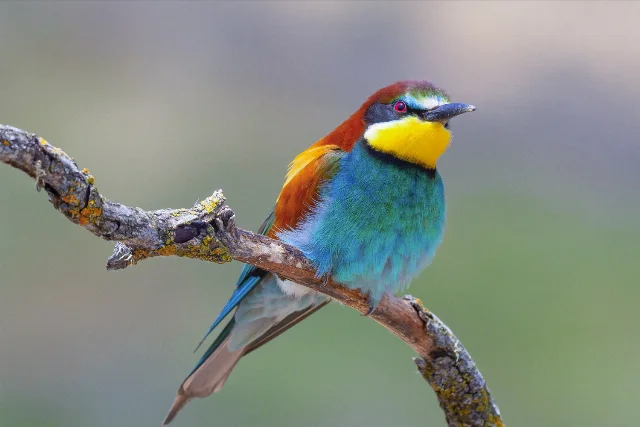
The Scarlet Minivet is a medium-sized perching bird, measuring between 20 and 22 centimeters in length. The species exhibits striking sexual dimorphism, making identification relatively straightforward for experienced birders. The male is arguably one of the most vividly colored birds in its habitat, boasting a brilliant, deep scarlet coloration on its underparts, rump, and outer tail feathers, which contrasts sharply with its glossy, jet-black head, throat, and upper back. This combination of black and scarlet makes them highly visible even in the dim light of the deep forest canopy. In contrast, females are characterized by a combination of yellow and grey-black, often sporting a bright yellow wash on the underparts and wings rather than the bold red seen in males. Both sexes possess a slender, pointed bill adapted for gleaning insects from foliage and a long, graduated tail that helps them maneuver through dense vegetation. Their wings are relatively long and pointed, facilitating rapid, agile flight as they move between branches in pursuit of prey, making them a marvel of biological engineering and aesthetic beauty.
Habitat
The Scarlet Minivet primarily inhabits moist, broad-leaved evergreen and semi-evergreen forests. They are most commonly found in the canopy layers of tropical and subtropical woodlands, often favoring areas with dense, mature tree growth. Their range extends across the Indian subcontinent, through the Himalayas, and into parts of Southeast Asia. While they prefer dense forests, they are also known to frequent forest edges, wooded hills, and occasionally high-altitude plantations, provided there is sufficient tree cover. Their reliance on the canopy means they are rarely seen near the forest floor, as they are specialized to navigate the complex environment of the treetops, where they find both shelter and abundant food resources.
Diet
As an insectivorous species, the Scarlet Minivet plays a crucial role in regulating forest insect populations. Their diet consists almost exclusively of a variety of small invertebrates, including caterpillars, beetles, flies, and other tiny insects found on the leaves and branches of trees. They are active hunters, often hovering momentarily to snatch prey from the underside of leaves or making short, rapid dashes to capture insects in mid-air. Occasionally, they may supplement their diet with small fruits or berries when insects are less abundant, but they are primarily specialized as foliage-gleaners. This feeding behavior keeps them constantly on the move, maintaining their high energy levels.
Breeding and Nesting
The breeding season of the Scarlet Minivet typically aligns with the warmer months of the year, often following the monsoon season in many parts of their range. During this time, they become more territorial, though they generally remain social birds. The nest is a sophisticated, cup-shaped structure constructed from fine twigs, roots, and moss, often bound together with spider webs to ensure durability and camouflage against the branch. These nests are usually placed high in the fork of a tree, well-hidden from predators. The female typically lays a small clutch of eggs, which are incubated with care. Both parents are highly attentive, sharing the responsibilities of feeding the chicks once they hatch, ensuring the survival of the next generation in the challenging environment of the forest canopy.
Behavior
Scarlet Minivets are highly social and are almost always encountered in small, restless groups or loose flocks. They exhibit a gregarious nature, often moving through the canopy in a synchronized fashion, following a leader from one tree to another. Their movement is characterized by a distinctive, undulating flight pattern. They are vocal birds, communicating with their flock members through a series of thin, metallic, or whistling calls that echo through the trees. Despite their vibrant appearance, they can be surprisingly difficult to track as they constantly flit between leaves, their black and scarlet plumage sometimes blending into the shadows and light of the forest.
Conservation Status - LC Least Concern
Currently, the Scarlet Minivet is classified under the Least Concern category by the IUCN. However, this does not mean they are entirely safe from environmental pressures. Their primary threat is the ongoing loss and fragmentation of mature, broad-leaved forests due to deforestation, agricultural expansion, and logging. As canopy-dependent specialists, they are highly sensitive to habitat degradation. While their population remains stable across a wide geographic range, continued conservation of old-growth forest corridors is essential to ensure that these vibrant birds continue to thrive in their natural environment for generations to come.
Interesting Facts
- The Scarlet Minivet belongs to the family Campephagidae, commonly known as cuckoo-shrikes.
- Males are famous for their fiery red plumage, while females are adorned in bright yellow.
- They are highly energetic and rarely stay on a single branch for more than a few seconds.
- Their nests are often so well-camouflaged with lichen and moss that they are extremely difficult to spot from the ground.
- They serve as important natural pest controllers in tropical forest ecosystems.
- The name 'minivet' is derived from their small size and distinctively sharp, whistling calls.
Tips for Birdwatchers
To successfully spot a Scarlet Minivet, focus your efforts on the high canopy of evergreen forests during the early morning hours when activity is at its peak. Listen carefully for their high-pitched, metallic 'swee-swee' calls, which often give away their location before you see them. Because they are constantly moving, it is best to find a vantage point where you can scan multiple trees at once. Using high-quality binoculars with a wide field of view is essential for tracking their rapid, erratic flight. Patience is key; wait near a fruiting or insect-rich tree, and you will likely see a flock pass through as they forage across the forest landscape.
Pro-Tip: To spot this bird in dense forest canopy, a 8x42 binoculars or telescope is highly recommended.
- [Check out our top recommended gear here]
Conclusion
In conclusion, the Scarlet Minivet is a spectacular example of the avian diversity that defines the tropical forests of Asia. With their vibrant colors, social dynamics, and specialized ecological role, they are a fascinating subject for any bird enthusiast. From the fiery plumage of the males to the intricate nest-building skills of the parents, every aspect of their life cycle is adapted to the complex, high-altitude world of the forest canopy. While they are currently secure in their conservation status, their future remains tied to the preservation of the vast, mature forests they call home. By protecting these vital habitats, we not only save a beautiful species but also maintain the health and balance of the entire ecosystem. Whether you are an experienced ornithologist or a beginner birdwatcher, encountering a flock of these stunning birds in the wild is a memorable experience that highlights the incredible beauty of nature. We must continue to support reforestation efforts and habitat protection to ensure that the forests remain filled with the brilliant colors and lively calls of the Scarlet Minivet, keeping our natural world vibrant and thriving for years to come.
Tag:

200 Follower
is a writer who draws. He’s the Bestselling author of “Number of The Year”. Donec vitae tortor efficitur, convallis lelobortis elit.
Recent Posts




Subscribe For Daily Newsletter
