Carrion Crow Basic Information
| Scientific Name |
Corvus corone
|
| Status |
LC
Least Concern
|
| Size |
45-50 cm (18-20 inch)
|
| Colors |
|
| Type |
|
| Family |
Crows and jays |
Introduction
The Carrion Crow (Corvus corone) is a member of the Corvidae family, widely recognized for its high intelligence and adaptability. Often misunderstood due to its scavenger nature, this bird is a fascinating study in evolutionary success. As a medium-sized perching bird, it has successfully colonized a diverse range of environments across Europe and parts of Asia. Unlike many other species that struggle with human encroachment, the Carrion Crow has thrived, utilizing urban landscapes as effectively as wild woodlands. Known for their complex social structures and problem-solving abilities, these birds represent the pinnacle of avian cognitive development. Whether you are a seasoned ornithologist or a casual birdwatcher, understanding the Carrion Crow offers a window into the survival strategies of one of the world's most successful passerines. Their presence in folklore and literature further cements their status as iconic, albeit sometimes controversial, figures in the natural world.
Physical Appearance
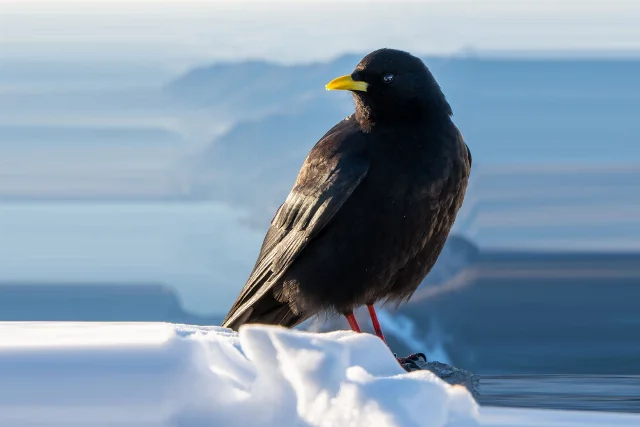
Standing between 45 and 50 centimeters in height, the Carrion Crow is a robust and imposing bird. Its primary color is an intense, glossy black that covers its entire plumage, often showing subtle violet or green iridescence when viewed under direct sunlight. While the bird appears entirely black from a distance, close inspection reveals the intricate texture of its feathers. The secondary coloration is characterized by a subtle, dusty greyish sheen on the underwings and shafts, which distinguishes it from the larger Common Raven. The bill is strong, thick, and black, perfectly adapted for tearing through tough materials, while its legs and feet are also a sturdy, dark black. The wings are broad and rounded, allowing for powerful, steady flight. Males and females are monomorphic, meaning they look identical, though males are often slightly larger on average. Their sharp, dark eyes convey an expression of alertness and curiosity, which is central to their highly intelligent nature.
Habitat
The Carrion Crow is remarkably adaptable, occupying a vast array of habitats throughout its range. While they are frequently found in open countryside, farmland, and woodland edges, they have also become a common sight in suburban gardens and densely populated city centers. They prefer areas that offer a mix of nesting trees and open ground for foraging. Their versatility allows them to thrive in mountainous regions, coastal cliffs, and expansive parklands alike. By nesting high in trees or on man-made structures like pylons and buildings, they avoid ground-based predators. This widespread distribution is a testament to their ability to exploit diverse ecological niches.
Diet
As the name suggests, the Carrion Crow is a dedicated scavenger, feeding primarily on carrion or dead animal matter. However, their diet is incredibly varied, making them true omnivores. They readily consume insects, earthworms, small mammals, eggs, nestlings, and various grains or seeds. In urban environments, they are opportunistic feeders, often scavenging for human food scraps, refuse, or pet food left outdoors. They have even been observed dropping hard-shelled mollusks or nuts onto hard surfaces to crack them open. This dietary flexibility is a key component of their survival strategy, ensuring they remain well-fed throughout the changing seasons.
Breeding and Nesting
The breeding season for the Carrion Crow typically begins in early spring. These birds are known for their strong pair bonds, often remaining with the same mate for life. They construct large, bulky nests made of twigs, sticks, and mud, usually lined with softer materials like wool, hair, or moss. Nests are typically placed high in the fork of a tree, though they may occasionally use cliff ledges or tall buildings. The female lays between three and five eggs, which are pale blue-green with dark brown spots. Incubation lasts approximately 18 to 20 days, performed primarily by the female while the male provides food. Both parents are fiercely protective of their nest and young, often mobbing larger predators or intruders to ensure the safety of their brood until the chicks fledge around 30 days after hatching.
Behavior
Behaviorally, the Carrion Crow is among the most sophisticated of all bird species. They are highly social, often seen in pairs or small family groups, though they may gather in larger communal roosts during the winter months. Their intelligence is demonstrated through complex communication, including a variety of harsh 'kraa' calls used to signal danger or coordinate with their flock. They are known to be bold and occasionally aggressive, especially when defending their territory. Their playfulness is also well-documented, as they have been observed engaging in games and using tools to solve problems, showcasing a cognitive capacity comparable to many mammals.
Conservation Status
-
LC
Least Concern
The Carrion Crow is classified as 'Least Concern' by the IUCN Red List. Their population is currently stable and, in many regions, continues to expand due to their ability to adapt to human-modified landscapes. Unlike many endangered species, they do not face immediate threats from habitat loss or climate change. In fact, their success is sometimes viewed as a challenge, as their population growth can impact local biodiversity by preying on the eggs and nestlings of smaller, more vulnerable bird species in agricultural and suburban areas.
Interesting Facts
- Carrion Crows are known to recognize individual human faces and can remember those who have threatened them for years.
- They are capable of using 'tool-use' behavior, such as using sticks to extract insects from tight crevices.
- These birds often engage in 'mobbing' behavior, where they collectively attack larger predators like birds of prey to drive them away.
- They have a complex vocal repertoire, with different calls used for social interaction versus emergency warnings.
- Carrion Crows are highly territorial during the breeding season but become more communal during the winter months.
- They have been observed 'caching' or hiding food for later consumption, demonstrating advanced planning abilities.
- They are often featured in mythology as symbols of both death and wisdom due to their intelligence and scavenging habits.
Tips for Birdwatchers
For birdwatchers hoping to observe the Carrion Crow, patience and observation are key. These birds are extremely wary of humans and will often fly away if they feel approached too closely. Use binoculars to observe them from a distance in parks or open fields where they forage. Pay close attention to their social interactions; you will often see them communicating with specific calls or engaging in displays of dominance with other corvids. If you want to attract them to your garden, provide a consistent source of food, but be aware that their boldness may deter smaller birds from visiting your feeders. Watching their problem-solving skills, such as how they interact with objects in their environment, provides the most rewarding experience for any bird enthusiast looking to understand corvid intelligence.
Conclusion
In summary, the Carrion Crow (Corvus corone) is a remarkable example of nature's ingenuity. From its sleek, all-black appearance to its complex social behaviors and high level of intelligence, this bird has carved out a permanent place in our environment. While their scavenging habits and adaptability might make them seem common, a deeper look reveals a creature with a rich, complex life. Their ability to thrive alongside humans, while maintaining their wild instincts, is a testament to their evolutionary success. As we continue to modify the planet, species like the Carrion Crow remind us that survival often favors the intelligent and the flexible. Whether you admire them for their problem-solving skills or simply observe them in your local park, they remain a vital and fascinating part of our avian world. Respecting their role in the ecosystem is essential, as they act as natural cleaners and play a crucial part in maintaining the balance of our local habitats. We hope this guide has provided a clearer understanding of why the Carrion Crow is such a significant and successful species.
Carrion Crow Distribution Map & Range
The distribution map for this species will be available soon.
We are working with our official data partners to update this information.