
Not available
Grey-breasted Prinia
Prinia hodgsonii
Last update: 09 Mar 2026
Read in:
English
Español
Português
हिन्दी
বাংলা
தமிழ்
മലയാളം
मराठी
ગુજરાતી
తెలుగు
French
Deutsch
Русский
日本語
简体中文
Italiano
Tiếng Việt
العربية
ಕನ್ನಡ
ਪੰਜਾਬੀ
Grey-breasted Prinia Basic Information
| Scientific Name | Prinia hodgsonii |
|---|---|
| Status | LC Least Concern |
| Size | 11-13 cm (4-5 inch) |
| Colors |
Grey
White
|
| Type |
Perching Birds

|
| Family | Cisticolas and allies |
Introduction
The Grey-breasted Prinia (Prinia hodgsonii) is a small, energetic passerine bird that belongs to the Cisticolidae family. Often overlooked due to its diminutive size and swift movements, this perching bird is a fascinating study in avian adaptation. Primarily found across the Indian Subcontinent and parts of Southeast Asia, the species thrives in a variety of scrubby landscapes and open woodlands. Known for its distinct vocalizations and restless nature, the Grey-breasted Prinia serves as a vital indicator of ecosystem health within its range. As an insectivorous bird, it plays a critical role in controlling pest populations in agricultural and wild environments alike. Birdwatchers often find themselves captivated by the subtle beauty of its plumage and the frantic energy it displays while foraging. Understanding the life cycle and ecological significance of the Grey-breasted Prinia provides deep insights into the biodiversity of the Asian tropical and subtropical regions. This guide explores the intricate details of this species, offering enthusiasts a comprehensive look at what makes this small bird a true marvel of the natural world.
Physical Appearance
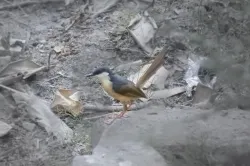
Standing between 11 to 13 centimeters in length, the Grey-breasted Prinia is a compact and agile bird. Its most defining physical characteristic is the soft, slate-grey plumage that covers its upperparts, contrasting elegantly with a clean, white belly and throat. The bird features a relatively long, graduated tail that it frequently flicks or cocks, a behavior that helps birdwatchers distinguish it from other similar prinias. During the breeding season, the male may exhibit subtle changes in plumage intensity, though both sexes generally share the same grey-and-white color palette. The beak is slender and dark, perfectly adapted for snatching small insects from foliage. The eyes are typically a light brown or yellowish hue, providing a sharp focus while hunting. Its legs are pale, thin, and strong, allowing it to grip thin branches and reeds with ease. The overall appearance is one of understated elegance, characterized by streamlined feathers that allow for rapid, darting flight. Juveniles often appear slightly duller in color, gradually developing the crisp, distinct grey-breasted appearance as they reach adulthood.
Habitat
The Grey-breasted Prinia is a versatile bird, showing a preference for habitats that offer dense cover interspersed with open spaces. They are commonly found in scrublands, open forests, secondary growth, and the edges of agricultural fields. Unlike some species that prefer deep, undisturbed forests, this bird thrives in mosaic landscapes where it can utilize low-lying bushes and tall grasses for shelter and foraging. They are frequently spotted in gardens, tea plantations, and along the banks of water bodies where vegetation is lush. Their ability to adapt to human-altered landscapes, such as rural farmlands, makes them a common sight for those who know where to look. They require areas with sufficient insect life to sustain their high-energy lifestyle, and the presence of scattered shrubs is essential for their nesting and protection against predators.
Diet
As a dedicated insectivore, the Grey-breasted Prinia plays an essential role in regulating insect populations within its habitat. Its diet consists almost exclusively of small insects, including beetles, caterpillars, ants, flies, and various larvae. Occasionally, they may also consume tiny spiders. The bird is an active forager, constantly on the move as it inspects the undersides of leaves and the crevices of branches for hidden prey. Their slender bills are highly effective for plucking insects off surfaces without damaging the surrounding vegetation. During the warmer months, when insect activity is at its peak, the Grey-breasted Prinia is highly efficient at gathering food to sustain both itself and its growing brood. This dietary habit makes them a beneficial species for farmers, as they naturally help suppress agricultural pests in the vicinity of their nesting grounds.
Breeding and Nesting
The breeding season of the Grey-breasted Prinia typically coincides with the monsoon or the period immediately following it, when food resources are most abundant. These birds are master architects, constructing intricate, purse-shaped or oval nests. They skillfully weave together fine grasses, plant fibers, and spiderwebs, often attaching the structure to a cluster of leaves or thin stems to keep it concealed. The female usually lays a clutch of three to four eggs, which may be pale blue or white with reddish-brown speckles. Both parents share the responsibility of incubating the eggs and feeding the chicks once they hatch. The nesting period is a time of high activity, as the parents make numerous trips to the nest to provide a steady supply of insects to their young. The nest is carefully placed in dense foliage to protect the vulnerable fledglings from potential predators, showcasing the species' instinct for survival and parental care.
Behavior
The Grey-breasted Prinia is known for its restless and energetic temperament. It is rarely seen sitting still for long, as it constantly flits between branches, often moving in short, jerky bursts of flight. Their vocalizations are a series of high-pitched, repetitive trills or 'tsee-tsee' calls, which are often the first indicator of their presence in the thickets. While they are generally shy and avoid direct contact with humans, they are not strictly reclusive and can be observed if one remains patient and quiet. During the breeding season, males become more vocal, performing song flights to defend their territory and attract mates. They are social birds but are often seen in pairs or small family groups, maintaining a constant state of vigilance to avoid threats from larger predators while they forage for their next meal.
Conservation Status - LC Least Concern
The Grey-breasted Prinia is currently classified as a species of Least Concern by the IUCN. Due to its wide distribution across Asia and its ability to adapt to various man-made landscapes, the population remains stable. However, like many small birds, it faces threats from habitat loss due to deforestation, the expansion of urban areas, and the excessive use of pesticides in agricultural regions, which reduces their primary food source. Conservation efforts should focus on preserving native scrublands and encouraging organic farming practices to ensure that these small, beneficial birds continue to thrive in their natural environments.
Interesting Facts
- The Grey-breasted Prinia is known for its distinctively long, graduated tail that it cocks frequently.
- They are highly skilled at weaving spiderwebs into their nests to provide structural integrity.
- These birds are exclusively insectivorous, making them natural pest controllers for farmers.
- Their high-pitched, repetitive trills are often the best way to locate them in dense brush.
- They are known to be quite shy, yet they adapt well to human-modified landscapes like gardens.
- During the breeding season, males perform specialized song flights to establish their territory.
Tips for Birdwatchers
For birdwatchers hoping to spot the Grey-breasted Prinia, patience is the ultimate virtue. Because they are small and move quickly, relying on their calls is often more effective than scanning the trees visually. Carry a high-quality pair of binoculars and focus your attention on the mid-to-lower levels of shrubs and tall grasses. Early morning is the best time for observation, as the birds are most active while foraging. Look for the characteristic tail-flicking motion, which is a dead giveaway for this species. If you find a potential nesting area, maintain a respectful distance to avoid causing stress to the birds. Recording their calls can also help you identify them in different locations, as their vocalizations are quite consistent throughout their range. Joining local birding groups can provide further tips on specific hotspots in your region.
Pro-Tip: To spot this bird in dense forest canopy, a 8x42 binoculars or telescope is highly recommended.
- [Check out our top recommended gear here]
Conclusion
In summary, the Grey-breasted Prinia is a remarkable example of nature's ability to thrive in modest settings. While it may not possess the vibrant plumage of more exotic species, its subtle grey-and-white coloration, combined with its frantic, energetic behavior, makes it an essential part of the avian community in its native range. As a dedicated insectivore, this bird provides invaluable services to the environment, helping to balance ecosystems and support agricultural health. By studying the Grey-breasted Prinia, we gain a greater appreciation for the complexity of smaller species and the vital roles they play in the intricate web of life. For birdwatchers and nature enthusiasts, the challenge of locating and observing this elusive bird is a rewarding pursuit that encourages a deeper connection with the natural world. Protecting their habitat is essential to ensuring that future generations can continue to enjoy the sight and sound of this charming perching bird. Whether you are an experienced ornithologist or a casual backyard observer, the Grey-breasted Prinia serves as a gentle reminder to value the smaller, often overlooked creatures that share our planet.
Tag:

200 Follower
is a writer who draws. He’s the Bestselling author of “Number of The Year”. Donec vitae tortor efficitur, convallis lelobortis elit.
Recent Posts




Subscribe For Daily Newsletter