Upland Ground Birds
avatar
Photo by Admin
Not available

Himalayan Quail

Ophrysia superciliosa

Last update: 04 Mar 2026

Himalayan Quail Basic Information

Scientific NameOphrysia superciliosa
Status CR Critically Endangered
Size25-25 cm (10-10 inch)
Colors
Grey
White
Type
Upland Ground Birds
type
FamilyPheasants, Partridges, Turkeys, Grouse

Introduction

The Himalayan Quail (Ophrysia superciliosa) is one of the most mysterious and elusive birds on Earth, an avian enigma that has captivated ornithologists for decades. Classified as a Critically Endangered species, it is widely believed to be possibly extinct, with no confirmed sightings since 1876. This upland ground bird, native to the Western Himalayas, represents a profound gap in our understanding of avian biodiversity and a stark reminder of the fragile nature of species in remote habitats. Its story is one of mystery, rarity, and the urgent need for conservation efforts, even for species thought to be lost.

Physical Appearance

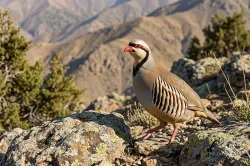
The Himalayan Quail is a small, stout upland ground bird, measuring approximately 25-25 cm in length. Its primary coloration is a distinctive grey, often appearing mottled or streaked, which provides excellent camouflage within its grassy habitat. A notable feature is its secondary color, white, which is particularly prominent in the supercilium (eyebrow stripe) and throat area of the male, giving it a striking appearance. Females are generally duller in coloration. Both sexes possess a long, somewhat graduated tail, unusual for a quail, and a robust bill adapted for foraging on the ground. The overall impression is one of a secretive bird, perfectly adapted to blend into the dense undergrowth of its mountain home.

Habitat

True to its name, the Himalayan Quail inhabits the high-altitude regions of the Himalayan mountain range, specifically the Western Himalayas in India. Historical records place its habitat in the dense grass and scrub-covered slopes, particularly areas of tall grass, bushes, and scattered forest clearings, typically at elevations between 1,650 and 2,400 meters (5,400 to 7,900 feet). These upland ground birds prefer areas with good cover, allowing them to remain hidden from predators. The specific locations where it was last sighted were around Mussoorie and Nainital in the state of Uttarakhand, India, suggesting a preference for cool, moist, temperate mountain environments.

Diet

As a typical ground-dwelling quail, the diet of the Himalayan Quail is presumed to consist primarily of plant matter and small invertebrates. It is believed to forage diligently on the forest floor, scratching and pecking for sustenance. Its diet likely includes:

  • Seeds: Various types of seeds from grasses, herbs, and shrubs found in its upland habitat.
  • Berries: Small berries and fruits available in the undergrowth.
  • Insects: A range of insects, such as beetles, ants, and their larvae, providing essential protein.
  • Shoots and Green Vegetation: Tender shoots and leaves, especially during certain seasons.

Its foraging behavior would be characteristic of other quails, involving discreet movements through dense cover.

Breeding and Nesting

Details regarding the breeding and nesting habits of the Himalayan Quail are scarce due to its extreme rarity. However, based on observations of similar quail species, it is presumed to be a ground-nesting bird. Key aspects likely include:

  • Nest Location: A shallow scrape on the ground, well-hidden amongst dense grass or under a bush, lined with plant material.
  • Clutch Size: Typically, quail species lay a clutch of 4-8 eggs.
  • Incubation: Females are generally responsible for incubation, which lasts around 18-21 days.
  • Chicks: Precocial chicks that are able to feed themselves shortly after hatching, following the mother for protection and guidance.

The breeding season would likely coincide with the availability of abundant food and suitable weather conditions in the Himalayas.

Behavior

The Himalayan Quail is renowned for its extremely secretive and elusive behavior. It is a true upland ground bird, spending most, if not all, of its life foraging and moving through dense undergrowth. Key behavioral traits include:

  • Ground Dwelling: Primarily terrestrial, rarely taking to the wing unless flushed.
  • Cryptic Nature: Its drab coloration and preference for thick cover make it incredibly difficult to spot.
  • Calls: Historical accounts describe a distinctive, somewhat mournful call, often heard at dawn or dusk, which could be a key to locating any surviving individuals.
  • Social Structure: Likely found in small coveys or pairs, especially during the breeding season.
  • Sedentary: Believed to be largely sedentary within its preferred habitat, possibly making local movements based on food availability or weather.

Its elusive nature is a primary reason why it has been so difficult to confirm its existence in recent times.

Conservation Status - CR Critically Endangered

The conservation status of the Himalayan Quail is one of dire concern: Critically Endangered (Possibly Extinct). It is listed as such by the IUCN Red List. The last confirmed sighting of a live specimen was in 1876, with unconfirmed reports continuing into the early 20th century. The reasons for its drastic decline and presumed extinction are complex and likely include:

  • Habitat Loss and Degradation: Conversion of its grassland and scrub habitat for agriculture, human settlement, and other developmental activities.
  • Hunting Pressure: Historical hunting, though its elusive nature may have offered some protection.
  • Small Population Size: Even historically, it may have had a naturally small and fragmented population, making it vulnerable to environmental changes.
  • Climate Change: Potential shifts in its specific high-altitude microhabitat.

Despite extensive searches, no definitive proof of its continued existence has emerged, making it one of the most sought-after 'lost' birds in the world.

Interesting Facts

  1. The Ghost Bird: The Himalayan Quail is often referred to as a 'ghost bird' due to its extreme rarity and the lack of confirmed sightings for over a century.
  2. Last Confirmed Sighting: The last scientifically confirmed sighting was in 1876 near Mussoorie, India. Before that, about a dozen specimens were collected between 1865 and 1876.
  3. Unique Tail: Unlike most quails, which have very short tails, the Himalayan Quail possesses a relatively long, graduated tail, making it quite distinct.
  4. Extensive Searches: Numerous expeditions have been launched to rediscover the bird, particularly in the 1990s and early 2000s, but all have been unsuccessful.
  5. Cryptic Plumage: Its grey and white plumage, especially the streaking, provides excellent camouflage in the tall grasses and scrub of its Himalayan habitat.
  6. A Mystery of Evolution: Its unique morphology and isolation suggest it might represent a distinct evolutionary lineage within the pheasant family.

Tips for Birdwatchers

For birdwatchers hoping to encounter the Himalayan Quail, it's crucial to understand the extraordinary circumstances surrounding this species. These are less 'tips for spotting' and more 'guidelines for understanding its significance':

  • Extreme Rarity: Acknowledge that this bird is critically endangered and possibly extinct. Any potential sighting would be a monumental discovery.
  • Focus on Historical Habitats: If undertaking an expedition, concentrate efforts in the historical sighting areas of Mussoorie and Nainital, particularly in dense, undisturbed upland grasslands and scrub.
  • Listen for Calls: Pay close attention to unique calls, especially at dawn and dusk. Historical accounts mention a distinctive, 'whistling' call.
  • Ethical Approach: Should you ever encounter a bird resembling the Himalayan Quail, prioritize its welfare. Document with photographs/video from a distance and report immediately to relevant conservation authorities (e.g., IUCN, Bombay Natural History Society) without disturbing the bird or its habitat.
  • Support Conservation: Contribute to efforts that conserve remaining Himalayan habitats, as these efforts indirectly support any potential relict populations of the quail and other rare species.

The quest for the Himalayan Quail is more about conservation hope and scientific discovery than casual birdwatching.

Conclusion

The Himalayan Quail stands as one of ornithology's greatest mysteries and a poignant symbol of extinction in the modern era. Its elusive nature, combined with habitat loss and other pressures, has relegated it to the status of a 'lost bird.' Yet, the hope, however faint, persists that a small, relict population might still survive in some remote, unexplored corner of the Western Himalayas. The story of Ophrysia superciliosa underscores the critical importance of habitat preservation, meticulous biodiversity surveys, and the ongoing vigilance required to protect the planet's most vulnerable species, reminding us that every bird, no matter how small or hidden, holds immense ecological and scientific value.

Himalayan Quail Distribution Map & Range

Official Distribution Data provided by
BirdLife International and Handbook of the Birds of the World (2025)

Previous
Next

Explore More Species in the Pheasants, Partridges, Turkeys, Grouse Family

14-16 cm
African Blue Quail
Synoicus adansonii
37-40 cm
Ahanta Spurfowl
Pternistis ahantensis
Altai Snowcock
58-65 cm
Altai Snowcock
Tetraogallus altaicus
Annamite Crested Argus
70-190 cm
Annamite Crested Argus
Rheinardia ocellata
Arabian Partridge
26-30 cm
Arabian Partridge
Alectoris melanocephala
12-14 cm
Asian Blue Quail
Synoicus chinensis
Bar-backed Partridge
25-28 cm
Bar-backed Partridge
Arborophila brunneopectus
32-35 cm
Barbary Partridge
Alectoris barbara
Black Francolin
33-36 cm
Black Francolin
Francolinus francolinus
40-60 cm
Black Grouse
Lyrurus tetrix
Black Partridge
30-35 cm
Black Partridge
Melanoperdix niger
Black-billed Capercaillie
60-70 cm
Black-billed Capercaillie
Tetrao urogalloides
Black-fronted Spurfowl
30-35 cm
Black-fronted Spurfowl
Pternistis atrifrons
40-46 cm
Blood Pheasant
Ithaginis cruentus
Blue Eared-pheasant
75-95 cm
Blue Eared-pheasant
Crossoptilon auritum
65-70 cm
Blyths Tragopan
Tragopan blythii
Bornean Crested Fireback
60-70 cm
Bornean Crested Fireback
Lophura ignita
Bornean Crestless Fireback
55-65 cm
Bornean Crestless Fireback
Lophura pyronota
Bornean Partridge
25-28 cm
Bornean Partridge
Arborophila hyperythra
Bornean Peacock-Pheasant
40-55 cm
Bornean Peacock-Pheasant
Polyplectron schleiermacheri
Bronze-tailed Peacock-Pheasant
50-60 cm
Bronze-tailed Peacock-Pheasant
Polyplectron chalcurum
Brown Eared-pheasant
85-100 cm
Brown Eared-pheasant
Crossoptilon mantchuricum
Brown Quail
17-20 cm
Brown Quail
Synoicus ypsilophorus
28-32 cm
Buff-throated Partridge
Tetraophasis szechenyii
Bulwer's Pheasant
55-80 cm
Bulwer's Pheasant
Lophura bulweri
Cabot's Tragopan
50-61 cm
Cabot's Tragopan
Tragopan caboti
37-42 cm
Cape Spurfowl
Pternistis capensis
Caspian Snowcock
50-57 cm
Caspian Snowcock
Tetraogallus caspius
Caucasian Grouse
40-50 cm
Caucasian Grouse
Lyrurus mlokosiewiczi
50-60 cm
Caucasian Snowcock
Tetraogallus caucasicus
90-118 cm
Cheer Pheasant
Catreus wallichii
Chestnut-bellied Partridge
26-29 cm
Chestnut-bellied Partridge
Arborophila javanica
29-30 cm
Chestnut-breasted Partridge
Arborophila mandellii
Chestnut-headed Partridge
28-32 cm
Chestnut-headed Partridge
Arborophila cambodiana
32-38 cm
Chestnut-naped Spurfowl
Pternistis castaneicollis
Chestnut-necklaced Partridge
27-30 cm
Chestnut-necklaced Partridge
Tropicoperdix charltonii
Chestnut-throated Partridge
28-32 cm
Chestnut-throated Partridge
Tetraophasis obscurus
25-30 cm
Chinese Bamboo-partridge
Bambusicola thoracicus
30-34 cm
Chinese Francolin
Francolinus pintadeanus
Chinese Grouse
30-35 cm
Chinese Grouse
Tetrastes sewerzowi
Chinese Monal
65-80 cm
Chinese Monal
Lophophorus lhuysii
Chukar
32-35 cm
Chukar
Alectoris chukar
Clapperton's Spurfowl
35-40 cm
Clapperton's Spurfowl
Pternistis clappertoni
Collared Partridge
27-30 cm
Collared Partridge
Arborophila gingica
50-90 cm
Common Pheasant
Phasianus colchicus
16-18 cm
Common Quail
Coturnix coturnix
60-75 cm
Congo Peafowl
Afropavo congensis
50-136 cm
Copper Pheasant
Syrmaticus soemmerringii
25-28 cm
Coqui Francolin
Campocolinus coqui
32-35 cm
Crested Francolin
Ortygornis sephaena
Crested Partridge
24-26 cm
Crested Partridge
Rollulus rouloul
Crimson-headed Partridge
27-30 cm
Crimson-headed Partridge
Haematortyx sanguiniceps
Daurian Partridge
28-30 cm
Daurian Partridge
Perdix dauurica
28-33 cm
Djibouti Spurfowl
Pternistis ochropectus
30-38 cm
Double-spurred Spurfowl
Pternistis bicalcaratus
Dulit Partridge
25-28 cm
Dulit Partridge
Rhizothera dulitensis
45-52 cm
Dusky Grouse
Dendragapus obscurus
32-36 cm
Elgon Francolin
Scleroptila elgonensis
Elliot's Pheasant
50-80 cm
Elliot's Pheasant
Syrmaticus ellioti
Erckel's Spurfowl
38-50 cm
Erckel's Spurfowl
Pternistis erckelii
Ferruginous Partridge
25-30 cm
Ferruginous Partridge
Caloperdix oculeus
Finsch's Francolin
30-33 cm
Finsch's Francolin
Scleroptila finschi
Forest Francolin
30-35 cm
Forest Francolin
Peliperdix lathami
38-43 cm
Franklin's Grouse
Canachites franklinii
Germain's Peacock-Pheasant
36-56 cm
Germain's Peacock-Pheasant
Polyplectron germaini
90-105 cm
Golden Pheasant
Chrysolophus pictus
Great Argus
160-200 cm
Great Argus
Argusianus argus
40-46 cm
Greater Prairie-chicken
Tympanuchus cupido
Green Junglefowl
40-75 cm
Green Junglefowl
Gallus varius
180-300 cm
Green Peafowl
Pavo muticus
65-80 cm
Green Pheasant
Phasianus versicolor
Green-legged Partridge
28-32 cm
Green-legged Partridge
Tropicoperdix chloropus
grey francolin
33-33 cm
grey francolin
Ortygornis pondicerianus
38-80 cm
Grey Junglefowl
Gallus sonneratii
29-31 cm
Grey Partridge
Perdix perdix
56-76 cm
Grey Peacock-Pheasant
Polyplectron bicalcaratum
35-40 cm
Grey-breasted Spurfowl
Pternistis rufopictus
28-33 cm
Grey-striped Spurfowl
Pternistis griseostriatus
33-38 cm
Grey-winged Francolin
Scleroptila afra
45-55 cm
Gunnison Grouse
Centrocercus minimus
Hainan Partridge
27-29 cm
Hainan Partridge
Arborophila ardens
Hainan Peacock-Pheasant
50-60 cm
Hainan Peacock-Pheasant
Polyplectron katsumatae
35-38 cm
Handsome Spurfowl
Pternistis nobilis
16-19 cm
Harlequin Quail
Coturnix delegorguei
28-30 cm
Hartlaub's Spurfowl
Pternistis hartlaubi
32-38 cm
Harwood's Spurfowl
Pternistis harwoodi
35-39 cm
Hazel Grouse
Tetrastes bonasia
30-35 cm
Heuglin's Spurfowl
Pternistis icterorhynchus
30-35 cm
Hildebrandt's Spurfowl
Pternistis hildebrandti
25-27 cm
Hill Partridge
Arborophila torqueola
Himalayan Monal
63-72 cm
Himalayan Monal
Lophophorus impejanus
54-72 cm
Himalayan Snowcock
Tetraogallus himalayensis
indian peafowl
90-230 cm
indian peafowl
Pavo cristatus
35-40 cm
Jackson's Spurfowl
Pternistis jacksoni
17-20 cm
Japanese Quail
Coturnix japonica
jungle bush quail
17-17 cm
jungle bush quail
Perdicula asiatica
49-73 cm
Kalij Pheasant
Lophura leucomelanos
Koklass Pheasant
51-64 cm
Koklass Pheasant
Pucrasia macrolopha
Lady Amherst's Pheasant
100-120 cm
Lady Amherst's Pheasant
Chrysolophus amherstiae
38-41 cm
Lesser Prairie-chicken
Tympanuchus pallidicinctus
Long-billed Partridge
25-30 cm
Long-billed Partridge
Rhizothera longirostris
24-28 cm
Madagascar Partridge
Margaroperdix madagarensis
Malay Crested Fireback
60-70 cm
Malay Crested Fireback
Lophura rufa
Malay Crestless Fireback
60-70 cm
Malay Crestless Fireback
Lophura erythrophthalma
Malay Partridge
24-28 cm
Malay Partridge
Arborophila campbelli
Malay Peacock-Pheasant
33-53 cm
Malay Peacock-Pheasant
Polyplectron malacense
Malaysian Crested Argus
150-200 cm
Malaysian Crested Argus
Rheinardia nigrescens
Manipur Bush-quail
20-20 cm
Manipur Bush-quail
Perdicula manipurensis
Mikado Pheasant
47-88 cm
Mikado Pheasant
Syrmaticus mikado
30-35 cm
Moorland Francolin
Scleroptila psilolaema
Mount Cameroon Spurfowl
25-28 cm
Mount Cameroon Spurfowl
Pternistis camerunensis
25-30 cm
Mountain Bamboo-partridge
Bambusicola fytchii
Mountain Peacock-Pheasant
50-60 cm
Mountain Peacock-Pheasant
Polyplectron inopinatum
60-90 cm
Mrs Humes Pheasant
Syrmaticus humiae
30-35 cm
Natal Spurfowl
Pternistis natalensis
New Zealand Quail
17-20 cm
New Zealand Quail
Coturnix novaezelandiae
70-100 cm
Ocellated Turkey
Meleagris ocellata
30-35 cm
Orange River Francolin
Scleroptila gutturalis
Orange-necked Partridge
25-30 cm
Orange-necked Partridge
Arborophila davidi
19-20 cm
Painted Bush-quail
Perdicula erythrorhyncha
30-35 cm
Painted Francolin
Francolinus pictus
32-35 cm
Painted Spurfowl
Galloperdix lunulata
Palawan Peacock-Pheasant
35-50 cm
Palawan Peacock-Pheasant
Polyplectron napoleonis
Philby's Partridge
25-28 cm
Philby's Partridge
Alectoris philbyi
Przevalski's Partridge
27-30 cm
Przevalski's Partridge
Alectoris magna
Rain Quail
15-17 cm
Rain Quail
Coturnix coromandelica
41-78 cm
Red Junglefowl
Gallus gallus
30-38 cm
Red Spurfowl
Galloperdix spadicea
Red-billed Partridge
30-35 cm
Red-billed Partridge
Arborophila rubrirostris
35-40 cm
Red-billed Spurfowl
Pternistis adspersus
32-35 cm
Red-legged Partridge
Alectoris rufa
33-38 cm
Red-necked Spurfowl
Pternistis afer
33-38 cm
Red-winged Francolin
Scleroptila levaillantii
150-210 cm
Reeves's Pheasant
Syrmaticus reevesii
30-35 cm
Ring-necked Francolin
Scleroptila streptophora
17-19 cm
Rock Bush-quail
Perdicula argoondah
32-35 cm
Rock Partridge
Alectoris graeca
31-35 cm
Rock Ptarmigan
Lagopus muta
40-50 cm
Ruffed Grouse
Bonasa umbellus
Rufous-throated Partridge
27-29 cm
Rufous-throated Partridge
Arborophila rufogularis
Sabah Partridge
26-29 cm
Sabah Partridge
Tropicoperdix graydoni
55-75 cm
Sage Grouse
Centrocercus urophasianus
Salvadori's Pheasant
45-55 cm
Salvadori's Pheasant
Lophura inornata
Sand Partridge
22-25 cm
Sand Partridge
Ammoperdix heyi
67-72 cm
Satyr Tragopan
Tragopan satyra
Scaly Spurfowl
30-38 cm
Scaly Spurfowl
Pternistis squamatus
25-28 cm
Schlegel's Francolin
Campocolinus schlegelii
63-68 cm
Sclaters Monal
Lophophorus sclateri
22-24 cm
See-see Partridge
Ammoperdix griseogularis
40-48 cm
Sharp-tailed Grouse
Tympanuchus phasianellus
30-35 cm
Shelley's Francolin
Scleroptila shelleyi
Siamese Fireback
65-80 cm
Siamese Fireback
Lophura diardi
Siberian Grouse
38-43 cm
Siberian Grouse
Falcipennis falcipennis
Sichuan Partridge
28-30 cm
Sichuan Partridge
Arborophila rufipectus
50-125 cm
Silver Pheasant
Lophura nycthemera
Snow Mountain Quail
25-28 cm
Snow Mountain Quail
Anurophasis monorthonyx
38-40 cm
Snow Partridge
Lerwa lerwa
43-50 cm
Sooty Grouse
Dendragapus fuliginosus
38-43 cm
Spruce Grouse
Canachites canadensis
Sri Lanka Junglefowl
36-72 cm
Sri Lanka Junglefowl
Gallus lafayettii
Sri Lanka Spurfowl
23-25 cm
Sri Lanka Spurfowl
Galloperdix bicalcarata
Stubble Quail
16-19 cm
Stubble Quail
Coturnix pectoralis
Sumatran Partridge
25-28 cm
Sumatran Partridge
Arborophila sumatrana
33-38 cm
Swainson's Spurfowl
Pternistis swainsonii
37-38 cm
Swamp Francolin
Ortygornis gularis
30-35 cm
Swierstra's Spurfowl
Pternistis swierstrai
Swinhoe's Pheasant
50-80 cm
Swinhoe's Pheasant
Lophura swinhoii
Taiwan Bamboo-partridge
30-35 cm
Taiwan Bamboo-partridge
Bambusicola sonorivox
Taiwan Partridge
28-30 cm
Taiwan Partridge
Arborophila crudigularis
Tan-breasted Partridge
25-28 cm
Tan-breasted Partridge
Arborophila rolli
58-64 cm
Temmincks Tragopan
Tragopan temminckii
72-85 cm
Tibetan Eared-pheasant
Crossoptilon harmani
28-31 cm
Tibetan Partridge
Perdix hodgsoniae
50-56 cm
Tibetan Snowcock
Tetraogallus tibetanus
Tonkin Partridge
28-33 cm
Tonkin Partridge
Tropicoperdix tonkinensis
Udzungwa Forest-partridge
25-30 cm
Udzungwa Forest-partridge
Xenoperdix udzungwensis
Vietnam Pheasant
50-65 cm
Vietnam Pheasant
Lophura edwardsi
60-110 cm
Western Capercaillie
Tetrao urogallus
55-72 cm
Western Tragopan
Tragopan melanocephalus
White Eared-pheasant
90-96 cm
White Eared-pheasant
Crossoptilon crossoptilon
29-30 cm
White-cheeked Partridge
Arborophila atrogularis
White-faced Partridge
27-30 cm
White-faced Partridge
Arborophila orientalis
30-31 cm
White-tailed Ptarmigan
Lagopus leucura
30-35 cm
White-throated Francolin
Campocolinus albogularis
30-34 cm
Whyte's Francolin
Scleroptila whytei
100-125 cm
Wild Turkey
Meleagris gallopavo
35-45 cm
Willow Grouse
Lagopus lagopus
33-40 cm
Yellow-necked Spurfowl
Pternistis leucoscepus