Night Birds
avatar
Photo by mayur mulubhai ahir
Podkarpackie, Poland
Long-eared Owl

Long-eared Owl

Asio otus

Last update: 06 Mar 2026

Long-eared Owl Basic Information

Scientific NameAsio otus
Status LC Least Concern
Size35-40 cm (14-16 inch)
Colors
Buff
Black
Type
Night Birds
type
FamilyTypical Owls

Introduction

The Long-eared Owl, scientifically known as Asio otus, is one of the most enigmatic and visually striking nocturnal birds found across the Northern Hemisphere. Often referred to as the 'cat owl' due to its distinct facial features and ear-like tufts, this raptor is a master of camouflage. Despite its relatively widespread distribution, the Long-eared Owl remains notoriously difficult to spot in the wild, largely due to its elusive nature and preference for dense, thick cover during daylight hours. As a member of the Strigidae family, it plays a vital role in local ecosystems by regulating rodent populations. Ornithologists and bird enthusiasts alike are captivated by its piercing orange eyes and its ability to blend seamlessly into bark-patterned environments. Understanding the life cycle, behaviors, and ecological requirements of the Long-eared Owl is essential for conservation efforts, as these birds face increasing threats from habitat fragmentation and climate change. This guide provides a comprehensive overview of this fascinating nocturnal predator, exploring what makes the Long-eared Owl a true marvel of the avian world.

Physical Appearance

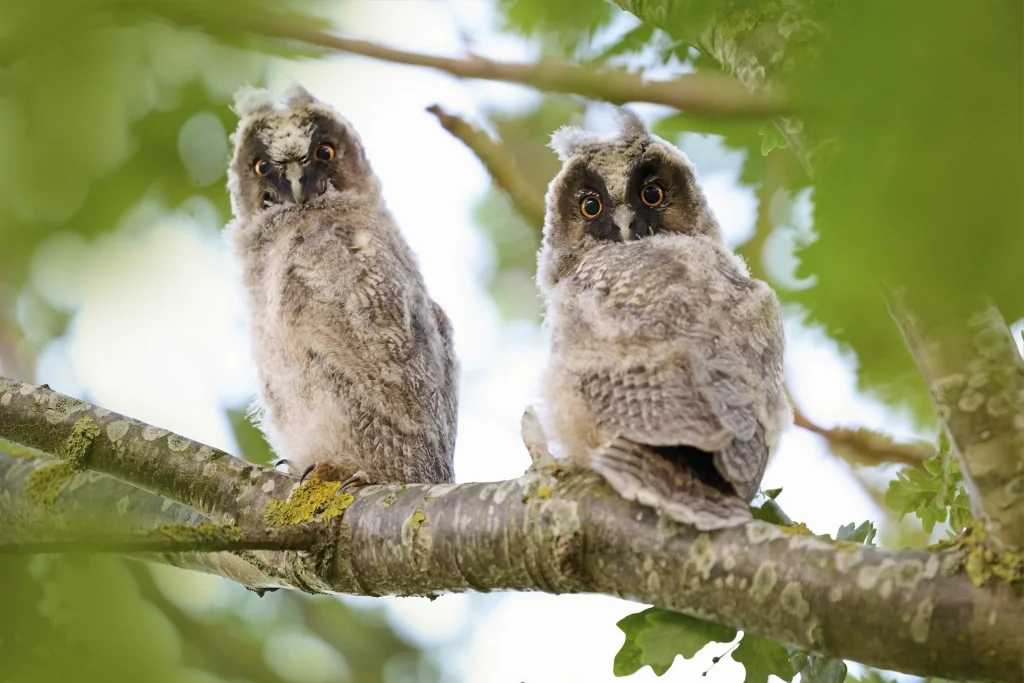
Measuring between 35-40 cm in length, the Long-eared Owl is a medium-sized bird with a slender, aerodynamic build. Its plumage is a complex tapestry of buff, brown, and black, designed specifically for effective camouflage against tree bark. The most prominent feature of this bird is its long, dark ear tufts, which are not actually ears at all but feathers that the bird can raise or lower to communicate mood or blend into its surroundings. The face is dominated by a distinct, buff-colored facial disc bordered by dark black lines, giving the owl an intense, focused expression. Its bright orange-yellow eyes are highly adapted for low-light conditions, providing exceptional vision during the night. The wings are long and rounded, allowing for silent, agile flight through dense forest foliage. When perched, the owl often stretches its body vertically, compressing its feathers to appear like a broken tree branch, an impressive display of natural mimicry that makes it nearly invisible to both prey and potential threats.

Habitat

Long-eared Owls are primarily found in temperate forests and woodland edges across North America, Europe, and Asia. They exhibit a strong preference for dense conifer forests that provide ample cover during the day, though they are also known to inhabit deciduous woodlands and mixed forests. Unlike many other owl species, they often choose to hunt in open grasslands, agricultural fields, or marshes adjacent to their forested homes. Because they are not nest-builders themselves, they rely heavily on pre-existing structures, such as old stick nests abandoned by crows, magpies, or hawks. The availability of these nesting sites, combined with a dense canopy for daytime roosting, determines the suitability of a habitat for this species. Consequently, they are sensitive to landscape changes that remove old-growth trees or destroy the scrubby corridors they use for hunting.

Diet

As a specialized nocturnal predator, the Long-eared Owl subsists primarily on small mammals. Its diet consists largely of voles, mice, and shrews, which it hunts with remarkable precision in open hunting grounds. Occasionally, it will supplement its diet with small birds, insects, or even reptiles if mammalian prey is scarce. The owl relies on its exceptional hearing to locate prey moving beneath grass or snow, rather than relying solely on sight. Once a target is detected, the owl performs a silent, gliding flight to swoop down and snatch the prey with its powerful talons. After consuming its meal, the owl regurgitates indigestible remains, such as bones and fur, in the form of compact pellets, which are invaluable to researchers studying the bird's local dietary habits and ecosystem health.

Breeding and Nesting

The breeding season for the Long-eared Owl typically begins in late winter or early spring. These birds are monogamous and often return to the same territory year after year. A unique aspect of their reproduction is that they never build their own nests. Instead, they occupy the abandoned stick nests of other birds, such as crows, magpies, or hawks, and sometimes even use squirrel dreys. The female usually lays a clutch of three to six white eggs, which she incubates for approximately 25 to 30 days while the male provides food. Once the chicks hatch, they remain in the nest for about three weeks before venturing onto nearby branches as 'branchers.' During this time, they are still dependent on their parents for food. The parents are highly protective and will perform distraction displays to lead intruders away from the nesting area, ensuring the survival of their vulnerable offspring until they are fully fledged.

Behavior

The Long-eared Owl is a strictly nocturnal species, spending its daylight hours hidden deep within thickets or dense evergreen trees. Its behavior is characterized by extreme caution and shyness. When threatened or disturbed, the owl will stretch its body into a thin, upright posture, flatten its feathers, and raise its ear tufts, effectively transforming itself into a shape that resembles a dead branch. This 'freezing' behavior is their primary defense mechanism. While they are generally silent, they become quite vocal during the breeding season, producing a variety of calls, including long, low hoots and shrill cries. Unlike some other owl species, they are relatively social during the non-breeding season and may occasionally gather in small 'roosts' during winter, where several individuals share the same tree to conserve heat and increase collective vigilance against predators.

Conservation Status - LC Least Concern

The Long-eared Owl is currently classified as a species of Least Concern by the IUCN, but this does not mean they are without threats. Their populations are declining in several regions due to the loss of old-growth forests and the removal of the specific tree species they require for nesting and roosting. Furthermore, the use of rodenticides in agricultural areas poses a significant risk of secondary poisoning. Conservation efforts focus on protecting nesting habitats and promoting sustainable forestry practices that maintain a mix of dense cover and open hunting grounds, ensuring that these mysterious nocturnal predators continue to thrive across their expansive range.

Interesting Facts

  1. The 'ears' on a Long-eared Owl are actually just tufts of feathers; their real ears are hidden on the sides of their head.
  2. They are master mimics, capable of compressing their bodies to look exactly like a jagged tree branch to hide from predators.
  3. They never build their own nests, preferring to 'renovate' abandoned homes made by other birds like crows or hawks.
  4. Their facial discs act like satellite dishes, funneling sound waves directly into their ears to help them hunt in total darkness.
  5. They are capable of silent flight, thanks to specialized serrated edges on their primary wing feathers that muffle the sound of air movement.
  6. In winter, they sometimes form communal roosts where multiple owls share a single tree to stay warm.

Tips for Birdwatchers

Spotting a Long-eared Owl is a challenge that requires patience and keen observation skills. The best time to look for them is during the winter months, when they are more likely to be found in communal roosts. Focus your search on dense conifer groves or thickets near open fields. Use binoculars to scan the interior of the trees, looking for the telltale, elongated shape of a perched owl. Avoid making sudden movements or loud noises, as these birds are highly sensitive to disturbance. If you find a roost, maintain a respectful distance to ensure you do not cause the owls to abandon their shelter. Dusk is the most active time for these birds, so arriving at your location shortly before sunset will increase your chances of witnessing their emergence for the night's hunt.

Pro-Tip: To spot this bird in dense forest canopy, a 8x42 binoculars or telescope is highly recommended.
- [Check out our top recommended gear here]

Conclusion

The Long-eared Owl (Asio otus) is a captivating example of nature’s ingenuity, perfectly adapted for a life of stealth and precision in the shadows of the night. From its intricate, bark-mimicking plumage to its highly specialized hunting techniques, every aspect of its existence is a testament to evolution's effectiveness. While its nocturnal habits and preference for dense cover make it a difficult subject to study, the effort to observe this bird is always rewarded by the sight of such an elegant and mysterious creature. As human development continues to alter the landscapes they call home, it becomes increasingly important for us to protect the forests and open areas that these owls depend upon. By supporting conservation initiatives and practicing responsible birdwatching, we can ensure that future generations will also have the opportunity to encounter the Long-eared Owl in the wild. Whether you are a seasoned ornithologist or a curious nature lover, the Long-eared Owl remains a symbol of the quiet, hidden beauty that exists within our natural world, waiting to be discovered by those who take the time to look closely at the trees.
Long-eared Owl Distribution Map & Range

Official Distribution Data provided by
BirdLife International and Handbook of the Birds of the World (2025)

Share:

Explore More Species in the Typical Owls Family

40-50 cm
Abyssinian Owl
Asio abyssinicus
17-20 cm
African Barred Owlet
Glaucidium capense
17-19 cm
African Scops-owl
Otus senegalensis
30-36 cm
African Wood-owl
Strix woodfordii
Akun Eagle-owl
40-46 cm
Akun Eagle-owl
Bubo leucostictus
Albertine Owlet
16-19 cm
Albertine Owlet
Glaucidium albertinum
Alor Boobook
23-25 cm
Alor Boobook
Ninox plesseni
15-17 cm
Amazonian Pygmy-owl
Glaucidium hardyi
25-30 cm
Andaman Boobook
Ninox affinis
18-20 cm
Andaman Scops-owl
Otus balli
15-17 cm
Andean Pygmy-owl
Glaucidium jardinii
19-22 cm
Anjouan Scops-owl
Otus capnodes
Arabian Eagle-owl
45-50 cm
Arabian Eagle-owl
Bubo milesi
Arabian Scops-owl
17-19 cm
Arabian Scops-owl
Otus pamelae
22-25 cm
Asian Barred Owlet
Glaucidium cuculoides
16-20 cm
Austral Pygmy-owl
Glaucidium nana
17-20 cm
Balsas Screech-owl
Megascops seductus
35-40 cm
Band-bellied Owl
Pulsatrix melanota
Banggai Scops-owl
19-20 cm
Banggai Scops-owl
Otus mendeni
Bare-legged Owl
20-23 cm
Bare-legged Owl
Margarobyas lawrencii
20-23 cm
Bare-shanked Screech-owl
Megascops clarkii
Barking Owl
35-45 cm
Barking Owl
Ninox connivens
Barred Eagle-owl
45-50 cm
Barred Eagle-owl
Bubo sumatranus
Barred Owl
48-50 cm
Barred Owl
Strix varia
18-20 cm
Bearded Screech-owl
Megascops barbarus
Bermuda Saw-whet Owl
18-21 cm
Bermuda Saw-whet Owl
Aegolius gradyi
Biak Scops-owl
18-20 cm
Biak Scops-owl
Otus beccarii
Bismarck Boobook
22-26 cm
Bismarck Boobook
Ninox variegata
Black-and-white Owl
33-46 cm
Black-and-white Owl
Ciccaba nigrolineata
35-40 cm
Black-banded Owl
Ciccaba huhula
23-25 cm
Black-capped Screech-owl
Megascops atricapilla
Blakiston's Eagle-owl
60-75 cm
Blakiston's Eagle-owl
Bubo blakistoni
22-27 cm
Boreal Owl
Aegolius funereus
27-33 cm
Brown Boobook
Ninox scutulata
brown fish owl
45-55 cm
brown fish owl
Ketupa zeylonensis
34-48 cm
Brown Wood-owl
Strix leptogrammica
20-22 cm
Buff-fronted Owl
Aegolius harrisii
40-48 cm
Buffy Fish-owl
Ketupa ketupu
19-25 cm
Burrowing Owl
Athene cunicularia
Buru Boobook
27-30 cm
Buru Boobook
Ninox hantu
Camiguin Boobook
23-26 cm
Camiguin Boobook
Ninox leventisi
45-53 cm
Cape Eagle-owl
Bubo capensis
Cebu Boobook
22-25 cm
Cebu Boobook
Ninox rumseyi
14-16 cm
Central American Pygmy-owl
Glaucidium griseiceps
33-38 cm
Chaco Owl
Strix chacoensis
Chestnut Owlet
15-18 cm
Chestnut Owlet
Glaucidium castaneum
Chestnut-backed Owlet
15-18 cm
Chestnut-backed Owlet
Glaucidium castanotum
Chocolate Boobook
25-28 cm
Chocolate Boobook
Ninox randi
Christmas Island Boobook
25-29 cm
Christmas Island Boobook
Ninox natalis
Cinnabar Boobook
22-25 cm
Cinnabar Boobook
Ninox ios
19-21 cm
Cinnamon Screech-owl
Megascops petersoni
13-15 cm
Cloud-forest Pygmy-owl
Glaucidium nubicola
20-22 cm
Cloud-forest Screech-owl
Megascops marshalli
13-15 cm
Colima Pygmy-owl
Glaucidium palmarum
15-17 cm
Collared Owlet
Glaucidium brodiei
23-25 cm
Collared Scops-owl
Otus lettia
13-15 cm
Costa Rican Pygmy-owl
Glaucidium costaricanum
38-43 cm
Crested Owl
Lophostrix cristata
Cuban Pygmy-owl
15-17 cm
Cuban Pygmy-owl
Glaucidium siju
Cyprus Scops-owl
19-20 cm
Cyprus Scops-owl
Otus cyprius
30-38 cm
Desert Tawny Owl
Strix hadorami
48-53 cm
Dusky Eagle-owl
Bubo coromandus
18-25 cm
Eastern Screech-owl
Megascops asio
12-14 cm
Elf Owl
Micrathene whitneyi
Enggano Scops-owl
18-20 cm
Enggano Scops-owl
Otus enganensis
60-75 cm
eurasian eagle owl
Bubo bubo
15-19 cm
Eurasian Pygmy-owl
Glaucidium passerinum
18-20 cm
Eurasian Scops-owl
Otus scops
Fearful Owl
40-45 cm
Fearful Owl
Nesasio solomonensis
15-17 cm
Ferruginous Pygmy-owl
Glaucidium brasilianum
15-17 cm
Flammulated Owl
Psiloscops flammeolus
Flores Scops-owl
19-21 cm
Flores Scops-owl
Otus alfredi
19-23 cm
Forest Owlet
Athene blewitti
Fraser's Eagle-owl
40-45 cm
Fraser's Eagle-owl
Bubo poensis
35-40 cm
Fulvous Owl
Strix fulvescens
Giant Scops-owl
45-50 cm
Giant Scops-owl
Otus gurneyi
Grande Comore Scops-owl
20-22 cm
Grande Comore Scops-owl
Otus pauliani
61-84 cm
Great Grey Owl
Strix nebulosa
43-64 cm
Great Horned Owl
Bubo virginianus
40-46 cm
Greyish Eagle-owl
Bubo cinerascens
Guadalcanal Owl
25-30 cm
Guadalcanal Owl
Athene granti
21-23 cm
Guatemalan Screech-owl
Megascops guatemalae
Halmahera Boobook
27-30 cm
Halmahera Boobook
Ninox hypogramma
34-47 cm
Himalayan Owl
Strix nivicolum
27-31 cm
Humes Boobook
Ninox obscura
18-20 cm
indian scops owl
Otus bakkamoena
Jamaican Owl
33-36 cm
Jamaican Owl
Pseudoscops grammicus
19-21 cm
Japanese Scops-owl
Otus semitorques
Javan Owlet
15-18 cm
Javan Owlet
Glaucidium castanopterum
Javan Scops-owl
18-21 cm
Javan Scops-owl
Otus angelinae
Jungle Boobook
25-30 cm
Jungle Boobook
Ninox theomacha
20-21 cm
jungle owlet
Glaucidium radiatum
17-19 cm
Koepcke's Screech-owl
Megascops koepckeae
Laughing Owl
35-40 cm
Laughing Owl
Ninox albifacies
Least Boobook
15-18 cm
Least Boobook
Ninox sumbaensis
12-15 cm
Least Pygmy-owl
Glaucidium minutissimum
30-38 cm
Lesser Horned Owl
Bubo magellanicus
21-23 cm
Little Owl
Athene noctua
25-28 cm
Long-tufted Screech-owl
Megascops sanctaecatarinae
12-14 cm
Long-whiskered Owlet
Xenoglaux loweryi
Luzon Boobook
25-28 cm
Luzon Boobook
Ninox philippensis
Luzon Highland Scops-owl
20-22 cm
Luzon Highland Scops-owl
Otus longicornis
Luzon Lowland Scops-owl
18-21 cm
Luzon Lowland Scops-owl
Otus megalotis
43-50 cm
Madagascar Owl
Asio madagascariensis
Madagascar Scops-owl
21-23 cm
Madagascar Scops-owl
Otus rutilus
Makira Owl
30-33 cm
Makira Owl
Athene roseoaxillaris
Malaita Owl
25-28 cm
Malaita Owl
Athene malaitae
30-33 cm
Maned Owl
Jubula lettii
Mantanani Scops-owl
23-25 cm
Mantanani Scops-owl
Otus mantananensis
Manus Boobook
25-27 cm
Manus Boobook
Ninox meeki
35-38 cm
Marsh Owl
Asio capensis
Mauritius Owl
35-40 cm
Mauritius Owl
Mascarenotus sauzieri
20-22 cm
Mayotte Scops-owl
Otus mayottensis
Mentawai Scops-owl
18-21 cm
Mentawai Scops-owl
Otus mentawi
Mindanao Boobook
23-27 cm
Mindanao Boobook
Ninox spilocephala
Mindanao Highland Scops-owl
18-20 cm
Mindanao Highland Scops-owl
Otus mirus
Mindanao Lowland Scops-owl
18-20 cm
Mindanao Lowland Scops-owl
Otus everetti
Mindoro Boobook
23-26 cm
Mindoro Boobook
Ninox mindorensis
Mindoro Scops-owl
18-20 cm
Mindoro Scops-owl
Otus mindorensis
20-22 cm
Moheli Scops-owl
Otus moheliensis
Moluccan Scops-owl
23-25 cm
Moluccan Scops-owl
Otus magicus
Morepork
26-29 cm
Morepork
Ninox novaeseelandiae
Mottled Owl
30-38 cm
Mottled Owl
Ciccaba virgata
41-48 cm
Mottled Wood-owl
Strix ocellata
20-24 cm
Mountain Scops-owl
Otus spilocephalus
New Britain Boobook
23-27 cm
New Britain Boobook
Ninox odiosa
18-19 cm
Nicobar Scops-owl
Otus alius
27-33 cm
Northern Boobook
Ninox japonica
35-43 cm
Northern Hawk-owl
Surnia ulula
15-17 cm
Northern Pygmy-owl
Glaucidium gnoma
18-21 cm
Northern Saw-whet Owl
Aegolius acadicus
24-28 cm
Northern White-faced Owl
Ptilopsis leucotis
Ochre-bellied Boobook
25-28 cm
Ochre-bellied Boobook
Ninox ochracea
Omani Owl
28-30 cm
Omani Owl
Strix butleri
17-21 cm
Oriental Scops-owl
Otus sunia
20-23 cm
Pacific Screech-owl
Megascops cooperi
Palau Owl
22-23 cm
Palau Owl
Pyrroglaux podargina
Palawan Scops-owl
18-22 cm
Palawan Scops-owl
Otus fuliginosus
19-22 cm
Pallid Scops-owl
Otus brucei
Papuan Hawk-owl
27-33 cm
Papuan Hawk-owl
Uroglaux dimorpha
16-19 cm
Pearl-spotted Owlet
Glaucidium perlatum
51-63 cm
Pel's Fishing-owl
Scotopelia peli
20-23 cm
Pemba Scops-owl
Otus pembaensis
Pernambuco Pygmy-owl
14-15 cm
Pernambuco Pygmy-owl
Glaucidium mooreorum
15-17 cm
Peruvian Pygmy-owl
Glaucidium peruanum
20-23 cm
Peruvian Screech-owl
Megascops roboratus
46-50 cm
Pharaoh Eagle-owl
Bubo ascalaphus
Philippine Eagle-owl
43-48 cm
Philippine Eagle-owl
Bubo philippensis
Powerful Owl
60-65 cm
Powerful Owl
Ninox strenua
19-20 cm
Principe Scops-owl
Otus bikegila
Puerto Rican Owl
20-23 cm
Puerto Rican Owl
Gymnasio nudipes
Rajah Scops-owl
23-28 cm
Rajah Scops-owl
Otus brookii
Red-chested Owlet
17-20 cm
Red-chested Owlet
Glaucidium tephronotum
Reddish Scops-owl
17-20 cm
Reddish Scops-owl
Otus rufescens
Reunion Owl
40-45 cm
Reunion Owl
Mascarenotus grucheti
Rinjani Scops-owl
20-23 cm
Rinjani Scops-owl
Otus jolandae
50-56 cm
Rock Eagle-owl
Bubo bengalensis
Rodrigues Owl
35-40 cm
Rodrigues Owl
Mascarenotus murivorus
Romblon Boobook
22-25 cm
Romblon Boobook
Ninox spilonotus
Rote Boobook
23-26 cm
Rote Boobook
Ninox rotiensis
19-22 cm
Rufescent Screech-owl
Megascops ingens
45-51 cm
Rufous Fishing-owl
Scotopelia ussheri
Rufous Owl
45-57 cm
Rufous Owl
Ninox rufa
30-35 cm
Rufous-banded Owl
Ciccaba albitarsis
33-38 cm
Rufous-legged Owl
Strix rufipes
35-38 cm
Rusty-barred Owl
Strix hylophila
19-22 cm
Ryukyu Scops-owl
Otus elegans
18-20 cm
Sandy Scops-owl
Otus icterorhynchus
Sangihe Scops-owl
19-21 cm
Sangihe Scops-owl
Otus collari
20-22 cm
Santa Marta Screech-owl
Megascops gilesi
19-20 cm
Sao Tome Scops-owl
Otus hartlaubi
Seram Boobook
26-29 cm
Seram Boobook
Ninox squamipila
Serendib Scops-owl
16-19 cm
Serendib Scops-owl
Otus thilohoffmanni
19-22 cm
Seychelles Scops-owl
Otus insularis
Shelley's Eagle-owl
53-61 cm
Shelley's Eagle-owl
Bubo shelleyi
Short-eared Owl
34-43 cm
Short-eared Owl
Asio flammeus
Siau Scops-owl
18-20 cm
Siau Scops-owl
Otus siaoensis
Simeulue Scops-owl
19-20 cm
Simeulue Scops-owl
Otus umbra
15-18 cm
Sjostedt's Owlet
Glaucidium sjostedti
52-71 cm
Snowy Owl
Bubo scandiacus
Socotra Scops-owl
16-18 cm
Socotra Scops-owl
Otus socotranus
15-18 cm
Sokoke Scops-owl
Otus ireneae
Southern Boobook
25-35 cm
Southern Boobook
Ninox boobook
23-28 cm
Southern White-faced Owl
Ptilopsis granti
Speckled Boobook
25-30 cm
Speckled Boobook
Ninox punctulata
43-52 cm
Spectacled Owl
Pulsatrix perspicillata
50-65 cm
Spot-bellied Eagle-owl
Bubo nipalensis
45-50 cm
Spotted Eagle-owl
Bubo africanus
41-48 cm
Spotted Owl
Strix occidentalis
21-21 cm
spotted owlet
Athene brama
Spotted Wood-owl
44-48 cm
Spotted Wood-owl
Strix seloputo
35-40 cm
Striped Owl
Asio clamator
38-46 cm
Stygian Owl
Asio stygius
15-17 cm
Subtropical Pygmy-owl
Glaucidium parkeri
Sula Scops-owl
20-23 cm
Sula Scops-owl
Otus sulaensis
Sulawesi Scops-owl
20-23 cm
Sulawesi Scops-owl
Otus manadensis
Sulu Boobook
22-25 cm
Sulu Boobook
Ninox reyi
Sumba Boobook
25-28 cm
Sumba Boobook
Ninox rudolfi
Sunda Owlet
15-17 cm
Sunda Owlet
Glaucidium sylvaticum
Sunda Scops-owl
20-23 cm
Sunda Scops-owl
Otus lempiji
13-15 cm
Tamaulipas Pygmy-owl
Glaucidium sanchezi
Tanimbar Boobook
25-27 cm
Tanimbar Boobook
Ninox forbesi
Tasmanian Boobook
25-30 cm
Tasmanian Boobook
Ninox leucopsis
48-58 cm
Tawny Fish-owl
Ketupa flavipes
37-46 cm
Tawny Owl
Strix aluco
23-25 cm
Tawny-bellied Screech-owl
Megascops watsonii
30-35 cm
Tawny-browed Owl
Pulsatrix koeniswaldiana
Timor Boobook
23-26 cm
Timor Boobook
Ninox fusca
Togian Boobook
20-23 cm
Togian Boobook
Ninox burhani
20-23 cm
Tropical Screech-owl
Megascops choliba
18-20 cm
Unspotted Saw-whet Owl
Aegolius ridgwayi
50-61 cm
Ural Owl
Strix uralensis
45-50 cm
Vermiculated Fishing-owl
Scotopelia bouvieri
Vermiculated Screech-owl
20-23 cm
Vermiculated Screech-owl
Megascops vermiculatus
Verreaux's Eagle-owl
60-65 cm
Verreaux's Eagle-owl
Bubo lacteus
Visayan Scops-owl
18-20 cm
Visayan Scops-owl
Otus nigrorum
Wallace's Scops-owl
23-25 cm
Wallace's Scops-owl
Otus silvicola
West Solomons Owl
25-30 cm
West Solomons Owl
Athene jacquinoti
19-24 cm
Western Screech-owl
Megascops kennicottii
Wetar Scops-owl
20-23 cm
Wetar Scops-owl
Otus tempestatis
17-19 cm
Whiskered Screech-owl
Megascops trichopsis
23-25 cm
White-browed Owl
Athene superciliaris
White-fronted Scops-owl
20-23 cm
White-fronted Scops-owl
Otus sagittatus
24-26 cm
White-throated Screech-owl
Megascops albogularis
15-17 cm
Yungas Pygmy-owl
Glaucidium bolivianum
22-24 cm
Yungas Screech-owl
Megascops hoyi