Not available
Steller's Jay
Cyanocitta stelleri
Last update: 20 Jun 2026
Read in:
English
Español
Português
हिन्दी
বাংলা
தமிழ்
മലയാളം
मराठी
ગુજરાતી
తెలుగు
French
Deutsch
Русский
日本語
简体中文
Italiano
Tiếng Việt
العربية
ಕನ್ನಡ
ਪੰਜਾਬੀ
Steller's Jay Basic Information
| Scientific Name | Cyanocitta stelleri |
|---|---|
| Status | LC Least Concern |
| Size | 30-34 cm (12-13 inch) |
| Colors |
Black
Blue
|
| Type |
Perching Birds

|
| Family | Crows and jays |
Introduction
The Steller's Jay (Cyanocitta stelleri) is one of the most charismatic and recognizable members of the corvid family found in western North America. Often referred to as the mountain counterpart to the common Blue Jay, this intelligent bird is easily identified by its dramatic dark plumage and distinct crest. Named after the German naturalist Georg Wilhelm Steller, who first documented the species in 1741 while exploring the Alaskan coast, the Steller's Jay has become a beloved fixture in coniferous forests and mountain regions. These birds are highly adaptable and possess a complex social structure that fascinates researchers and birdwatchers alike. Known for their bold personalities and loud, harsh vocalizations, they are a dominant presence in their environments. As a member of the perching bird order, they demonstrate remarkable dexterity and curiosity, often interacting with humans in campgrounds and residential areas. Understanding the Steller's Jay requires a deep dive into their biology, their role in forest ecosystems, and their unique evolutionary adaptations that allow them to thrive in diverse, often harsh, mountainous landscapes.
Physical Appearance
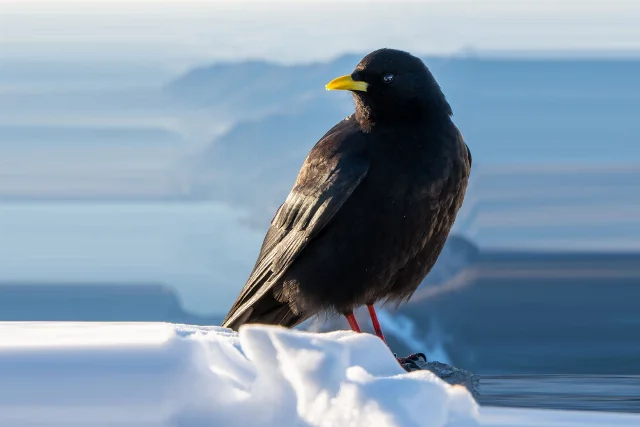
Measuring approximately 30-34 cm in length, the Steller's Jay is a medium-sized songbird with a silhouette that is unmistakable. The most striking feature of this bird is its intense coloration, which transitions from a deep, velvety black on the head, crest, and upper back to a brilliant, iridescent blue on the wings, tail, and underparts. The black head is adorned with a prominent, expressive crest that the bird can raise or lower depending on its mood, often serving as a signal during social interactions. The bill is strong, dark, and slightly hooked, perfectly adapted for manipulating nuts, seeds, and insects. Their wings are broad and rounded, allowing for agile flight through dense forest canopies. Unlike many other species, there is little sexual dimorphism in the Steller's Jay, meaning males and females look nearly identical. Their feet are robust and equipped with sharp, curved claws, which are essential for perching on vertical tree trunks and maneuvering through branches. The combination of their bold color pattern, sleek aerodynamic shape, and large, dark eyes gives them a look of perpetual alertness and intelligence.
Habitat
The Steller's Jay is primarily a bird of high-altitude environments, favoring coniferous and mixed-coniferous forests. They are widely distributed across western North America, ranging from southern Alaska down through the Rocky Mountains and into the high mountain ranges of Central America. They are most commonly found in regions dominated by pine, spruce, fir, and hemlock trees, which provide both nesting sites and a consistent food supply. Unlike many migratory species, the Steller's Jay is largely a permanent resident throughout its range, though some populations may move to lower elevations during the harsh winter months to escape heavy snowpack. They are highly comfortable in mountainous terrain and are frequently spotted near mountain streams, forest edges, and even suburban gardens that border wild woodland areas.
Diet
As an opportunistic omnivore, the Steller's Jay has a highly varied and flexible diet. They are expert foragers, spending much of their time searching for food both in the canopy and on the forest floor. Their diet consists largely of seeds, nuts, berries, and various fruits. During the autumn, they are particularly known for caching acorns and pine seeds, which helps sustain them throughout the winter. Beyond plant matter, they are aggressive predators and scavengers, regularly consuming insects, eggs, nestlings of other birds, and even small reptiles. This varied diet allows them to survive in environments where food sources might be seasonal or scarce. They are also known to frequent bird feeders, where they show a particular preference for peanuts, sunflower seeds, and suet, often asserting their dominance over smaller birds.
Breeding and Nesting
Breeding for the Steller's Jay typically begins in the early spring, as temperatures rise and food becomes more available. These birds are monogamous and often form long-term pair bonds. The nesting process is a collaborative effort, with both the male and female involved in selecting a site, usually located in the dense branches of a conifer tree, often several meters above the ground. The nest itself is a substantial, cup-shaped structure built from twigs, mud, and lined with soft materials like pine needles, moss, or animal hair. The female typically lays a clutch of three to five pale blue or green eggs, which are lightly speckled with brown. While the female handles the majority of the incubation, which lasts about 16 to 18 days, the male is responsible for bringing food to the nest. Once the chicks hatch, both parents work tirelessly to provide protein-rich insects to support their rapid growth, with the fledglings leaving the nest after about three weeks.
Behavior
Steller's Jays are highly social and intelligent creatures known for their complex behavioral patterns. They are extremely vocal and possess a wide repertoire of calls, including a harsh, raspy 'shack-shack-shack' alarm call that alerts other forest inhabitants to the presence of predators like hawks or cats. Interestingly, they are also skilled mimics and can imitate the calls of other birds, such as Red-tailed Hawks, to clear an area of competitors. They are bold and curious, often showing little fear of humans, which has earned them a reputation as 'camp robbers' in mountain picnic areas. Their social hierarchy is well-defined, and they often engage in aggressive posturing and displays to defend their territory or food sources from rivals.
Conservation Status - LC Least Concern
The Steller's Jay is currently classified as a species of Least Concern by the IUCN. Their populations are stable and widespread, largely due to their ability to adapt to human-modified landscapes. While they face natural threats from habitat loss and predation, they have successfully integrated into suburban environments, which has helped maintain their numbers. Conservation efforts focus primarily on protecting old-growth and mature coniferous forests, which are essential for their long-term survival. Their resilience and ability to forage in diverse habitats ensure that they remain one of the most common and visible birds in the American West.
Interesting Facts
- Steller's Jays are known to cache thousands of seeds per season to survive the winter.
- They are capable of mimicking the sounds of other species, including squirrels and raptors.
- The crest on their head is a key indicator of their emotional state; it stays erect when they are excited or aggressive.
- They share a close genetic relationship with the Blue Jay, but are the only crested jay in the western United States.
- These birds are known to be quite bold and will often approach humans for food scraps at campsites.
- Despite their aggressive nature, they are highly devoted parents that protect their nests fiercely.
Tips for Birdwatchers
To successfully spot a Steller's Jay, focus your search on coniferous forests in the western regions of North America. They are most active during the early morning and late afternoon hours. Because they are curious and vocal, listening for their distinct, harsh calls is often the best way to locate them before you see them. If you are birdwatching in a mountain park or campground, stay quiet and observe areas near picnic tables or bird feeders, as they are often attracted to human activity. Using binoculars with a wide field of view will help you track them as they move quickly between tree branches. Patience is key; if you remain still, their natural curiosity may lead them to investigate you, providing excellent opportunities for photography and observation. Remember to keep a respectful distance and avoid feeding them human food to ensure their wild behavior remains intact.
Pro-Tip: To spot this bird in dense forest canopy, a 8x42 binoculars or telescope is highly recommended.
- [Check out our top recommended gear here]
Pro-Tip: To capture the stunning beauty of this bird, a high-quality wildlife camera and lens are highly recommended.
- [Check out best wildlife cameras here]
Conclusion
The Steller's Jay is more than just a beautiful bird; it is a vital component of the western forest ecosystem. With their striking black and blue plumage, intelligence, and complex social behaviors, they offer endless fascination for bird enthusiasts and scientists alike. Whether they are acting as forest sentinels by warning others of predators or showcasing their problem-solving skills at a backyard feeder, these birds demonstrate the incredible adaptability of the corvid family. Protecting the habitats where they thrive ensures that future generations can continue to enjoy the sight and sound of these charismatic jays in the wild. As we continue to learn more about their social structures and survival strategies, the Steller's Jay serves as a reminder of the beauty and complexity of the natural world. If you find yourself in the mountainous regions of the West, take a moment to look up into the evergreen canopy; you are almost certain to encounter this bold, beautiful bird, and in doing so, you will gain a deeper appreciation for the biodiversity that defines our western landscapes. Their enduring presence is a testament to the resilience of nature in the face of a changing world.

200 Follower
is a writer who draws. He’s the Bestselling author of “Number of The Year”. Donec vitae tortor efficitur, convallis lelobortis elit.
Recent Posts




Subscribe For Daily Newsletter