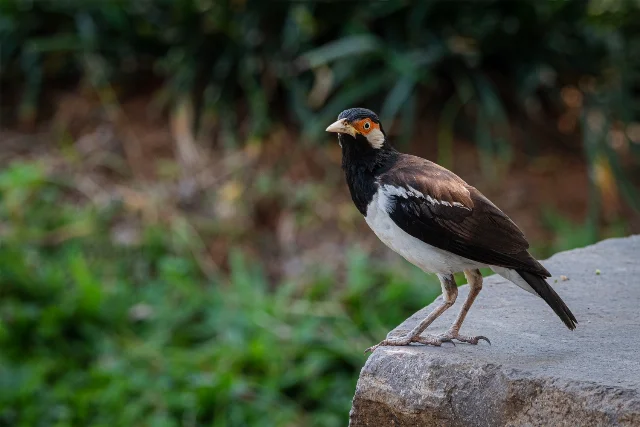
Perching Birds
avatar
Photo by Admin
Not available

Banded Wren

Thryophilus pleurostictus

Last update: 23 Jun 2026

Banded Wren 的基本信息

Scientific NameThryophilus pleurostictus
Status LC 无危
Size14-16 cm (6-6 inch)
Colors
Brown
White
Type
Perching Birds
type
FamilyWrens

简介

带纹鹪鹩 (Banded Wren),学名为 Thryophilus pleurostictus,是鹪鹩科中极具特色的一种小型鸣禽。这种鸟类主要分布于中美洲的干燥森林和灌木丛中,以其悦耳的歌声和独特的横纹羽毛而闻名。作为一种典型的栖木鸟类,带纹鹪鹩在生态系统中扮演着重要的角色,通过捕食昆虫来控制害虫数量。对于观鸟爱好者和鸟类学者而言,研究带纹鹪鹩不仅能了解热带鸟类的生活方式,还能深入探讨栖息地变迁对物种分布的影响。尽管它们体型较小,但其机敏的性格和复杂的鸣叫声使其成为观鸟界的焦点之一。本文将为您详细剖析这种迷人鸟类的各个方面,从其独特的生理构造到其繁衍后代的策略,带您全面认识这一自然界的歌唱家。

外貌特征

带纹鹪鹩的体长约为 14 到 16 厘米,属于中小型鸣禽。其外观的主要色彩为棕色,这种颜色为其在林间穿梭提供了天然的保护色。身体的腹部和侧翼则呈现出明显的白色,并夹杂着深色的横向条纹,这也是其被称为“带纹”鹪鹩的主要原因。这种条纹图案一直延伸至其胸部和侧腹,与其背部浓郁的棕色形成了鲜明的对比。它们的喙部细长且微微下弯,非常适合从树皮缝隙或叶片背面捕捉昆虫。此外,它们的尾羽较短,通常会向上翘起,这是鹪鹩科鸟类非常标志性的动作。眼睛周围有一条明显的眼纹,增强了其面部的轮廓感,使其在茂密的植被中依然具有很高的辨识度。整体而言,这种鸟类的羽毛质地紧密,能够很好地适应它们所处的半干旱气候环境。

栖息地

带纹鹪鹩主要栖息于中美洲的太平洋沿岸地区,分布范围从墨西哥南部一直延伸至哥斯达黎加。它们偏爱半干旱的落叶林、灌木丛生区域以及林缘地带。与许多喜欢湿润雨林的鸟类不同,带纹鹪鹩更适应干燥、多刺的植被环境。它们通常在较低的树层或灌木丛中活动,很少出现在高大的树冠层。这种选择不仅为它们提供了丰富的食物来源,还通过茂密的带刺植被为它们提供了躲避天敌的天然屏障。随着人类农业活动的扩张,带纹鹪鹩也在一定程度上适应了次生林和人工种植园边缘的环境。

饮食习性

作为一种典型的食虫鸟类,带纹鹪鹩的饮食结构非常依赖于其栖息环境中的昆虫多样性。它们主要以各种小型昆虫、蜘蛛、毛虫以及其他无脊椎动物为食。在寻找食物时,带纹鹪鹩表现出极强的耐心和敏锐度,它们会利用细长的喙部在树干的裂缝、卷曲的叶片以及茂密的草丛中进行搜寻,捕捉那些藏匿其中的猎物。偶尔,它们也会摄入少量的浆果或种子作为补充营养。这种食性不仅维持了它们的能量需求,也在维持当地森林生态平衡方面起到了不可忽视的作用,有效地抑制了害虫的过度繁殖。

繁殖与筑巢

带纹鹪鹩的繁殖季节通常与当地的雨季重合,这时食物资源最为丰富。它们倾向于在离地面较低的树杈或灌木丛中筑巢。巢穴的形状通常呈球形或长瓶状,入口位于侧面,这种设计能有效防止掠食者进入并抵御恶劣天气。筑巢材料多采用草茎、细枝、苔藓以及蜘蛛丝,内衬则会使用柔软的羽毛或兽毛。通常由雌鸟负责主要的筑巢工作,雄鸟则在周围警戒并发出鸣叫。每窝产卵通常为 3 到 5 枚,孵化期持续约两周。雏鸟出生后,雌雄双方会共同参与育雏,频繁往返于巢穴与觅食地之间,直到幼鸟能够独立飞行为止。

行为习性

带纹鹪鹩是一种非常机敏且好动的鸟类。它们在灌木丛中跳跃的速度极快,很难长时间保持静止。这种鸟类以其复杂的鸣叫声而闻名,雄鸟常会在清晨或黄昏时分站上高处,发表长篇的鸣唱,以宣示领地和吸引配偶。它们通常成对或以家庭为单位活动,具有较强的领地意识,一旦发现入侵者,会发出急促的警告叫声。尽管它们性格活泼,但在面对威胁时,它们懂得利用植被的掩护迅速消失,表现出极高的警觉性。

保护现状 - LC 无危

目前,带纹鹪鹩在世界自然保护联盟(IUCN)的红色名录中被列为“无危”(Least Concern)。尽管该物种在分布范围内表现出一定的适应性,能够利用部分次生林环境,但由于其栖息地受到农业开发、城市化进程以及森林退化的威胁,其种群数量仍需持续监测。保护其天然的干旱林生态系统,特别是维持植被的多样性,对于确保带纹鹪鹩的长期生存至关重要。目前尚未发现大规模的种群衰退,但生态环境的破碎化依然是一个潜在的隐忧。

趣闻轶事

  1. 带纹鹪鹩的鸣叫声非常复杂,被认为是鹪鹩科中歌声最动听的物种之一。
  2. 它们筑造的巢穴极其精密,具有良好的隐蔽性,能有效防御蛇类和小型哺乳动物的袭击。
  3. 带纹鹪鹩在寻找食物时,经常会检查每一片落叶的背面。
  4. 它们具有很强的领地意识,有时会为了保护领地而与其他小型鸟类发生争斗。
  5. 虽然名为“带纹”,但其条纹的密度在不同亚种之间存在明显的差异。
  6. 它们很少长距离飞行,更倾向于在灌木丛中短距离穿梭。

观鸟者提示

若想在野外一睹带纹鹪鹩的风采,建议前往墨西哥到哥斯达黎加一带的干燥灌木林。最佳的观鸟时间是清晨,此时是它们鸣叫最频繁、活动最活跃的时刻。由于它们体型较小且善于隐藏,建议携带高倍望远镜,并耐心观察灌木丛的低层区域。当听到清脆而复杂的鸣叫声时,不要急于靠近,保持安静并寻找鸣叫的源头。穿着与环境颜色相近的户外服装,可以减少对它们的干扰。同时,带纹鹪鹩对声音较敏感,避免使用过大的录音回放,以免破坏它们的自然行为模式。

结论

带纹鹪鹩 (Thryophilus pleurostictus) 作为中美洲干旱森林的代表性物种,不仅以其独特的羽色和悦耳的歌声吸引着无数观鸟爱好者,更在生态系统中发挥着不可替代的生物防治作用。通过对带纹鹪鹩的深入了解,我们不仅能领略到自然界生物进化的奇妙,也能深刻体会到保护栖息地对于维持生物多样性的重要意义。从它们精巧的筑巢技术到复杂的社会行为,每一点滴都展示了生命在严苛环境下的顽强与智慧。作为人类,我们有责任关注这些小型鸣禽的生存状态,通过科学研究与环境保护,确保它们那清脆的歌声能永远在森林中回荡。希望这份指南能为您提供有价值的参考,激发您对鸟类学的兴趣,并在未来的观鸟旅程中,带给您更多关于带纹鹪鹩的惊喜发现。保护自然,从认识身边的小生命开始,带纹鹪鹩正是这广阔自然画卷中不可或缺的一抹亮色。

Banded Wren 分布图与范围

The distribution map for this species will be available soon.

We are working with our official data partners to update this information.

Tag:

Share:

Previous
Next
avatar
{blogMain.author}
200 Follower
Follow
{blogMain.author} is a writer who draws. He’s the Bestselling author of “Number of The Year”. Donec vitae tortor efficitur, convallis lelobortis elit.
Subscribe For Daily Newsletter

Explore More Species in the Wrens Family

11-12 cm
Antioquia Wren
Thryophilus sernai
13-14 cm
Apolinar's Wren
Cistothorus apolinari
17-20 cm
Band-backed Wren
Campylorhynchus zonatus
Bar-winged Wood-wren
10-12 cm
Bar-winged Wood-wren
Henicorhina leucoptera
15-17 cm
Bay Wren
Cantorchilus nigricapillus
12-14 cm
Bewick's Wren
Thryomanes bewickii
17-19 cm
Bicolored Wren
Campylorhynchus griseus
15-17 cm
Black-bellied Wren
Pheugopedius fasciatoventris
13-14 cm
Black-throated Wren
Pheugopedius atrogularis
13-14 cm
Boucard's Wren
Campylorhynchus jocosus
12-13 cm
Buff-breasted Wren
Cantorchilus leucotis
18-22 cm
Cactus Wren
Campylorhynchus brunneicapillus
14-15 cm
Canebrake Wren
Cantorchilus zeledoni
13-16 cm
Canyon Wren
Catherpes mexicanus
12-15 cm
Carolina Wren
Thryothorus ludovicianus
Clarion Wren
12-14 cm
Clarion Wren
Troglodytes tanneri
Cobb's Wren
10-12 cm
Cobb's Wren
Troglodytes cobbi
Colombian Wren
14-15 cm
Colombian Wren
Pheugopedius columbianus
13-15 cm
Coraya Wren
Pheugopedius coraya
12-14 cm
Cozumel Wren
Troglodytes beani
17-20 cm
Fasciated Wren
Campylorhynchus fasciatus
Fawn-breasted Wren
13-14 cm
Fawn-breasted Wren
Cantorchilus guarayanus
14-16 cm
Flutist Wren
Microcerculus ustulatus
Fulvous Wren
17-19 cm
Fulvous Wren
Cinnycerthia fulva
20-22 cm
Giant Wren
Campylorhynchus chiapensis
10-13 cm
Grass Wren
Cistothorus platensis
Grey Wren
12-13 cm
Grey Wren
Cantorchilus griseus
Grey-barred Wren
18-20 cm
Grey-barred Wren
Campylorhynchus megalopterus
11-13 cm
Grey-breasted Wood-wren
Henicorhina leucophrys
Grey-browed Wren
14-15 cm
Grey-browed Wren
Pheugopedius schulenbergi
Grey-mantled Wren
14-16 cm
Grey-mantled Wren
Odontorchilus branickii
11-12 cm
Happy Wren
Pheugopedius felix
Hermit Wood-wren
9-11 cm
Hermit Wood-wren
Henicorhina anachoreta
11-13 cm
House Wren
Troglodytes aedon
Inca Wren
12-13 cm
Inca Wren
Pheugopedius eisenmanni
Long-billed Wren
15-17 cm
Long-billed Wren
Cantorchilus longirostris
Maranon Wren
12-13 cm
Maranon Wren
Pheugopedius sclateri
10-13 cm
Marsh Wren
Cistothorus palustris
12-13 cm
Merida Wren
Cistothorus meridae
10-12 cm
Mountain Wren
Troglodytes solstitialis
14-15 cm
Moustached Wren
Pheugopedius genibarbis
10-12 cm
Munchique Wood-wren
Henicorhina negreti
14-15 cm
Musician Wren
Cyphorhinus arada
Nava's Wren
13-15 cm
Nava's Wren
Hylorchilus navai
Niceforo's Wren
15-16 cm
Niceforo's Wren
Thryophilus nicefori
Northern Chestnut-breasted Wren
11-13 cm
Northern Chestnut-breasted Wren
Cyphorhinus dichrous
11-13 cm
Northern Nightingale-wren
Microcerculus philomela
Northern Wren
9-11 cm
Northern Wren
Troglodytes troglodytes
10-11 cm
Ochraceous Wren
Troglodytes ochraceus
8-10 cm
Pacific Wren
Troglodytes pacificus
Peruvian Wren
13-14 cm
Peruvian Wren
Cinnycerthia peruana
13-14 cm
Plain Wren
Cantorchilus modestus
14-15 cm
Plain-tailed Wren
Pheugopedius euophrys
14-15 cm
Riverside Wren
Cantorchilus semibadius
14-16 cm
Rock Wren
Salpinctes obsoletus
12-14 cm
Rufous Wren
Cinnycerthia unirufa
13-14 cm
Rufous-and-white Wren
Thryophilus rufalbus
17-19 cm
Rufous-backed Wren
Campylorhynchus capistratus
14-16 cm
Rufous-breasted Wren
Pheugopedius rutilus
13-15 cm
Rufous-browed Wren
Troglodytes rufociliatus
Rufous-naped Wren
18-20 cm
Rufous-naped Wren
Campylorhynchus rufinucha
11-12 cm
Santa Marta Wren
Troglodytes monticola
12-14 cm
Sclater's Wren
Campylorhynchus humilis
10-12 cm
Sedge Wren
Cistothorus stellaris
11-12 cm
Sharpe's Wren
Cinnycerthia olivascens
12-13 cm
Sinaloa Wren
Thryophilus sinaloa
13-15 cm
Socorro Wren
Troglodytes sissonii
14-16 cm
Song Wren
Cyphorhinus phaeocephalus
12-13 cm
Sooty-headed Wren
Pheugopedius spadix
Southern Chestnut-breasted Wren
11-13 cm
Southern Chestnut-breasted Wren
Cyphorhinus thoracicus
11-13 cm
Southern Nightingale-wren
Microcerculus marginatus
Speckle-breasted Wren
11-12 cm
Speckle-breasted Wren
Pheugopedius paucimaculatus
13-15 cm
Spot-breasted Wren
Pheugopedius maculipectus
14-16 cm
Spotted Wren
Campylorhynchus gularis
Stripe-backed Wren
15-17 cm
Stripe-backed Wren
Campylorhynchus nuchalis
13-14 cm
Stripe-breasted Wren
Cantorchilus thoracicus
11-12 cm
Stripe-throated Wren
Cantorchilus leucopogon
13-15 cm
Sumichrast's Wren
Hylorchilus sumichrasti
Superciliated Wren
14-15 cm
Superciliated Wren
Cantorchilus superciliaris
12-13 cm
Tepui Wren
Troglodytes rufulus
18-22 cm
Thrush-like Wren
Campylorhynchus turdinus
11-12 cm
Timberline Wren
Thryorchilus browni
Tooth-billed Wren
13-15 cm
Tooth-billed Wren
Odontorchilus cinereus
Whiskered Wren
11-12 cm
Whiskered Wren
Pheugopedius mystacalis
12-13 cm
White-bellied Wren
Uropsila leucogastra
10-11 cm
White-breasted Wood-wren
Henicorhina leucosticta
11-12 cm
White-browed Wren
Thryothorus albinucha
16-18 cm
White-headed Wren
Campylorhynchus albobrunneus
Wing-banded Wren
11-13 cm
Wing-banded Wren
Microcerculus bambla
9-11 cm
Winter Wren
Troglodytes hiemalis
15-16 cm
Yucatan Wren
Campylorhynchus yucatanicus
Zapata Wren
15-16 cm
Zapata Wren
Ferminia cerverai