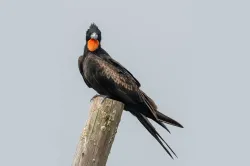
Perching Birds
avatar
Photo by Admin
Not available

Blanfords Rosefinch

Agraphospiza rubescens

Last update: 05 Mar 2026

Blanfords Rosefinch Basic Information

Scientific NameAgraphospiza rubescens
Status LC Least Concern
Size14-15 cm (6-6 inch)
Colors
Red
Brown
Type
Perching Birds
type
FamilyFinches

Introduction

The Blanford's Rosefinch, scientifically known as Agraphospiza rubescens, is a fascinating and elusive species of perching bird that captures the imagination of ornithologists and birdwatchers alike. Belonging to the Fringillidae family, this bird is primarily recognized for its distinctive coloration and its preference for the high-altitude environments of the Himalayas. Named after the naturalist William Thomas Blanford, this species represents a specialized niche within the avian world, having adapted to survive in some of the most rugged and challenging terrains on Earth. Understanding the Blanford's Rosefinch requires a look into its unique evolutionary history and its specific environmental requirements. As a member of the rosefinch group, it exhibits the typical charm associated with these birds, yet it remains distinct due to its specific plumage patterns and geographical distribution. This comprehensive guide explores every facet of this remarkable bird, from its physical characteristics to its complex breeding behaviors, ensuring that enthusiasts gain a deep appreciation for this mountain dweller.

Physical Appearance

Standing at a modest size of 14-15 cm, the Blanford's Rosefinch is a compact and agile bird. The most striking aspect of the male's appearance is its vibrant, deep red plumage, which serves as a visual hallmark of the species. This primary red color is often offset by subtle brown undertones, particularly on the wings and back, providing a degree of camouflage against the rocky, alpine landscape. The female, by contrast, typically exhibits a more muted, brownish-streaked plumage, which is essential for protection while nesting. Its beak is stout and well-adapted for cracking seeds, which is a common trait among perching birds in this family. The bird's overall structure is designed for efficient movement through dense shrubs and rocky crevices. Its tail is relatively short, and its wings are pointed, facilitating rapid, short-distance flights between feeding sites. Both sexes possess dark eyes and legs, completing their refined appearance. The intricate feather patterns, especially the transition from rich red to earthy brown, showcase the exquisite natural artistry of this high-altitude specialist.

Habitat

The Blanford's Rosefinch is primarily a high-altitude specialist, found predominantly in the Himalayan mountain ranges. Its habitat consists of alpine meadows, scrublands, and rocky slopes, often at elevations exceeding 3,000 meters. These birds are highly adapted to the thin air and cold temperatures characteristic of such environments. During the warmer months, they are often observed near the tree line or in areas with thick, low-lying vegetation that provides both food and shelter. In the winter, they may descend to slightly lower altitudes to avoid the most severe weather conditions, but they remain committed to rugged, mountainous terrains. Their ability to navigate these steep, often inaccessible landscapes is a testament to their evolutionary success in a harsh, unforgiving ecosystem.

Diet

The diet of the Blanford's Rosefinch is primarily herbivorous, consisting largely of a variety of seeds, buds, and small berries found within its alpine habitat. Their stout, conical beaks are perfectly evolved for husking seeds from hardy mountain grasses and dwarf shrubs. During the spring and summer, when food is more abundant, they may supplement their intake with small insects or larvae, which provide essential protein for growing nestlings. Foraging usually takes place on the ground or in low-lying bushes, where the birds move in small, cautious groups. Their foraging behavior is methodical, often spending significant time in one spot to ensure they extract the maximum nutritional value from available plant materials before moving on to the next patch.

Breeding and Nesting

Breeding for the Blanford's Rosefinch is a seasonal affair, dictated by the brief alpine summer. Nesting typically occurs in sheltered areas, such as rock crevices or deep within dense, low-growing shrubs to protect against the elements and predators. The nest is a cup-shaped structure meticulously constructed from fine grasses, moss, and animal hair, lined with softer materials to insulate the eggs. The female takes the lead in building the nest and incubating the eggs, while the male often patrols the surrounding territory to ward off potential intruders. Once the eggs hatch, both parents participate in feeding the chicks, bringing a steady supply of seeds and insects to support their rapid development. This high-investment parenting style is crucial for the survival of the offspring in the volatile mountain climate, where weather can shift rapidly and food availability remains unpredictable.

Behavior

Blanford's Rosefinches are generally shy and reserved birds, often displaying a cautious nature that makes them difficult to observe in the wild. They are typically found in small, loose flocks, especially during the non-breeding season, which helps them detect predators more effectively. Their flight is undulating and swift, allowing them to quickly disappear into the landscape if startled. They are not known to be highly vocal, but they do emit soft, melodic calls that serve to communicate within the flock or between mates. Their behavior is largely centered on foraging and maintaining social bonds, with a clear hierarchy often established within their small groups to minimize conflict during the competitive search for food in the harsh alpine environment.

Conservation Status - LC Least Concern

Currently, the Blanford's Rosefinch is not listed as a species of immediate global concern, but its status requires careful monitoring due to the localized nature of its population. The primary threat to this species is the loss of habitat caused by climate change, which is rapidly altering the delicate alpine ecosystems of the Himalayas. Rising temperatures are shifting the tree line upward, potentially shrinking the specialized environment this bird requires to survive. Conservation efforts should focus on protecting these high-altitude ranges from human encroachment and environmental degradation, ensuring that these beautiful birds continue to thrive in their natural, rugged homes.

Interesting Facts

  1. The Blanford's Rosefinch is named after the renowned British zoologist William Thomas Blanford.
  2. They are highly specialized to live at extreme altitudes, rarely venturing below the tree line.
  3. The males display a stunning 'rose-red' color that helps them attract mates during the breeding season.
  4. Their small, stout beaks are specialized tools for processing tough alpine seeds.
  5. They often seek shelter in rock crevices to survive the sub-zero temperatures of the Himalayas.
  6. Despite their striking color, they are masters of camouflage in rocky, brown-toned terrains.
  7. They are considered a 'jewel' of the high Himalayas by dedicated birdwatchers.

Tips for Birdwatchers

To spot the elusive Blanford's Rosefinch, patience and proper preparation are paramount. Birdwatchers should plan trips to high-altitude Himalayan regions during the summer months, when the birds are more active and visible. It is essential to use high-quality binoculars or a spotting scope, as these birds are often wary and will fly off at the slightest disturbance. Focus your search on alpine scrublands and rocky slopes, keeping an eye out for small, reddish flashes of color against the brown mountain backdrop. Early morning is the best time for observation, as the birds are most active while foraging. Always maintain a respectful distance and avoid using playback calls, as this can stress the birds during their critical breeding period. Recording the location and behavior of your sightings can contribute valuable data to ongoing ornithological research.

Pro-Tip: To spot this bird in dense forest canopy, a 8x42 binoculars or telescope is highly recommended.
- [Check out our top recommended gear here]

Conclusion

In conclusion, the Blanford's Rosefinch (Agraphospiza rubescens) stands as a testament to the resilience and beauty of avian life in the most extreme environments. From its vibrant red plumage to its specialized feeding habits and complex nesting behaviors, this bird is a truly remarkable subject for study. While it remains a relatively rare and elusive species, the knowledge we possess about it highlights the importance of preserving high-altitude habitats. For birdwatchers, catching a glimpse of this rosefinch in its natural, rugged domain is a rewarding experience that underscores the diversity of our planet’s birdlife. As we continue to face global environmental challenges, the survival of specialized species like the Blanford's Rosefinch serves as a reminder of the need for dedicated conservation and ongoing research. By respecting their habitat and supporting efforts to mitigate the impacts of climate change, we can ensure that future generations will also have the opportunity to marvel at these extraordinary creatures. The Blanford's Rosefinch is not just a bird; it is a symbol of the wild, untouched beauty of the Himalayas, deserving of our admiration and protection.

Blanfords Rosefinch Distribution Map & Range

Official Distribution Data provided by
BirdLife International and Handbook of the Birds of the World (2025)

Tag:

Share:

Explore More Species in the Finches Family

11-13 cm
Abyssinian Citril
Crithagra citrinelloides
African Crimson-winged Finch
13-15 cm
African Crimson-winged Finch
Rhodopechys alienus
Akekee
10-11 cm
Akekee
Loxops caeruleirostris
Akiapolaau
13-15 cm
Akiapolaau
Hemignathus wilsoni
Akikiki
11-13 cm
Akikiki
Oreomystis bairdi
Akohekohe
17-18 cm
Akohekohe
Palmeria dolei
11-14 cm
American Goldfinch
Spinus tristis
11-13 cm
Andean Siskin
Spinus spinescens
Anianiau
9-11 cm
Anianiau
Magumma parva
11-12 cm
Ankober Serin
Crithagra ankoberensis
Antillean Siskin
10-11 cm
Antillean Siskin
Spinus dominicensis
Apapane
13-14 cm
Apapane
Himatione sanguinea
Arabian Grosbeak
16-18 cm
Arabian Grosbeak
Rhynchostruthus percivali
Arabian Serin
11-12 cm
Arabian Serin
Crithagra rothschildi
14-16 cm
Asian Rosy-finch
Leucosticte arctoa
15-17 cm
Azores Bullfinch
Pyrrhula murina
14-16 cm
Beautiful Rosefinch
Carpodacus pulcherrimus
Black Mamo
20-23 cm
Black Mamo
Drepanis funerea
14-16 cm
Black Rosy-finch
Leucosticte atrata
11-13 cm
Black Siskin
Spinus atratus
20-22 cm
Black-and-yellow Grosbeak
Mycerobas icterioides
10-12 cm
Black-capped Siskin
Spinus atriceps
10-12 cm
Black-chinned Siskin
Spinus barbatus
Black-eared Seedeater
10-12 cm
Black-eared Seedeater
Crithagra mennelli
Black-faced Canary
11-13 cm
Black-faced Canary
Crithagra capistrata
12-13 cm
Black-headed Canary
Serinus alario
Black-headed Greenfinch
13-15 cm
Black-headed Greenfinch
Chloris ambigua
10-12 cm
Black-headed Siskin
Spinus notatus
11-13 cm
Black-throated Canary
Crithagra atrogularis
11-13 cm
Blue-crowned Chlorophonia
Chlorophonia occipitalis
11-13 cm
Blue-naped Chlorophonia
Chlorophonia cyanea
15-17 cm
Bonin Grosbeak
Carpodacus ferreorostris
14-16 cm
Brambling
Fringilla montifringilla
16-18 cm
Brandts Mountain-finch
Leucosticte brandti
15-16 cm
Brimstone Canary
Crithagra sulphurata
10-12 cm
Bronze-green Euphonia
Euphonia mesochrysa
16-17 cm
Brown Bullfinch
Pyrrhula nipalensis
14-16 cm
Brown-capped Rosy-finch
Leucosticte australis
Brown-rumped Seedeater
11-13 cm
Brown-rumped Seedeater
Crithagra tristriata
13-15 cm
Cape Canary
Serinus canicollis
12-14 cm
Cape Siskin
Crithagra totta
15-17 cm
Cassin's Finch
Haemorhous cassinii
10-12 cm
Chestnut-bellied Euphonia
Euphonia pectoralis
11-12 cm
Chestnut-breasted Chlorophonia
Chlorophonia pyrrhophrys
18-20 cm
Chinese Grosbeak
Eophona migratoria
Chinese Long-tailed Rosefinch
16-18 cm
Chinese Long-tailed Rosefinch
Carpodacus lepidus
Chinese White-browed Rosefinch
15-17 cm
Chinese White-browed Rosefinch
Carpodacus dubius
11-12 cm
Citril Finch
Carduelis citrinella
22-24 cm
Collared Grosbeak
Mycerobas affinis
14-16 cm
Common Chaffinch
Fringilla coelebs
13-14 cm
Common Linnet
Linaria cannabina
13-15 cm
Common Rosefinch
Carpodacus erythrinus
11-12 cm
Corsican Finch
Carduelis corsicana
19-21 cm
Crimson-browed Finch
Carpodacus subhimachalus
15-17 cm
Dark-breasted Rosefinch
Procarduelis nipalensis
15-16 cm
Dark-rumped Rosefinch
Carpodacus edwardsii
14-15 cm
Desert Finch
Rhodospiza obsoleta
12-14 cm
Drakensberg Siskin
Crithagra symonsi
11-13 cm
East African Citril
Crithagra hyposticta
Elegant Euphonia
10-11 cm
Elegant Euphonia
Euphonia elegantissima
11-12 cm
Ethiopian Siskin
Serinus nigriceps
14-19 cm
Eurasian Bullfinch
Pyrrhula pyrrhula
Eurasian Crimson-winged Finch
15-17 cm
Eurasian Crimson-winged Finch
Rhodopechys sanguineus
11-13 cm
Eurasian Siskin
Spinus spinus
12-13 cm
European Goldfinch
Carduelis carduelis
14-16 cm
European Greenfinch
Chloris chloris
11-12 cm
European Serin
Serinus serinus
16-22 cm
Evening Grosbeak
Hesperiphona vespertina
Finsch's Euphonia
9-10 cm
Finsch's Euphonia
Euphonia finschi
11-13 cm
Forest Canary
Crithagra scotops
9-11 cm
Fulvous-vented Euphonia
Euphonia fulvicrissa
13-15 cm
Gold-naped Finch
Pyrrhoplectes epauletta
10-11 cm
Golden-browed Chlorophonia
Chlorophonia callophrys
Golden-rumped Euphonia
9-11 cm
Golden-rumped Euphonia
Euphonia cyanocephala
Golden-sided Euphonia
10-12 cm
Golden-sided Euphonia
Euphonia cayennensis
15-17 cm
Gran Canaria Blue Chaffinch
Fringilla polatzeki
19-21 cm
Great Rosefinch
Carpodacus rubicilla
Greater Amakihi
10-12 cm
Greater Amakihi
Viridonia sagittirostris
Greater Koa-finch
19-20 cm
Greater Koa-finch
Rhodacanthis palmeri
Green-throated Euphonia
10-11 cm
Green-throated Euphonia
Euphonia chalybea
12-13 cm
Grey-capped Goldfinch
Carduelis caniceps
14-16 cm
Grey-crowned Rosy-Finch
Leucosticte tephrocotis
15-17 cm
Grey-headed Bullfinch
Pyrrhula erythaca
Hawaii Akepa
10-11 cm
Hawaii Akepa
Loxops coccineus
Hawaii Akialoa
17-19 cm
Hawaii Akialoa
Akialoa obscura
Hawaii Amakihi
10-11 cm
Hawaii Amakihi
Chlorodrepanis virens
Hawaii Creeper
11-12 cm
Hawaii Creeper
Manucerthia mana
Hawaii Mamo
20-23 cm
Hawaii Mamo
Drepanis pacifica
16-18 cm
Hawfinch
Coccothraustes coccothraustes
17-18 cm
Himalayan White-browed Rosefinch
Carpodacus thura
Hispaniolan Crossbill
15-17 cm
Hispaniolan Crossbill
Loxia megaplaga
Hispaniolan Euphonia
10-11 cm
Hispaniolan Euphonia
Euphonia musica
18-20 cm
Hooded Grosbeak
Hesperiphona abeillei
10-12 cm
Hooded Siskin
Spinus magellanicus
13-15 cm
House Finch
Haemorhous mexicanus
Iiwi
15-15 cm
Iiwi
Drepanis coccinea
12-13 cm
Island Canary
Serinus canaria
Jamaican Euphonia
10-11 cm
Jamaican Euphonia
Euphonia jamaica
22-23 cm
Japanese Grosbeak
Eophona personata
Kakawahie
11-12 cm
Kakawahie
Paroreomyza flammea
Kauai Akialoa
17-19 cm
Kauai Akialoa
Akialoa stejnegeri
10-11 cm
Kauai Amakihi
Chlorodrepanis stejnegeri
Kauai Nukupuu
13-15 cm
Kauai Nukupuu
Hemignathus hanapepe
11-13 cm
Kipengere Seedeater
Crithagra melanochroa
Kona Grosbeak
19-20 cm
Kona Grosbeak
Chloridops kona
Lanai Akialoa
17-19 cm
Lanai Akialoa
Akialoa lanaiensis
Lanai Hookbill
16-18 cm
Lanai Hookbill
Dysmorodrepanis munroi
10-12 cm
Lawrence's Goldfinch
Spinus lawrencei
Laysan Finch
15-16 cm
Laysan Finch
Telespiza cantans
Laysan Honeycreeper
10-11 cm
Laysan Honeycreeper
Himatione fraithii
Lemon-breasted Canary
11-12 cm
Lemon-breasted Canary
Crithagra citrinipectus
Lesser Antillean Euphonia
10-11 cm
Lesser Antillean Euphonia
Euphonia flavifrons
9-12 cm
Lesser Goldfinch
Spinus psaltria
Lesser Koa-finch
17-18 cm
Lesser Koa-finch
Rhodacanthis flaviceps
Malay Bullfinch
16-17 cm
Malay Bullfinch
Pyrrhula waterstradti
Maui Akepa
10-11 cm
Maui Akepa
Loxops ochraceus
Maui Alauahio
10-11 cm
Maui Alauahio
Paroreomyza montana
Maui Nukupuu
13-15 cm
Maui Nukupuu
Hemignathus affinis
Maui Parrotbill
13-15 cm
Maui Parrotbill
Pseudonestor xanthophrys
Mindanao Serin
10-11 cm
Mindanao Serin
Chrysocorythus mindanensis
14-15 cm
Mongolian Finch
Bucanetes mongolicus
Mountain Serin
12-14 cm
Mountain Serin
Chrysocorythus estherae
Nihoa Finch
15-17 cm
Nihoa Finch
Telespiza ultima
14-16 cm
Northern Grosbeak-canary
Crithagra donaldsoni
Oahu Akepa
10-11 cm
Oahu Akepa
Loxops wolstenholmei
Oahu Akialoa
17-19 cm
Oahu Akialoa
Akialoa ellisiana
Oahu Alauahio
10-11 cm
Oahu Alauahio
Paroreomyza maculata
Oahu Amakihi
10-11 cm
Oahu Amakihi
Chlorodrepanis flava
Oahu Nukupuu
13-15 cm
Oahu Nukupuu
Hemignathus lucidus
Olivaceous Siskin
10-11 cm
Olivaceous Siskin
Spinus olivaceus
10-12 cm
Olive-backed Euphonia
Euphonia gouldi
13-15 cm
Orange Bullfinch
Pyrrhula aurantiaca
10-12 cm
Orange-bellied Euphonia
Euphonia xanthogaster
Orange-crowned Euphonia
10-11 cm
Orange-crowned Euphonia
Euphonia saturata
14-16 cm
Oriental Greenfinch
Chloris sinica
11-13 cm
Oriole Finch
Linurgus olivaceus
Ou
16-18 cm
Ou
Psittirostra psittacea
14-16 cm
Pale Rosefinch
Carpodacus stoliczkae
Palila
17-19 cm
Palila
Loxioides bailleui
15-17 cm
Pallas's Rosefinch
Carpodacus roseus
12-13 cm
Papyrus Canary
Crithagra koliensis
16-18 cm
Parrot Crossbill
Loxia pytyopsittacus
20-25 cm
Pine Grosbeak
Pinicola enucleator
11-14 cm
Pine Siskin
Spinus pinus
13-14 cm
Pink-browed Rosefinch
Carpodacus rodochroa
Pink-rumped Rosefinch
14-16 cm
Pink-rumped Rosefinch
Carpodacus waltoni
14-15 cm
Plain Mountain-finch
Leucosticte nemoricola
Plumbeous Euphonia
9-10 cm
Plumbeous Euphonia
Euphonia plumbea
Poo-uli
13-14 cm
Poo-uli
Melamprosops phaeosoma
11-13 cm
Principe Seedeater
Crithagra rufobrunnea
13-14 cm
Protea Canary
Crithagra leucoptera
Puerto Rican Euphonia
10-11 cm
Puerto Rican Euphonia
Euphonia sclateri
12-16 cm
Purple Finch
Haemorhous purpureus
10-11 cm
Purple-throated Euphonia
Euphonia chlorotica
14-20 cm
Red Crossbill
Loxia curvirostra
10-11 cm
Red Siskin
Spinus cucullatus
19-21 cm
Red-fronted Rosefinch
Carpodacus puniceus
11-12 cm
Red-fronted Serin
Serinus pusillus
15-17 cm
Red-headed Bullfinch
Pyrrhula erythrocephala
17-18 cm
Red-mantled Rosefinch
Carpodacus rhodochlamys
11-14 cm
Redpoll
Acanthis flammea
Reichard's Seedeater
12-13 cm
Reichard's Seedeater
Crithagra reichardi
10-12 cm
Reichenow's Seedeater
Crithagra reichenowi
10-12 cm
Rufous-bellied Euphonia
Euphonia rufiventris
Saffron Siskin
10-12 cm
Saffron Siskin
Spinus siemiradzkii
11-12 cm
Salvadori's Seedeater
Crithagra xantholaema
17-19 cm
Sao Tome Grosbeak
Crithagra concolor
14-15 cm
Scarlet Finch
Carpodacus sipahi
Scottish Crossbill
15-17 cm
Scottish Crossbill
Loxia scotica
10-11 cm
Scrub Euphonia
Euphonia affinis
Sharpe's Rosefinch
15-16 cm
Sharpe's Rosefinch
Carpodacus verreauxii
15-17 cm
Siberian Long-tailed Rosefinch
Carpodacus sibiricus
Sillem's Rosefinch
15-16 cm
Sillem's Rosefinch
Carpodacus sillemi
Sinai Rosefinch
13-15 cm
Sinai Rosefinch
Carpodacus synoicus
Socotra Grosbeak
15-16 cm
Socotra Grosbeak
Rhynchostruthus socotranus
17-19 cm
Somali Grosbeak
Rhynchostruthus louisae
Southern Grosbeak-canary
14-16 cm
Southern Grosbeak-canary
Crithagra buchanani
17-18 cm
Spectacled Finch
Callacanthis burtoni
9-10 cm
Spot-crowned Euphonia
Euphonia imitans
20-22 cm
Spot-winged Grosbeak
Mycerobas melanozanthos
16-18 cm
Spot-winged Rosefinch
Carpodacus rodopeplus
19-21 cm
Streaked Rosefinch
Carpodacus rubicilloides
13-15 cm
Streaky Seedeater
Crithagra striolata
13-15 cm
Streaky-headed Seedeater
Crithagra gularis
12-14 cm
Stripe-breasted Seedeater
Crithagra striatipectus
Syrian Serin
12-13 cm
Syrian Serin
Serinus syriacus
Taiwan Rosefinch
14-16 cm
Taiwan Rosefinch
Carpodacus formosanus
9-10 cm
Tawny-capped Euphonia
Euphonia anneae
16-18 cm
Tenerife Blue Chaffinch
Fringilla teydea
10-11 cm
Thick-billed Euphonia
Euphonia laniirostris
13-15 cm
Thick-billed Seedeater
Crithagra burtoni
Thick-billed Siskin
12-14 cm
Thick-billed Siskin
Spinus crassirostris
17-19 cm
Three-banded Rosefinch
Carpodacus trifasciatus
Tibetan Rosefinch
17-19 cm
Tibetan Rosefinch
Carpodacus roborowskii
10-12 cm
Tibetan Siskin
Spinus thibetanus
Trinidad Euphonia
10-11 cm
Trinidad Euphonia
Euphonia trinitatis
12-15 cm
Trumpeter Finch
Bucanetes githagineus
13-14 cm
Twite
Linaria flavirostris
15-17 cm
Two-barred Crossbill
Loxia leucoptera
Ula-ai-hawane
13-14 cm
Ula-ai-hawane
Ciridops anna
10-11 cm
Velvet-fronted Euphonia
Euphonia concinna
Vietnamese Greenfinch
13-15 cm
Vietnamese Greenfinch
Chloris monguilloti
13-16 cm
Vinaceous Rosefinch
Carpodacus vinaceus
10-12 cm
Violaceous Euphonia
Euphonia violacea
13-14 cm
Warsangli Linnet
Linaria johannis
West African Seedeater
10-12 cm
West African Seedeater
Crithagra canicapilla
11-12 cm
White-bellied Canary
Crithagra dorsostriata
White-cheeked Bullfinch
15-17 cm
White-cheeked Bullfinch
Pyrrhula leucogenis
10-11 cm
White-lored Euphonia
Euphonia chrysopasta
11-12 cm
White-rumped Seedeater
Crithagra leucopygia
13-15 cm
White-throated Canary
Crithagra albogularis
10-11 cm
White-vented Euphonia
Euphonia minuta
21-23 cm
White-winged Grosbeak
Mycerobas carnipes
12-13 cm
Yellow Canary
Crithagra flaviventris
10-12 cm
Yellow-bellied Siskin
Spinus xanthogastrus
12-14 cm
Yellow-breasted Greenfinch
Chloris spinoides
Yellow-browed Citril
11-13 cm
Yellow-browed Citril
Crithagra frontalis
10-12 cm
Yellow-collared Chlorophonia
Chlorophonia flavirostris
Yellow-crowned Canary
11-12 cm
Yellow-crowned Canary
Serinus flavivertex
10-11 cm
Yellow-crowned Euphonia
Euphonia luteicapilla
10-12 cm
Yellow-faced Siskin
Spinus yarrellii
12-13 cm
Yellow-fronted Canary
Crithagra mozambica
Yellow-rumped Seedeater
11-13 cm
Yellow-rumped Seedeater
Crithagra xanthopygia
Yellow-rumped Siskin
10-12 cm
Yellow-rumped Siskin
Spinus uropygialis
10-12 cm
Yellow-throated Euphonia
Euphonia hirundinacea
13-15 cm
Yellow-throated Seedeater
Crithagra flavigula
Yemen Linnet
12-14 cm
Yemen Linnet
Linaria yemenensis
Yemen Serin
11-12 cm
Yemen Serin
Crithagra menachensis