Chopi Blackbird Distribution Map & Range
The distribution map for this species will be available soon.
We are working with our official data partners to update this information.

Sign in with your Google account to access all features

| Scientific Name | Gnorimopsar chopi |
|---|---|
| Status | LC Least Concern |
| Size | 23-25 cm (9-10 inch) |
| Colors |
Black
Brown
|
| Type |
Perching Birds

|
| Family | New World blackbirds |
The Chopi Blackbird (Gnorimopsar chopi) is a fascinating member of the Icteridae family, widely recognized for its sleek appearance and melodious vocalizations across South America. As a distinct species of perching bird, it has successfully adapted to a variety of environments, ranging from open woodlands to agricultural landscapes. Known for its social nature and intelligent behavior, the Chopi Blackbird is a common sight for birdwatchers in its native range, which spans countries like Brazil, Argentina, Bolivia, and Paraguay. Ornithologists often study this species due to its complex social structures and its unique ability to thrive in human-altered habitats. Unlike some more elusive forest-dwelling birds, the Chopi Blackbird is frequently seen foraging on the ground, making it an accessible subject for those interested in studying neotropical avian life. Throughout this guide, we will delve into the biological characteristics, ecological roles, and conservation status of this remarkable blackbird, providing a comprehensive overview for bird enthusiasts and researchers alike.
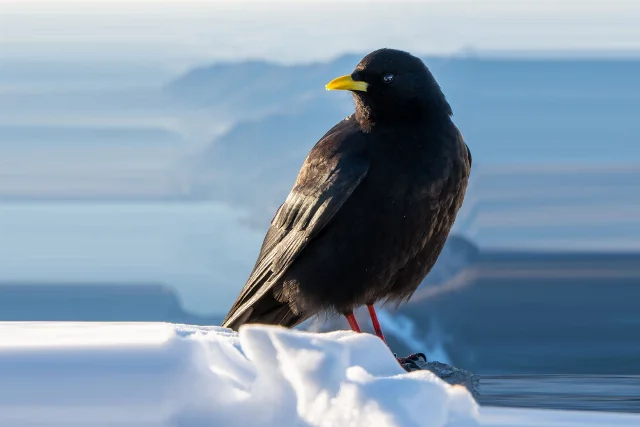
The Chopi Blackbird is a medium-sized perching bird, typically measuring between 23 and 25 cm in length. Its plumage is predominantly a deep, glossy black, which gives the bird a sophisticated and uniform appearance. While the primary color is black, closer inspection reveals subtle brown or dark gray undertones, particularly in the flight feathers and secondary wing coverts. The bird features a strong, pointed, and slightly curved bill, which is perfectly adapted for its varied diet of insects and fruits. Its eyes are dark, complemented by a sharp gaze that reflects its alert nature. The legs and feet are robust and dark, designed for efficient perching on branches as well as walking on the ground. There is very little sexual dimorphism in this species, meaning both males and females share the same striking coloration, although males may appear slightly larger in some populations. The overall build of the Chopi Blackbird is sturdy, reflecting its active lifestyle and its status as a resilient inhabitant of diverse ecosystems.
The Chopi Blackbird is highly versatile when it comes to habitat selection, which has contributed to its widespread distribution across South America. It is primarily found in open and semi-open landscapes, including savannahs, gallery forests, and woodland edges. Unlike deep-forest species, the Chopi Blackbird prefers areas where it can easily transition between tree cover and open ground. It is also frequently spotted in human-modified environments, such as pastures, agricultural fields, and even suburban gardens. This adaptability allows the species to maintain stable populations in regions where other birds might struggle due to habitat loss. They are commonly observed in areas with scattered trees, which serve as essential lookout points and nesting sites for these social birds.
As an opportunistic feeder, the Chopi Blackbird possesses a diverse diet that shifts according to seasonal availability. Its primary food sources consist of various invertebrates, including beetles, grasshoppers, caterpillars, and spiders, which it catches by foraging on the ground or gleaning from vegetation. In addition to animal protein, these birds consume a significant amount of plant matter, such as seeds, nectar, and small fruits. During the harvest seasons, they are often seen in agricultural areas, where they may feed on leftover grains. Their strong, pointed beaks are essential tools that allow them to probe the soil or pry open tough fruit husks, demonstrating their efficiency as versatile foragers in their environment.
The breeding season for the Chopi Blackbird is a period of intense activity and social interaction. Unlike some blackbird species that build their own nests from scratch, the Chopi Blackbird exhibits a unique behavior: it is a secondary cavity nester. They frequently occupy abandoned nests of other species, such as those of the Rufous Hornero, or utilize natural tree cavities. The pair works together to line the interior of the chosen cavity with soft materials like grass, feathers, and fine rootlets to create a comfortable environment for their eggs. A typical clutch consists of three to four eggs, which are incubated primarily by the female. Both parents are highly protective of the nest, often engaging in aggressive displays to deter potential predators or intruders that venture too close to their nesting site during the critical incubation and rearing period.
The Chopi Blackbird is highly social and is often seen in pairs or small family groups, though they can congregate in larger flocks outside the breeding season. They are known for their distinct and varied vocalizations, which include a series of whistles and melodic calls that are often heard during the early morning hours. Their behavior is characterized by a high level of curiosity and alertness. When foraging on the ground, they move with a confident, walking gait, occasionally stopping to scan the horizon for threats. They are also known to interact with other bird species, sometimes joining mixed-species flocks to increase their chances of finding food and identifying predators in open areas.
Currently, the Chopi Blackbird is classified as a species of Least Concern by the IUCN Red List. This status is largely due to their expansive geographic range and their ability to successfully adapt to human-altered landscapes. While they are not currently threatened with extinction, their populations are still subject to the pressures of habitat degradation and the use of pesticides in agricultural areas. Continued monitoring is necessary to ensure that local populations remain stable, especially as land-use changes continue to impact the diverse ecosystems they call home throughout South America.
For birdwatchers hoping to spot the Chopi Blackbird, patience and observation are key. Because they are ground-foragers, look for them in open pastures or near the edges of woodland paths during the early morning or late afternoon when they are most active. Carrying a good pair of binoculars is essential for observing their behavior from a distance without disturbing them. Since they are social birds, if you see one, there is a high likelihood that others are nearby. Listening for their distinct, melodic whistles is often the best way to locate them before you see them. Additionally, checking old, abandoned nests in trees can lead to exciting sightings during the breeding season. Always maintain a respectful distance to ensure you do not interfere with their natural behaviors or nesting success.
In conclusion, the Chopi Blackbird (Gnorimopsar chopi) stands out as a remarkable example of avian adaptability and social complexity. With its striking black plumage and versatile behavior, it has successfully carved out a niche in diverse environments ranging from wild grasslands to human-managed agricultural landscapes. Understanding the life cycle, diet, and habitat requirements of this perching bird offers valuable insights into the broader health of the ecosystems they inhabit. As we continue to monitor the status of various bird species, the Chopi Blackbird serves as a reminder of how certain animals can thrive alongside human development through behavioral flexibility. Whether you are an experienced ornithologist or a casual birdwatcher, observing the Chopi Blackbird provides a rewarding experience that highlights the beauty and intelligence of neotropical fauna. We must continue to protect the habitats that support such species, ensuring that they remain a common and vibrant part of our natural world for future generations to study and enjoy. Through conservation and observation, we can ensure that these intelligent birds continue to thrive in their native South American landscapes.
We are working with our official data partners to update this information.
Tag:


Birds have their own beautiful world, we should not interfere in it. We should enjoy this beauty. Its beauty should be captured in the camera but be careful not to disturb them.
Tap a language to switch instantly.
Tap a language to switch instantly.