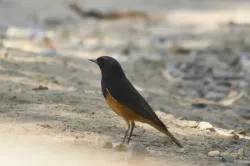
Flame-colored Tanager Basic Information
| Scientific Name |
Piranga bidentata
|
| Status |
LC
Least Concern
|
| Size |
18-20 cm (7-8 inch)
|
| Colors |
|
| Type |
|
| Family |
Cardinals |
Introduction
The Flame-colored Tanager (Piranga bidentata) is a visually arresting member of the Cardinalidae family, celebrated for its vibrant plumage and melodic presence in the canopy of neotropical forests. Often referred to as the 'Flame-colored' due to its intense, fiery orange coloration, this perching bird is a prized sighting for ornithologists and bird enthusiasts alike. Spanning from parts of Mexico down through Central America, the species thrives in high-altitude environments, often remaining elusive within the dense foliage of oak and pine-oak woodlands. Unlike some of its more common relatives, the Flame-colored Tanager possesses a unique charm that captivates observers. Its presence in the wild serves as a testament to the biodiversity of mountain ecosystems. Understanding this bird requires a deep dive into its ecological niche, behavioral patterns, and the specific environmental conditions that allow it to flourish. This comprehensive guide explores every facet of the Flame-colored Tanager, providing a detailed look at why this species remains one of the most intriguing avian subjects in the Americas.
Physical Appearance
Measuring between 18 to 20 cm in length, the Flame-colored Tanager is a medium-sized songbird that displays striking sexual dimorphism. The male is particularly magnificent, boasting a brilliant, deep orange body that appears almost incandescent in the sunlight. This primary orange hue is beautifully complemented by black wings and tail feathers, which provide a sharp, elegant contrast. The wings often feature distinct white or pale wing bars, aiding in identification. The head of the male is often tinged with a deeper, more saturated orange-red, and its bill is typically stout and greyish, perfectly adapted for its varied diet. In contrast, the female of the species tends to be more subdued, sporting a yellowish-olive plumage on the underparts and a greener back, which serves as effective camouflage against the forest canopy. Both sexes possess a robust build characteristic of perching birds, with strong legs and feet designed for gripping branches as they navigate the complex structure of high-altitude forest trees.
Habitat
The Flame-colored Tanager is primarily a resident of mountainous regions, showing a strong preference for high-elevation habitats. They are most commonly found in oak-pine forests, mixed woodlands, and the edges of cloud forests. These environments provide the necessary microclimates and vegetation structures that support their specific nesting and foraging needs. They typically inhabit elevations ranging from 1,000 to 3,000 meters. The presence of mature trees is essential for this species, as they rely heavily on the canopy for protection and food sources. Because they are adapted to these cool, misty montane environments, they are rarely found in lowland tropical rainforests, making them a specialized inhabitant of the rugged highland corridors that stretch across their range.
Diet
As an omnivorous species, the Flame-colored Tanager maintains a diverse diet that shifts according to seasonal availability. Their primary food source consists of small fruits, berries, and insects. During the breeding season, they increase their intake of protein by foraging for caterpillars, beetles, and other small arthropods, which are essential for the growth of their nestlings. They are frequently observed gleaning food from the branches of trees or making short, agile flights to catch insects in mid-air. When fruits are abundant, particularly mistletoe berries and various forest shrubs, they become highly focused on frugivory. This opportunistic feeding behavior allows them to adapt to the fluctuating food supplies within their mountain habitats throughout the year.
Breeding and Nesting
The breeding season for the Flame-colored Tanager typically coincides with the arrival of the rainy season, which ensures an abundance of food for the young. The female is primarily responsible for the construction of the nest, which is a neat, cup-shaped structure woven from fine rootlets, grasses, and spider silk. These nests are usually positioned in the fork of a horizontal branch, often well-hidden in the dense foliage of an oak or pine tree. The clutch size generally consists of two to three pale blue eggs, lightly speckled with brown. Both parents contribute to the feeding of the hatchlings once they emerge. The nesting period is a time of high activity, and the parents demonstrate impressive territoriality, aggressively defending their nesting site from potential predators and other birds that might encroach upon their immediate territory.
Behavior
The Flame-colored Tanager is generally a solitary or pair-living bird, often keeping to the higher levels of the canopy where it is difficult to spot. They are known for their quiet, deliberate movements, often sitting motionless for long periods before darting out to snatch an insect or pluck a berry. While they are not typically gregarious, they may occasionally join mixed-species flocks during the non-breeding season to forage. Their song is a series of rich, whistled notes that can be heard throughout the forest, though they can be quite secretive. Their flight is direct and undulating, and they are masters at utilizing the dense cover of their habitat to remain hidden from both predators and human observers.
Conservation Status
-
LC
Least Concern
Currently, the Flame-colored Tanager is classified as a species of Least Concern by major conservation organizations. While their populations appear stable across their extensive range, they are still vulnerable to habitat loss due to deforestation, particularly in the sensitive high-altitude mountain forests they call home. Climate change also poses a potential long-term threat by altering the delicate ecosystems of the cloud forests upon which they depend. Continued monitoring of population trends and the preservation of large, contiguous tracts of montane forest are essential to ensuring the long-term survival of this beautiful tanager species.
Interesting Facts
- The Flame-colored Tanager was formerly known as the Stripe-backed Tanager in some regional field guides.
- Their vibrant orange plumage is derived from carotenoid pigments found in the fruits they consume.
- Despite their bright colors, they are notoriously difficult to spot in the wild due to their preference for the high canopy.
- They play an important role in forest ecosystems by acting as seed dispersers for various montane plant species.
- Unlike many other tanagers, they are rarely seen at backyard bird feeders, preferring the natural bounty of the forest.
- The song of the Flame-colored Tanager is often compared to that of a Robin, but with a more melodic and complex structure.
Tips for Birdwatchers
For birdwatchers hoping to spot the Flame-colored Tanager, patience and the right equipment are paramount. Since they frequent the high canopy, a high-quality pair of binoculars or a spotting scope is absolutely necessary. Focus your efforts in the early morning hours when these birds are most active and vocal. Learning to identify their specific song is perhaps the most effective way to locate them, as their plumage can often blend in with the sun-dappled leaves. Visit known high-elevation oak-pine forests during the spring months. Stay quiet, remain still for extended periods, and watch the tops of trees carefully. Often, the movement of a bright orange flash against the dark green canopy is the first sign of their presence, rewarding the diligent observer with a spectacular view.
Conclusion
In conclusion, the Flame-colored Tanager stands as a brilliant example of the avian splendor found within the neotropical mountain ranges. From its striking orange and black coloration to its specialized role in the high-altitude ecosystem, this bird is a fascinating subject for any naturalist. While they may be elusive, the challenge of locating and observing them in their natural habitat adds to the allure of birdwatching in these regions. Protecting their forest homes is vital, not only for the survival of this species but for the preservation of the entire mountain biodiversity. Whether you are a professional ornithologist or a casual backyard birder, the Flame-colored Tanager serves as a powerful reminder of the incredible beauty hidden within our world's forests. By continuing to study their behaviors and supporting conservation efforts, we can ensure that future generations will have the opportunity to marvel at the fiery brilliance of this remarkable perching bird. We hope this guide has provided you with the necessary knowledge to appreciate and identify the Flame-colored Tanager during your next outdoor adventure in the highlands.
Flame-colored Tanager Distribution Map & Range
The distribution map for this species will be available soon.
We are working with our official data partners to update this information.