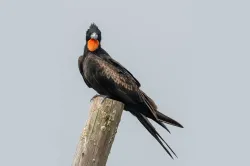
Red Tanager Basic Information
| Scientific Name |
Piranga flava
|
| Status |
LC
Least Concern
|
| Size |
17-19 cm (7-7 inch)
|
| Colors |
|
| Type |
|
| Family |
Cardinals |
Introduction
The Red Tanager, scientifically classified as Piranga flava, is a fascinating member of the Cardinalidae family, often admired for its vibrant plumage and melodic presence. As a quintessential perching bird, it has captured the attention of ornithologists and bird enthusiasts throughout the Americas. This species, while sometimes elusive, offers a rewarding experience for those who venture into its natural range. The Red Tanager is not merely a colorful spectacle; it plays a vital role in its ecosystem, interacting with various flora and fauna in complex ways. Understanding this bird requires a deep dive into its unique biological traits, behavioral patterns, and the specific environments it calls home. Throughout this guide, we will explore every aspect of the Red Tanager, providing a comprehensive overview that serves both seasoned birdwatchers and those just beginning their journey into the world of avian studies. From its striking appearance to its intricate nesting habits, the Red Tanager remains a symbol of the biodiversity found within its native habitats, reminding us of the delicate balance of nature and the importance of conservation efforts to protect such magnificent creatures for future generations.
Physical Appearance
Measuring between 17 and 19 centimeters in length, the Red Tanager is a medium-sized passerine that leaves a lasting impression. The most defining characteristic of the male is its brilliant, saturated red plumage, which can vary in intensity based on the subspecies and geographical location. This striking color is often complemented by dark, almost black, accents found on the wings and sometimes the tail, creating a beautiful contrast that makes the bird stand out against the green backdrop of its environment. In contrast, the female Red Tanager typically exhibits a more subdued color palette, often featuring shades of olive-yellow or duller orange, which serves as an effective camouflage while nesting. The bill is robust, designed primarily for its specialized diet, and its eyes are dark and alert. The overall silhouette is typical of a perching bird, with a sturdy body, rounded wings, and a tail that allows for agility while navigating through dense foliage or perching on exposed branches. Both sexes possess a graceful demeanor that makes them distinct in the field, even when seen from a distance.
Habitat
The Red Tanager, Piranga flava, is highly adaptable and can be found in a variety of environments across its extensive range. It primarily inhabits open woodlands, scrublands, and forest edges, where it can easily find both shelter and foraging opportunities. It is frequently seen in mountainous regions and can thrive in both humid forests and drier, more temperate zones. Unlike some deep-forest species, this tanager prefers areas with a mosaic of trees and open spaces, which allows it to utilize both the canopy and the mid-story for perching and hunting. Its presence is often linked to the availability of specific fruit-bearing trees and nesting sites, making it a reliable indicator of healthy, diverse woodland ecosystems.
Diet
As a versatile feeder, the Red Tanager maintains a diet that reflects the seasonal availability of food in its environment. It is primarily frugivorous and insectivorous, demonstrating a remarkable ability to switch between food sources. During the warmer months, these birds are frequently seen hunting for insects, caterpillars, and spiders, which provide essential proteins during the breeding season. As autumn approaches and insects become scarcer, their diet shifts heavily toward berries, small fruits, and seeds. They are known to visit various fruit-bearing shrubs and trees, often playing a role in seed dispersal within their habitat. This dietary flexibility allows the Red Tanager to survive in changing conditions throughout the year, ensuring its nutritional needs are met even in fluctuating environments.
Breeding and Nesting
The breeding season of the Red Tanager is a period of intense activity and vocalization. Pairs establish territories, which they defend vigorously against intruders. The nesting process is meticulous; the female typically builds a cup-shaped nest, often situated on a horizontal branch of a tree, well-hidden among the leaves to protect it from predators. The nest is constructed using a variety of materials, including twigs, rootlets, grass, and occasionally spider webs to bind the structure together. Once the nest is complete, the female lays a clutch of eggs, usually numbering between two and four. Both parents are involved in the process, with the female doing the majority of the incubation while the male provides food. This cooperative behavior ensures the survival of the chicks, who are born altricial and require constant care and feeding until they are ready to fledge.
Behavior
The Red Tanager is generally a solitary or pair-living bird, often observed perching quietly in the canopy for extended periods before making sudden, swift movements. They are not typically gregarious, though they may occasionally join mixed-species foraging flocks. Their behavior is characterized by a mix of stealth and boldness; while they can be elusive when nesting, they are quite visible when feeding. They communicate through a variety of calls and songs, which are particularly active during the dawn chorus. Their flight is direct and undulating, and they are adept at maneuvering through dense branches. Observing their behavior requires patience, as they often stay still, allowing their bright colors to blend with filtered sunlight.
Conservation Status
-
LC
Least Concern
Currently, the Red Tanager is classified as a species of Least Concern by major conservation organizations. Despite this status, it is not immune to the threats facing many avian species. Habitat loss due to deforestation, agricultural expansion, and urbanization remains a primary concern for local populations. As these birds rely on specific woodland structures for nesting and foraging, the fragmentation of their habitats can lead to population declines. Maintaining healthy corridors of native vegetation is crucial for their long-term survival. Conservation efforts focusing on preserving forest edges and promoting sustainable land-use practices are essential to ensure that the Red Tanager continues to thrive throughout its natural range.
Interesting Facts
- The Red Tanager is well-known for its ability to thrive in diverse altitudes, from lowlands to high mountain ranges.
- Despite its bright red color, the male can be surprisingly difficult to spot when perched among autumn foliage.
- The species plays an important role in forest regeneration through seed dispersal.
- Unlike some migratory birds, many populations of the Red Tanager are sedentary, remaining in the same area year-round.
- Their robust bills are perfectly adapted for crushing both hard seeds and tough insect exoskeletons.
- The female's duller plumage is a specialized evolutionary adaptation for protection during the vulnerable nesting period.
Tips for Birdwatchers
To successfully spot the Red Tanager, patience and a keen eye are your best tools. Because they often perch high in the canopy, using high-quality binoculars or a spotting scope is highly recommended. Focus your search on forest edges and areas with abundant fruit-bearing trees, especially during early morning or late afternoon when they are most active. Learning their specific songs and calls can significantly increase your chances of locating them, as they are often heard before they are seen. Avoid sudden movements and wear neutral-colored clothing to blend into the environment. If you are in a mountainous region, look for them in the mid-story of open woodlands. Remember to record your sightings to help contribute to citizen science databases, which are vital for tracking population trends.
Conclusion
In conclusion, the Red Tanager (Piranga flava) is a remarkable bird that exemplifies the beauty and complexity of the avian world. With its vibrant red plumage, adaptable diet, and unique nesting behaviors, it serves as a captivating subject for both casual observers and serious researchers. Throughout this guide, we have explored the various facets of its life, from its physical characteristics to the critical importance of conserving its natural habitat. The Red Tanager's ability to navigate and thrive in diverse environments highlights the resilience of the species, yet it also serves as a reminder of our responsibility to protect the ecosystems that sustain it. Whether you are an experienced birder or someone just beginning to appreciate the wonders of nature, the Red Tanager offers a unique opportunity to connect with the wild. By understanding its needs and habits, we can better appreciate the intricate web of life it inhabits. We hope this information inspires you to venture out into the field, observe these birds with newfound knowledge, and continue supporting the vital conservation efforts that ensure the Red Tanager remains a vibrant part of our natural heritage for generations to come. Every sighting is a chance to learn more and advocate for the preservation of these magnificent perching birds.
Red Tanager Distribution Map & Range
The distribution map for this species will be available soon.
We are working with our official data partners to update this information.