Tree-clinging Birds
avatar
Photo by Admin
Not available

Glossy Swiftlet

Collocalia esculenta

Last update: 05 Mar 2026

Glossy Swiftlet Basic Information

Scientific NameCollocalia esculenta
Status LC Least Concern
Size9-10 cm (4-4 inch)
Colors
Black
White
Type
Tree-clinging Birds
type
FamilySwifts

Introduction

The Glossy Swiftlet (Collocalia esculenta) is a fascinating species belonging to the Apodidae family. Renowned for its aerial agility and unique nesting habits, this small bird is a prominent member of the swiftlet group. Often observed in diverse environments, it plays a vital role in its ecosystem by controlling insect populations.

Physical Appearance

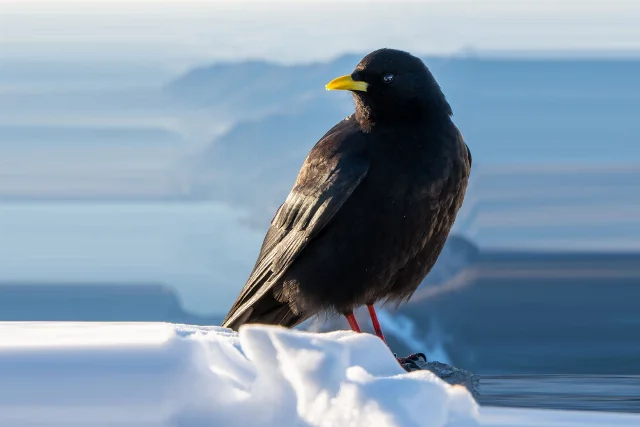
The Glossy Swiftlet is a diminutive bird measuring approximately 9-10 cm in length. Its plumage is primarily a deep, iridescent black, which gives the bird its characteristic glossy appearance in sunlight. This is contrasted by a lighter, often white, coloration on the underparts, specifically around the rump and belly area, providing a sharp visual distinction.

Habitat

These birds are highly adaptable and can be found in a variety of environments. They are commonly observed in tropical forests, clearings, and near human settlements. As tree-clinging birds, they are frequently seen resting on vertical surfaces or cliffs, though they are most active while foraging in open air spaces.

Diet

The Glossy Swiftlet is strictly insectivorous. Its diet consists of a wide variety of small flying insects, which it captures mid-air using its wide, specialized beak. Its hunting prowess allows it to thrive in areas with high insect density, such as forest edges and canopy gaps.

Breeding and Nesting

Unlike some other swiftlets that nest exclusively in deep caves, the Glossy Swiftlet is known for building nests in more exposed areas, including rocky crevices, caves, and sometimes even under the eaves of buildings. They construct their nests using saliva, plant material, and moss, creating a cup-shaped structure that hardens over time.

Behavior

These birds are exceptionally social and are often seen flying in small, energetic flocks. They are master aviators, capable of maneuvering rapidly to catch prey. When not in flight, they utilize their sharp claws to cling to vertical surfaces, a behavior that defines their classification as tree-clinging birds.

Conservation Status - LC Least Concern

The Glossy Swiftlet is currently listed as Least Concern by the IUCN. Due to their wide distribution and ability to adapt to human-modified landscapes, their populations remain stable across much of their range.

Interesting Facts

  1. The Glossy Swiftlet uses echolocation to navigate in dark nesting sites, though it is less complex than that of some other cave-dwelling species.
  2. Their nests are remarkably durable, often lasting through multiple breeding seasons.
  3. They spend the vast majority of their lives in the air, only landing to roost or tend to their nests.

Tips for Birdwatchers

To spot the Glossy Swiftlet, look for them at dawn or dusk when they are most active in foraging. Use binoculars to observe their rapid, erratic flight patterns. Because they are often found near cliff faces or high forest structures, scanning the skyline near these features will increase your chances of a successful sighting.

Pro-Tip: To spot this bird in dense forest canopy, a 8x42 binoculars or telescope is highly recommended.
- [Check out our top recommended gear here]

Conclusion

The Glossy Swiftlet is a remarkable example of avian adaptation. From its specialized hunting techniques to its unique nesting habits, it remains a captivating species for both ornithologists and casual birdwatchers alike. Protecting their natural habitats ensures that these agile aerial acrobats continue to thrive in the wild.

Glossy Swiftlet Distribution Map & Range

Official Distribution Data provided by
BirdLife International and Handbook of the Birds of the World (2025)

Tag:

Share:

Previous
Next

Explore More Species in the Swifts Family

15-17 cm
African Palm Swift
Cypsiurus parvus
14-16 cm
African Swift
Apus barbatus
20-23 cm
Alpine Swift
Tachymarptis melba
15-17 cm
Andean Swift
Aeronautes andecolus
13-14 cm
Antillean Palm Swift
Tachornis phoenicobia
Ashy-tailed Swift
10-11 cm
Ashy-tailed Swift
Chaetura andrei
11-13 cm
Asian Palm Swift
Cypsiurus balasiensis
Atiu Swiftlet
10-11 cm
Atiu Swiftlet
Aerodramus sawtelli
Australian Swiftlet
11-13 cm
Australian Swiftlet
Aerodramus terraereginae
11-13 cm
Band-rumped Swift
Chaetura spinicaudus
Bare-legged Swiftlet
12-13 cm
Bare-legged Swiftlet
Aerodramus nuditarsus
Bates's Swift
14-15 cm
Bates's Swift
Apus batesi
20-22 cm
Biscutate Swift
Streptoprocne biscutata
Black Spinetail
11-12 cm
Black Spinetail
Telacanthura melanopygia
15-18 cm
Black Swift
Cypseloides niger
Black-nest Swiftlet
12-13 cm
Black-nest Swiftlet
Aerodramus maximus
9-11 cm
Bohm's Spinetail
Neafrapus boehmi
16-18 cm
Bradfield's Swift
Apus bradfieldi
23-25 cm
Brown-backed Needletail
Hirundapus giganteus
13-15 cm
Cape Verde Swift
Apus alexandri
Caroline Swiftlet
11-12 cm
Caroline Swiftlet
Aerodramus inquietus
Cassin's Spinetail
11-13 cm
Cassin's Spinetail
Neafrapus cassini
Cave Swiftlet
9-11 cm
Cave Swiftlet
Collocalia linchi
11-12 cm
Chapman's Swift
Chaetura chapmani
13-15 cm
Chestnut-collared Swift
Streptoprocne rutila
12-15 cm
Chimney Swift
Chaetura pelagica
16-17 cm
Common Swift
Apus apus
10-12 cm
Costa Rican Swift
Chaetura fumosa
14-15 cm
Dark-rumped Swift
Apus acuticauda
11-12 cm
Edible-nest Swiftlet
Aerodramus fuciphagus
Fernando Po Swift
10-12 cm
Fernando Po Swift
Apus sladeniae
Forbes-Watson's Swift
10-12 cm
Forbes-Watson's Swift
Apus berliozi
16-18 cm
Fork-tailed Palm Swift
Tachornis squamata
18-20 cm
Great Dusky Swift
Cypseloides senex
20-22 cm
Great Swallow-tailed Swift
Panyptila sanctihieronymi
10-12 cm
Grey-rumped Swift
Chaetura cinereiventris
13-14 cm
Himalayan Swiftlet
Aerodramus brevirostris
16-18 cm
Horus Swift
Apus horus
13-15 cm
House Swift
Apus nipalensis
12-13 cm
Indian Swiftlet
Aerodramus unicolor
Lesser Antillean Swift
10-11 cm
Lesser Antillean Swift
Chaetura martinica
12-13 cm
Lesser Swallow-tailed Swift
Panyptila cayennensis
12-14 cm
Little Swift
Apus affinis
Madagascar Spinetail
10-12 cm
Madagascar Spinetail
Zoonavena grandidieri
Madagascar Swift
14-16 cm
Madagascar Swift
Apus balstoni
Malagasy Palm Swift
14-16 cm
Malagasy Palm Swift
Cypsiurus gracilis
Mariana Swiftlet
10-12 cm
Mariana Swiftlet
Aerodramus bartschi
Mascarene Swiftlet
10-12 cm
Mascarene Swiftlet
Aerodramus francicus
Mayr's Swiftlet
10-11 cm
Mayr's Swiftlet
Aerodramus orientalis
Moluccan Swiftlet
10-12 cm
Moluccan Swiftlet
Aerodramus infuscatus
Mossy-nest Swiftlet
10-12 cm
Mossy-nest Swiftlet
Aerodramus salangana
Mottled Spinetail
10-12 cm
Mottled Spinetail
Telacanthura ussheri
20-23 cm
Mottled Swift
Tachymarptis aequatorialis
Mountain Swiftlet
13-14 cm
Mountain Swiftlet
Aerodramus hirundinaceus
Nyanza Swift
16-18 cm
Nyanza Swift
Apus niansae
17-18 cm
Pacific Swift
Apus pacificus
Palau Swiftlet
10-11 cm
Palau Swiftlet
Aerodramus pelewensis
Pale-rumped Swift
10-12 cm
Pale-rumped Swift
Chaetura egregia
16-18 cm
Pallid Swift
Apus pallidus
Papuan Spinetail
11-13 cm
Papuan Spinetail
Mearnsia novaeguineae
Papuan Swiftlet
10-11 cm
Papuan Swiftlet
Aerodramus papuensis
Philippine Spinetail
11-12 cm
Philippine Spinetail
Mearnsia picina
Philippine Swiftlet
10-12 cm
Philippine Swiftlet
Aerodramus mearnsi
14-15 cm
Plain Swift
Apus unicolor
Polynesian Swiftlet
10-13 cm
Polynesian Swiftlet
Aerodramus leucophaeus
Purple Needletail
19-21 cm
Purple Needletail
Hirundapus celebensis
10-11 cm
Pygmy Palm Swift
Tachornis furcata
Pygmy Swiftlet
9-10 cm
Pygmy Swiftlet
Collocalia troglodytes
14-15 cm
Rothschild's Swift
Cypseloides rothschildi
Sabine's Spinetail
10-12 cm
Sabine's Spinetail
Rhaphidura sabini
Sao Tome Spinetail
10-12 cm
Sao Tome Spinetail
Zoonavena thomensis
Scarce Swift
10-11 cm
Scarce Swift
Schoutedenapus myoptilus
Seychelles Swiftlet
10-11 cm
Seychelles Swiftlet
Aerodramus elaphrus
10-12 cm
Short-tailed Swift
Chaetura brachyura
19-20 cm
Silver-backed Needletail
Hirundapus cochinchinensis
Silver-rumped Spinetail
11-12 cm
Silver-rumped Spinetail
Rhaphidura leucopygialis
13-14 cm
Sooty Swift
Cypseloides fumigatus
13-15 cm
Southern Swift
Chaetura meridionalis
11-12 cm
Spot-fronted Swift
Cypseloides cherriei
13-14 cm
Tepui Swift
Streptoprocne phelpsi
Uniform Swiftlet
12-14 cm
Uniform Swiftlet
Aerodramus vanikorensis
10-12 cm
Vaux's Swift
Chaetura vauxi
Volcano Swiftlet
11-12 cm
Volcano Swiftlet
Aerodramus vulcanorum
Waterfall Swift
18-20 cm
Waterfall Swift
Hydrochous gigas
14-15 cm
White-chested Swift
Cypseloides lemosi
16-18 cm
White-chinned Swift
Cypseloides cryptus
17-20 cm
White-collared Swift
Streptoprocne zonaris
White-fronted Swift
14-16 cm
White-fronted Swift
Cypseloides storeri
18-20 cm
White-naped Swift
Streptoprocne semicollaris
11-12 cm
White-rumped Spinetail
Zoonavena sylvatica
12-14 cm
White-rumped Swift
Apus caffer
White-rumped Swiftlet
10-12 cm
White-rumped Swiftlet
Aerodramus spodiopygius
19-22 cm
White-throated Needletail
Hirundapus caudacutus
15-18 cm
White-throated Swift
Aeronautes saxatalis
10-12 cm
White-tipped Swift
Aeronautes montivagus
Whitehead's Swiftlet
10-11 cm
Whitehead's Swiftlet
Aerodramus whiteheadi