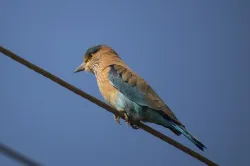
Spot-fronted Swift Distribution Map & Range
The distribution map for this species will be available soon.
We are working with our official data partners to update this information.

Sign in with your Google account to access all features

| Scientific Name | Cypseloides cherriei |
|---|---|
| Status | LC Least Concern |
| Size | 11-12 cm (4-5 inch) |
| Colors |
Black
White
|
| Type |
Perching Birds

|
| Family | Swifts |
The Spot-fronted Swift, scientifically known as Cypseloides cherriei, remains one of the most enigmatic and elusive members of the Apodidae family. This small, aerial master is highly sought after by ornithologists and dedicated birdwatchers due to its rarity and the difficulty involved in spotting it in its natural environment. Unlike many other swift species that are commonly observed soaring over urban landscapes or open fields, the Spot-fronted Swift prefers the dense, shadowy confines of mountainous terrain and forested regions within the Neotropics. Its biological classification as a perching bird is somewhat of a misnomer, as all swifts are anatomically adapted for near-constant flight; however, this species belongs to a group known for its distinct nesting habits near waterfalls and rocky crevices. Understanding this bird requires a deep dive into its specialized ecological niche, where it plays a vital role as an aerial insectivore. As we explore the life of the Spot-fronted Swift, we uncover the challenges of studying such a cryptic species and the importance of preserving the fragile habitats that support its continued survival in the wild.
The Spot-fronted Swift is a compact bird, measuring approximately 11 to 12 centimeters in length, making it one of the smaller representatives of its genus. Its primary plumage is a deep, uniform black, which provides excellent camouflage against the dark, damp cliff faces and forested shadows it frequents. The most distinguishing feature, and the origin of its common name, is the presence of white markings on the forehead. These small, bright spots contrast sharply with the dark facial plumage, serving as a key diagnostic field mark for identification. The body is streamlined, typical of the swift family, characterized by long, narrow, scythe-like wings that enable high-speed, agile flight. Its tail is relatively short and slightly rounded, which aids in complex maneuvering through dense vegetation. The bill is extremely small and delicate, yet perfectly adapted for capturing small flying insects mid-air. Its feet are small and specialized for clinging to vertical surfaces rather than walking or perching on branches, reflecting its highly evolved aerial lifestyle. The overall silhouette in flight is sleek, with the white forehead spots often visible only under ideal lighting conditions and at close range.
The Spot-fronted Swift occupies a highly specialized habitat, primarily found in the humid mountainous regions of Central and South America. They are most frequently associated with the vicinity of waterfalls, steep rocky canyons, and dense, moist montane forests. These areas provide the necessary vertical structures for both nesting and roosting, as well as an abundant supply of aerial insects. Because they rely heavily on these specific microclimates, their distribution is fragmented and often localized. They are rarely found in open lowlands, preferring the cool, misty air of higher elevations where the terrain offers protection and the environment remains consistently humid, which is essential for the moisture-dependent insects they consume.
As an obligate aerial insectivore, the Spot-fronted Swift sustains itself entirely on a diet of flying insects. Throughout the day, these swifts spend the vast majority of their time on the wing, performing intricate aerial maneuvers to capture prey. Their diet consists primarily of small arthropods, including gnats, flies, beetles, and winged ants that are carried into the air by thermals or wind currents. Because their feeding habits are linked to the availability of these insects, their activity levels fluctuate with weather patterns; they are particularly active during periods of high insect emergence, such as after rainfall or during calm, humid mornings when insect life is most abundant in the forest canopy.
The breeding biology of the Spot-fronted Swift is a testament to its secretive nature. These birds are known to nest in extremely challenging environments, typically choosing vertical cliff faces, damp rocky crevices, or the areas immediately behind or adjacent to waterfalls. The nest itself is a small, cup-shaped structure constructed from moss, mud, and sometimes lichen, which is carefully glued to the rock face using the bird's own specialized saliva. This adhesive property is crucial for maintaining the nest's position in high-moisture environments. Breeding activity is often synchronized with the local rainy season to ensure that food availability for the developing chicks is at its peak. Both parents participate in the care of the nestlings, making frequent trips to provide a constant supply of insects. Due to the inaccessible nature of these nesting sites, detailed observations of their reproductive cycle remain limited, adding to the mystery surrounding this fascinating species.
Behaviorally, the Spot-fronted Swift is characterized by its high-energy, aerial lifestyle. They are almost exclusively observed in flight, exhibiting rapid, darting movements as they forage. Unlike many other bird species, they do not perch on tree branches; instead, they cling to vertical rock surfaces or enter their nests. They are often seen in small, loose groups, especially when congregating near suitable nesting or roosting sites. Their flight pattern is erratic and fast, making them difficult to track with binoculars. Socially, they appear to maintain tight bonds within their nesting colonies, utilizing vocalizations that are generally high-pitched and brief to communicate with one another amidst the roar of nearby waterfalls or the rustling of the forest canopy.
The conservation status of the Spot-fronted Swift is currently categorized as a species of concern due to its limited and fragmented range. Because they are so highly specialized to specific micro-habitats like pristine montane forests and waterfall environments, they are particularly vulnerable to habitat destruction, climate change, and water source disruption. Deforestation in the Neotropics remains the most significant threat to their population. Protecting these birds requires a landscape-level approach that preserves the integrity of their mountain habitats and ensures that the water quality and insect populations they depend on remain stable for future generations.
For birdwatchers hoping to catch a glimpse of the elusive Spot-fronted Swift, preparation and patience are essential. Because they are small and move at high speeds, you should invest in high-quality binoculars or a spotting scope with a wide field of view. Target areas with known waterfalls or steep, rocky canyons in the Neotropical montane regions, especially during the early morning or late afternoon when insect activity is at its peak. It is often best to position yourself at a vantage point where you can look out across a valley or waterfall, as these birds are most frequently spotted in transit or foraging over water. Avoid sudden movements and maintain a respectful distance from nesting sites to prevent disturbance. Patience is your greatest tool, as these birds may disappear for long periods before reappearing in a sudden burst of activity.
In summary, the Spot-fronted Swift (Cypseloides cherriei) represents the incredible diversity of the avian world and the specialized adaptations required to thrive in extreme environments. From its distinct black and white plumage to its remarkable ability to nest on vertical, damp surfaces, this bird is a marvel of evolutionary precision. While it remains a difficult species to study, the data we do have highlights the importance of protecting the unique mountainous habitats where it resides. For bird enthusiasts, the quest to observe this swift is a rewarding challenge that underscores the beauty of rare and cryptic wildlife. As we continue to learn more about their diet, breeding habits, and behavior, we are reminded of the delicate balance of the ecosystems they inhabit. Conservation efforts must remain focused on preserving these vital, undisturbed areas to ensure that the Spot-fronted Swift continues to soar through the misty heights of the Neotropics. By valuing such elusive species, we contribute to a broader understanding of biodiversity and the necessity of maintaining healthy, functional environments for all living creatures. Whether you are an experienced ornithologist or a casual birdwatcher, the Spot-fronted Swift serves as a compelling reminder of the wonders that still exist in the world's most hidden corners, waiting to be appreciated and protected.
We are working with our official data partners to update this information.
Tag:


Birds have their own beautiful world, we should not interfere in it. We should enjoy this beauty. Its beauty should be captured in the camera but be careful not to disturb them.
Tap a language to switch instantly.
Tap a language to switch instantly.