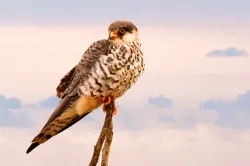
Tree-clinging Birds
avatar
Photo by Admin
Not available

Little Swift

Apus affinis

Last update: 05 Mar 2026

Little Swift Basic Information

Scientific NameApus affinis
Status LC Least Concern
Size12-14 cm (5-6 inch)
Colors
Black
White
Type
Tree-clinging Birds
type
FamilySwifts

Introduction

The Little Swift (Apus affinis) is a small, agile bird belonging to the swift family. Known for its remarkable aerial capabilities, this species is widely distributed across parts of Africa and Asia. Often observed darting through the skies, the Little Swift is a quintessential example of a bird perfectly adapted to a life on the wing.

Physical Appearance

The Little Swift is a compact bird, measuring between 12-14 cm in length. Its primary coloration is a deep, uniform black, which provides a stark contrast to its most notable identifying feature: a clean, white patch on its rump. Its streamlined body shape and long, narrow wings are perfectly designed for high-speed flight.

Habitat

These birds are highly adaptable and are commonly found in a variety of environments, including open country, savanna, and urban areas. While they are classified as tree-clinging birds, they are also well-known for utilizing man-made structures, often nesting under the eaves of buildings, bridges, and tunnels.

Diet

Like other swifts, the Little Swift is an insectivore. It feeds almost exclusively on the wing, using its wide gape to capture flying insects such as:

  • Small beetles
  • Flies
  • Mosquitoes
  • Flying ants

Breeding and Nesting

Little Swifts are colonial breeders. They construct messy, globular nests made of feathers, grass, and saliva. These nests are often clumped together on vertical surfaces, such as cliff faces or the walls of buildings, where they provide safety from predators.

Behavior

The Little Swift is social and highly gregarious. They are frequently seen in large, noisy groups, especially near their nesting colonies. Their flight is characterized by rapid wingbeats interspersed with short glides, and they are capable of remaining airborne for extended periods.

Conservation Status - LC Least Concern

According to the IUCN Red List, the Little Swift is categorized as Least Concern. Its population remains stable due to its ability to thrive in human-altered landscapes and its wide geographic distribution.

Interesting Facts

  1. They can spend almost their entire lives in the air, only landing to nest.
  2. They use their own saliva as a biological glue to attach their nests to surfaces.
  3. Despite their name, they are not closely related to swallows, though they share a similar silhouette.
  4. They are known to be very vocal, emitting a continuous, chattering call when in flight.

Tips for Birdwatchers

To spot a Little Swift, look up during the late afternoon when insect activity is high. Focus your binoculars on the eaves of buildings or bridges in urban areas. Because they move very quickly, it is best to track their flight path and wait for them to return to a nesting colony.

Pro-Tip: To spot this bird in dense forest canopy, a 8x42 binoculars or telescope is highly recommended.
- [Check out our top recommended gear here]

Conclusion

The Little Swift is a resilient and fascinating species. Whether you are an experienced ornithologist or a casual birdwatcher, observing their high-speed aerial maneuvers is always a rewarding experience. Their success in both natural and urban environments serves as a testament to their evolutionary adaptability.

Little Swift Distribution Map & Range

Official Distribution Data provided by
BirdLife International and Handbook of the Birds of the World (2025)

Tag:

Share:

Previous
Next

Explore More Species in the Swifts Family

15-17 cm
African Palm Swift
Cypsiurus parvus
14-16 cm
African Swift
Apus barbatus
20-23 cm
Alpine Swift
Tachymarptis melba
15-17 cm
Andean Swift
Aeronautes andecolus
13-14 cm
Antillean Palm Swift
Tachornis phoenicobia
Ashy-tailed Swift
10-11 cm
Ashy-tailed Swift
Chaetura andrei
11-13 cm
Asian Palm Swift
Cypsiurus balasiensis
Atiu Swiftlet
10-11 cm
Atiu Swiftlet
Aerodramus sawtelli
Australian Swiftlet
11-13 cm
Australian Swiftlet
Aerodramus terraereginae
11-13 cm
Band-rumped Swift
Chaetura spinicaudus
Bare-legged Swiftlet
12-13 cm
Bare-legged Swiftlet
Aerodramus nuditarsus
Bates's Swift
14-15 cm
Bates's Swift
Apus batesi
20-22 cm
Biscutate Swift
Streptoprocne biscutata
Black Spinetail
11-12 cm
Black Spinetail
Telacanthura melanopygia
15-18 cm
Black Swift
Cypseloides niger
Black-nest Swiftlet
12-13 cm
Black-nest Swiftlet
Aerodramus maximus
9-11 cm
Bohm's Spinetail
Neafrapus boehmi
16-18 cm
Bradfield's Swift
Apus bradfieldi
23-25 cm
Brown-backed Needletail
Hirundapus giganteus
13-15 cm
Cape Verde Swift
Apus alexandri
Caroline Swiftlet
11-12 cm
Caroline Swiftlet
Aerodramus inquietus
Cassin's Spinetail
11-13 cm
Cassin's Spinetail
Neafrapus cassini
Cave Swiftlet
9-11 cm
Cave Swiftlet
Collocalia linchi
11-12 cm
Chapman's Swift
Chaetura chapmani
13-15 cm
Chestnut-collared Swift
Streptoprocne rutila
12-15 cm
Chimney Swift
Chaetura pelagica
16-17 cm
Common Swift
Apus apus
10-12 cm
Costa Rican Swift
Chaetura fumosa
14-15 cm
Dark-rumped Swift
Apus acuticauda
11-12 cm
Edible-nest Swiftlet
Aerodramus fuciphagus
Fernando Po Swift
10-12 cm
Fernando Po Swift
Apus sladeniae
Forbes-Watson's Swift
10-12 cm
Forbes-Watson's Swift
Apus berliozi
16-18 cm
Fork-tailed Palm Swift
Tachornis squamata
9-10 cm
Glossy Swiftlet
Collocalia esculenta
18-20 cm
Great Dusky Swift
Cypseloides senex
20-22 cm
Great Swallow-tailed Swift
Panyptila sanctihieronymi
10-12 cm
Grey-rumped Swift
Chaetura cinereiventris
13-14 cm
Himalayan Swiftlet
Aerodramus brevirostris
16-18 cm
Horus Swift
Apus horus
13-15 cm
House Swift
Apus nipalensis
12-13 cm
Indian Swiftlet
Aerodramus unicolor
Lesser Antillean Swift
10-11 cm
Lesser Antillean Swift
Chaetura martinica
12-13 cm
Lesser Swallow-tailed Swift
Panyptila cayennensis
Madagascar Spinetail
10-12 cm
Madagascar Spinetail
Zoonavena grandidieri
Madagascar Swift
14-16 cm
Madagascar Swift
Apus balstoni
Malagasy Palm Swift
14-16 cm
Malagasy Palm Swift
Cypsiurus gracilis
Mariana Swiftlet
10-12 cm
Mariana Swiftlet
Aerodramus bartschi
Mascarene Swiftlet
10-12 cm
Mascarene Swiftlet
Aerodramus francicus
Mayr's Swiftlet
10-11 cm
Mayr's Swiftlet
Aerodramus orientalis
Moluccan Swiftlet
10-12 cm
Moluccan Swiftlet
Aerodramus infuscatus
Mossy-nest Swiftlet
10-12 cm
Mossy-nest Swiftlet
Aerodramus salangana
Mottled Spinetail
10-12 cm
Mottled Spinetail
Telacanthura ussheri
20-23 cm
Mottled Swift
Tachymarptis aequatorialis
Mountain Swiftlet
13-14 cm
Mountain Swiftlet
Aerodramus hirundinaceus
Nyanza Swift
16-18 cm
Nyanza Swift
Apus niansae
17-18 cm
Pacific Swift
Apus pacificus
Palau Swiftlet
10-11 cm
Palau Swiftlet
Aerodramus pelewensis
Pale-rumped Swift
10-12 cm
Pale-rumped Swift
Chaetura egregia
16-18 cm
Pallid Swift
Apus pallidus
Papuan Spinetail
11-13 cm
Papuan Spinetail
Mearnsia novaeguineae
Papuan Swiftlet
10-11 cm
Papuan Swiftlet
Aerodramus papuensis
Philippine Spinetail
11-12 cm
Philippine Spinetail
Mearnsia picina
Philippine Swiftlet
10-12 cm
Philippine Swiftlet
Aerodramus mearnsi
14-15 cm
Plain Swift
Apus unicolor
Polynesian Swiftlet
10-13 cm
Polynesian Swiftlet
Aerodramus leucophaeus
Purple Needletail
19-21 cm
Purple Needletail
Hirundapus celebensis
10-11 cm
Pygmy Palm Swift
Tachornis furcata
Pygmy Swiftlet
9-10 cm
Pygmy Swiftlet
Collocalia troglodytes
14-15 cm
Rothschild's Swift
Cypseloides rothschildi
Sabine's Spinetail
10-12 cm
Sabine's Spinetail
Rhaphidura sabini
Sao Tome Spinetail
10-12 cm
Sao Tome Spinetail
Zoonavena thomensis
Scarce Swift
10-11 cm
Scarce Swift
Schoutedenapus myoptilus
Seychelles Swiftlet
10-11 cm
Seychelles Swiftlet
Aerodramus elaphrus
10-12 cm
Short-tailed Swift
Chaetura brachyura
19-20 cm
Silver-backed Needletail
Hirundapus cochinchinensis
Silver-rumped Spinetail
11-12 cm
Silver-rumped Spinetail
Rhaphidura leucopygialis
13-14 cm
Sooty Swift
Cypseloides fumigatus
13-15 cm
Southern Swift
Chaetura meridionalis
11-12 cm
Spot-fronted Swift
Cypseloides cherriei
13-14 cm
Tepui Swift
Streptoprocne phelpsi
Uniform Swiftlet
12-14 cm
Uniform Swiftlet
Aerodramus vanikorensis
10-12 cm
Vaux's Swift
Chaetura vauxi
Volcano Swiftlet
11-12 cm
Volcano Swiftlet
Aerodramus vulcanorum
Waterfall Swift
18-20 cm
Waterfall Swift
Hydrochous gigas
14-15 cm
White-chested Swift
Cypseloides lemosi
16-18 cm
White-chinned Swift
Cypseloides cryptus
17-20 cm
White-collared Swift
Streptoprocne zonaris
White-fronted Swift
14-16 cm
White-fronted Swift
Cypseloides storeri
18-20 cm
White-naped Swift
Streptoprocne semicollaris
11-12 cm
White-rumped Spinetail
Zoonavena sylvatica
12-14 cm
White-rumped Swift
Apus caffer
White-rumped Swiftlet
10-12 cm
White-rumped Swiftlet
Aerodramus spodiopygius
19-22 cm
White-throated Needletail
Hirundapus caudacutus
15-18 cm
White-throated Swift
Aeronautes saxatalis
10-12 cm
White-tipped Swift
Aeronautes montivagus
Whitehead's Swiftlet
10-11 cm
Whitehead's Swiftlet
Aerodramus whiteheadi