Not available

great egret
Ardea alba
Last update: 19 Jan 2026
Read in:
English
Español
Português
हिन्दी
বাংলা
தமிழ்
മലയാളം
मराठी
ગુજરાતી
తెలుగు
French
Deutsch
Русский
日本語
简体中文
Italiano
Tiếng Việt
العربية
ಕನ್ನಡ
ਪੰਜਾਬੀ
Great Egret Basic Information
| Scientific Name | Ardea alba |
|---|---|
| Status | LC Least Concern |
| Size | 90-102 cm (35-37 inch) |
| Colors |
White
White
|
| Type |
Waders

|
| Family | Herons |
Great Egret Names In Other Languages
| assamese | বৰ বগ |
|---|---|
| french | Grande Aigrette |
| gujarati | મોટો સફેદ બગલો, મોટો ધોળો બગલો |
| hindi | बगुला |
| kannada | ದೊಡ್ಡ ಬೆಳ್ಳಕ್ಕಿ |
| malayalam | പെരുമുണ്ടി |
| marathi | बगळा |
| nepali | ठूलो सेतोबकुल्ला |
Introduction
The Great Egret (Casmerodius albus) is a stunning, large white bird that serves as a global symbol of wetland elegance. Belonging to the heron family, this majestic species is known for its graceful stature and impressive hunting prowess in various aquatic environments.
Physical Appearance
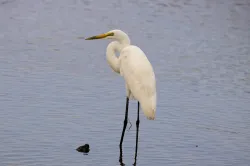
The Great Egret is characterized by its all-white plumage and can reach heights of 90-102 cm, with a weight of up to 950 g. Key identifiers include:
- A long, sharp yellow bill.
- Stark black legs and feet.
- A slow, methodical flight pattern with its neck retracted in an S-shape, distinguishing it from storks and cranes.
Habitat
These birds are highly adaptable and can be found in a variety of watery environments. Their preferred habitats include rivers, lakes, marshes, estuaries, mangroves, and coral reefs. While they are often solitary when hunting, they are known to roost communally in large groups.
Diet
The Great Egret is a skilled predator that feeds primarily in shallow water or drier habitats. Its diet consists of:
- Fish and frogs.
- Small mammals.
- Small reptiles and insects.
It typically hunts by standing motionless or stalking slowly, using its long bill as a spear to strike prey with lightning speed.
Breeding and Nesting
Great Egrets typically breed in colonies, often located in trees or shrubs near water. They build large platform nests made of sticks. During the breeding season, they develop long, delicate plumes on their backs known as aigrettes, which were historically prized in the fashion industry.
Behavior
While they may feed communally when food sources are concentrated, the Great Egret is generally less sociable than other egret species. They are patient hunters, often waiting for long periods for prey to come within striking distance. They are also known for their communal roosting habits at night.
Conservation Status - LC Least Concern
The Great Egret is currently listed as Least Concern by the IUCN. However, they remain dependent on the conservation of wetland habitats and are protected under various migratory bird acts due to past population declines caused by the plume trade.
Interesting Facts
- The Great Egret is the symbol of the National Audubon Society, representing the success of bird conservation efforts.
- Despite their large size, they are surprisingly light, weighing less than a kilogram.
- They fly with their necks tucked in, whereas storks and cranes fly with their necks outstretched.
- Their sharp bills are used like a spear to impale fish and other prey.
Tips for Birdwatchers
To spot a Great Egret, look for a large white shape standing perfectly still in shallow wetlands. Use binoculars to observe their hunting technique from a distance, as they can be wary of human presence. Early morning or late afternoon are the best times to see them active.
Pro-Tip: To spot this bird in dense forest canopy, a 8x42 binoculars or telescope is highly recommended.
- [Check out our top recommended gear here]
Conclusion
The Great Egret is a master of the wetlands, combining beauty with predatory precision. Protecting our marshes and rivers ensures that this iconic white heron continues to thrive across the globe for generations to come.

Tag:

200 Follower
is a writer who draws. He’s the Bestselling author of “Number of The Year”. Donec vitae tortor efficitur, convallis lelobortis elit.
Recent Posts




Subscribe For Daily Newsletter