Waders
avatar
Photo by Admin
Not available

striated heron

Butorides striata

Last update: 03 Feb 2026

Striated Heron Basic Information

Scientific NameButorides striata
Status LC Least Concern
Size40-48 cm (16-19 inch)
Colors
Grey
Black
Type
Waders
type
FamilyHerons

Striated Heron Names In Other Languages

bhojpuriकांचा बकुला
malayalamചിന്നക്കൊക്ക്
nepaliछोटाखुट्टे बकुल्ला

Introduction

The striated heron (Butorides striata) is a small, resourceful member of the Ardeidae family. Known for its wide global distribution and stealthy hunting techniques, this species is a fascinating subject for birdwatchers and nature enthusiasts alike.

Physical Appearance

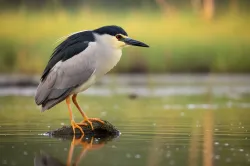
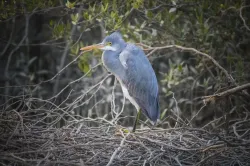
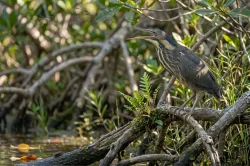
The striated heron is a compact bird, typically measuring between 40-48 cm in length with a wingspan of 50 to 60 cm. Adult birds are characterized by their blue-grey back and wings and white underparts. They feature a glossy greenish-black cap, a short dark crest, and a distinctive dark line extending from the bill to the eye. They generally weigh between 125 and 250 grams, with females being slightly smaller than males.

Habitat

These birds are highly adaptable and prefer wooded water margins. Their diverse habitats include:

  • Marshes, swamps, and mangrove-lined shores.
  • Estuaries, rivers, streams, and lakes with thick vegetation.
  • Artificial environments like canals and ponds.
  • Tidal creeks, mudflats, and even exposed coral reefs.

Diet

The striated heron is an opportunistic feeder with a varied diet. They primarily hunt for:

  • Fish, molluscs, and crustaceans.
  • Insects, frogs, and tadpoles.
  • Lizards, small birds, and rodents.
  • Occasional vegetable matter.

Breeding and Nesting

The breeding and nesting process involves constructing a shallow nest made of twigs, typically hidden within trees or bushes. This species does not follow a strict breeding season. A clutch usually consists of three to five eggs, and both parents participate in the vital task of feeding the hatchlings.

Behavior

Most striated heron populations are sedentary, though northern populations may migrate south for the winter. In Africa, local movements are often triggered by seasonal rainfall. They are known for their patient hunting style, often standing motionless at the water's edge waiting for prey to approach.

Conservation Status - LC Least Concern

The striated heron is currently categorized as a species of Least Concern. Its ability to inhabit a wide range of environments, including man-made canals and salt-flats, has helped maintain a stable population across its extensive range.

Interesting Facts

  1. There are up to thirty-three recognized subspecies of the striated heron globally.
  2. The nominate subspecies, B. s. striata, is native to South America.
  3. They are often referred to as "Green-backed Herons" in various parts of the world.
  4. Some individuals have been observed using tools, such as dropping bait on the water's surface to lure fish.

Tips for Birdwatchers

To spot a striated heron, focus your search on the edges of mangroves or thick reeds. Because of their small size and camouflage, they can be difficult to see. Look for them during low tide on mudflats or perched quietly on low-hanging branches over water.

Conclusion

The striated heron is a remarkable example of avian adaptability. From tropical mangroves to urban canals, this small but hardy heron continues to thrive, making it a staple of wetland ecosystems worldwide.

Striated Heron Distribution Map & Range

Official Distribution Data provided by
BirdLife International and Handbook of the Birds of the World (2025)

Tag:

Share:

Previous
Next
avatar
{blogMain.author}
200 Follower
Follow
{blogMain.author} is a writer who draws. He’s the Bestselling author of “Number of The Year”. Donec vitae tortor efficitur, convallis lelobortis elit.
Subscribe For Daily Newsletter
Explore More Species in the Herons Family

65-77 cm
Agami Heron
Agamia agami
60-85 cm
American Bittern
Botaurus lentiginosus
Australasian Bittern
66-74 cm
Australasian Bittern
Botaurus poiciloptilus
Australian Little Bittern
25-30 cm
Australian Little Bittern
Ixobrychus dubius
70-80 cm
Bare-throated Tiger-heron
Tigrisoma mexicanum
Bermuda Night Heron
50-60 cm
Bermuda Night Heron
Nyctanassa carcinocatactes
black bittern
52-58 cm
black bittern
Ixobrychus flavicollis
black crowned night heron
58-65 cm
black crowned night heron
Nycticorax nycticorax
45-65 cm
Black Heron
Egretta ardesiaca
85-100 cm
Black-headed Heron
Ardea melanocephala
45-50 cm
Boat-billed Heron
Cochlearius cochlearius
50-52 cm
Capped Heron
Pilherodius pileatus
cattle egret
48-53 cm
cattle egret
Bubulcus ibis
65-68 cm
Chinese Egret
Egretta eulophotes
40-50 cm
chinese pond heron
Ardeola bacchus
38-41 cm
cinnamon bittern
Ixobrychus cinnamomeus
95-125 cm
Cocoi Heron
Ardea cocoi
Common Little Bittern
27-36 cm
Common Little Bittern
Ixobrychus minutus
Dwarf Bittern
25-30 cm
Dwarf Bittern
Ixobrychus sturmii
69-81 cm
Eurasian Bittern
Botaurus stellaris
60-70 cm
Fasciated Tiger-heron
Tigrisoma fasciatum
Forest Bittern
50-60 cm
Forest Bittern
Zonerodius heliosylus
120-152 cm
goliath heron
Ardea goliath
69-81 cm
great bittern
Botaurus stellaris
97-137 cm
Great Blue Heron
Ardea herodias
great egret
90-102 cm
great egret
Ardea alba
80-104 cm
Great White Egret
Ardea alba
110-130 cm
Great White Heron
Ardea occidentalis
110-115 cm
Great-billed Heron
Ardea sumatrana
40-48 cm
Green-backed Heron
Butorides striata
grey heron
90-98 cm
grey heron
Ardea cinerea
42-45 cm
indian pond heron
Ardeola grayii
65-72 cm
intermediate egret
Ardea intermedia
49-54 cm
Japanese Night Heron
Gorsachius goisagi
40-45 cm
Javan Pond Heron
Ardeola speciosa
Least Bittern
28-36 cm
Least Bittern
Ixobrychus exilis
27-36 cm
little bittern
Ixobrychus minutus
Little Blue Heron
50-70 cm
Little Blue Heron
Egretta caerulea
little egret
55-65 cm
little egret
Egretta garzetta
90-93 cm
Madagascar Heron
Ardea humbloti
40-45 cm
Malagasy Pond Heron
Ardeola idae
45-50 cm
Malay Night Heron
Gorsachius melanolophus
Mauritius Night Heron
50-60 cm
Mauritius Night Heron
Nycticorax mauritianus
Nankeen Night Heron
55-65 cm
Nankeen Night Heron
Nycticorax caledonicus
New Zealand Little Bittern
25-28 cm
New Zealand Little Bittern
Ixobrychus novaezelandiae
58-58 cm
pacific reef egret
Egretta sacra
Pied Heron
40-50 cm
Pied Heron
Egretta picata
60-75 cm
Pinnated Bittern
Botaurus pinnatus
Plumed Egret
55-70 cm
Plumed Egret
Ardea plumifera
purple heron
78-90 cm
purple heron
Ardea purpurea
68-82 cm
Reddish Egret
Egretta rufescens
Reunion Night Heron
50-55 cm
Reunion Night Heron
Nycticorax duboisi
Rodrigues Night Heron
50-60 cm
Rodrigues Night Heron
Nycticorax megacephalus
60-75 cm
Rufescent Tiger-heron
Tigrisoma lineatum
38-50 cm
Rufous-bellied Heron
Ardeola rufiventris
Schrenck's Bittern
30-40 cm
Schrenck's Bittern
Ixobrychus eurhythmus
45-50 cm
Slaty Egret
Egretta vinaceigula
56-66 cm
Snowy Egret
Egretta thula
40-49 cm
Squacco Heron
Ardeola ralloides
Stripe-backed Bittern
28-33 cm
Stripe-backed Bittern
Ixobrychus involucris
56-76 cm
Tricolored Heron
Egretta tricolor
western reef egret
55-65 cm
western reef egret
Egretta gularis
50-53 cm
Whistling Heron
Syrigma sibilatrix
110-127 cm
white bellied heron
Ardea insignis
50-55 cm
White-backed Night Heron
Calherodius leuconotus
53-56 cm
White-crested Tiger-heron
Tigriornis leucolopha
54-56 cm
White-eared Night Heron
Oroanassa magnifica
White-faced Heron
60-70 cm
White-faced Heron
Egretta novaehollandiae
White-necked Heron
76-106 cm
White-necked Heron
Ardea pacifica
36-40 cm
yellow bittern
Ixobrychus sinensis
65-75 cm
Yellow-billed Egret
Ardea brachyrhyncha
Yellow-crowned Night Heron
55-70 cm
Yellow-crowned Night Heron
Nyctanassa violacea
27-30 cm
Zigzag Heron
Zebrilus undulatus