Grey Hawk Basic Information
| Scientific Name |
Buteo plagiatus
|
| Status |
LC
Least Concern
|
| Size |
38-48 cm (15-19 inch)
|
| Colors |
|
| Type |
|
| Family |
Hawks, Eagles |
Introduction
The Grey Hawk (Buteo plagiatus) is a fascinating and relatively small raptor that captures the attention of bird enthusiasts across the Americas. Formerly classified within the genus Asturina, this bird of prey is now recognized under the Buteo genus, reflecting its evolutionary placement among other buzzards. Known for its distinctively elegant appearance and agile flight, the Grey Hawk inhabits a variety of environments ranging from dense woodlands to open riparian corridors. Unlike some of its larger, more aggressive cousins, the Grey Hawk possesses a unique hunting style that relies on stealth and surprise, often perching motionless for extended periods before swooping down on unsuspecting prey. Its range extends from the southwestern United States down through Mexico and into Central America. Understanding the life cycle, behaviors, and ecological requirements of the Grey Hawk provides valuable insight into the health of the ecosystems they inhabit. This bird serves as a critical apex predator in its niche, helping to maintain the balance of local small vertebrate populations, making it an essential subject for ornithologists and casual observers alike.
Physical Appearance
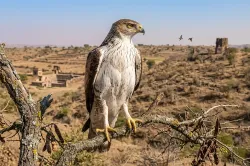
The Grey Hawk is a medium-sized raptor, typically measuring between 38 to 48 cm in length. As its name suggests, the adult plumage is predominantly grey, characterized by a sophisticated pattern of fine, dark barring across its underparts, which provides excellent camouflage against the dappled light of the forest canopy. The upperparts are a uniform, slate-grey, while the tail is strikingly marked with broad white bands, making it easily identifiable in flight. The bird's eyes are typically dark brown, and it features a bright yellow cere and legs, which contrast sharply with its muted plumage. Juveniles, however, present a significantly different appearance, with brownish-streaked underparts and more heavily patterned upperparts that help them blend into the foliage during their vulnerable early months. The wings are relatively broad and rounded, typical of forest-dwelling hawks, allowing for high maneuverability when navigating through dense branches during a hunt. When perched, the Grey Hawk maintains a compact, upright posture, often appearing smaller than its actual size, which is a key identifying feature for birdwatchers in the field.
Habitat
The Grey Hawk is highly adaptable but shows a strong preference for semi-open habitats, particularly those associated with riparian forests. They are most commonly found in regions where deciduous woodlands meet open savannahs or agricultural lands. The presence of mature trees is essential, as these provide the necessary lookout points for hunting and secure sites for nesting. In the northern parts of their range, such as southern Arizona and Texas, they are frequently associated with mesquite thickets and cottonwood-willow galleries along riverbanks. As one moves further south into Central America, they occupy a broader range of tropical and subtropical deciduous forests. They tend to avoid extremely dense, unbroken rainforests as well as completely treeless deserts, preferring the intermediate 'edge' zones where biodiversity is highest and their hunting strategy of perching and scanning is most effective.
Diet
As an opportunistic hunter, the Grey Hawk feeds on a diverse array of small vertebrates. Its primary diet consists of lizards, which are a staple food source, particularly in the arid regions of its northern range. Beyond reptiles, they frequently consume small mammals such as rodents, as well as small birds and large insects. The Grey Hawk is known for its 'sit-and-wait' predatory strategy. It will perch quietly on a high branch, often obscured by foliage, scanning the ground for movement. Once prey is spotted, it descends with speed and precision to secure the target. This raptor is also known to occasionally hunt snakes, demonstrating its prowess and ability to tackle prey that is both agile and potentially dangerous, showcasing its role as a skilled and versatile predator within its ecosystem.
Breeding and Nesting
The breeding season of the Grey Hawk is a period of intense activity and site fidelity. Pairs are generally monogamous and often return to the same nesting territory year after year. The nest is typically a substantial structure built from sticks and twigs, placed high within the fork of a tall tree, often near a water source to ensure easy access to food for the developing chicks. Both the male and female participate in the construction, though the female often takes the lead in lining the nest with softer materials like green leaves. A typical clutch consists of two to three eggs, which are incubated primarily by the female while the male provides food. Once the chicks hatch, both parents contribute to the feeding process. The young remain in the nest for several weeks, gradually developing their flight feathers until they are ready to fledge and begin their transition to independence under the watchful guidance of their parents.
Behavior
The Grey Hawk is known for its relatively calm and patient demeanor compared to more frantic raptor species. It is a highly territorial bird, and pairs will often engage in aerial displays to defend their nesting grounds from intruders. Despite this territoriality, they are not typically aggressive toward humans unless the nest is directly threatened. They are most active during the early morning and late afternoon hours, when temperatures are cooler and prey activity is at its peak. During the heat of the day, they are often found resting in the shade of dense canopy cover. Their vocalizations, often described as a series of high-pitched, whistled notes, are most frequently heard during the breeding season as a means of communication between mates and to announce their presence to other hawks in the vicinity.
Conservation Status
-
LC
Least Concern
The Grey Hawk is currently listed as a species of Least Concern by the IUCN, indicating that its populations remain relatively stable across its vast range. However, this does not mean they are immune to environmental threats. Habitat destruction, particularly the clearing of riparian forests and the degradation of river corridors, poses a significant risk to local populations. As development encroaches on their preferred semi-open woodlands, the availability of suitable nesting sites decreases. Conservation efforts should focus on preserving riparian buffer zones and maintaining the integrity of mature forest stands, which are crucial for their long-term survival and continued ecological health within their native habitats.
Interesting Facts
- The Grey Hawk was previously known as the Mexican Goshawk.
- They possess exceptionally keen eyesight, allowing them to spot movement from great distances.
- Unlike many other hawks, they are rarely seen soaring in the sky for long periods.
- The Grey Hawk is one of the few raptors that specializes in hunting lizards.
- They are known to be quite vocal during the courtship period.
- Their wingspan is relatively short compared to their body length, aiding in maneuverability.
- They are highly site-faithful, often reusing the same nest for many consecutive years.
Tips for Birdwatchers
For birdwatchers hoping to spot a Grey Hawk, timing and location are everything. Focus your efforts on riparian corridors in the southwestern United States during the spring and summer months. Because they are masters of stealth, you should look for perches in the mid-to-high canopy of trees near water. Instead of scanning the open sky, use your binoculars to scan the branches of trees along forest edges. Patience is your best tool; because the Grey Hawk spends much of its time sitting motionless, it is easy to overlook. Listen carefully for their distinctive whistled calls, which often precede a sighting. Bringing a high-quality field guide and a camera with a decent zoom will significantly enhance your experience, allowing you to document these beautiful raptors without disturbing their natural behaviors in the wild.
Conclusion
The Grey Hawk (Buteo plagiatus) represents a specialized and highly successful component of the raptor family. Its unique reliance on forest-edge habitats and its specialized diet of reptiles and small vertebrates make it a critical indicator species for the health of riparian ecosystems. Throughout this guide, we have explored the intricate details of its physical characteristics, its patient hunting behavior, and the nesting habits that ensure the continuation of the species. While the Grey Hawk is not currently threatened on a global scale, the local loss of habitat remains a pressing concern that requires ongoing attention from conservationists and land managers. For the dedicated birdwatcher, encountering a Grey Hawk is a rewarding experience that highlights the beauty and complexity of avian life. Whether you are a professional ornithologist or an amateur enthusiast, taking the time to observe and appreciate the Grey Hawk contributes to a deeper understanding of our natural world. By protecting the environments these magnificent birds call home, we ensure that future generations will have the opportunity to witness the silent, graceful flight of the Grey Hawk in the wild, maintaining the delicate balance of nature for years to come.
Grey Hawk Distribution Map & Range
The distribution map for this species will be available soon.
We are working with our official data partners to update this information.