Galapagos Hawk Basic Information
| Scientific Name |
Buteo galapagoensis
|
| Status |
VU
Vulnerable
|
| Size |
50-55 cm (20-22 inch)
|
| Colors |
|
| Type |
|
| Family |
Hawks, Eagles |
Introduction
The Galapagos Hawk (Buteo galapagoensis) stands as one of the most remarkable avian species within the enchanted Galapagos Islands. As an endemic apex predator, this raptor holds a unique ecological position, having evolved in isolation from mainland competitors. Often described as fearless, the Galapagos Hawk has become an iconic symbol of the archipelago's untamed wilderness. Unlike many other birds of prey that are notoriously shy around humans, the Galapagos Hawk is known for its remarkable curiosity, often approaching visitors without hesitation. This behavior stems from the lack of natural terrestrial predators in its island home, allowing it to dominate the food chain with little interference. As a diurnal hunter, it plays a vital role in maintaining the balance of the ecosystem, preying on a variety of small to medium-sized animals. Understanding this bird is essential for grasping the evolutionary pressures that have shaped the biodiversity of the Galapagos, making it a subject of intense interest for ornithologists and conservationists alike.
Physical Appearance
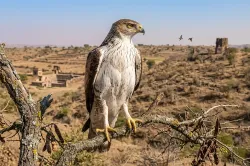
The Galapagos Hawk is a medium-sized bird of prey, typically measuring between 50 and 55 centimeters in length. Its physical appearance is characterized by a robust build, suited for its role as an island predator. The plumage is primarily a deep, rich brown, which provides excellent camouflage against the rugged, volcanic terrain of its habitat. As the bird matures, the feathers often darken, with adult individuals displaying a striking blackish-brown coloration. One of the most notable features is the broad, rounded wingspan, which allows for efficient soaring over the rocky landscapes. The tail is relatively short and dark, often marked with subtle banding that becomes more pronounced during flight. The hawk possesses a sharp, hooked beak designed for tearing flesh, and its powerful talons are well-adapted for capturing a wide range of prey, from small reptiles to young birds. Juvenile hawks often exhibit a more mottled, lighter brown appearance, which gradually shifts to the darker, more uniform adult plumage as they reach sexual maturity. This transformation is a gradual process that reflects the bird's development within the challenging island environment.
Habitat
The Galapagos Hawk is found exclusively within the Galapagos Islands, inhabiting a diverse range of environments across the archipelago. While they were once present on most of the major islands, their current range is more restricted. These hawks are highly adaptable, occupying areas that include lava fields, open grasslands, and coastal scrub forests. They prefer nesting in high vantage points, such as tall cacti or cliffs, which provide a clear line of sight for spotting prey. The volcanic nature of the islands dictates much of their habitat structure, requiring the hawks to be resilient against harsh, arid conditions. Their distribution is largely dictated by the availability of nesting sites and a consistent food supply, which is why they are frequently spotted near colonies of other island fauna.
Diet
As a opportunistic hunter and scavenger, the Galapagos Hawk occupies the top of the food chain. Its diet is incredibly varied, reflecting the scarcity of specialized prey on the islands. They primarily hunt lava lizards, small snakes, grasshoppers, and centipedes. However, their predatory prowess extends to larger targets, including young iguanas, rodents, and even the chicks of other seabirds. Because they are not strictly hunters, they will also scavenge on carcasses, making them essential for island sanitation. Their hunting strategy often involves patient observation from a high perch, followed by a swift, calculated strike. This dietary flexibility has been a key factor in their survival throughout the isolated history of the archipelago.
Breeding and Nesting
The breeding behavior of the Galapagos Hawk is unique and complex, often involving cooperative polyandry, where one female mates with multiple males. This social structure is relatively rare among raptors and likely evolved as a strategy to ensure successful chick rearing in a resource-limited environment. The nest is a bulky structure constructed from sticks and twigs, usually placed in the fork of a tree, on a cliff ledge, or directly on the ground in protected areas. A typical clutch consists of one to three eggs, which are incubated primarily by the female. Once hatched, the males assist in providing food for the growing chicks. This communal effort increases the survival rate of the offspring, as the combined resources of multiple parents help the young hawks navigate the initial, vulnerable stages of life until they are ready to fledge and hunt independently.
Behavior
The behavior of the Galapagos Hawk is defined by its extreme lack of fear toward humans and other animals. This trait, known as tameness, is a classic characteristic of island species that evolved without natural terrestrial predators. They are highly social within their breeding groups and display territorial behavior to protect their nesting sites. When soaring, they utilize thermals to conserve energy, spending long hours patrolling their territory. During courtship, they engage in spectacular aerial displays, including synchronized flying and vocalizations. Their inquisitive nature means they are often seen investigating new objects or activities in their vicinity, which makes them one of the most approachable raptors in the world for wildlife photographers and researchers.
Conservation Status
-
VU
Vulnerable
The Galapagos Hawk is currently listed as Vulnerable by the IUCN. While they are protected by the Galapagos National Park, their population faces threats from habitat loss, invasive species, and human disturbance. Historically, they were persecuted by settlers who viewed them as a threat to livestock, leading to their disappearance from several islands. Today, conservation efforts focus on habitat restoration and monitoring population trends. Because their total population is relatively small, they remain sensitive to environmental changes and disease, necessitating ongoing vigilance to ensure this unique predator continues to thrive in its native volcanic home.
Interesting Facts
- They are one of the few bird species to exhibit cooperative polyandry.
- The Galapagos Hawk has no natural predators on the islands.
- They are known for their extreme curiosity and lack of fear toward humans.
- Their diet is highly opportunistic, ranging from insects to young iguanas.
- They play a crucial role as scavengers, helping to keep the island ecosystem clean.
- Their wingspan and flight style are specifically adapted for soaring over rocky, volcanic terrain.
Tips for Birdwatchers
For birdwatchers visiting the Galapagos, seeing a Galapagos Hawk is often a highlight of the trip. To increase your chances, visit islands like Española, Santiago, or Fernandina, where populations are more stable. Because they are curious, you do not need to hide to observe them; simply remain quiet and patient, and they may approach you. Bring a high-quality pair of binoculars and a camera with a decent zoom lens, although you may find they land quite close to you. Always maintain a respectful distance to avoid causing unnecessary stress, especially during the nesting season. Early morning and late afternoon are the best times to witness their most active hunting and soaring behaviors.
Conclusion
The Galapagos Hawk is a testament to the evolutionary wonders of the Galapagos Islands. As a top predator, it has adapted to survive in one of the most isolated and challenging environments on Earth. Its unique social structures, such as cooperative polyandry, and its fearless demeanor make it a fascinating subject for anyone interested in ornithology or evolutionary biology. However, as a vulnerable species, the hawk serves as a reminder of the fragility of island ecosystems. Protecting the Galapagos Hawk requires a dedicated commitment to preserving the natural integrity of the archipelago. By supporting local conservation efforts and practicing responsible tourism, we can help ensure that future generations will have the opportunity to witness this magnificent bird in its wild state. Whether you are a scientist or a casual birdwatcher, the Galapagos Hawk offers a profound connection to the natural world. Its presence on the rocky outcrops of the islands is not just a biological fact, but a symbol of the resilience and beauty of life in the Galapagos. As we continue to study and appreciate this raptor, we gain deeper insights into the delicate balance that sustains life in one of the world's most precious natural laboratories.
Galapagos Hawk Distribution Map & Range
The distribution map for this species will be available soon.
We are working with our official data partners to update this information.