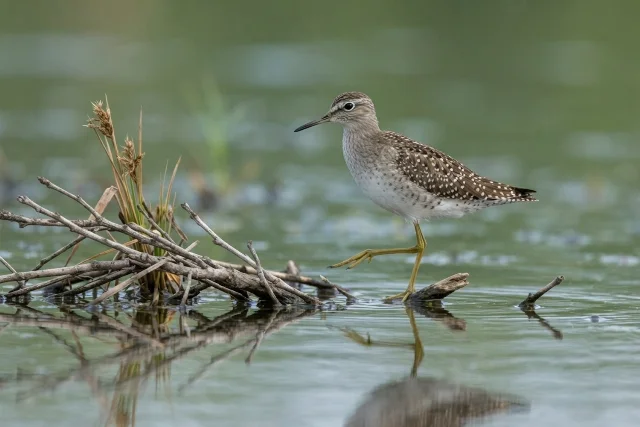
Mountain Parakeet Basic Information
| Scientific Name |
Psilopsiagon aurifrons
|
| Status |
LC
Least Concern
|
| Size |
18-20 cm (7-8 inch)
|
| Colors |
|
| Type |
|
| Family |
Parrots |
Introduction
The Mountain Parakeet, scientifically known as Psilopsiagon aurifrons, is a fascinating and resilient species of parrot native to the high-altitude regions of the Andes Mountains in South America. Belonging to the Psittacidae family, this charming bird has adapted remarkably well to the harsh, cold, and rugged environments of its mountainous home. Often found in small flocks, these birds are known for their quiet demeanor compared to their more boisterous relatives. As a member of the perching birds category, they exhibit agile movements as they navigate rocky outcrops and scrubby vegetation. Their presence is a vital indicator of the health of high-elevation ecosystems. Bird enthusiasts are often drawn to the Mountain Parakeet not only for its subtle beauty but also for the challenge of locating it within its vast, dramatic terrain. Understanding this species requires a deep dive into its unique biology, social structures, and the environmental pressures it faces in the thinning air of the high Andes.
Physical Appearance
Standing at a modest size of 18-20 cm, the Mountain Parakeet possesses a compact and streamlined build perfectly suited for life in thin, high-altitude air. Its primary coloration is a vibrant yet camouflage-friendly green, which helps it blend seamlessly into the mossy or shrubby vegetation of its habitat. A distinctive secondary color is its elegant grey, often concentrated around the face and head, providing a stark, sophisticated contrast to the rest of its body. The species exhibits sexual dimorphism, where males often display more intense coloration, particularly around the face and wings, while females may appear slightly duller or more uniform in their green and grey hues. Their wings are relatively long and pointed, facilitating efficient flight across deep canyons and wind-swept slopes. Their beak is small but sturdy, designed for cracking seeds and handling tough high-altitude plants. The plumage is dense, providing essential insulation against the freezing temperatures that occur frequently in their native mountain ranges.
Habitat
The Mountain Parakeet is exclusively found in the Andes, primarily spanning regions in Peru, Bolivia, Chile, and Argentina. They favor high-altitude environments, typically ranging from 1,500 to 4,500 meters above sea level. These birds are specialized inhabitants of the puna grasslands, rocky slopes, and shrubby ravines. Unlike many other parrots that thrive in tropical rainforests, the Mountain Parakeet has evolved to survive in arid, cold climates with extreme diurnal temperature fluctuations. They are frequently seen near cliff faces or in valleys where scrub vegetation provides both food and shelter from the intense mountain winds. Their ability to thrive in such an unforgiving landscape is a testament to their evolutionary adaptability and hardiness.
Diet
As a primarily granivorous species, the Mountain Parakeet relies heavily on the seeds of various high-altitude grasses and shrubs. Their diet is highly seasonal, shifting based on the availability of food sources in the harsh Andean environment. During the warmer months, they forage on the ground, consuming grass seeds, berries, and small fruits found in sheltered valleys. When food becomes scarce during the winter, they demonstrate incredible flexibility by feeding on buds, leaves, and occasionally succulent plant matter. They are often seen foraging in small, organized groups, which allows them to effectively scan for predators while they feed on the sparse vegetation of the mountainside.
Breeding and Nesting
The breeding season of the Mountain Parakeet is timed to coincide with the period of maximum resource availability in the high Andes. Unlike many tree-nesting parrots, these birds are unique in that they frequently utilize crevices, holes in rock faces, or even abandoned burrows to establish their nests. This nesting strategy is a clever adaptation to the relative lack of large trees in their high-altitude environment. A typical clutch consists of several white eggs, which the female incubates while the male frequently brings food to the nest. Both parents are deeply involved in the rearing process, showing significant dedication to their offspring. The fledglings emerge from the nest only when they are strong enough to handle the challenging, high-wind conditions of the mountains, ensuring their survival in a landscape where exposure is a constant threat to the young.
Behavior
Behaviorally, the Mountain Parakeet is a social and relatively quiet species. They are frequently observed in small, tight-knit flocks, maintaining constant contact with one another through soft, chattering calls. They are not as loud as many other parrot species, which helps them avoid detection by high-altitude raptors. During the day, they spend considerable time foraging on the ground or perching on rocky outcrops. They are remarkably agile flyers, capable of maneuvering through narrow canyons and heavy gusts of wind with ease. Their social structure is cooperative, with flock members often looking out for one another, a trait that is essential for surviving in the open, exposed terrain of the Andes.
Conservation Status
-
LC
Least Concern
The Mountain Parakeet is currently classified as a species of Least Concern by the IUCN, although its population trends are closely monitored. The primary threats to this species include habitat degradation caused by overgrazing in the high Andes and the impact of climate change on their specialized environment. While they are currently widespread, localized populations remain vulnerable to significant environmental shifts. Conservation efforts focus on preserving the integrity of the puna ecosystem and ensuring that key breeding sites remain protected from human-induced disturbances and industrial development.
Interesting Facts
- They are one of the few parrot species that nest in rocky crevices instead of tree cavities.
- Their grey facial markings are a key identifier for distinguishing them from other Andean parrot species.
- They can survive at altitudes exceeding 4,000 meters, where oxygen levels are significantly lower.
- They are known for being surprisingly quiet compared to other members of the Psittacidae family.
- They form small, cooperative flocks that help them detect predators in the open mountainous terrain.
- Their plumage provides exceptional insulation against the freezing temperatures of the high Andes.
Tips for Birdwatchers
For birdwatchers hoping to spot the Mountain Parakeet, patience and preparation are essential. Since they inhabit high-altitude areas, it is vital to prepare for rapid weather changes and thin air. Focus your search on rocky slopes, canyons, and areas with low, scrubby vegetation. Use high-quality binoculars or a spotting scope to scan the ground and rock crevices, as they are often well-camouflaged. Early morning is the best time for observation, as they are most active while foraging. Being quiet and moving slowly is crucial, as these birds are naturally cautious. Finally, hiring a local guide who knows the specific terrain can significantly increase your chances of a successful sighting.
Conclusion
The Mountain Parakeet (Psilopsiagon aurifrons) is a remarkable example of nature's ability to adapt to extreme conditions. From the rugged, wind-swept peaks of the Andes to the sparse, rocky valleys, this bird has carved out a unique niche that few other parrots could inhabit. Its subtle green and grey plumage, combined with its specialized nesting habits and cooperative social structure, makes it a true highlight for any birder visiting South America. While currently stable in the wild, the Mountain Parakeet reminds us of the delicate balance required for survival in fragile high-altitude ecosystems. Protecting their habitat is essential to ensuring that these resilient creatures continue to thrive for generations to come. Whether you are an experienced ornithologist or a casual bird enthusiast, the Mountain Parakeet offers a rewarding and educational experience, showcasing the incredible diversity and tenacity of life found in the high mountains of the Andes. We hope this guide has provided you with a deeper appreciation for this extraordinary bird.
Mountain Parakeet Distribution Map & Range
The distribution map for this species will be available soon.
We are working with our official data partners to update this information.