Pin-tailed Manakin Distribution Map & Range
The distribution map for this species will be available soon.
We are working with our official data partners to update this information.

Sign in with your Google account to access all features

| Scientific Name | Ilicura militaris |
|---|---|
| Status | LC Least Concern |
| Size | 10-11 cm (4-4 inch) |
| Colors |
Black
Red
|
| Type |
Perching Birds

|
| Family | Manakins |
The Pin-tailed Manakin (Ilicura militaris) is a fascinating species of bird belonging to the family Pipridae. Endemic to the lush, biodiverse regions of eastern Brazil, this small perching bird is celebrated by ornithologists and birdwatchers alike for its unique physical characteristics and captivating courtship rituals. Unlike many of its relatives in the manakin family, the Pin-tailed Manakin possesses a distinct morphology that makes it easily identifiable in the field. This species thrives in the understory of humid forests, where its vibrant plumage provides a stark contrast against the deep greens of the Atlantic Forest. As a specialized inhabitant of these dense ecosystems, the Pin-tailed Manakin plays a vital role in its environment, contributing to seed dispersal and maintaining the ecological balance of its native range. Understanding this bird requires a deep dive into its specialized behaviors, breeding cycles, and the specific environmental pressures it faces in the modern world. This guide provides an exhaustive look at everything you need to know about this remarkable avian treasure.
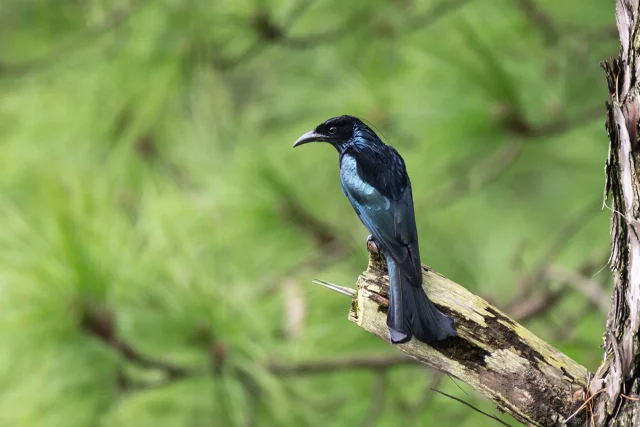
The Pin-tailed Manakin is a small, compact bird measuring approximately 10 to 11 centimeters in length. Its physical appearance is characterized by a striking combination of colors that distinguish it from other members of its genus. The primary color of the male is deep, glossy black, which covers much of its body. This is offset by a vibrant, bright red crown that sits prominently on its head, serving as a focal point during mating displays. Perhaps the most defining feature, which gives the species its common name, is the elongated, pin-like central tail feathers. These feathers are thin and pointed, extending well beyond the rest of the tail. Females and juveniles exhibit a more subdued coloration, typically appearing in olive-green or brownish tones, which provides essential camouflage while foraging in the dense undergrowth. Their anatomy is perfectly adapted for life as a perching bird, featuring strong, short legs and a short, stout bill designed for quick, precise feeding maneuvers. Every aspect of their plumage serves a purpose, whether it is for attracting potential mates or concealing themselves from predators within the forest shadows.
The Pin-tailed Manakin is strictly endemic to the Atlantic Forest of southeastern Brazil. It prefers the humid, dense understory of primary and secondary forests, where it can remain shielded from direct sunlight and potential avian predators. These birds are typically found in regions ranging from sea level up to elevations of approximately 1,500 meters. They occupy the lower to middle strata of the forest, rarely venturing into the high canopy. The availability of dense foliage and specific fruit-bearing shrubs is essential for their survival. Because they are highly sensitive to habitat fragmentation, the preservation of continuous forest corridors is critical for maintaining healthy populations of this unique manakin species across its limited geographic range.
As with most manakins, the diet of the Pin-tailed Manakin is primarily frugivorous. They rely heavily on the fruits of various shrubs and trees found within the Atlantic Forest understory. These birds are particularly fond of small, fleshy berries that are easy to swallow whole. In addition to their fruit-based diet, they also consume a variety of small insects and arthropods, which provide necessary protein, especially during the breeding season when energy demands are significantly higher. They are skilled at hovering briefly to snatch insects from leaves or branches. By foraging in this manner, they play an essential role in the forest ecosystem by acting as seed dispersers for many native plant species.
The breeding behavior of the Pin-tailed Manakin is one of its most captivating aspects. Like other manakins, they engage in elaborate lekking displays where males gather to compete for the attention of females. During these displays, the male Pin-tailed Manakin performs acrobatic movements, utilizing his unique tail feathers to create visual interest. The female is solely responsible for building the nest, which is typically a small, cup-shaped structure woven from fine plant fibers and spider silk, usually placed in the fork of a tree branch. She lays a small clutch of eggs, typically two, and handles all incubation duties. The male provides no parental care, focusing his energy entirely on defending his display territory and attracting further mates through his persistent, rhythmic vocalizations and energetic dance performances.
The Pin-tailed Manakin is known for being a highly active and energetic bird, especially during the breeding season. Outside of the lekking period, they are generally solitary and somewhat elusive. They move quickly through the understory, often using short, rapid flights to navigate between perches. Their vocalizations are distinct, consisting of a series of sharp, metallic notes that echo through the forest. When threatened, they are quick to retreat into the deepest parts of the foliage, using their cryptic coloration to disappear from view. Their behavior is highly specialized, reflecting a life evolved to thrive in the complex, vertical environments of the Brazilian Atlantic Forest.
The Pin-tailed Manakin is currently classified as a species of Least Concern by the IUCN, but this status masks the reality of its fragile existence. Their primary threat is the ongoing loss and fragmentation of the Atlantic Forest due to urbanization, agriculture, and logging. While they can survive in secondary forests, they depend on the structural complexity of native vegetation. Conservation efforts must focus on protecting existing forest fragments and promoting reforestation to create biological corridors. Monitoring their populations is essential to ensure that this iconic bird continues to thrive in its natural habitat.
For birdwatchers hoping to spot the Pin-tailed Manakin, patience is your greatest asset. Focus your efforts on the Atlantic Forest regions in southeastern Brazil during the early morning hours when these birds are most active. Because they prefer the understory, look for movement in the lower branches rather than the canopy. Use a high-quality pair of binoculars and listen for their distinct, sharp calls. Since males often return to specific display perches, finding a known lek site can greatly increase your chances of witnessing their spectacular courtship dances. Always maintain a respectful distance to avoid disturbing their natural behaviors or nesting sites. Bringing a field guide specific to Brazilian birds will help you distinguish them from other manakin species found in the same region.
In conclusion, the Pin-tailed Manakin (Ilicura militaris) stands as a testament to the incredible evolutionary diversity found within the Atlantic Forest of Brazil. From its striking black and red plumage to its unique, needle-like tail feathers, every detail of this bird is a marvel of adaptation. As a specialized frugivore and a master of complex courtship displays, the Pin-tailed Manakin fulfills a unique niche that supports the health of its forest home. However, its future remains tied to the conservation of the fragile ecosystems it inhabits. By protecting the dense, humid understories of the Atlantic Forest, we ensure that future generations of birdwatchers and scientists can continue to study and admire this remarkable species. Whether you are an experienced ornithologist or a casual birdwatcher, observing the Pin-tailed Manakin in its natural environment is a rewarding experience that highlights the beauty and necessity of biodiversity. We must continue to support habitat restoration and conservation initiatives to keep this vibrant, pin-tailed wonder dancing in the shadows of the Brazilian wilderness for years to come.
We are working with our official data partners to update this information.
Tag:



Birds have their own beautiful world, we should not interfere in it. We should enjoy this beauty. Its beauty should be captured in the camera but be careful not to disturb them.
Tap a language to switch instantly.
Tap a language to switch instantly.