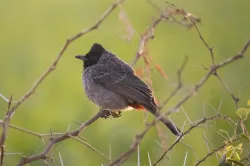
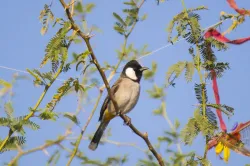
Not available

Black-capped Bulbul
Rubigula melanictera
Last update: 13 Jul 2026
Read in:
English
Español
Português
हिन्दी
বাংলা
தமிழ்
മലയാളം
मराठी
ગુજરાતી
తెలుగు
French
Deutsch
Русский
日本語
简体中文
Italiano
Tiếng Việt
العربية
ಕನ್ನಡ
ਪੰਜਾਬੀ
Black-capped Bulbul Basic Information
| Scientific Name | Rubigula melanictera |
|---|---|
| Status | LC Least Concern |
| Size | 18-20 cm (7-8 inch) |
| Colors |
Yellow
Black
|
| Type |
Perching Birds

|
| Family | Bulbuls |
Introduction
The Black-capped Bulbul (Rubigula melanictera) is a charismatic and striking passerine bird that belongs to the Pycnonotidae family. Often considered a jewel of the forest, this perching bird is primarily found in the lush, tropical landscapes of Sri Lanka. Renowned for its melodious songs and vibrant plumage, the species has long captivated bird enthusiasts and ornithologists alike. Unlike many other bulbuls that exhibit duller, more cryptic coloration, the Black-capped Bulbul stands out due to its brilliant yellow underparts and distinctively dark, velvet-like head. As a vital part of the island's ecosystem, it plays an important role in seed dispersal, contributing to the health and regeneration of its native forest environments. Understanding this species requires a deep dive into its unique biological traits, social structures, and the environmental factors that influence its survival in the wild. This guide provides a comprehensive overview of the Black-capped Bulbul, offering insights into its life cycle, dietary preferences, and the best ways to observe this beautiful bird in its natural habitat.
Physical Appearance
The Black-capped Bulbul is a medium-sized songbird, typically measuring between 18 and 20 centimeters in length. Its most defining physical characteristic is the stark contrast between its jet-black head and its vibrant, lemon-yellow body. This color palette makes it easily distinguishable from other bulbul species found in the region. The head features a prominent black crown that appears almost velvety in texture, which sits in sharp relief against the bright yellow plumage that covers its breast, belly, and back. The wings and tail often exhibit a slightly olive-green tint, which helps provide a degree of camouflage when the bird is perched among the foliage. The bill is dark and slender, perfectly adapted for its varied diet, while its eyes are often a bright, inquisitive shade of blue or pale white, depending on the individual's maturity. The legs and feet are sturdy and well-developed for perching, allowing the bird to move nimbly through the dense canopy. Both males and females share this striking coloration, although subtle differences in intensity may occur, with some individuals displaying more vivid yellow hues during the breeding season.
Habitat
The Black-capped Bulbul is primarily endemic to the island nation of Sri Lanka. It is a highly adaptable species, though it shows a strong preference for humid, evergreen forests and well-wooded areas. You can frequently find them in the canopy and sub-canopy layers of tropical rainforests, as well as in secondary growth forests, tea plantations, and even mature home gardens near forested tracts. They thrive in areas with high humidity and dense vegetation, which provide both protection from predators and an abundance of food sources. While they are most common in the lowlands and foothills, their range extends into the montane regions, demonstrating a versatile nature regarding altitude and local microclimates.
Diet
As an omnivorous species, the Black-capped Bulbul maintains a diverse diet that supports its energetic lifestyle. Its primary food sources consist of small fruits, berries, and nectar, which it gathers by foraging through the canopy. They are particularly fond of native figs and other small forest fruits, making them essential seed dispersers within their ecosystem. In addition to plant matter, they are skilled insectivores. They frequently supplement their diet with small insects, larvae, and spiders, especially during the breeding season when the extra protein is necessary for raising chicks. This varied intake allows them to remain active and healthy throughout the year, even when fruit availability fluctuates with the seasons.
Breeding and Nesting
Breeding for the Black-capped Bulbul typically follows the monsoon seasons, when food resources are at their peak. These birds are known for their meticulous nest-building skills. They construct small, cup-shaped nests using fine twigs, grass, roots, and spiderwebs to bind the materials together. The nests are usually tucked away in the fork of a tree or hidden within dense shrubbery to protect them from predators. A typical clutch consists of two to three eggs, which are often pale with reddish-brown spots. Both parents are actively involved in the incubation process and the subsequent feeding of the chicks. The young grow rapidly, fledging within a few weeks, and are often seen following their parents as they learn to forage and navigate the complex forest canopy.
Behavior
Socially, the Black-capped Bulbul is often seen in pairs or small family groups. They are not particularly shy, but their movement through the dense canopy can make them difficult to spot if they are not calling. Their vocalizations are a series of pleasant, melodious whistles, which are most frequent during the early morning hours. They are highly territorial during the nesting season and will defend their space against other birds with spirited displays. Their flight is typically short and direct, moving from one branch to another in a quick, darting motion. They are also known to engage in communal bathing in small forest pools, a behavior that highlights their social nature.
Conservation Status - LC Least Concern
The Black-capped Bulbul is currently categorized as a species of Least Concern by the IUCN. While its population appears stable, it faces ongoing threats from habitat fragmentation and deforestation in its native range. As an endemic species, it is highly dependent on the preservation of Sri Lanka's forest cover. Conservation efforts focus on protecting existing forest patches and promoting the growth of native trees in agricultural landscapes. While not currently endangered, continued monitoring is essential to ensure that human expansion does not negatively impact their breeding grounds or food availability in the future.
Interesting Facts
- The Black-capped Bulbul is endemic to Sri Lanka, meaning it is found nowhere else in the world.
- They are known for their distinctive, bright blue eyes that contrast beautifully with their yellow feathers.
- These birds are excellent seed dispersers, aiding in the growth of various native tree species.
- During the heat of the day, they are often seen bathing in small water droplets collected on large leaves.
- They possess a highly melodic song that is often heard before the bird is actually seen.
- Their nests are remarkably sturdy, built using spider silk as a natural adhesive.
- They play a significant role in controlling insect populations within their natural habitat.
Tips for Birdwatchers
For birdwatchers hoping to catch a glimpse of the Black-capped Bulbul, the best approach is to head to the wet zone forests of Sri Lanka early in the morning. Being active during the dawn chorus is crucial, as this is when the birds are most vocal and active. Use high-quality binoculars to scan the sub-canopy, as this is their preferred feeding height. Patience is key; wait near fruiting trees, as these are natural magnets for the species. Avoid sudden movements and wear muted clothing to blend into the environment. Listening for their unique, clear whistles will guide you to their location before you see them. Bringing a camera with a good telephoto lens is recommended, as they can be quick to move between branches.
Pro-Tip: To spot this bird in dense forest canopy, a 8x42 binoculars or telescope is highly recommended.
- [Check out our top recommended gear here]
Pro-Tip: To capture the stunning beauty of this bird, a high-quality wildlife camera and lens are highly recommended.
- [Check out best wildlife cameras here]
Conclusion
The Black-capped Bulbul is a testament to the biological richness of Sri Lanka. With its vibrant yellow plumage and charming, inquisitive nature, it serves as a flagship species for the island’s tropical forests. By studying and protecting this bird, we not only preserve a beautiful piece of avian life but also support the broader ecosystem that relies on its presence for seed dispersal and insect control. As birdwatchers and nature lovers, our appreciation for such species fosters a greater commitment to environmental conservation. Whether you are a professional ornithologist or a casual enthusiast, the Black-capped Bulbul offers a rewarding experience in the field. Its presence in the canopy reminds us of the delicate balance of nature and the importance of maintaining the habitats that sustain such unique biodiversity. We hope this guide has provided you with a deeper understanding of this remarkable bird and encouraged you to explore the lush forests of Sri Lanka to witness its beauty firsthand. Always remember to practice ethical birding to ensure that these birds continue to thrive in their natural environment for generations to come.
Tag:

200 Follower
is a writer who draws. He’s the Bestselling author of “Number of The Year”. Donec vitae tortor efficitur, convallis lelobortis elit.
Recent Posts






Subscribe For Daily Newsletter