Perching Birds
avatar
Photo by mayur mulubhai ahir
Udupi, Karnataka, India
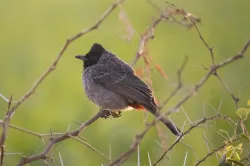
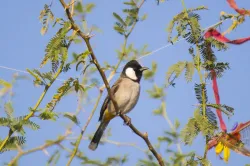
Grey-headed Bulbul

Grey-headed Bulbul

Brachypodius priocephalus

Last update: 10 Mar 2026

Grey-headed Bulbul Basic Information

Scientific NameBrachypodius priocephalus
Status LC Least Concern
Size14-16 cm (6-6 inch)
Colors
Olive
Grey
Type
Perching Birds
type
FamilyBulbuls

Grey-headed Bulbul Names In Other Languages

bengaliধূসরমাথা বুলবুলি
frenchBulbul à tête grise
hindiधूसर-शीर्ष बुलबुल
kannadaಬೂದು ತಲೆಯ ಬುಲ್ಬುಲ್
malayalamചാരത്തലയൻ ബുൾബുൾ
marathiराखाडी डोक्याचा बुलबुल
portugueseBulbul-de-cabeça-cinzenta
spanishBulbul cabecigrís
tamilசாம்பல் தலை கொண்ட கொண்டைக்குருவி
teluguబూడిద తల పచ్చపిట్ట

Introduction

The Grey-headed Bulbul (Brachypodius priocephalus) is a fascinating and elusive member of the Pycnonotidae family, primarily found in the lush, verdant landscapes of the Western Ghats in India. As an endemic species, it holds a special place in the hearts of ornithologists and birdwatchers who traverse the dense forests of the Indian peninsula. This perching bird is celebrated for its distinctive appearance and its shy, often secretive nature, which adds to the thrill of spotting one in the wild. Unlike some of its more boisterous relatives, the Grey-headed Bulbul prefers the tranquility of the canopy, making it a challenging yet rewarding subject for nature photographers and researchers alike. Understanding this species requires a deep appreciation for the complex biodiversity of the Western Ghats, a global biodiversity hotspot that provides the specialized environment this bird requires to thrive. Its presence is often an indicator of a healthy, intact forest ecosystem, highlighting the importance of conservation efforts in its native range.

Physical Appearance

The Grey-headed Bulbul is a small, compact passerine bird, typically measuring between 14 and 16 centimeters in length. Its most striking feature is, as the name suggests, its ash-grey head, which contrasts beautifully with the rest of its body. The primary plumage is dominated by a rich, warm olive-green color that covers the mantle, wings, and underparts, providing excellent camouflage against the foliage of the rainforest canopy. The bird features a distinctive yellow throat and belly, which adds a vibrant splash of color to its otherwise muted, earthy tones. The eyes are usually a bright, piercing white or pale yellow, set against the dark grey of the head, giving the bird a sharp and alert expression. Its beak is relatively short and sturdy, perfectly adapted for its varied diet. The tail is often slightly rounded, and the overall build of the bird is typical of the bulbul family—stout and well-proportioned for agile movement through tangled branches.

Habitat

The Grey-headed Bulbul is strictly endemic to the Western Ghats of India. This bird is highly specialized and is primarily found in evergreen forests, moist deciduous forests, and shola grasslands. It favors areas with dense undergrowth and thick canopy cover, which provide both protection from predators and an abundance of food resources. You are most likely to encounter these birds in the southern parts of the Western Ghats, particularly in regions like Kerala, Tamil Nadu, and parts of Karnataka. They are rarely seen in open spaces or human-altered landscapes, preferring the undisturbed, humid environments of the high-altitude forests where the climate remains cool and stable throughout the year.

Diet

The diet of the Grey-headed Bulbul is primarily frugivorous, consisting of a wide variety of forest fruits, berries, and small seeds. They are particularly fond of figs and the berries of various native trees found within the Western Ghats. In addition to plant matter, they are known to supplement their diet with insects and small invertebrates, especially during the breeding season when the demand for protein is higher for their developing chicks. They forage actively in the canopy, often hopping from branch to branch in search of ripe fruits. Their feeding habits play a crucial role in the local ecosystem, as they act as important seed dispersers for many forest plant species.

Breeding and Nesting

Breeding for the Grey-headed Bulbul typically coincides with the arrival of the monsoon season, which ensures an abundance of food for the upcoming brood. They construct neat, cup-shaped nests made of fine twigs, grasses, and moss, often lined with soft fibers to provide comfort for the eggs. These nests are usually placed in the fork of a tree or hidden within thick, leafy foliage to protect them from potential predators. The female usually lays a small clutch of two to three eggs, which are pale with darker markings. Both parents are actively involved in the incubation process and the subsequent feeding of the chicks, demonstrating a high level of parental care. The nestlings remain in the nest for several weeks, protected by the dense forest canopy until they are ready to fledge and begin their independent lives.

Behavior

The Grey-headed Bulbul is known for its quiet and reserved demeanor. Unlike many other bulbuls that are vocal and conspicuous, this species is often detected by its soft, melodic calls rather than its movement. They are typically found in pairs or small family groups, moving stealthily through the middle to upper layers of the forest. They are not known for long-distance migrations, instead remaining within their established home ranges throughout the year. While they can be shy, they are also quite agile, capable of quick, darting flights between trees to avoid detection. Their behavior is a classic example of adaptation to a dense forest environment, where stealth is a primary survival strategy.

Conservation Status - LC Least Concern

Currently, the Grey-headed Bulbul is classified as a species of Least Concern by the IUCN, although its population is considered to be declining in certain localized areas. The primary threats to this species include habitat fragmentation and the loss of pristine evergreen forests due to agricultural expansion, infrastructure development, and climate change. As an endemic species with a restricted range, it is highly sensitive to environmental changes. Protecting the corridors of the Western Ghats is essential for ensuring the long-term survival of this bird, as it relies heavily on the structural integrity of its forest habitat.

Interesting Facts

  1. It is strictly endemic to the Western Ghats of India.
  2. The bird features a unique white iris that gives it a distinct appearance.
  3. It is a key seed disperser for various evergreen forest trees.
  4. Unlike other bulbuls, it is generally quiet and avoids human settlements.
  5. The breeding season is perfectly timed with the monsoon's arrival.
  6. It is often considered a 'specialty bird' by birdwatchers visiting the Western Ghats.

Tips for Birdwatchers

For birdwatchers hoping to spot the Grey-headed Bulbul, patience is the ultimate virtue. Focus your efforts on the early morning hours, as this is when they are most active and likely to be foraging. Use high-quality binoculars and consider using a spotting scope if you are observing from a distance to avoid alarming them. Since they are canopy dwellers, look for movement in the mid-to-upper levels of the trees rather than on the ground. Familiarize yourself with their unique, soft calls by listening to recordings beforehand, as this will help you pinpoint their location in dense foliage. Hiring a local guide who is familiar with the specific forest patches where they reside can significantly increase your chances of a successful sighting.

Pro-Tip: To spot this bird in dense forest canopy, a 8x42 binoculars or telescope is highly recommended.
- [Check out our top recommended gear here]

Conclusion

The Grey-headed Bulbul is a remarkable testament to the unique biodiversity preserved within the Western Ghats of India. As a specialized inhabitant of these ancient forests, its survival is inextricably linked to the conservation of its natural habitat. Throughout this guide, we have explored the various aspects of its life—from its olive-grey plumage and diet of forest fruits to its secretive nesting habits and quiet demeanor. For bird enthusiasts, encountering this species is a highlight of any expedition, representing a successful search for one of India's most charismatic endemic birds. However, beyond the excitement of a sighting, the Grey-headed Bulbul serves as a reminder of the fragility of isolated ecosystems. As we face global environmental challenges, protecting the dense, evergreen forests that this bird calls home is not just about saving a single species, but about preserving the complex web of life that sustains the entire region. By supporting conservation initiatives and practicing responsible birdwatching, we can ensure that future generations will also have the opportunity to marvel at this elegant inhabitant of the forest canopy, continuing the legacy of discovery and appreciation for the natural world.

Grey-headed Bulbul Distribution Map & Range

Official Distribution Data provided by
BirdLife International and Handbook of the Birds of the World (2025)

Tag:

Share:

Previous
Next

Explore More Species in the Bulbuls Family

Aceh Bulbul
19-21 cm
Aceh Bulbul
Pycnonotus snouckaerti
17-18 cm
Andaman Bulbul
Brachypodius fuscoflavescens
Angola Greenbul
17-19 cm
Angola Greenbul
Phyllastrephus viridiceps
16-18 cm
Ansorge's Greenbul
Eurillas ansorgei
20-21 cm
Ashy Bulbul
Hemixos flavala
Ashy-fronted Bulbul
19-21 cm
Ashy-fronted Bulbul
Pycnonotus cinereifrons
Banggai Golden Bulbul
18-20 cm
Banggai Golden Bulbul
Hypsipetes harterti
Bare-faced Bulbul
20-22 cm
Bare-faced Bulbul
Nok hualon
Baumann's Greenbul
15-17 cm
Baumann's Greenbul
Phyllastrephus baumanni
24-25 cm
Black Bulbul
Hypsipetes leucocephalus
Black-and-white Bulbul
19-21 cm
Black-and-white Bulbul
Microtarsus melanoleucos
19-21 cm
Black-browed Mountain Greenbul
Arizelocichla fusciceps
Black-capped Bulbul
18-20 cm
Black-capped Bulbul
Rubigula melanictera
18-20 cm
Black-collared Bulbul
Neolestes torquatus
18-19 cm
Black-crested Bulbul
Rubigula flaviventris
19-21 cm
Black-fronted Bulbul
Pycnonotus nigricans
17-18 cm
Black-headed Bulbul
Brachypodius atriceps
Blue-wattled Bulbul
20-22 cm
Blue-wattled Bulbul
Pycnonotus nieuwenhuisii
Bornean Bulbul
18-20 cm
Bornean Bulbul
Rubigula montis
Brown-breasted Bulbul
20-22 cm
Brown-breasted Bulbul
Pycnonotus xanthorrhous
Brown-cheeked Bulbul
20-22 cm
Brown-cheeked Bulbul
Alophoixus bres
27-29 cm
Brown-eared Bulbul
Hypsipetes amaurotis
Buff-vented Bulbul
20-22 cm
Buff-vented Bulbul
Iole charlottae
Buru Golden Bulbul
18-20 cm
Buru Golden Bulbul
Hypsipetes mysticalis
Cabanis's Greenbul
19-21 cm
Cabanis's Greenbul
Phyllastrephus cabanisi
Cameroon Mountain Greenbul
18-20 cm
Cameroon Mountain Greenbul
Arizelocichla montana
18-20 cm
Cameroon Olive Greenbul
Phyllastrephus poensis
Camiguin Bulbul
22-24 cm
Camiguin Bulbul
Hypsipetes catarmanensis
19-21 cm
Cape Bulbul
Pycnonotus capensis
Chestnut Bulbul
20-22 cm
Chestnut Bulbul
Hemixos castanonotus
Chestnut-vented Bulbul
17-19 cm
Chestnut-vented Bulbul
Alophoixus ruficrissus
Cinereous Bulbul
20-22 cm
Cinereous Bulbul
Hemixos cinereus
Collared Finchbill
20-22 cm
Collared Finchbill
Spizixos semitorques
18-21 cm
Common Bulbul
Pycnonotus barbatus
Cream-eyed Bulbul
20-22 cm
Cream-eyed Bulbul
Pycnonotus pseudosimplex
Cream-striped Bulbul
20-23 cm
Cream-striped Bulbul
Hemixos leucogrammicus
Cream-vented Bulbul
18-20 cm
Cream-vented Bulbul
Pycnonotus simplex
19-22 cm
Crested Finchbill
Spizixos canifrons
20-22 cm
Eastern Bearded Greenbul
Criniger chloronotus
18-20 cm
Eastern Mountain Greenbul
Arizelocichla nigriceps
16-18 cm
Falkenstein's Greenbul
Chlorocichla falkensteini
Finsch's Bulbul
16-18 cm
Finsch's Bulbul
Iole finschii
Fischer's Greenbul
15-17 cm
Fischer's Greenbul
Phyllastrephus fischeri
18-19 cm
Flame-throated Bulbul
Rubigula gularis
19-20 cm
Flavescent Bulbul
Pycnonotus flavescens
Golden Greenbul
19-21 cm
Golden Greenbul
Calyptocichla serinus
22-24 cm
Grande Comore Bulbul
Hypsipetes parvirostris
20-22 cm
Green-tailed Bristlebill
Bleda eximius
Green-winged Bulbul
18-20 cm
Green-winged Bulbul
Hemixos connectens
18-20 cm
Grey Greenbul
Eurillas gracilis
Grey-bellied Bulbul
19-21 cm
Grey-bellied Bulbul
Ixidia cyaniventris
Grey-cheeked Bulbul
18-20 cm
Grey-cheeked Bulbul
Alophoixus tephrogenys
Grey-crowned Bulbul
18-20 cm
Grey-crowned Bulbul
Alophoixus griseiceps
Grey-eyed Bulbul
19-21 cm
Grey-eyed Bulbul
Iole propinqua
Grey-headed Bristlebill
19-21 cm
Grey-headed Bristlebill
Bleda canicapillus
Grey-headed Greenbul
19-21 cm
Grey-headed Greenbul
Phyllastrephus poliocephalus
17-19 cm
Grey-olive Greenbul
Phyllastrephus cerviniventris
Hairy-backed Bulbul
15-18 cm
Hairy-backed Bulbul
Tricholestes criniger
Halmahera Golden Bulbul
19-21 cm
Halmahera Golden Bulbul
Hypsipetes chloris
18-20 cm
Himalayan Bulbul
Pycnonotus leucogenys
Honeyguide Greenbul
16-19 cm
Honeyguide Greenbul
Baeopogon indicator
Hook-billed Bulbul
22-25 cm
Hook-billed Bulbul
Setornis criniger
Icterine Greenbul
19-21 cm
Icterine Greenbul
Phyllastrephus icterinus
Javan Bulbul
18-20 cm
Javan Bulbul
Ixos virescens
16-18 cm
Joyful Greenbul
Chlorocichla laetissima
Leaf-love
19-21 cm
Leaf-love
Pyrrhurus scandens
17-19 cm
Light-vented Bulbul
Pycnonotus sinensis
15-17 cm
Little Greenbul
Eurillas virens
Lowland Tiny Greenbul
13-15 cm
Lowland Tiny Greenbul
Phyllastrephus debilis
20-23 cm
Malagasy Bulbul
Hypsipetes madagascariensis
20-22 cm
Mauritius Bulbul
Hypsipetes olivaceus
Moheli Bulbul
20-22 cm
Moheli Bulbul
Hypsipetes moheliensis
Montane Tiny Greenbul
13-15 cm
Montane Tiny Greenbul
Phyllastrephus albigula
21-24 cm
Mountain Bulbul
Ixos mcclellandii
20-22 cm
Nicobar Bulbul
Ixos nicobariensis
18-20 cm
Northern Brownbul
Phyllastrephus strepitans
Obi Golden Bulbul
18-20 cm
Obi Golden Bulbul
Hypsipetes lucasi
Ochraceous Bulbul
19-21 cm
Ochraceous Bulbul
Alophoixus ochraceus
18-20 cm
Olive Bulbul
Iole viridescens
Olive-headed Bulbul
18-20 cm
Olive-headed Bulbul
Arizelocichla striifacies
Olive-winged Bulbul
18-20 cm
Olive-winged Bulbul
Pycnonotus plumosus
Orange-spotted Bulbul
18-20 cm
Orange-spotted Bulbul
Pycnonotus bimaculatus
Palawan Bulbul
20-22 cm
Palawan Bulbul
Alophoixus frater
Pale-eyed Bulbul
19-21 cm
Pale-eyed Bulbul
Pycnonotus davisoni
Pale-faced Bulbul
18-20 cm
Pale-faced Bulbul
Pycnonotus leucops
Pale-olive Greenbul
18-20 cm
Pale-olive Greenbul
Phyllastrephus fulviventris
17-19 cm
Pale-throated Greenbul
Atimastillas flavigula
Philippine Bulbul
23-25 cm
Philippine Bulbul
Hypsipetes philippinus
Plain Greenbul
18-20 cm
Plain Greenbul
Eurillas curvirostris
Prigogine's Greenbul
15-17 cm
Prigogine's Greenbul
Chlorocichla prigoginei
Puff-backed Bulbul
18-20 cm
Puff-backed Bulbul
Euptilotus eutilotus
Puff-throated Bulbul
18-20 cm
Puff-throated Bulbul
Alophoixus pallidus
red vented bulbul
20-20 cm
red vented bulbul
Pycnonotus cafer
Red-eyed Bulbul
19-22 cm
Red-eyed Bulbul
Pycnonotus brunneus
18-20 cm
Red-tailed Bristlebill
Bleda syndactylus
20-23 cm
Red-tailed Greenbul
Criniger calurus
Red-whiskered Bulbul
20-22 cm
Red-whiskered Bulbul
Pycnonotus jocosus
20-22 cm
Reunion Bulbul
Hypsipetes borbonicus
Ruby-throated Bulbul
17-19 cm
Ruby-throated Bulbul
Rubigula dispar
Sangihe Golden Bulbul
18-20 cm
Sangihe Golden Bulbul
Hypsipetes platenae
Sassi's Olive Greenbul
18-20 cm
Sassi's Olive Greenbul
Phyllastrephus lorenzi
Scaly-breasted Bulbul
18-20 cm
Scaly-breasted Bulbul
Ixidia squamata
Seram Golden Bulbul
19-21 cm
Seram Golden Bulbul
Hypsipetes affinis
24-25 cm
Seychelles Bulbul
Hypsipetes crassirostris
Shelley's Greenbul
18-20 cm
Shelley's Greenbul
Arizelocichla masukuensis
17-19 cm
Simple Greenbul
Chlorocichla simplex
15-17 cm
Slender-billed Greenbul
Stelgidillas gracilirostris
19-20 cm
Sombre Greenbul
Andropadus importunus
Sooty-headed Bulbul
18-20 cm
Sooty-headed Bulbul
Pycnonotus aurigaster
Spectacled Bulbul
18-20 cm
Spectacled Bulbul
Ixidia erythropthalmos
Spot-necked Bulbul
19-21 cm
Spot-necked Bulbul
Pycnonotus tympanistrigus
18-20 cm
Spotted Greenbul
Ixonotus guttatus
20-22 cm
Square-tailed Bulbul
Hypsipetes ganeesa
Straw-headed Bulbul
28-29 cm
Straw-headed Bulbul
Pycnonotus zeylanicus
Streak-breasted Bulbul
18-20 cm
Streak-breasted Bulbul
Hypsipetes siquijorensis
Streak-eared Bulbul
20-23 cm
Streak-eared Bulbul
Pycnonotus blanfordi
Streaked Bulbul
20-24 cm
Streaked Bulbul
Ixos malaccensis
20-23 cm
Striated Bulbul
Alcurus striatus
17-19 cm
Stripe-cheeked Bulbul
Arizelocichla milanjensis
Stripe-throated Bulbul
18-20 cm
Stripe-throated Bulbul
Pycnonotus finlaysoni
Styan's Bulbul
18-20 cm
Styan's Bulbul
Pycnonotus taivanus
Sula Golden Bulbul
18-20 cm
Sula Golden Bulbul
Hypsipetes longirostris
Sulphur-bellied Bulbul
17-19 cm
Sulphur-bellied Bulbul
Iole palawanensis
Sulu Bulbul
20-22 cm
Sulu Bulbul
Hypsipetes haynaldi
Sumatran Bulbul
18-20 cm
Sumatran Bulbul
Ixos sumatranus
Swamp Palm Bulbul
15-18 cm
Swamp Palm Bulbul
Thescelocichla leucopleura
18-20 cm
Terrestrial Brownbul
Phyllastrephus terrestris
Togian Golden Bulbul
18-20 cm
Togian Golden Bulbul
Hypsipetes aureus
Toro Olive Greenbul
17-19 cm
Toro Olive Greenbul
Phyllastrephus hypochloris
Uluguru Mountain Greenbul
16-18 cm
Uluguru Mountain Greenbul
Arizelocichla neumanni
Western Bearded Greenbul
20-22 cm
Western Bearded Greenbul
Criniger barbatus
18-20 cm
Western Mountain Greenbul
Arizelocichla tephrolaema
white eared bulbul
20-20 cm
white eared bulbul
Pycnonotus leucotis
White-bearded Greenbul
19-22 cm
White-bearded Greenbul
Criniger ndussumensis
19-20 cm
White-browed Bulbul
Pycnonotus luteolus
White-headed Bulbul
20-23 cm
White-headed Bulbul
Hypsipetes thompsoni
White-spectacled Bulbul
17-19 cm
White-spectacled Bulbul
Pycnonotus xanthopygos
White-tailed Greenbul
18-20 cm
White-tailed Greenbul
Baeopogon clamans
21-23 cm
White-throated Bulbul
Alophoixus flaveolus
17-19 cm
White-throated Greenbul
Phyllastrephus albigularis
Xavier's Greenbul
17-19 cm
Xavier's Greenbul
Phyllastrephus xavieri
Yellow-bearded Greenbul
18-20 cm
Yellow-bearded Greenbul
Criniger olivaceus
Yellow-bellied Bulbul
19-21 cm
Yellow-bellied Bulbul
Alophoixus phaeocephalus
19-22 cm
Yellow-bellied Greenbul
Chlorocichla flaviventris
Yellow-browed Bulbul
19-20 cm
Yellow-browed Bulbul
Acritillas indica
Yellow-eared Bulbul
19-21 cm
Yellow-eared Bulbul
Pycnonotus penicillatus
18-20 cm
Yellow-eyed Bristlebill
Bleda ugandae
Yellow-lored Bristlebill
18-20 cm
Yellow-lored Bristlebill
Bleda notatus
Yellow-streaked Greenbul
18-20 cm
Yellow-streaked Greenbul
Phyllastrephus flavostriatus
19-20 cm
Yellow-throated Bulbul
Pycnonotus xantholaemus
Yellow-throated Greenbul
19-21 cm
Yellow-throated Greenbul
Atimastillas flavicollis
19-21 cm
Yellow-throated Mountain Greenbul
Arizelocichla chlorigula
Yellow-vented Bulbul
18-20 cm
Yellow-vented Bulbul
Pycnonotus goiavier
Yellow-wattled Bulbul
19-21 cm
Yellow-wattled Bulbul
Poliolophus urostictus
17-19 cm
Yellow-whiskered Greenbul
Eurillas latirostris
Yellowish Bulbul
18-20 cm
Yellowish Bulbul
Hypsipetes everetti
Zamboanga Bulbul
17-19 cm
Zamboanga Bulbul
Hypsipetes rufigularis