Perching Birds
avatar
Photo by Admin
Not available

Himalayan Bulbul

Pycnonotus leucogenys

Last update: 10 Mar 2026

Himalayan Bulbul Basic Information

Scientific NamePycnonotus leucogenys
Status LC Least Concern
Size18-20 cm (7-8 inch)
Colors
Brown
White
Type
Perching Birds
type
FamilyBulbuls

Introduction

The Himalayan Bulbul (Pycnonotus leucogenys) is a distinctive and charismatic passerine bird native to the mountainous regions of South Asia. Belonging to the family Pycnonotidae, this perching bird is widely recognized for its jaunty crest and striking facial patterns. As a resident species of the Himalayan foothills, it has become a favorite among birdwatchers and ornithologists alike due to its lively personality and melodic, flute-like vocalizations that echo through wooded valleys. This medium-sized bird typically thrives in temperate forests and shrublands, displaying a remarkable ability to adapt to varying altitudes. Throughout the year, the Himalayan Bulbul remains an active member of its ecosystem, playing a vital role in seed dispersal and insect population control. Whether flitting through the canopy or visiting garden bird feeders, its presence brings vibrant energy to the landscape. Understanding the ecology and behavior of this species offers fascinating insights into avian adaptation within high-altitude environments, making it a quintessential subject for anyone interested in the biodiversity of the Himalayan range.

Physical Appearance

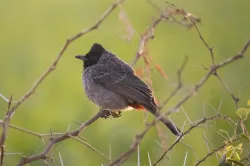
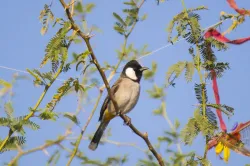
Measuring between 18 and 20 centimeters in length, the Himalayan Bulbul possesses a compact yet elegant physique typical of the bulbul family. The bird is primarily characterized by its earthy brown plumage, which provides excellent camouflage against the bark and foliage of its forest habitat. A defining feature is its prominent, forward-curving black crest, which it can raise or lower depending on its mood or level of alertness. The facial area presents a sharp contrast; the cheeks are white, framed by dark, almost black, auricular patches that make the bird easily identifiable. The underparts are a lighter, grayish-white, while the vent area is bright yellow, serving as a subtle splash of color during flight. Both males and females share similar plumage, a trait known as monomorphism, making it difficult to distinguish between sexes by sight alone. Their strong, slender legs and perching feet are adapted for gripping branches securely, while their short, rounded wings allow for quick, agile movements through dense thickets and shrubbery.

Habitat

The Himalayan Bulbul is primarily found in the temperate and subtropical zones of the Himalayas, ranging from Afghanistan through Pakistan and northern India to Nepal. They typically inhabit elevations between 1,000 and 3,000 meters, preferring open woodlands, forest edges, and scrubby hillsides. They are also frequent visitors to human-altered landscapes, often appearing in orchards, tea plantations, and well-vegetated gardens. This adaptability to both wild forests and semi-urban environments allows them to maintain stable populations across their range. During colder winter months, some populations may descend to lower altitudes to find more abundant food sources, showcasing their seasonal migratory patterns within the mountain systems.

Diet

As an omnivorous species, the Himalayan Bulbul has a diverse and flexible diet. They primarily feed on a variety of wild fruits, berries, and nectar, which makes them effective pollinators and seed dispersers for many Himalayan plant species. During the breeding season, their dietary requirements shift slightly as they increase their intake of protein-rich foods to support their growing nestlings. They become adept insectivores, skillfully catching flies, beetles, and small caterpillars mid-air or gleaning them from leaf surfaces. This balanced diet of plant matter and insects allows them to thrive in various habitats, ensuring they can find sufficient nourishment even when specific fruit sources are seasonally scarce.

Breeding and Nesting

The breeding season of the Himalayan Bulbul generally occurs between April and August, coinciding with the period of peak food availability. These birds are typically monogamous and work together to construct a neat, cup-shaped nest. The nest is usually fashioned from fine twigs, roots, grass, and moss, often lined with softer fibers to cushion the eggs. It is carefully concealed within the dense foliage of a shrub or a low-hanging tree branch, offering protection from predators. The female typically lays a clutch of two to four pinkish-white eggs with reddish-brown spots. Both parents are highly attentive, sharing incubation duties and working tirelessly to feed the chicks once they hatch, ensuring their rapid development until they are ready to fledge.

Behavior

The Himalayan Bulbul is an active and social bird, often seen in pairs or small family groups. They are known for their lively and occasionally aggressive behavior, especially when defending their nesting territory from intruders or competing for food sources at feeders. Their vocalizations are varied, ranging from soft, musical chirps to louder, more complex songs that are most frequent during the dawn chorus. When perched, they often flick their tails and move their crests, displaying a high level of nervous energy. They are generally bold birds, showing little fear of humans, which makes them a joy to observe in residential areas and public parks.

Conservation Status - LC Least Concern

Currently, the Himalayan Bulbul is classified as a species of 'Least Concern' by the IUCN. Their population is considered stable, largely due to their wide distribution and their ability to adapt to human-disturbed habitats. While they are not currently facing immediate threats of extinction, they are still vulnerable to the broader impacts of habitat degradation and climate change in the Himalayan region. Protecting the integrity of temperate forest corridors remains essential for ensuring that their natural range continues to support healthy, diverse populations for future generations of bird enthusiasts to enjoy.

Interesting Facts

  1. The Himalayan Bulbul is famous for its distinctively jaunty, forward-curving black crest.
  2. Despite being wild birds, they are known to be quite bold and frequently visit backyard bird feeders.
  3. They play a crucial ecological role as seed dispersers for many native Himalayan plant species.
  4. Males and females are nearly identical in appearance, making them sexually monomorphic.
  5. They are highly vocal birds, particularly active during the early morning hours.
  6. Their diet changes based on the season, shifting from fruit-heavy to insect-heavy during breeding.
  7. They have been observed bathing in shallow water sources to maintain their plumage health.

Tips for Birdwatchers

To spot the Himalayan Bulbul, focus your search on forest edges and bushy areas during the early morning or late afternoon when they are most active. Because they are vocal, listening for their distinct, flute-like call is often the easiest way to locate them before you see them. If you are birding in a garden or park, consider setting up a bird feeder with small pieces of fruit like papaya or apple, as these are favorites. Use binoculars with a 8x or 10x magnification to observe their crest movements and facial markings clearly. Patience is key; remain still and quiet, and these curious birds will often approach you to investigate.

Pro-Tip: To spot this bird in dense forest canopy, a 8x42 binoculars or telescope is highly recommended.
- [Check out our top recommended gear here]

Conclusion

The Himalayan Bulbul (Pycnonotus leucogenys) stands as a testament to the resilience and beauty of avian life in the mountain regions. Its presence is a constant reminder of the intricate ecological balance maintained within the Himalayan foothills. From its striking physical features, such as the iconic crest and contrasting facial patterns, to its engaging social behaviors and melodic songs, this species offers endless opportunities for observation and appreciation. As we continue to study and protect these birds, we gain a deeper understanding of the environmental health of their habitats. Whether you are a professional ornithologist or a casual backyard birdwatcher, the Himalayan Bulbul is a species that never fails to delight. By maintaining the quality of our local environments and supporting conservation efforts, we can ensure that these vibrant perching birds continue to thrive. We hope this guide has provided you with the necessary knowledge to identify, appreciate, and protect the magnificent Himalayan Bulbul in its natural home, fostering a greater connection between humanity and the natural world.

Himalayan Bulbul Distribution Map & Range

Official Distribution Data provided by
BirdLife International and Handbook of the Birds of the World (2025)

Tag:

Share:

Previous
Next

Explore More Species in the Bulbuls Family

Aceh Bulbul
19-21 cm
Aceh Bulbul
Pycnonotus snouckaerti
17-18 cm
Andaman Bulbul
Brachypodius fuscoflavescens
Angola Greenbul
17-19 cm
Angola Greenbul
Phyllastrephus viridiceps
16-18 cm
Ansorge's Greenbul
Eurillas ansorgei
20-21 cm
Ashy Bulbul
Hemixos flavala
Ashy-fronted Bulbul
19-21 cm
Ashy-fronted Bulbul
Pycnonotus cinereifrons
Banggai Golden Bulbul
18-20 cm
Banggai Golden Bulbul
Hypsipetes harterti
Bare-faced Bulbul
20-22 cm
Bare-faced Bulbul
Nok hualon
Baumann's Greenbul
15-17 cm
Baumann's Greenbul
Phyllastrephus baumanni
24-25 cm
Black Bulbul
Hypsipetes leucocephalus
Black-and-white Bulbul
19-21 cm
Black-and-white Bulbul
Microtarsus melanoleucos
19-21 cm
Black-browed Mountain Greenbul
Arizelocichla fusciceps
Black-capped Bulbul
18-20 cm
Black-capped Bulbul
Rubigula melanictera
18-20 cm
Black-collared Bulbul
Neolestes torquatus
18-19 cm
Black-crested Bulbul
Rubigula flaviventris
19-21 cm
Black-fronted Bulbul
Pycnonotus nigricans
17-18 cm
Black-headed Bulbul
Brachypodius atriceps
Blue-wattled Bulbul
20-22 cm
Blue-wattled Bulbul
Pycnonotus nieuwenhuisii
Bornean Bulbul
18-20 cm
Bornean Bulbul
Rubigula montis
Brown-breasted Bulbul
20-22 cm
Brown-breasted Bulbul
Pycnonotus xanthorrhous
Brown-cheeked Bulbul
20-22 cm
Brown-cheeked Bulbul
Alophoixus bres
27-29 cm
Brown-eared Bulbul
Hypsipetes amaurotis
Buff-vented Bulbul
20-22 cm
Buff-vented Bulbul
Iole charlottae
Buru Golden Bulbul
18-20 cm
Buru Golden Bulbul
Hypsipetes mysticalis
Cabanis's Greenbul
19-21 cm
Cabanis's Greenbul
Phyllastrephus cabanisi
Cameroon Mountain Greenbul
18-20 cm
Cameroon Mountain Greenbul
Arizelocichla montana
18-20 cm
Cameroon Olive Greenbul
Phyllastrephus poensis
Camiguin Bulbul
22-24 cm
Camiguin Bulbul
Hypsipetes catarmanensis
19-21 cm
Cape Bulbul
Pycnonotus capensis
Chestnut Bulbul
20-22 cm
Chestnut Bulbul
Hemixos castanonotus
Chestnut-vented Bulbul
17-19 cm
Chestnut-vented Bulbul
Alophoixus ruficrissus
Cinereous Bulbul
20-22 cm
Cinereous Bulbul
Hemixos cinereus
Collared Finchbill
20-22 cm
Collared Finchbill
Spizixos semitorques
18-21 cm
Common Bulbul
Pycnonotus barbatus
Cream-eyed Bulbul
20-22 cm
Cream-eyed Bulbul
Pycnonotus pseudosimplex
Cream-striped Bulbul
20-23 cm
Cream-striped Bulbul
Hemixos leucogrammicus
Cream-vented Bulbul
18-20 cm
Cream-vented Bulbul
Pycnonotus simplex
19-22 cm
Crested Finchbill
Spizixos canifrons
20-22 cm
Eastern Bearded Greenbul
Criniger chloronotus
18-20 cm
Eastern Mountain Greenbul
Arizelocichla nigriceps
16-18 cm
Falkenstein's Greenbul
Chlorocichla falkensteini
Finsch's Bulbul
16-18 cm
Finsch's Bulbul
Iole finschii
Fischer's Greenbul
15-17 cm
Fischer's Greenbul
Phyllastrephus fischeri
18-19 cm
Flame-throated Bulbul
Rubigula gularis
19-20 cm
Flavescent Bulbul
Pycnonotus flavescens
Golden Greenbul
19-21 cm
Golden Greenbul
Calyptocichla serinus
22-24 cm
Grande Comore Bulbul
Hypsipetes parvirostris
20-22 cm
Green-tailed Bristlebill
Bleda eximius
Green-winged Bulbul
18-20 cm
Green-winged Bulbul
Hemixos connectens
18-20 cm
Grey Greenbul
Eurillas gracilis
Grey-bellied Bulbul
19-21 cm
Grey-bellied Bulbul
Ixidia cyaniventris
Grey-cheeked Bulbul
18-20 cm
Grey-cheeked Bulbul
Alophoixus tephrogenys
Grey-crowned Bulbul
18-20 cm
Grey-crowned Bulbul
Alophoixus griseiceps
Grey-eyed Bulbul
19-21 cm
Grey-eyed Bulbul
Iole propinqua
Grey-headed Bristlebill
19-21 cm
Grey-headed Bristlebill
Bleda canicapillus
Grey-headed Bulbul
14-16 cm
Grey-headed Bulbul
Brachypodius priocephalus
Grey-headed Greenbul
19-21 cm
Grey-headed Greenbul
Phyllastrephus poliocephalus
17-19 cm
Grey-olive Greenbul
Phyllastrephus cerviniventris
Hairy-backed Bulbul
15-18 cm
Hairy-backed Bulbul
Tricholestes criniger
Halmahera Golden Bulbul
19-21 cm
Halmahera Golden Bulbul
Hypsipetes chloris
Honeyguide Greenbul
16-19 cm
Honeyguide Greenbul
Baeopogon indicator
Hook-billed Bulbul
22-25 cm
Hook-billed Bulbul
Setornis criniger
Icterine Greenbul
19-21 cm
Icterine Greenbul
Phyllastrephus icterinus
Javan Bulbul
18-20 cm
Javan Bulbul
Ixos virescens
16-18 cm
Joyful Greenbul
Chlorocichla laetissima
Leaf-love
19-21 cm
Leaf-love
Pyrrhurus scandens
17-19 cm
Light-vented Bulbul
Pycnonotus sinensis
15-17 cm
Little Greenbul
Eurillas virens
Lowland Tiny Greenbul
13-15 cm
Lowland Tiny Greenbul
Phyllastrephus debilis
20-23 cm
Malagasy Bulbul
Hypsipetes madagascariensis
20-22 cm
Mauritius Bulbul
Hypsipetes olivaceus
Moheli Bulbul
20-22 cm
Moheli Bulbul
Hypsipetes moheliensis
Montane Tiny Greenbul
13-15 cm
Montane Tiny Greenbul
Phyllastrephus albigula
21-24 cm
Mountain Bulbul
Ixos mcclellandii
20-22 cm
Nicobar Bulbul
Ixos nicobariensis
18-20 cm
Northern Brownbul
Phyllastrephus strepitans
Obi Golden Bulbul
18-20 cm
Obi Golden Bulbul
Hypsipetes lucasi
Ochraceous Bulbul
19-21 cm
Ochraceous Bulbul
Alophoixus ochraceus
18-20 cm
Olive Bulbul
Iole viridescens
Olive-headed Bulbul
18-20 cm
Olive-headed Bulbul
Arizelocichla striifacies
Olive-winged Bulbul
18-20 cm
Olive-winged Bulbul
Pycnonotus plumosus
Orange-spotted Bulbul
18-20 cm
Orange-spotted Bulbul
Pycnonotus bimaculatus
Palawan Bulbul
20-22 cm
Palawan Bulbul
Alophoixus frater
Pale-eyed Bulbul
19-21 cm
Pale-eyed Bulbul
Pycnonotus davisoni
Pale-faced Bulbul
18-20 cm
Pale-faced Bulbul
Pycnonotus leucops
Pale-olive Greenbul
18-20 cm
Pale-olive Greenbul
Phyllastrephus fulviventris
17-19 cm
Pale-throated Greenbul
Atimastillas flavigula
Philippine Bulbul
23-25 cm
Philippine Bulbul
Hypsipetes philippinus
Plain Greenbul
18-20 cm
Plain Greenbul
Eurillas curvirostris
Prigogine's Greenbul
15-17 cm
Prigogine's Greenbul
Chlorocichla prigoginei
Puff-backed Bulbul
18-20 cm
Puff-backed Bulbul
Euptilotus eutilotus
Puff-throated Bulbul
18-20 cm
Puff-throated Bulbul
Alophoixus pallidus
red vented bulbul
20-20 cm
red vented bulbul
Pycnonotus cafer
Red-eyed Bulbul
19-22 cm
Red-eyed Bulbul
Pycnonotus brunneus
18-20 cm
Red-tailed Bristlebill
Bleda syndactylus
20-23 cm
Red-tailed Greenbul
Criniger calurus
Red-whiskered Bulbul
20-22 cm
Red-whiskered Bulbul
Pycnonotus jocosus
20-22 cm
Reunion Bulbul
Hypsipetes borbonicus
Ruby-throated Bulbul
17-19 cm
Ruby-throated Bulbul
Rubigula dispar
Sangihe Golden Bulbul
18-20 cm
Sangihe Golden Bulbul
Hypsipetes platenae
Sassi's Olive Greenbul
18-20 cm
Sassi's Olive Greenbul
Phyllastrephus lorenzi
Scaly-breasted Bulbul
18-20 cm
Scaly-breasted Bulbul
Ixidia squamata
Seram Golden Bulbul
19-21 cm
Seram Golden Bulbul
Hypsipetes affinis
24-25 cm
Seychelles Bulbul
Hypsipetes crassirostris
Shelley's Greenbul
18-20 cm
Shelley's Greenbul
Arizelocichla masukuensis
17-19 cm
Simple Greenbul
Chlorocichla simplex
15-17 cm
Slender-billed Greenbul
Stelgidillas gracilirostris
19-20 cm
Sombre Greenbul
Andropadus importunus
Sooty-headed Bulbul
18-20 cm
Sooty-headed Bulbul
Pycnonotus aurigaster
Spectacled Bulbul
18-20 cm
Spectacled Bulbul
Ixidia erythropthalmos
Spot-necked Bulbul
19-21 cm
Spot-necked Bulbul
Pycnonotus tympanistrigus
18-20 cm
Spotted Greenbul
Ixonotus guttatus
20-22 cm
Square-tailed Bulbul
Hypsipetes ganeesa
Straw-headed Bulbul
28-29 cm
Straw-headed Bulbul
Pycnonotus zeylanicus
Streak-breasted Bulbul
18-20 cm
Streak-breasted Bulbul
Hypsipetes siquijorensis
Streak-eared Bulbul
20-23 cm
Streak-eared Bulbul
Pycnonotus blanfordi
Streaked Bulbul
20-24 cm
Streaked Bulbul
Ixos malaccensis
20-23 cm
Striated Bulbul
Alcurus striatus
17-19 cm
Stripe-cheeked Bulbul
Arizelocichla milanjensis
Stripe-throated Bulbul
18-20 cm
Stripe-throated Bulbul
Pycnonotus finlaysoni
Styan's Bulbul
18-20 cm
Styan's Bulbul
Pycnonotus taivanus
Sula Golden Bulbul
18-20 cm
Sula Golden Bulbul
Hypsipetes longirostris
Sulphur-bellied Bulbul
17-19 cm
Sulphur-bellied Bulbul
Iole palawanensis
Sulu Bulbul
20-22 cm
Sulu Bulbul
Hypsipetes haynaldi
Sumatran Bulbul
18-20 cm
Sumatran Bulbul
Ixos sumatranus
Swamp Palm Bulbul
15-18 cm
Swamp Palm Bulbul
Thescelocichla leucopleura
18-20 cm
Terrestrial Brownbul
Phyllastrephus terrestris
Togian Golden Bulbul
18-20 cm
Togian Golden Bulbul
Hypsipetes aureus
Toro Olive Greenbul
17-19 cm
Toro Olive Greenbul
Phyllastrephus hypochloris
Uluguru Mountain Greenbul
16-18 cm
Uluguru Mountain Greenbul
Arizelocichla neumanni
Western Bearded Greenbul
20-22 cm
Western Bearded Greenbul
Criniger barbatus
18-20 cm
Western Mountain Greenbul
Arizelocichla tephrolaema
white eared bulbul
20-20 cm
white eared bulbul
Pycnonotus leucotis
White-bearded Greenbul
19-22 cm
White-bearded Greenbul
Criniger ndussumensis
19-20 cm
White-browed Bulbul
Pycnonotus luteolus
White-headed Bulbul
20-23 cm
White-headed Bulbul
Hypsipetes thompsoni
White-spectacled Bulbul
17-19 cm
White-spectacled Bulbul
Pycnonotus xanthopygos
White-tailed Greenbul
18-20 cm
White-tailed Greenbul
Baeopogon clamans
21-23 cm
White-throated Bulbul
Alophoixus flaveolus
17-19 cm
White-throated Greenbul
Phyllastrephus albigularis
Xavier's Greenbul
17-19 cm
Xavier's Greenbul
Phyllastrephus xavieri
Yellow-bearded Greenbul
18-20 cm
Yellow-bearded Greenbul
Criniger olivaceus
Yellow-bellied Bulbul
19-21 cm
Yellow-bellied Bulbul
Alophoixus phaeocephalus
19-22 cm
Yellow-bellied Greenbul
Chlorocichla flaviventris
Yellow-browed Bulbul
19-20 cm
Yellow-browed Bulbul
Acritillas indica
Yellow-eared Bulbul
19-21 cm
Yellow-eared Bulbul
Pycnonotus penicillatus
18-20 cm
Yellow-eyed Bristlebill
Bleda ugandae
Yellow-lored Bristlebill
18-20 cm
Yellow-lored Bristlebill
Bleda notatus
Yellow-streaked Greenbul
18-20 cm
Yellow-streaked Greenbul
Phyllastrephus flavostriatus
19-20 cm
Yellow-throated Bulbul
Pycnonotus xantholaemus
Yellow-throated Greenbul
19-21 cm
Yellow-throated Greenbul
Atimastillas flavicollis
19-21 cm
Yellow-throated Mountain Greenbul
Arizelocichla chlorigula
Yellow-vented Bulbul
18-20 cm
Yellow-vented Bulbul
Pycnonotus goiavier
Yellow-wattled Bulbul
19-21 cm
Yellow-wattled Bulbul
Poliolophus urostictus
17-19 cm
Yellow-whiskered Greenbul
Eurillas latirostris
Yellowish Bulbul
18-20 cm
Yellowish Bulbul
Hypsipetes everetti
Zamboanga Bulbul
17-19 cm
Zamboanga Bulbul
Hypsipetes rufigularis