Broad-billed Prion Distribution Map & Range
The distribution map for this species will be available soon.
We are working with our official data partners to update this information.

Sign in with your Google account to access all features

| Scientific Name | Pachyptila vittata |
|---|---|
| Status | LC Least Concern |
| Size | 25-30 cm (10-12 inch) |
| Colors |
Grey
White
|
| Type |
Seabirds

|
| Family | Petrels, Shearwaters |
The Broad-billed Prion, scientifically known as Pachyptila vittata, is a fascinating member of the Procellariidae family, which includes petrels and shearwaters. These highly specialized seabirds are masters of the southern oceans, adapted to thrive in some of the most challenging marine environments on Earth. As their name suggests, they are distinguished by their notably broad bills, which play a crucial role in their unique feeding strategy. Often seen skimming the surface of the waves, these birds are a quintessential sight for those exploring the temperate and sub-Antarctic waters of the Southern Hemisphere. Understanding the Broad-billed Prion provides valuable insights into the health of oceanic ecosystems, as their movements and population trends are closely linked to marine productivity. Throughout this guide, we will explore the intricate life of this resilient seabird, examining its morphological adaptations, nomadic lifestyle, and the conservation challenges it faces in an increasingly changing climate.
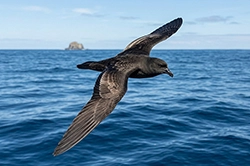
The Broad-billed Prion is a medium-sized seabird, typically measuring between 25 and 30 cm in length. Its plumage is characterized by a sophisticated palette of grey and white, which serves as effective camouflage against the backdrop of the open ocean. The upperparts are generally a soft, slate-grey, while the underparts are a clean, crisp white. A defining feature is the dark 'M' pattern that stretches across the wings and back, a common trait among many prion species. The head is relatively large, featuring a distinct dark eye-stripe that contrasts against the lighter facial feathers. However, the most diagnostic feature is its namesake: a remarkably wide, blue-grey bill equipped with specialized lamellae. These comb-like structures inside the bill are essential for filtering tiny prey from seawater. With a wingspan that allows for efficient gliding in high winds, the Broad-billed Prion is perfectly built for a life spent almost entirely on the wing, navigating the relentless swells of the Southern Ocean.
Broad-billed Prions are strictly pelagic birds, spending the vast majority of their lives at sea. They are primarily distributed across the temperate and sub-Antarctic waters of the Southern Ocean. Their range spans from the waters surrounding New Zealand and southern Australia to the islands of the South Atlantic and Indian Oceans. They prefer the cooler, nutrient-rich waters where upwellings provide an abundance of food. While they are nomadic, they return to land exclusively for breeding purposes. During this time, they occupy rocky islands, cliffs, and coastal slopes, where they excavate burrows or utilize natural crevices to protect themselves and their offspring from harsh weather and predators.
The diet of the Broad-billed Prion is specialized, focusing on small marine organisms that are captured through a process known as surface filtering. Their primary food source consists of zooplankton, specifically copepods and amphipods, which they strain from the water using the specialized lamellae in their broad bills. Additionally, they consume small crustaceans, such as krill, and occasionally small fish or squid when available. By flying low over the water, they detect patches of prey and perform a maneuver where they dip their bills into the surface to filter-feed while still in flight. This efficient method allows them to exploit ephemeral food sources in the vast, open ocean.
The breeding cycle of the Broad-billed Prion is a critical period that brings these otherwise solitary seabirds back to colonial nesting sites. They typically breed on remote, predator-free islands, often returning to the same burrow year after year. The nesting season usually begins in the late winter or early spring. Both parents participate in the excavation of deep, often winding burrows in soft soil, or they utilize natural cavities in rocky terrain. A single, relatively large white egg is laid, and both parents share the responsibility of incubation, which lasts for several weeks. Once the chick hatches, the parents take turns foraging at sea to bring back nutritious food. This period requires immense energy expenditure, as the adults must travel great distances to secure enough resources to ensure the survival and rapid growth of their single offspring before the fledgling period concludes.
Broad-billed Prions exhibit remarkable flight behavior, characterized by rapid, erratic turns and low-altitude glides just above the wave crests. This flight pattern, often described as 'fluttering,' helps them navigate the turbulent air currents generated by ocean waves. They are highly gregarious at sea, often forming large, mixed-species feeding flocks when food is abundant. Despite their social nature while foraging, they are nocturnal visitors to their breeding colonies. This behavior is a strategic adaptation to avoid diurnal predators, such as skuas and large gulls. Their vocalizations, which include rhythmic cooing and guttural calls, are most frequently heard at night within the nesting colonies, serving to maintain pair bonds and defend their burrow territories.
The Broad-billed Prion is currently classified as a species of Least Concern by the IUCN, although their populations face localized threats. The primary risks include predation by introduced mammals such as rats, cats, and mice on their breeding islands, which can devastate egg and chick survival. Additionally, they are vulnerable to the impacts of commercial fishing, including accidental bycatch, and the long-term effects of climate change on ocean temperatures and food availability. Protecting their nesting habitats and managing invasive species remain the most effective conservation strategies for ensuring the long-term stability of this resilient seabird species.
For birdwatchers hoping to spot a Broad-billed Prion, patience and the right location are paramount. These birds are rarely seen from the shore, so booking a dedicated pelagic birding trip is your best strategy. Travel to areas with deep, cold-water upwellings, particularly off the coasts of New Zealand or southern Australia. When on a boat, keep a sharp eye on the wave troughs; their rapid, fluttering flight pattern is distinct compared to the steady soaring of albatrosses. Use high-quality binoculars to look for the signature grey 'M' across their wings. Dress warmly, as these trips often venture into cold, windy, and unpredictable maritime conditions, and always be prepared for long hours of scanning the horizon.
In conclusion, the Broad-billed Prion (Pachyptila vittata) serves as a remarkable example of evolutionary adaptation to the harsh, expansive environment of the Southern Ocean. Through their unique physical features, such as their specialized broad bills, and their complex life history, they have carved out a niche that allows them to thrive in one of the planet's most demanding ecosystems. While they are currently stable in terms of overall population, their reliance on specific, predator-free islands for breeding makes them vulnerable to habitat degradation and invasive species. As stewards of the marine environment, it is essential that we continue to monitor their populations and protect the remote islands they call home. For birdwatchers and scientists alike, the Broad-billed Prion remains a symbol of the wild, untamed beauty of the open sea. By appreciating the intricacies of their existence—from their nocturnal nesting rituals to their efficient, plankton-filtering flight—we gain a deeper understanding of the interconnectedness of marine life and the importance of preserving the health of our global oceans for future generations to study and enjoy.
We are working with our official data partners to update this information.
Tag:



Birds have their own beautiful world, we should not interfere in it. We should enjoy this beauty. Its beauty should be captured in the camera but be careful not to disturb them.
Tap a language to switch instantly.
Tap a language to switch instantly.