Fairy Prion Basic Information
| Scientific Name | Pachyptila turtur |
|---|
| Status |
LC
Least Concern
|
| Size | 23-28 cm (9-11 inch) |
|---|
| Colors |
|
| Type |
|
| Family | Petrels, Shearwaters |
|---|
Introduction
The Fairy Prion (Pachyptila turtur) is a captivating member of the Procellariidae family, representing the smaller, more delicate end of the spectrum among the group known as whalebirds. These fascinating seabirds are master navigators of the Southern Hemisphere's vast, turbulent oceans. Often overlooked due to their pelagic nature and preference for remote offshore waters, Fairy Prions are essential indicators of marine ecosystem health. Their presence across the Southern Ocean, from the temperate waters of New Zealand to the sub-Antarctic islands, highlights their incredible resilience and adaptability to harsh maritime conditions. Ornithologists hold these birds in high regard for their specialized bill structures and complex migration patterns. Understanding the life cycle of the Fairy Prion provides profound insights into the broader challenges facing marine life today. As we explore their biology, we uncover a species perfectly evolved for a life spent almost entirely on the wing, gliding effortlessly over deep-blue swells while braving some of the most formidable weather conditions on the planet.
Physical Appearance
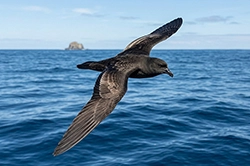
The Fairy Prion is a small, compact seabird, typically measuring between 23 and 28 centimeters in length. Its plumage is a masterclass in camouflage, primarily featuring a soft, slate-grey upper body that blends seamlessly with the color of the ocean surface under cloudy skies. This grey coloration is beautifully contrasted by a pristine, snowy-white underbelly and throat, a common trait among many pelagic species that aids in countershading against predators. One of its most distinctive physical features is the 'M' marking across its wings, which is visible during flight and serves as a key identification mark for birdwatchers. The bird possesses a relatively short, stout bill that is pale blue-grey, equipped with specialized lamellae—thin, comb-like structures used for filter-feeding. Its eyes are dark and expressive, set against a subtle greyish facial mask. The wings are long and pointed, providing the agility required for rapid, erratic flight patterns. When viewed in flight, the dark tail tip and the contrasting white underparts make this species stand out among other similar procellariids, showcasing an elegant and streamlined silhouette perfectly suited for high-speed foraging over the open sea.
Habitat
Fairy Prions are quintessential pelagic birds, spending the vast majority of their lives at sea. They are most commonly found throughout the Southern Ocean, with significant breeding populations located on islands around New Zealand, the Chatham Islands, and parts of southern Australia. During the breeding season, they seek out rocky, offshore islands and coastal cliffs where they can establish burrows. They prefer nesting sites with dense vegetation or soft soil that allows for efficient excavation. Outside of the breeding season, these birds are highly migratory, often moving into warmer temperate waters. They are rarely seen near the mainland coast unless driven ashore by severe storm events, which often results in beach-cast specimens being discovered by coastal observers.
Diet
The diet of the Fairy Prion is primarily composed of zooplankton, with a heavy reliance on krill, amphipods, and copepods. They are highly specialized filter feeders; when foraging, the bird flies low over the water surface, dipping its bill into the waves to strain small crustaceans through the lamellae inside its beak. This method of 'surface-seizing' and 'hydroplaning' allows them to exploit abundant, patchy food sources in the nutrient-rich waters of the Southern Ocean. Occasionally, they will also consume small fish or squid larvae. Their foraging strategy is energy-efficient, enabling them to cover vast distances while maintaining their metabolic requirements in a challenging marine environment.
Breeding and Nesting
The breeding cycle of the Fairy Prion is a communal affair, often occurring in large, dense colonies on remote islands. These birds are burrow-nesters, utilizing deep, self-excavated tunnels or natural crevices in rocky terrain to protect their single egg from predators and the elements. Both parents share the responsibility of incubation, which lasts approximately 45 to 50 days. The chicks are fed a rich diet of regurgitated plankton by both adults, who often travel long distances to find high-quality food. Once the chick is ready to fledge, it leaves the burrow at night to avoid avian predators like skuas or gulls. This nocturnal behavior is a survival strategy, ensuring the safety of the fledgling as it makes its way to the ocean for the first time, marking the start of a solitary life at sea.
Behavior
Fairy Prions are characterized by their rapid, twisting flight style, often described as 'flickering' as they bank and turn over wave crests. They are highly social, especially during the breeding season, where the air around nesting colonies is filled with their soft, chattering calls. They are strictly nocturnal when visiting their nesting burrows to avoid detection by diurnal predators. During the day, they are almost exclusively found on the water or in the air, exhibiting remarkable endurance. Their behavior is largely dictated by wind patterns, as they utilize dynamic soaring to minimize energy expenditure while searching for food in the vast expanse of the ocean.
Conservation Status - LC
Least Concern
Currently, the Fairy Prion is classified as 'Least Concern' by the IUCN, though their populations face localized threats. The primary dangers to these birds include predation by introduced mammals such as rats, feral cats, and stoats on their breeding islands. Additionally, light pollution near coastal nesting sites can disorient fledglings, leading to fatal groundings. Climate change also poses a long-term risk, as shifts in ocean temperature affect the distribution and abundance of the plankton species upon which they depend for survival. Continued monitoring and predator eradication programs on nesting islands are crucial for their long-term protection.
Interesting Facts
- Fairy Prions are colloquially known as 'whalebirds' because they were historically seen following whales to feed on the plankton disturbed by the mammals.
- They possess a unique sense of smell, which they use to locate food sources and identify their specific nesting burrows in the dark.
- Their bill contains special lamellae that act as a filter for catching tiny crustaceans.
- They are strictly nocturnal when at their nesting colonies to avoid predators.
- The wingspan of a Fairy Prion can reach up to 60 centimeters, despite their small body size.
- They are capable of flying in very high winds, using the waves to gain lift.
- They return to the same nesting burrow year after year with the same mate.
Tips for Birdwatchers
For birdwatchers hoping to spot a Fairy Prion, a dedicated pelagic trip is almost essential, as they are rarely seen from the shore. Look for organized boat charters that head into deep water, especially during the winter months when they move closer to temperate zones. Bring high-quality binoculars and a camera with a fast shutter speed, as their erratic, rapid flight makes them difficult to track. Pay close attention to the 'M' pattern on their wings and their white underparts. If you are exploring coastal areas after a severe storm, keep an eye out for beach-cast birds, but always report sightings to local wildlife authorities rather than handling the animals yourself. Patience is key, as these birds are fast and often keep a distance from boats.
Conclusion
The Fairy Prion is a remarkable testament to the beauty and complexity of life in the Southern Ocean. As a species that spends its entire existence navigating the thin line between the air and the sea, it embodies the spirit of the wild, untamed maritime environment. While their status as 'Least Concern' provides some comfort, we must remain vigilant regarding the health of our oceans and the integrity of their remote breeding grounds. Protecting these islands from invasive species and mitigating the impacts of climate change are vital steps in ensuring that future generations can witness the sight of these 'whalebirds' dancing over the waves. For the dedicated birdwatcher, the Fairy Prion represents a challenging but rewarding target, offering a glimpse into the mysterious world of pelagic seabirds. By studying and appreciating the Fairy Prion, we gain a deeper understanding of the interconnectedness of our planet’s marine ecosystems. Their survival is intrinsically linked to our commitment to conservation, and their presence remains a vital pulse in the rhythm of the Southern Hemisphere's oceans. Let us continue to value and protect these elegant, grey-and-white wanderers of the deep.
Fairy Prion Distribution Map & Range
The distribution map for this species will be available soon.
We are working with our official data partners to update this information.