Desertas Petrel Basic Information
| Scientific Name | Pterodroma deserta |
|---|
| Status |
VU
Vulnerable
|
| Size | 35-38 cm (14-15 inch) |
|---|
| Colors |
|
| Type |
|
| Family | Petrels, Shearwaters |
|---|
Introduction
The Desertas Petrel (Pterodroma deserta), also known as the Bugio Petrel, is a fascinating and elusive species of gadfly petrel that captures the imagination of ornithologists and bird enthusiasts alike. As a member of the Procellariidae family, this seabird is highly specialized for life on the open ocean, spending the vast majority of its existence navigating the vast expanses of the Atlantic. Endemic to the Desertas Islands, a small, rugged archipelago southeast of Madeira, Portugal, this species was historically considered a subspecies of the Zino's Petrel but has since been recognized as a distinct species due to significant morphological and ecological differences. Its restricted breeding range makes it one of the most localized and vulnerable seabirds in the world. Understanding the life history of the Desertas Petrel is crucial for conservation efforts, as its survival is intrinsically linked to the health of its singular nesting site and the surrounding marine environment. As a pelagic specialist, it remains largely hidden from human observation, making every sighting a prized event for dedicated birders.
Physical Appearance
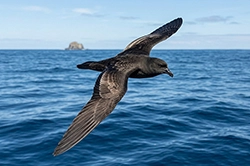
The Desertas Petrel is a medium-sized seabird, typically measuring between 35 and 38 centimeters in length. Its physical appearance is characterized by a sophisticated, muted palette that provides excellent camouflage while at sea. The primary coloration is a deep, elegant grey-brown, which covers the upperparts, wings, and back, creating a sleek silhouette against the ocean waves. In contrast, the underparts are primarily white, providing a classic counter-shading effect common in many pelagic species, which helps them blend in when viewed from below against the bright sky. The wings are long and narrow, adapted for dynamic soaring and efficient travel over long distances. The head features a dark, dusky cap that contrasts with its lighter throat and neck. Its bill is short, stout, and dark, typical of the genus Pterodroma, and is equipped with specialized tubular nostrils that assist in detecting prey scents and excreting excess salt. Overall, the Desertas Petrel exudes a sense of aerodynamic grace, with a flight pattern that involves high-arching glides and rapid, agile banking maneuvers that allow it to traverse the turbulent winds of the Atlantic with minimal energy expenditure.
Habitat
The Desertas Petrel is almost exclusively associated with the marine environments of the central and eastern Atlantic Ocean. Its terrestrial existence is limited to a very small, specific breeding habitat on Bugio Island, which is part of the Desertas Islands in the Madeira archipelago. These islands are characterized by steep, rocky cliffs and arid, volcanic landscapes that provide the necessary terrain for burrow-nesting. At sea, the Desertas Petrel is a true pelagic wanderer, foraging over deep-water zones where it utilizes wind currents to glide effortlessly. It rarely approaches land except during the breeding season, preferring the isolation and nutrient-rich waters of the open ocean far from coastal disturbances.
Diet
Like other gadfly petrels, the Desertas Petrel is an opportunistic predator that feeds primarily on small marine organisms found near the ocean surface. Its diet consists largely of cephalopods, such as small squids, along with various species of fish and crustaceans. These birds are known to use their keen sense of smell to locate food sources, often following schools of predatory fish that drive prey toward the surface. By feeding in this manner, they efficiently exploit the productivity of the Atlantic. Their foraging range can be extensive, as they are capable of traveling long distances from their nesting grounds to locate suitable feeding patches in the deep-sea ecosystem.
Breeding and Nesting
Breeding for the Desertas Petrel is a highly synchronized and site-specific event. They are colonial nesters, preferring to excavate burrows or utilize natural crevices within the rocky, volcanic slopes of Bugio Island. The breeding season typically begins in the spring, with courtship displays involving complex vocalizations and aerial maneuvers near the nesting colonies at night to avoid predation. The female lays a single egg, which is incubated by both parents in alternating shifts. This shared parental care is essential, as it allows one adult to forage at sea while the other protects the nest. Once the chick hatches, both parents work tirelessly to provide food, flying long distances to bring back energy-rich meals until the chick is ready to fledge and begin its independent life at sea.
Behavior
The Desertas Petrel exhibits behavior typical of the Pterodroma genus, characterized by a highly aerial lifestyle. They are nocturnal when visiting their nesting colonies, a behavior that serves as a primary defense mechanism against avian predators like gulls or skuas. When in flight, they are masters of wind-assisted movement, using the slope of the waves to gain lift. They are generally solitary at sea but may congregate in areas of high prey density. Their vocalizations are haunting and varied, often heard during the night at their colonies, which adds to the mysterious allure of these birds for researchers studying their social interactions.
Conservation Status - VU
Vulnerable
The Desertas Petrel is classified as Vulnerable, primarily due to its extremely limited breeding range and historical threats from invasive species. Because the entire global population nests on a single island, they are highly susceptible to catastrophic events or habitat degradation. Conservation efforts have focused heavily on the eradication of invasive mammals, such as rabbits and rodents, which previously caused significant damage to nesting burrows. Ongoing monitoring and strict protection of the Desertas Islands are essential to ensure that this unique seabird population continues to thrive in its fragile environment.
Interesting Facts
- The Desertas Petrel was only recognized as a distinct species relatively recently, having previously been confused with the Zino's Petrel.
- They possess specialized salt glands that allow them to drink seawater and excrete the excess salt through their tubular nostrils.
- Their entire global breeding population is concentrated on a single island, Bugio.
- These birds are exclusively nocturnal when on land, which helps them avoid predators.
- They are capable of traveling thousands of kilometers across the Atlantic in search of food.
- The species name 'deserta' refers to the Desertas Islands, their only known home.
Tips for Birdwatchers
Observing a Desertas Petrel is a significant challenge for any birder due to their remote habitat and nocturnal land behavior. The best way to encounter this species is through specialized pelagic birding trips organized around the Madeira archipelago. When on a boat, look for a bird with a characteristic 'gadfly' flight—a series of high-arching glides followed by rapid, banking turns. Patience is key, as these birds are often found far from shore. Using high-quality binoculars and a camera with a fast shutter speed is essential for identification. Always respect the birds' space and avoid disturbing nesting sites, as they are highly sensitive to human presence during the breeding season.
Conclusion
The Desertas Petrel stands as a testament to the evolutionary wonders of the Atlantic, perfectly adapted to a life of perpetual flight and isolation. Its existence, confined to the rugged, volcanic cliffs of Bugio Island, highlights the importance of protecting small, endemic populations that are vital to global biodiversity. While its status as a vulnerable species brings concern, the dedicated conservation work currently in place offers hope for its continued survival. For the observer, catching a glimpse of this elegant, grey-brown bird soaring over the deep blue of the Atlantic is a rare and profound experience. As we deepen our understanding of their diet, breeding habits, and movement patterns, we are better equipped to safeguard their future. The Desertas Petrel is more than just a bird; it is a symbol of the wild, untamed nature of our oceans. By continuing to support research and habitat protection, we ensure that future generations may also witness the grace of this remarkable seabird, keeping the spirit of the Desertas Islands alive for years to come. Whether through scientific study or mindful birdwatching, our continued interest in this species plays a vital role in its long-term conservation success.
Desertas Petrel Distribution Map & Range
The distribution map for this species will be available soon.
We are working with our official data partners to update this information.