Herald Petrel Distribution Map & Range
The distribution map for this species will be available soon.
We are working with our official data partners to update this information.

Sign in with your Google account to access all features

| Scientific Name | Pterodroma heraldica |
|---|---|
| Status | LC Least Concern |
| Size | 35-40 cm (14-16 inch) |
| Colors |
Brown
White
|
| Type |
Seabirds

|
| Family | Petrels, Shearwaters |
The Herald Petrel (Pterodroma heraldica) is a captivating and somewhat elusive species of seabird that belongs to the family Procellariidae. Known for its graceful flight and distinct appearance, this medium-sized petrel is primarily found across the vast reaches of the tropical South Pacific Ocean. Ornithologists often find this species intriguing because of its complex taxonomy and its tendency to inhabit remote island chains, making sightings relatively rare for the average birdwatcher. As a true pelagic species, the Herald Petrel spends the vast majority of its life soaring over open waters, rarely venturing near land except during its critical breeding season. Its existence is closely tied to the health of marine ecosystems, as it relies on specific oceanic conditions to forage. Despite its wide range, the species faces several threats, including invasive predators on its nesting islands and the impacts of climate change on its prey availability. Understanding the life history of the Herald Petrel is essential for conservationists aiming to protect the biodiversity of our oceans. This guide explores the biology, behavior, and unique characteristics of this remarkable seabird in comprehensive detail.
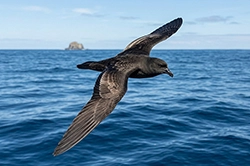
The Herald Petrel is a medium-sized seabird, typically measuring between 35 and 40 centimeters in length. Its plumage is a study in elegant contrast, primarily characterized by a rich, dark brown coloration on its upperparts, including the wings and mantle, which provides excellent camouflage against the dark ocean surface. In stark contrast, the underparts are predominantly white, creating a clean, crisp look that is highly characteristic of the Pterodroma genus. The wings are long and pointed, adapted perfectly for the dynamic soaring flight required to traverse thousands of miles of open ocean. The bird features a dark, hooked bill specifically evolved to grasp slippery prey from the surface of the water. Its head often shows a subtle mottled pattern, and the dark underwings are a key diagnostic feature that helps birdwatchers distinguish it from other similar petrel species in the field. The legs and feet are typically pale or flesh-colored, which can be difficult to observe while the bird is in flight but are visible when it is perched or swimming near the surface. Overall, the Herald Petrel's physical structure reflects its life as a highly efficient aerial predator.
The Herald Petrel is a quintessential pelagic bird, spending the majority of its life cycle far from continental landmasses. Its primary habitat includes the warm, tropical waters of the South Pacific Ocean. These birds are most commonly associated with remote oceanic islands, such as the Pitcairn Islands, Tonga, and various other groups in the South Pacific. During the nesting season, they require specific island environments that provide safe, elevated nesting sites, often on high-altitude ridges or volcanic slopes where vegetation is sparse. They favor areas with strong prevailing winds that facilitate their soaring flight patterns. Outside of the breeding season, they are strictly oceanic, wandering across vast marine territories where they can exploit nutrient-rich upwellings that sustain their food sources.
The diet of the Herald Petrel consists primarily of small fish, squid, and crustaceans that rise to the surface of the ocean at night. They are known as surface-feeders, often employing a technique called 'dipping' or 'skimming' to snatch prey items directly from the water's surface without fully submerging themselves. This opportunistic feeding behavior allows them to capitalize on prey that is driven to the surface by larger predatory fish or through natural vertical migration cycles. Squid are a particularly important component of their diet, providing the high-energy lipids necessary for their long-distance migrations and the rigorous demands of raising chicks in isolated nesting colonies.
The breeding cycle of the Herald Petrel is a complex and highly synchronized event. These birds are colonial breeders, returning to specific, isolated tropical islands to lay their single white egg. The nesting sites are typically located in crevices, under thick vegetation, or in simple burrows dug into the soft soil of steep hillsides. Both the male and female share the responsibility of incubation, which takes several weeks, followed by a demanding period of chick-rearing. Because these islands are often remote, the parents must travel long distances to forage for food, returning at night to avoid predation by larger gulls or skuas. The nesting phase is a vulnerable period for the species, as they are highly susceptible to the impacts of introduced invasive species like rats and feral cats that prey on eggs and young chicks.
Herald Petrels are known for their spectacular flight behavior. They utilize a technique called dynamic soaring, which allows them to traverse long distances across the ocean with minimal energy expenditure by exploiting the wind gradients above the waves. They are generally solitary when foraging but may congregate in small groups when food sources are particularly abundant. They are largely nocturnal when visiting their nesting colonies, a behavioral adaptation that likely helps them avoid diurnal avian predators. Their vocalizations are most commonly heard at night around these nesting grounds, consisting of soft, mournful calls used for pair bonding and maintaining contact with their mates amidst the darkness of the colony.
The conservation status of the Herald Petrel is a matter of concern for international ornithological organizations. While they are not currently listed as critically endangered, they are considered vulnerable due to their restricted breeding range and the high sensitivity of their nesting colonies. The primary threats include habitat degradation caused by invasive species, particularly rats, which decimate populations by preying on eggs and chicks. Additionally, climate change poses a significant risk to their food supply by altering ocean currents and temperature, which impacts the distribution of their prey. Conservation efforts are currently focused on eradicating invasive predators from critical nesting islands and monitoring population trends across their vast, fragmented range.
For birdwatchers hoping to catch a glimpse of the Herald Petrel, patience and specialized equipment are essential. Because these birds are pelagic and rarely approach land outside of the breeding season, the best way to see them is through organized pelagic birding trips that venture into deep waters. Bring high-quality binoculars and a spotting scope, as identifying petrels from a moving boat can be challenging. Pay close attention to the underwing pattern and the overall flight style, as these are the most reliable field marks. It is also helpful to study the distribution maps for the specific time of year, as their presence at sea can shift significantly based on seasonal patterns. Always respect the environment and maintain a distance from nesting colonies to ensure you do not disturb these sensitive birds.
In conclusion, the Herald Petrel (Pterodroma heraldica) stands as a testament to the resilience of life in the vast, open expanses of the South Pacific. As a specialized seabird perfectly adapted to a life of perpetual flight, it plays a vital role in the marine ecosystem. Its survival, however, is delicately balanced against the threats posed by environmental change and invasive species. Through continued research and dedicated conservation efforts, we can hope to preserve the islands and oceanic habitats that this unique species calls home. For birdwatchers, the Herald Petrel remains a prize sighting, a symbol of the wild, untamed beauty of the ocean. By fostering a deeper understanding and appreciation for such species, we encourage the global support necessary to protect our planet's diverse avian life. Whether you are a scientist, an enthusiast, or simply someone who admires the wonders of nature, the story of the Herald Petrel serves as a reminder of the interconnectedness of our world and our shared responsibility to safeguard the future of these magnificent creatures for generations to come.
We are working with our official data partners to update this information.
Tag:



Birds have their own beautiful world, we should not interfere in it. We should enjoy this beauty. Its beauty should be captured in the camera but be careful not to disturb them.
Tap a language to switch instantly.
Tap a language to switch instantly.