

Not available
House Sparrow
Passer domesticus
Last update: 06 Jul 2026
Read in:
English
Español
Português
हिन्दी
বাংলা
தமிழ்
മലയാളം
मराठी
ગુજરાતી
తెలుగు
French
Deutsch
Русский
日本語
简体中文
Italiano
Tiếng Việt
العربية
ಕನ್ನಡ
ਪੰਜਾਬੀ
House Sparrow Basic Information
| Scientific Name | Passer domesticus |
|---|---|
| Status | LC Least Concern |
| Size | 14-16 cm (6-6 inch) |
| Colors |
Brown
Grey
|
| Type |
Perching Birds

|
| Family | Old World Sparrows |
Introduction
The House Sparrow (Passer domesticus) is perhaps one of the most recognizable and widespread avian species found across the globe. Belonging to the family Passeridae, these small, perching birds have successfully adapted to living in close proximity to humans, making them a common sight in urban, suburban, and rural environments. Despite their ubiquity, they are fascinating creatures with a long history of association with human civilization, having traveled alongside human expansion across continents. They are not native to the Americas, but since their introduction in the 19th century, they have thrived, becoming a staple of backyard birdwatching. Understanding the House Sparrow is essential for any bird enthusiast, as they provide a window into how wildlife adapts to anthropogenically modified landscapes. Their resilience, social nature, and vocal presence make them a subject of constant study in ornithology, highlighting the complex relationship between human development and bird population dynamics.
Physical Appearance
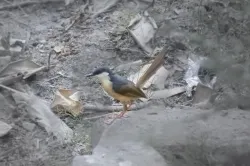
The House Sparrow is a compact, robust bird measuring approximately 14 to 16 cm in length. Their plumage is a beautiful, albeit understated, mix of earthy tones that provide excellent camouflage in their varied environments. The primary color of their plumage is a rich, warm brown, which is often streaked with black on the wings and back. The secondary color, a soft grey, is prominently featured on the crown of the head and the underparts, offering a sophisticated contrast to the darker mantle. Sexual dimorphism is quite apparent in this species. Males are easily distinguished by their dark grey crown, white cheeks, and a distinctive black bib or 'badge' on the throat, which often expands during the breeding season. Females and juveniles lack this bold pattern, displaying a more uniform, muted appearance of buffy-browns and dull greys, which helps them blend into their nesting sites while protecting their vulnerable young from potential predators.
Habitat
The House Sparrow is a highly synanthropic species, meaning it thrives in environments that have been heavily modified by humans. You will frequently find these birds nesting in the eaves of houses, bridges, barns, and other man-made structures. They are rarely found in deep forests or vast, uninhabited wilderness areas, preferring the comfort and resources found in residential gardens, city parks, and agricultural farmlands. Their ability to nest in small crevices and holes makes them perfectly suited for life in built-up areas. By utilizing human architecture, they have secured a niche that protects them from many natural predators while providing easy access to food sources provided by human activity.
Diet
As opportunistic omnivores, House Sparrows have an incredibly varied diet that allows them to survive in almost any environment. Their primary food sources include seeds, grains, and various grasses, which they forage for on the ground. However, they are also highly adaptable, frequently consuming human scraps, discarded bread, and leftovers found near restaurants or picnic areas. During the breeding season, they shift their dietary focus to include insects, such as beetles, caterpillars, and aphids. This protein-rich diet is crucial for the development of their nestlings. Their strong, conical beaks are perfectly evolved for cracking open seeds, making them highly efficient foragers in diverse settings.
Breeding and Nesting
Breeding among House Sparrows is a social and often competitive affair. They are prolific breeders, capable of raising multiple broods in a single season. Nests are typically constructed in cavities, such as holes in walls, under roof tiles, or inside purpose-built birdhouses. Both the male and female participate in building the nest, using a chaotic assortment of materials including dried grass, twigs, feathers, and even string or paper scraps. The female usually lays a clutch of three to five eggs, which are incubated for roughly two weeks. The chicks are altricial, meaning they are born helpless and require intensive care from both parents. Because of their high reproductive rate, they can quickly populate new areas, ensuring their survival even in environments where individual mortality rates might be high due to predation or harsh weather conditions.
Behavior
House Sparrows are highly social and gregarious birds that are almost never seen alone. They are often found in large, noisy flocks, especially outside of the breeding season. Their behavior is characterized by constant movement, chirping, and social interactions, which include dust bathing and communal roosting. They are known to be quite territorial when it comes to their immediate nesting site, often engaging in aggressive displays with other birds to defend their chosen cavity. Despite this, they exhibit a high degree of cooperation within their own flocks, sharing information about food sources and potential dangers, which is a key factor in their overall success and widespread distribution.
Conservation Status - LC Least Concern
Currently, the House Sparrow is classified as Least Concern by the IUCN. Their population is incredibly stable and widespread, largely due to their ability to exploit human-altered landscapes. While they have faced declines in some specific urban centers—likely due to changes in building architecture that reduce nesting sites and a decrease in insect populations—they remain one of the most abundant bird species globally. Their resilience and adaptability continue to ensure that they remain a common fixture in our daily lives, requiring little in the way of direct conservation intervention at this time.
Interesting Facts
- They are not actually 'true' sparrows but are members of the Old World sparrow family.
- House Sparrows are prolific dust bathers, which helps them maintain their feathers and eliminate parasites.
- They have been known to live for over a decade in captivity, though wild lifespans are much shorter.
- The size of the male's black throat bib is often linked to his social status and dominance within the flock.
- They were introduced to North America in the 1850s to control pest populations in New York City.
- House Sparrows are highly intelligent and can learn to navigate complex urban environments.
Tips for Birdwatchers
For birdwatchers, the House Sparrow offers a fantastic opportunity to observe complex social behaviors right in your own backyard. To attract them, consider setting up a simple bird feeder with a mix of millet, cracked corn, and sunflower seeds. Because they are ground-foragers, a platform feeder or simply scattering seed on a flat surface can be very effective. If you want to encourage nesting, installing a small-hole birdhouse under your eaves will likely attract a pair. Pay close attention to the males during the spring as they perform their chirping displays; observing the hierarchy within a flock can be surprisingly entertaining and educational for those interested in avian sociology.
Conclusion
In conclusion, the House Sparrow (Passer domesticus) stands as a testament to the power of adaptation. From their origins in the Middle East to their current status as a truly global species, these birds have mirrored the growth of human civilization. While they are often overlooked in favor of more exotic or colorful species, their resilience, complex social structures, and constant presence make them a cornerstone of the avian world. By studying them, we gain valuable insights into how wildlife can thrive alongside humans, provided they have access to the right resources and nesting opportunities. Whether you are a seasoned ornithologist or a casual backyard birdwatcher, the House Sparrow provides endless opportunities for observation and appreciation. Their ability to survive in the face of changing environments is a reminder of the tenacity of life, and their familiar chirps will likely continue to be a soundtrack to our daily lives for generations to come. Protecting their habitats and maintaining a bird-friendly environment is a simple yet effective way to support the local biodiversity that these charming, persistent little birds contribute to every single day.
Tag:

200 Follower
is a writer who draws. He’s the Bestselling author of “Number of The Year”. Donec vitae tortor efficitur, convallis lelobortis elit.
Recent Posts




Subscribe For Daily Newsletter


