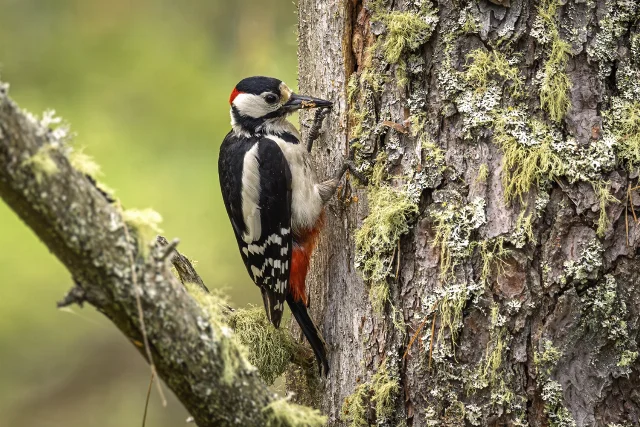
Tree-clinging Birds
avatar
Photo by Admin
Not available

Red-breasted Sapsucker

Sphyrapicus ruber

Last update: 22 May 2026

Red-breasted Sapsucker Basic Information

Scientific NameSphyrapicus ruber
Status LC Least Concern
Size20-22 cm (8-9 inch)
Colors
Red
Black
Type
Tree-clinging Birds
type
FamilyWoodpeckers

Introduction

The Red-breasted Sapsucker (Sphyrapicus ruber) is one of the most visually striking members of the woodpecker family found along the Pacific Coast of North America. Known for its brilliant crimson head and chest, this medium-sized bird is a fascinating study in specialized adaptation. Unlike many other woodpeckers that focus primarily on excavating wood-boring insects, the Red-breasted Sapsucker has evolved a unique relationship with trees, acting as both a primary consumer of sap and an ecological engineer. Its presence in a forest ecosystem often signals a healthy, diverse environment, as their feeding habits provide essential resources for a wide array of other species, including hummingbirds and insects. Whether you are a casual backyard bird enthusiast or a seasoned ornithologist, understanding the life cycle and behaviors of this bird offers a profound glimpse into the intricate connections of West Coast forest ecosystems. This guide explores every facet of the Red-breasted Sapsucker, from its distinct physical markings to its complex social and nesting habits.

Physical Appearance

Measuring approximately 20 to 22 cm in length, the Red-breasted Sapsucker is a compact yet robust bird. Its most defining characteristic is the deep, vibrant red coloration that blankets its head, neck, and upper chest, which stands in stark contrast to its mantle and wings. The wings and back exhibit a beautiful mottled pattern of black and white, providing essential camouflage against the rugged bark of the trees it frequents. A distinct white patch on the wing is particularly visible during flight, serving as a key identification mark for birders. The underparts of the bird transition from the bold red of the chest to a yellowish-white hue on the belly, which is often streaked with dark markings. Both males and females look remarkably similar, though the intensity of the red may vary slightly. Their stout, chisel-like bills are perfectly adapted for drilling small, precise holes into tree trunks, allowing them to tap into the nutrient-rich phloem of various deciduous and coniferous tree species.

Habitat

The Red-breasted Sapsucker is primarily found in the moist, temperate forests of the Pacific Coast, ranging from southeastern Alaska down through British Columbia, Washington, Oregon, and northern California. They show a strong preference for coniferous forests, particularly those dominated by hemlock, cedar, and fir trees, though they are frequently found in mixed-wood forests containing alder and willow. During the breeding season, they seek out areas with mature, healthy trees that are capable of withstanding their drilling activities. In the winter months, some populations may migrate to lower elevations or move further south, often venturing into suburban orchards or parks where tree sap remains accessible. Their habitat selection is largely dictated by the availability of suitable nesting snags and a reliable, year-round supply of tree sap, which serves as their primary caloric source throughout the colder seasons.

Diet

True to its name, the Red-breasted Sapsucker relies heavily on tree sap as a staple of its diet. They use their specialized bills to create horizontal rows of shallow, uniform holes known as "sap wells." These wells are meticulously maintained; the bird returns to them regularly to lap up the fresh sap that accumulates. This sugary liquid provides the necessary energy to survive. However, the diet is not limited to sap. During the spring and summer, these birds supplement their intake by catching insects, such as ants, beetles, and spiders, often hawking them in mid-air or gleaning them from the bark. Fruits and berries also become an important food source during the late summer and autumn months. Interestingly, the sap wells they create often attract other species, such as hummingbirds and warblers, which rely on the Sapsucker to "open" the tree for them, highlighting the bird's vital role in the food web.

Breeding and Nesting

Breeding season for the Red-breasted Sapsucker typically occurs from late spring through mid-summer. These birds are cavity nesters, preferring to excavate their homes in dead or decaying trees, known as snags, which provide the soft wood necessary for drilling. Both the male and female participate in the construction of the nest, which can take several weeks to complete. Once the cavity is ready, the female lays a clutch of four to seven white eggs. Incubation is shared by both parents and lasts approximately two weeks. After the chicks hatch, both adults are kept busy foraging for insects to feed the rapidly growing brood. The nestlings fledge after about three to four weeks. During this time, the parents are highly protective of their nesting site, often using their distinct, cat-like mewing calls to deter potential predators or intruders from entering their territory.

Behavior

The Red-breasted Sapsucker is generally a solitary bird, except during the breeding season when pairs work in tandem. They are highly territorial, frequently engaging in aggressive displays to defend their sap wells from other sapsuckers and even larger bird species. A common behavioral trait is their methodical drilling pattern; they move along branches or trunks in a systematic fashion, creating neat lines of holes. When they are not feeding, they are often seen perching quietly against a trunk, perfectly blending into the shadows. They are relatively quiet compared to other woodpeckers, but they do produce a variety of calls, including a series of rapid, stuttering chirps and a distinctive, nasal "mew" sound. Their flight is characterized by a series of quick, undulating wingbeats, followed by a brief glide as they land expertly on vertical tree surfaces.

Conservation Status - LC Least Concern

Currently, the Red-breasted Sapsucker is classified as a species of Least Concern by the IUCN. Their populations are generally stable across their primary range in the Pacific Northwest. However, they are not immune to the threats posed by habitat loss and climate change. The removal of dead or decaying trees, which are essential for their nesting, can negatively impact local populations. As forest management practices shift, maintaining old-growth and diseased trees is crucial for their long-term survival. Conservation efforts focus on preserving diverse forest structures to ensure that these birds continue to play their unique ecological role.

Interesting Facts

  1. They are known as 'keystone species' because their sap wells provide food for many other birds and insects.
  2. Unlike many other woodpeckers, they do not drum on trees to communicate, preferring vocalizations.
  3. They can drill hundreds of holes in a single tree, which they maintain for weeks at a time.
  4. The Red-breasted Sapsucker was formerly considered a subspecies of the Red-naped Sapsucker.
  5. They have specialized tongues with hair-like structures at the tip to help collect sap efficiently.
  6. They often return to the same nesting tree year after year if it remains structurally sound.

Tips for Birdwatchers

To successfully spot a Red-breasted Sapsucker, focus your efforts on coniferous and mixed-wood forests along the Pacific Coast. Early morning is the best time for observation, as the birds are most active while foraging for sap. Look for horizontal rows of small, circular holes on tree trunks—these are the tell-tale signs of a sapsucker's presence. Once you find a active sap well, remain patient and still; the bird will likely return to check its 'crop' throughout the day. Using binoculars or a spotting scope will help you appreciate their stunning red plumage without disturbing their natural behavior. Listen for their distinctive nasal 'mew' calls, which are quite different from the typical drumming sounds associated with other woodpecker species. Always keep a respectful distance to ensure you do not interfere with their nesting or feeding activities.

Pro-Tip: To spot this bird in dense forest canopy, a 8x42 binoculars or telescope is highly recommended.
- [Check out our top recommended gear here]

Conclusion

In summary, the Red-breasted Sapsucker is a remarkable bird that showcases the incredible diversity of North American wildlife. With its vivid red coloration and specialized feeding behaviors, it stands out as a unique contributor to the forest ecosystems of the Pacific Coast. By understanding their reliance on tree sap and their role in supporting other species, we gain a deeper appreciation for the interconnectedness of nature. Whether you are observing them in a dense forest or a quiet park, these birds provide a rewarding experience for any birdwatcher. As we continue to study and protect their habitats, we ensure that future generations can enjoy the sight of this 'red-headed' beauty. The Red-breasted Sapsucker serves as a reminder that even small, specialized animals play critical roles in maintaining the health and vitality of our environment. Let us continue to support conservation efforts that protect the mature trees and healthy forests these birds depend on for their survival. Their presence is a vibrant splash of color and a testament to the resilience of our natural world.

Red-breasted Sapsucker Distribution Map & Range

Official Distribution Data provided by
BirdLife International and Handbook of the Birds of the World (2025)

Share:

Previous
Next
avatar
{blogMain.author}
200 Follower
Follow
{blogMain.author} is a writer who draws. He’s the Bestselling author of “Number of The Year”. Donec vitae tortor efficitur, convallis lelobortis elit.
Subscribe For Daily Newsletter

Explore More Species in the Woodpeckers Family

20-22 cm
Abyssinian Woodpecker
Dendropicos abyssinicus
19-23 cm
Acorn Woodpecker
Melanerpes formicivorus
8-10 cm
African Piculet
Verreauxia africana
Amami Woodpecker
28-31 cm
Amami Woodpecker
Dendrocopos owstoni
38-43 cm
Andaman Woodpecker
Dryocopus hodgei
Antillean Piculet
8-10 cm
Antillean Piculet
Nesoctites micromegas
Arabian Woodpecker
17-19 cm
Arabian Woodpecker
Dendropicos dorae
18-20 cm
Arizona Woodpecker
Leuconotopicus arizonae
9-11 cm
Arrowhead Piculet
Picumnus minutissimus
Ashy Woodpecker
14-16 cm
Ashy Woodpecker
Mulleripicus fulvus
Bamboo Woodpecker
25-27 cm
Bamboo Woodpecker
Gecinulus viridis
Banded Woodpecker
25-26 cm
Banded Woodpecker
Chrysophlegma miniaceum
20-22 cm
Bar-bellied Woodpecker
Veniliornis nigriceps
8-10 cm
Bar-breasted Piculet
Picumnus aurifrons
30-35 cm
Bay Woodpecker
Blythipicus pyrrhotis
Bearded Woodpecker
20-24 cm
Bearded Woodpecker
Dendropicos namaquus
17-19 cm
Beautiful Woodpecker
Melanerpes pulcher
22-24 cm
Bennett's Woodpecker
Campethera bennettii
Bermuda Flicker
28-32 cm
Bermuda Flicker
Colaptes oceanicus
45-55 cm
Black Woodpecker
Dryocopus martius
Black-and-buff Woodpecker
25-27 cm
Black-and-buff Woodpecker
Meiglyptes jugularis
22-25 cm
Black-backed Woodpecker
Picoides arcticus
Black-bodied Woodpecker
30-35 cm
Black-bodied Woodpecker
Hylatomus schulzii
18-20 cm
Black-cheeked Woodpecker
Melanerpes pucherani
20-23 cm
Black-crowned Woodpecker
Colaptes atriceps
Black-headed Woodpecker
22-24 cm
Black-headed Woodpecker
Picus erythropygius
Black-naped Woodpecker | Gray-headed Woodpecker
30-33 cm
Black-naped Woodpecker | Gray-headed Woodpecker
Picus guerini
20-22 cm
Black-necked Woodpecker
Colaptes atricollis
Black-rumped Flameback
26-29 cm
Black-rumped Flameback
Dinopium benghalense
Black-spotted Piculet
8-10 cm
Black-spotted Piculet
Picumnus nigropunctatus
30-33 cm
Blond-crested Woodpecker
Celeus flavescens
14-16 cm
Blood-colored Woodpecker
Veniliornis sanguineus
22-25 cm
Bronze-winged Woodpecker
Colaptes aeruginosus
16-18 cm
Brown-backed Woodpecker
Dendropicos obsoletus
20-22 cm
Brown-eared Woodpecker
Pardipicus caroli
18-20 cm
Brown-fronted Woodpecker
Leiopicus auriceps
Buff-necked Woodpecker
25-28 cm
Buff-necked Woodpecker
Meiglyptes tukki
Buff-rumped Woodpecker
14-16 cm
Buff-rumped Woodpecker
Meiglyptes grammithorax
Buff-spotted Flameback
25-27 cm
Buff-spotted Flameback
Chrysocolaptes lucidus
14-16 cm
Buff-spotted Woodpecker
Pardipicus nivosus
30-35 cm
Campo Flicker
Colaptes campestris
12-15 cm
Cardinal Woodpecker
Dendropicos fuscescens
16-18 cm
Checkered Woodpecker
Veniliornis mixtus
Chequer-throated Yellownape
26-28 cm
Chequer-throated Yellownape
Chrysophlegma humii
8-10 cm
Chestnut Piculet
Picumnus cinnamomeus
24-26 cm
Chestnut Woodpecker
Celeus elegans
23-25 cm
Chestnut-colored Woodpecker
Celeus castaneus
30-33 cm
Chilean Flicker
Colaptes pitius
18-20 cm
Choco Woodpecker
Veniliornis chocoensis
23-26 cm
Cinnamon Woodpecker
Celeus loricatus
26-32 cm
Common Flameback
Dinopium javanense
25-28 cm
Cream-backed Woodpecker
Campephilus leucopogon
24-28 cm
Cream-colored Woodpecker
Celeus flavus
22-25 cm
Crimson-bellied Woodpecker
Campephilus haematogaster
Crimson-breasted Woodpecker
17-19 cm
Crimson-breasted Woodpecker
Dryobates pernyii
34-38 cm
Crimson-crested Woodpecker
Campephilus melanoleucos
22-24 cm
Crimson-mantled Woodpecker
Colaptes rivolii
Crimson-winged Woodpecker
24-26 cm
Crimson-winged Woodpecker
Picus puniceus
Cuban Green Woodpecker
23-26 cm
Cuban Green Woodpecker
Xiphidiopicus percussus
23-25 cm
Darjeeling Woodpecker
Dendrocopos darjellensis
Dark-bodied Woodpecker
23-25 cm
Dark-bodied Woodpecker
Picoides funebris
15-17 cm
Dot-fronted Woodpecker
Veniliornis frontalis
14-18 cm
Downy Woodpecker
Dryobates pubescens
Dusky-winged Woodpecker
18-20 cm
Dusky-winged Woodpecker
Hylatomus fuscipennis
8-10 cm
Ecuadorian Piculet
Picumnus sclateri
Elliot's Woodpecker
18-20 cm
Elliot's Woodpecker
Dendropicos elliotii
30-36 cm
Eurasian Green Woodpecker
Picus viridis
Eurasian Wryneck
16-17 cm
Eurasian Wryneck
Jynx torquilla
Fernandina's Flicker
30-33 cm
Fernandina's Flicker
Colaptes fernandinae
14-16 cm
Fine-banded Woodpecker
Campethera taeniolaema
8-10 cm
Fine-barred Piculet
Picumnus subtilis
15-17 cm
Fine-spotted Woodpecker
Campethera punctuligera
Fire-bellied Woodpecker
20-22 cm
Fire-bellied Woodpecker
Dendropicos pyrrhogaster
17-18 cm
Freckle-breasted Woodpecker
Dendrocopos analis
18-20 cm
Fulvous-breasted Woodpecker
Dendrocopos macei
Gabon Woodpecker
14-15 cm
Gabon Woodpecker
Dendropicos gabonensis
22-25 cm
Gila Woodpecker
Melanerpes uropygialis
27-30 cm
Gilded Flicker
Colaptes chrysoides
22-24 cm
Golden-breasted Woodpecker
Colaptes melanolaimus
Golden-cheeked Woodpecker
20-22 cm
Golden-cheeked Woodpecker
Melanerpes chrysogenys
Golden-collared Woodpecker
17-19 cm
Golden-collared Woodpecker
Veniliornis cassini
23-28 cm
Golden-fronted Woodpecker
Melanerpes aurifrons
20-22 cm
Golden-green Woodpecker
Piculus chrysochloros
18-20 cm
Golden-naped Woodpecker
Melanerpes chrysauchen
20-24 cm
Golden-olive Woodpecker
Colaptes rubiginosus
9-11 cm
Golden-spangled Piculet
Picumnus exilis
18-20 cm
Golden-tailed Woodpecker
Campethera abingoni
48-58 cm
Great Slaty Woodpecker
Mulleripicus pulverulentus
Great Spotted Woodpecker
20-24 cm
Great Spotted Woodpecker
Dendrocopos major
33-35 cm
Greater Flameback
Chrysocolaptes guttacristatus
Greater Sri Lanka Flameback
28-30 cm
Greater Sri Lanka Flameback
Chrysocolaptes stricklandi
33-35 cm
Greater Yellownape
Chrysophlegma flavinucha
20-22 cm
Green-barred Woodpecker
Colaptes melanochloros
20-22 cm
Grey Woodpecker
Dendropicos goertae
Grey-and-buff Woodpecker
16-18 cm
Grey-and-buff Woodpecker
Hemicircus sordidus
18-20 cm
Grey-breasted Woodpecker
Melanerpes hypopolius
Grey-capped Woodpecker
13-15 cm
Grey-capped Woodpecker
Picoides canicapillus
20-22 cm
Grey-crowned Woodpecker
Colaptes auricularis
25-27 cm
Grey-faced Woodpecker
Picus canus
25-27 cm
Grey-headed Woodpecker
Dendropicos spodocephalus
8-10 cm
Greyish Piculet
Picumnus granadensis
25-30 cm
Ground Woodpecker
Geocolaptes olivaceus
Guadeloupe Woodpecker
24-27 cm
Guadeloupe Woodpecker
Melanerpes herminieri
28-32 cm
Guatemalan Flicker
Colaptes mexicanoides
33-36 cm
Guayaquil Woodpecker
Campephilus gayaquilensis
18-26 cm
Hairy Woodpecker
Leuconotopicus villosus
15-16 cm
Heart-spotted Woodpecker
Hemicircus canente
30-32 cm
Helmeted Woodpecker
Celeus galeatus
28-30 cm
Himalayan Flameback
Dinopium shorii
23-25 cm
Himalayan Woodpecker
Dendrocopos himalayensis
Hispaniolan Woodpecker
24-26 cm
Hispaniolan Woodpecker
Melanerpes striatus
18-20 cm
Hoffmann's Woodpecker
Melanerpes hoffmannii
30-33 cm
Iberian Green Woodpecker
Picus sharpei
Imperial Woodpecker
51-60 cm
Imperial Woodpecker
Campephilus imperialis
12-13 cm
Indian Pygmy Woodpecker
Picoides nanus
48-53 cm
Ivory-billed Woodpecker
Campephilus principalis
Jamaican Woodpecker
20-23 cm
Jamaican Woodpecker
Melanerpes radiolatus
Japanese Pygmy Woodpecker
14-15 cm
Japanese Pygmy Woodpecker
Picoides kizuki
29-31 cm
Japanese Woodpecker
Picus awokera
Javan Flameback
28-30 cm
Javan Flameback
Chrysocolaptes strictus
Javan Yellownape
28-30 cm
Javan Yellownape
Chrysophlegma mentale
Johnston's Woodpecker
23-25 cm
Johnston's Woodpecker
Dendropicos johnstoni
20-22 cm
Kaempfer's Woodpecker
Celeus obrieni
25-27 cm
Knysna Woodpecker
Campethera notata
Laced Woodpecker
28-30 cm
Laced Woodpecker
Picus vittatus
16-18 cm
Ladder-backed Woodpecker
Dryobates scalaris
8-10 cm
Lafresnaye's Piculet
Picumnus lafresnayi
14-15 cm
Lesser Spotted Woodpecker
Dryobates minor
Lesser Sri Lanka Flameback
26-29 cm
Lesser Sri Lanka Flameback
Dinopium psarodes
Lesser Yellownape
25-27 cm
Lesser Yellownape
Picus chlorolophus
26-28 cm
Lewis's Woodpecker
Melanerpes lewis
Lineated Woodpecker
30-35 cm
Lineated Woodpecker
Hylatomus lineatus
17-19 cm
Lita Woodpecker
Piculus litae
Little Green Woodpecker
18-20 cm
Little Green Woodpecker
Campethera maculosa
Little Spotted Woodpecker
15-17 cm
Little Spotted Woodpecker
Campethera cailliautii
12-14 cm
Little Woodpecker
Veniliornis passerinus
Luzon Flameback
28-30 cm
Luzon Flameback
Chrysocolaptes haematribon
36-45 cm
Magellanic Woodpecker
Campephilus magellanicus
30-33 cm
Maghreb Green Woodpecker
Picus vaillantii
Maroon Woodpecker
24-26 cm
Maroon Woodpecker
Blythipicus rubiginosus
Melancholy Woodpecker
20-22 cm
Melancholy Woodpecker
Dendropicos lugubris
Middle Spotted Woodpecker
20-22 cm
Middle Spotted Woodpecker
Leiopicus medius
20-22 cm
Mombasa Woodpecker
Campethera mombassica
8-9 cm
Mottled Piculet
Picumnus nebulosus
30-35 cm
Northern Andean Flicker
Colaptes cinereicapillus
Northern Sooty Woodpecker
20-22 cm
Northern Sooty Woodpecker
Mulleripicus funebris
20-22 cm
Nubian Woodpecker
Campethera nubica
16-18 cm
Nuttall's Woodpecker
Dryobates nuttallii
8-9 cm
Ocellated Piculet
Picumnus dorbignyanus
8-10 cm
Ochraceous Piculet
Picumnus limae
17-19 cm
Ochre-backed Woodpecker
Celeus ochraceus
8-9 cm
Ochre-collared Piculet
Picumnus temminckii
30-31 cm
Okinawa Woodpecker
Dendrocopos noguchii
8-10 cm
Olivaceous Piculet
Picumnus olivaceus
24-26 cm
Olive Woodpecker
Dendropicos griseocephalus
Olive-backed Woodpecker
18-20 cm
Olive-backed Woodpecker
Chloropicoides rafflesii
Orange-backed Woodpecker
17-18 cm
Orange-backed Woodpecker
Chrysocolaptes validus
8-9 cm
Orinoco Piculet
Picumnus pumilus
32-38 cm
Pale-billed Woodpecker
Campephilus guatemalensis
27-30 cm
Pale-crested Woodpecker
Celeus lugubris
25-27 cm
Pale-headed Woodpecker
Gecinulus grantia
Pampas Flicker
28-32 cm
Pampas Flicker
Colaptes campestroides
Philippine Pygmy Woodpecker
12-14 cm
Philippine Pygmy Woodpecker
Picoides maculatus
Pileated Woodpecker
40-49 cm
Pileated Woodpecker
Hylatomus pileatus
8-10 cm
Plain-breasted Piculet
Picumnus castelnau
45-50 cm
Powerful Woodpecker
Campephilus pollens
Puerto Rican Woodpecker
23-25 cm
Puerto Rican Woodpecker
Melanerpes portoricensis
23-27 cm
Red-bellied Woodpecker
Melanerpes carolinus
20-23 cm
Red-cockaded Woodpecker
Leuconotopicus borealis
Red-collared Woodpecker
25-26 cm
Red-collared Woodpecker
Picus rabieri
Red-crested Woodpecker
28-30 cm
Red-crested Woodpecker
Hemicircus concretus
22-24 cm
Red-crowned Woodpecker
Melanerpes rubricapillus
Red-headed Flameback
26-28 cm
Red-headed Flameback
Chrysocolaptes erythrocephalus
19-23 cm
Red-headed Woodpecker
Melanerpes erythrocephalus
19-21 cm
Red-naped Sapsucker
Sphyrapicus nuchalis
28-32 cm
Red-necked Woodpecker
Campephilus rubricollis
18-20 cm
Red-rumped Woodpecker
Veniliornis kirkii
28-32 cm
Red-shafted Flicker
Colaptes cafer
15-17 cm
Red-stained Woodpecker
Veniliornis affinis
20-22 cm
Reichenow's Woodpecker
Campethera scriptoricauda
30-33 cm
Ringed Woodpecker
Celeus torquatus
33-36 cm
Robust Woodpecker
Campephilus robustus
Rufous Piculet
8-10 cm
Rufous Piculet
Sasia abnormis
24-26 cm
Rufous Woodpecker
Micropternus brachyurus
20-25 cm
Rufous-bellied Woodpecker
Dendrocopos hyperythrus
8-10 cm
Rufous-breasted Piculet
Picumnus rufiventris
17-19 cm
Rufous-headed Woodpecker
Celeus spectabilis
16-18 cm
Rufous-necked Wryneck
Jynx ruficollis
18-20 cm
Rufous-winged Woodpecker
Piculus simplex
8-9 cm
Rusty-necked Piculet
Picumnus fuscus
15-17 cm
Sahelian Woodpecker
Dendropicos elachus
8-10 cm
Scaled Piculet
Picumnus squamulatus
33-35 cm
Scaly-bellied Woodpecker
Picus squamatus
16-18 cm
Scarlet-backed Woodpecker
Veniliornis callonotus
17-19 cm
Scarlet-breasted Woodpecker
Dryobates cathpharius
20-22 cm
Sind Woodpecker
Dendrocopos assimilis
17-19 cm
Smoky-brown Woodpecker
Leuconotopicus fumigatus
32-35 cm
Southern Andean Flicker
Colaptes rupicola
Southern Sooty Woodpecker
20-22 cm
Southern Sooty Woodpecker
Mulleripicus fuliginosus
17-19 cm
Speckle-breasted Woodpecker
Dendropicos poecilolaemus
8-9 cm
Speckle-chested Piculet
Picumnus steindachneri
9-10 cm
Speckled Piculet
Picumnus innominatus
25-28 cm
Splendid Woodpecker
Campephilus splendens
17-20 cm
Spot-breasted Woodpecker
Colaptes punctigula
Spot-throated Flameback
26-28 cm
Spot-throated Flameback
Dinopium everetti
8-10 cm
Spotted Piculet
Picumnus pygmaeus
Stierling's Woodpecker
15-17 cm
Stierling's Woodpecker
Dendropicos stierlingi
Streak-breasted Woodpecker
23-25 cm
Streak-breasted Woodpecker
Picus viridanus
27-29 cm
Streak-throated Woodpecker
Picus xanthopygaeus
19-21 cm
Strickland's Woodpecker
Leuconotopicus stricklandi
20-22 cm
Stripe-breasted Woodpecker
Dendrocopos atratus
19-21 cm
Stripe-cheeked Woodpecker
Piculus callopterus
16-18 cm
Striped Woodpecker
Veniliornis lignarius
Sulawesi Pygmy Woodpecker
12-13 cm
Sulawesi Pygmy Woodpecker
Picoides temminckii
Sulu Pygmy Woodpecker
12-14 cm
Sulu Pygmy Woodpecker
Picoides ramsayi
Sumatran Woodpecker
28-30 cm
Sumatran Woodpecker
Picus dedemi
Sunda Pygmy Woodpecker
8-9 cm
Sunda Pygmy Woodpecker
Picoides moluccensis
22-23 cm
Syrian Woodpecker
Dendrocopos syriacus
21-23 cm
Three-toed Woodpecker
Picoides tridactylus
Tullberg's Woodpecker
18-20 cm
Tullberg's Woodpecker
Campethera tullbergi
8-9 cm
Varzea Piculet
Picumnus varzeae
17-19 cm
Waved Woodpecker
Celeus undatus
West Indian Woodpecker
23-26 cm
West Indian Woodpecker
Melanerpes superciliaris
24-26 cm
White Woodpecker
Melanerpes candidus
24-26 cm
White-backed Woodpecker
Dendrocopos leucotos
8-10 cm
White-barred Piculet
Picumnus cirratus
8-10 cm
White-bellied Piculet
Picumnus spilogaster
40-48 cm
White-bellied Woodpecker
Dryocopus javensis
8-10 cm
White-browed Piculet
Sasia ochracea
17-19 cm
White-fronted Woodpecker
Melanerpes cactorum
21-23 cm
White-headed Woodpecker
Leuconotopicus albolarvatus
31-35 cm
White-naped Woodpecker
Chrysocolaptes festivus
White-rumped Woodpecker
24-26 cm
White-rumped Woodpecker
Meiglyptes tristis
15-17 cm
White-spotted Woodpecker
Veniliornis spilogaster
22-25 cm
White-throated Woodpecker
Piculus leucolaemus
8-9 cm
White-wedged Piculet
Picumnus albosquamatus
White-winged Woodpecker
23-25 cm
White-winged Woodpecker
Dendrocopos leucopterus
21-25 cm
Williamson's Sapsucker
Sphyrapicus thyroideus
19-21 cm
Yellow-bellied Sapsucker
Sphyrapicus varius
Yellow-browed Woodpecker
15-18 cm
Yellow-browed Woodpecker
Piculus aurulentus
Yellow-crested Woodpecker
20-22 cm
Yellow-crested Woodpecker
Dendropicos xantholophus
17-19 cm
Yellow-crowned Woodpecker
Leiopicus mahrattensis
20-22 cm
Yellow-eared Woodpecker
Veniliornis maculifrons
Yellow-faced Flameback
28-30 cm
Yellow-faced Flameback
Chrysocolaptes xanthocephalus
17-19 cm
Yellow-fronted Woodpecker
Melanerpes flavifrons
28-32 cm
Yellow-shafted Flicker
Colaptes auratus
20-23 cm
Yellow-throated Woodpecker
Piculus flavigula
18-20 cm
Yellow-tufted Woodpecker
Melanerpes cruentatus
18-20 cm
Yellow-vented Woodpecker
Veniliornis dignus
20-22 cm
Yucatan Woodpecker
Melanerpes pygmaeus