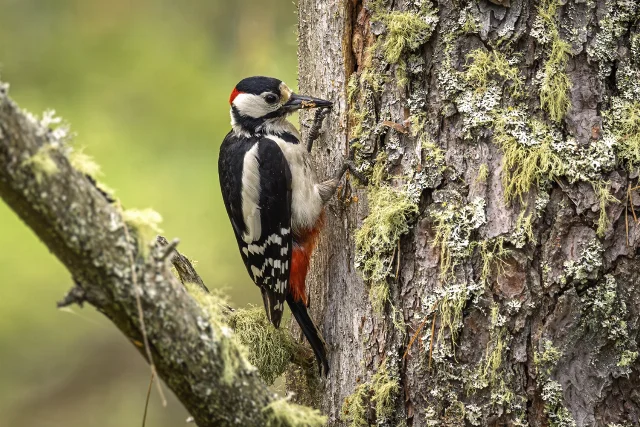
Guatemalan Flicker Basic Information
| Scientific Name |
Colaptes mexicanoides
|
| Status |
LC
Least Concern
|
| Size |
28-32 cm (11-13 inch)
|
| Colors |
|
| Type |
|
| Family |
Woodpeckers |
Introduction
The Guatemalan Flicker, scientifically classified as Colaptes mexicanoides, is a fascinating member of the woodpecker family (Picidae) native to the highlands of Central America. As a specialized tree-clinging bird, it plays a vital role in the montane forest ecosystems it inhabits. Often associated with the broader Northern Flicker complex, taxonomists now recognize the Guatemalan Flicker as a distinct species due to its unique genetic markers and localized distribution. These birds are primarily found in high-altitude pine-oak forests, where they demonstrate remarkable adaptability to the rugged, cloud-shrouded terrain of their range. For bird enthusiasts and ornithologists alike, observing this flicker in its natural environment is a rewarding experience, as it offers a window into the avian diversity of Mesoamerica. Despite its beauty and ecological importance, much remains to be studied regarding its specific population trends and behavioral nuances, making it a compelling subject for ongoing biological research and conservation efforts in the region.
Physical Appearance
The Guatemalan Flicker is a medium-sized bird, typically measuring between 28 and 32 centimeters in length. Its plumage is a striking display of earthy tones, with a primary color of rich, mottled brown that provides excellent camouflage against tree bark. The bird is adorned with secondary accents of red, most notably seen in the malar stripes of the males and the subtle, vibrant shafts of the wing and tail feathers. The underparts are often characterized by a cream or buff coloration, heavily spotted or barred with black markings, which helps break up the bird's silhouette while foraging. Its bill is strong, slightly decurved, and perfectly adapted for excavating wood and probing for insects. The tail feathers are stiff and pointed, acting as a sturdy prop while the bird clings to vertical tree trunks. The overall build is robust, typical of the Colaptes genus, balancing weight and agility for life in the canopy and along trunks.
Habitat
The Guatemalan Flicker is primarily restricted to the mountainous regions of Central America, spanning from southern Mexico down through Guatemala, Honduras, and parts of El Salvador. Its preferred habitat consists of high-altitude pine-oak forests and open woodlands, typically found at elevations ranging from 2,000 to 3,500 meters above sea level. These cloud forests provide the necessary vertical structure for the bird to thrive. They are often seen in areas with mature trees that offer soft, decaying wood for nesting and foraging. The cool, temperate climate of these highlands is essential for the species, as they are not well-suited to the lowland tropical jungles found elsewhere in the region.
Diet
As a specialized insectivore, the Guatemalan Flicker has a diet that is heavily reliant on ants and beetles. Unlike many other woodpeckers that spend the majority of their time hammering into deep wood, this species is frequently observed foraging on the ground or on fallen logs. They use their long, sticky, and barbed tongues to extract larvae and adult insects from crevices and ant mounds. During the non-breeding season, their diet may also include a variety of wild berries, seeds, and nuts available within the pine-oak canopy. This opportunistic feeding behavior allows them to maintain energy levels throughout the varying seasonal availability of insects in the high-altitude forests.
Breeding and Nesting
The breeding season for the Guatemalan Flicker typically aligns with the arrival of the spring rains in the Central American highlands. These birds are primary excavators, meaning they carve their own nest cavities into the trunks or thick branches of dead or decaying trees. Both the male and female participate in the excavation process, which can take several weeks to complete. Once the cavity is ready, the female lays a clutch of four to seven white, glossy eggs. Both parents share the responsibility of incubation, which usually lasts about two weeks. After hatching, the chicks are fed a high-protein diet of regurgitated insects by both adults. The fledglings remain in the nest for roughly a month, developing their flight muscles before venturing out into the dense forest canopy to join their parents in the search for food.
Behavior
The Guatemalan Flicker is a relatively solitary bird, though it may be seen in pairs during the breeding season. They are known for their distinct vocalizations, which include rhythmic 'wick-a-wick-a-wick' calls that echo through the forest. When communicating or defending territory, they may engage in drumming, using their bills to tap rapidly on resonant wood or even metal surfaces to create a loud, mechanical sound. They are agile climbers, using their stiff tails for support as they hop upward along trunks. While they are generally shy and difficult to approach, they can be persistent when foraging, often spending long periods focused on a single ant colony on the forest floor.
Conservation Status
-
LC
Least Concern
Currently, the Guatemalan Flicker is not classified as globally threatened; however, it faces significant regional pressures. The primary threat to this species is the ongoing loss and fragmentation of the high-altitude pine-oak forests due to deforestation, agricultural expansion, and climate change. Because their range is restricted to specific mountain elevations, they have limited ability to migrate or shift their habitat. Conservation efforts are focused on protecting remaining old-growth forest tracts and encouraging sustainable forestry practices that preserve dead standing trees, which are essential for their nesting requirements.
Interesting Facts
- The Guatemalan Flicker is a specialized 'ground-foraging' woodpecker.
- They possess a uniquely long, sticky tongue designed to extract ants from deep tunnels.
- Both males and females participate equally in the excavation of nest cavities.
- Their stiff tail feathers act as a tripod, allowing them to hang vertically on tree trunks.
- They are a key indicator species for the health of high-altitude pine-oak forests.
- The red markings on their faces are more prominent in males than in females.
- They are known to use 'drumming' as a form of long-distance communication.
Tips for Birdwatchers
For birdwatchers hoping to spot the Guatemalan Flicker, patience is your greatest asset. Focus your efforts on the high-altitude pine-oak forests of Guatemala and southern Mexico during the early morning hours, when these birds are most active. Look for them not just on tree trunks, but also on the forest floor, as they spend a significant amount of time searching for ants. Listening for their characteristic 'wick-a' call is the best way to locate them in the dense canopy. Bringing a high-quality pair of binoculars and a camera with a good telephoto lens is essential, as these birds can be elusive and often stay high in the branches. Always maintain a respectful distance to avoid disturbing their nesting or foraging activities, as this ensures the birds remain undisturbed in their natural habitat.
Conclusion
The Guatemalan Flicker (Colaptes mexicanoides) is a remarkable example of avian evolution, perfectly adapted to the unique, cool-climate forests of the Central American highlands. Its specialized role in controlling insect populations and its reliance on mature, decaying timber highlight the importance of preserving these delicate ecosystems. As we continue to learn more about this species, it becomes increasingly clear that its survival is intrinsically linked to the health of its mountain environment. For birdwatchers, encountering this species is a highlight of any trip to the region, offering a glimpse into a specialized lifestyle that has persisted for generations. Through increased awareness, support for local conservation initiatives, and the protection of essential forest corridors, we can ensure that the Guatemalan Flicker continues to thrive in the wild. Whether you are an avid researcher or a casual nature enthusiast, appreciating the beauty and ecological function of this tree-clinging bird serves as a reminder of the incredible biodiversity that exists within our world's high-altitude forests. By documenting sightings and respecting their habitat, we contribute to the broader understanding and preservation of this magnificent and often overlooked avian treasure.
Guatemalan Flicker Distribution Map & Range
The distribution map for this species will be available soon.
We are working with our official data partners to update this information.