Robust Woodpecker Distribution Map & Range
The distribution map for this species will be available soon.
We are working with our official data partners to update this information.

Sign in with your Google account to access all features

| Scientific Name | Campephilus robustus |
|---|---|
| Status | LC Least Concern |
| Size | 33-36 cm (13-14 inch) |
| Colors |
Black
Red
|
| Type |
Tree-clinging Birds

|
| Family | Woodpeckers |
The Robust Woodpecker (Campephilus robustus) is a magnificent and powerful member of the Picidae family, captivating bird enthusiasts across South America. As a primary representative of the tree-clinging birds, this species is renowned for its sheer physical presence and its vital role within its forest ecosystem. Measuring between 33 and 36 centimeters, it stands as one of the more imposing woodpeckers in its range, easily recognized by its bold coloration and industrious nature. Found primarily in the dense forests of Argentina, Brazil, and Paraguay, the Robust Woodpecker is a sentinel of the canopy, spending the majority of its life vertically attached to the trunks of massive trees. Unlike smaller woodpecker species that might be overlooked, the Robust Woodpecker makes its presence known through resonant drumming and distinct vocalizations. Understanding this species is essential for conservationists and birders alike, as it acts as an indicator of forest health. By exploring its unique biological adaptations, social structures, and reliance on specific forest environments, we gain a deeper appreciation for the complex biodiversity of neotropical woodlands and the specific requirements necessary to ensure the survival of this remarkable avian species for generations to come.
The Robust Woodpecker is a masterclass in avian design, perfectly adapted for a life of vertical climbing and wood-excavating. Its primary color is a deep, glossy black that covers most of its body, providing excellent camouflage against the shadows of the forest canopy. This dark plumage is contrasted sharply by vibrant splashes of red, which are particularly prominent on the head, especially in males who sport a striking, fiery crest. Measuring 33 to 36 centimeters in length, it is a sturdy, large-bodied bird. One of its most distinctive physical features is its powerful, chisel-like beak, which is designed to withstand the intense impact of repeated drilling into hardwood. The bird's feet are zygodactyl, meaning two toes point forward and two point backward, allowing it to maintain a secure grip on vertical surfaces. Furthermore, its stiff, pointed tail feathers act as a crucial brace, providing the stability needed to exert maximum force when foraging. The combination of its size, bold color pattern, and specialized anatomical features makes the Robust Woodpecker an unmistakable and iconic sight within its native range, showcasing the perfect evolutionary synergy between form and function.
The Robust Woodpecker thrives in a variety of forested environments, showing a strong preference for humid subtropical forests, Atlantic forests, and mixed woodland areas. These birds are most commonly found in regions with mature trees that provide ample opportunities for foraging and nesting. They are particularly drawn to areas with dense canopy cover, which offers protection from aerial predators and maintains the microclimate necessary for their prey. Because they rely heavily on decaying or dead timber for finding food and carving out nesting cavities, they are most abundant in primary forests or older, undisturbed secondary growth. Fragmentation of these habitats poses a significant challenge, as they require large, contiguous tracts of forest to maintain viable populations and find sufficient resources throughout the year.
As an expert forager, the Robust Woodpecker primarily feeds on wood-boring insect larvae, which it skillfully extracts from within the trunks and branches of trees. Its diet consists largely of beetle larvae, ants, and other invertebrates found deep within the wood. To access these hidden food sources, the woodpecker uses its powerful bill to hammer into the bark and sapwood, often creating deep, characteristic rectangular or oval holes. In addition to larvae, they may occasionally consume fruits, berries, and nuts found in the canopy, providing necessary nutritional variety. This foraging behavior not only sustains the woodpecker but also plays a critical role in forest ecology, as their abandoned nesting and foraging holes provide essential shelter for various other species of birds, mammals, and insects.
The breeding cycle of the Robust Woodpecker is a testament to the dedication required for survival in the wild. During the breeding season, pairs engage in elaborate courtship displays, which include synchronized drumming, vocalizations, and aerial maneuvers. Both the male and female invest significant time and energy into excavating a large, secure nesting cavity, typically high up in a dead or dying tree. This process can take several weeks, as the pair works to create a deep chamber that protects their eggs and chicks from the elements and potential predators. Once the cavity is ready, the female lays a small clutch of white eggs. Both parents are highly involved in the incubation process and share the responsibilities of feeding the altricial chicks until they are ready to fledge. This cooperative behavior ensures a higher survival rate for their offspring in a challenging environment.
The Robust Woodpecker is primarily solitary or found in pairs, maintaining a strong territorial bond with its mate. They are highly active during the day, spending most of their time climbing tree trunks in search of food. Their behavior is characterized by a series of short, powerful hops, punctuated by periods of intense drumming against the wood. This drumming serves multiple purposes: it is a method of foraging, a way to mark territory, and a vital means of communication with potential mates. They are generally shy and cautious, often moving to the opposite side of a tree trunk when they detect potential threats, making them a challenging yet rewarding subject for patient birdwatchers.
The Robust Woodpecker is currently classified as a species of Least Concern by the IUCN, but this does not mean it is without threats. Its primary challenge is the rapid loss and fragmentation of its natural habitat due to deforestation, agricultural expansion, and logging. As a species that relies on mature, undisturbed forests for both food and nesting, the reduction of these ecosystems directly impacts their population density. Conservation efforts must focus on the protection of large, contiguous forest tracts and the promotion of sustainable forestry practices that preserve standing dead trees, which are critical for the survival of this and other woodpecker species.
To successfully spot the Robust Woodpecker, patience and persistence are key. Because they are often found in dense, mature forests, it is best to visit during the early morning hours when their activity levels are highest. Listen intently for their distinct, resonant drumming sound, which is often the first clue to their presence. Once you hear them, move slowly and try to remain quiet; these birds are quite cautious and will quickly move to the far side of a tree if they feel observed. Using high-quality binoculars and a birding app to compare calls can significantly improve your chances of a positive identification. Remember to look for fresh wood chips at the base of trees, as these are telltale signs of recent foraging activity.
The Robust Woodpecker (Campephilus robustus) represents the incredible diversity and resilience of South American birdlife. Through its specialized anatomical adaptations, such as its powerful bill and zygodactyl feet, it has carved out a unique niche as a tree-clinging specialist in some of the world's most beautiful forest ecosystems. Beyond its striking appearance—defined by its bold black and red plumage—this woodpecker serves a crucial ecological function. By excavating wood for food and creating nesting cavities, it facilitates a chain of life, providing essential resources for numerous other creatures that inhabit the canopy. However, the future of the Robust Woodpecker is inextricably linked to the health of its habitat. As deforestation continues to pose a threat, the preservation of mature, intact forests becomes paramount to ensuring these birds continue to thrive. For birdwatchers and conservationists, the Robust Woodpecker serves as a reminder of the intricate connections within nature and the importance of protecting the environments that sustain such magnificent species. By fostering a deeper understanding and appreciation for this bird, we contribute to the broader effort of conserving the biodiversity of our planet. Whether you are an experienced birder or a casual nature enthusiast, observing the Robust Woodpecker in its natural element is a truly rewarding experience that highlights the wonder of the natural world.
We are working with our official data partners to update this information.
Tag:



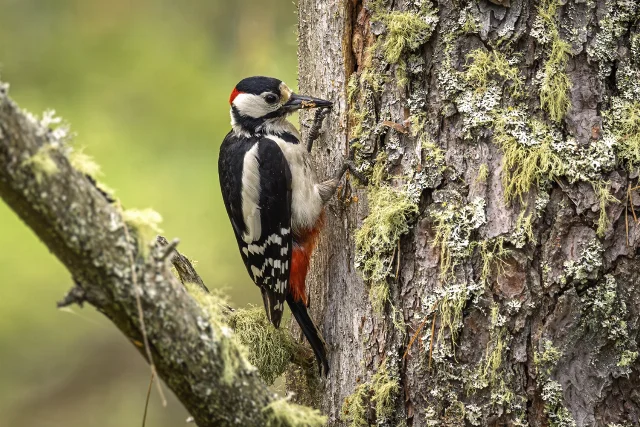

Birds have their own beautiful world, we should not interfere in it. We should enjoy this beauty. Its beauty should be captured in the camera but be careful not to disturb them.
Tap a language to switch instantly.
Tap a language to switch instantly.