black drongo

Dicrurus macrocercus
  • Home
  • black drongo Details
iconAbout black drongo

Basisinformationen über Black Drongo

Basisinformationen über Black Drongo

Scientific NameDicrurus macrocercus
Status LC Nicht gefährdet
Size28-28 cm (11-11 inch)
Colors
Black
Blue
TypePerching Birds

Namen in lokalen Sprachen

assamese: ফেঁচু
bengali: কালো ফিঙে, রাজকীয় কাক
bhojpuri: भुजइठा, भुजंगा, भुचेंगड़ा, ठाकुरजी
gujarati: કાળો કોસીટ, કાળીયો કોશી
hindi: कोतवाल, भुजंग
kannada: ಕಾಜಾಣ
malayalam: ആനറാഞ്ചി പക്ഷി
marathi: कोतवाल, काळा गोविंद, गोचिडघुम्मा, काळबाण्या, बाणवा (आदिवासी भाग)
nepali: कालो चिबे
oriya: କଜଳପାତୀ
punjabi: ਕਾਲ ਕਲੀਚੀ
sanskrit: अङ्गारक, धूम्याट
tamil: இரட்டைவால் குருவி, கரிக்குருவி

Einführung

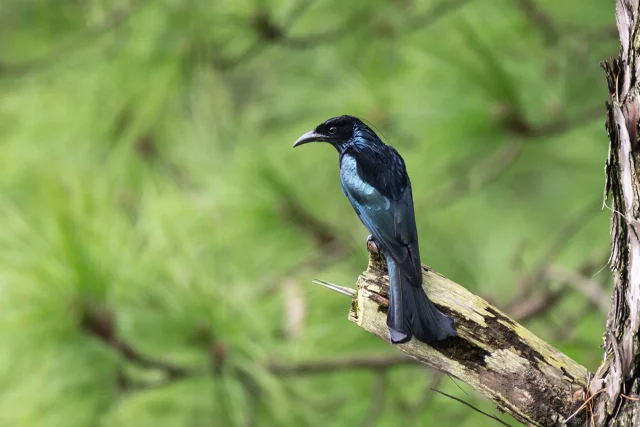
Der Königsdrongo (Dicrurus macrocercus) ist ein kleiner, aber bemerkenswert mutiger Singvogel aus der Familie der Drongos (Dicruridae). Er ist in Südasien beheimatet und leicht an seinem glänzend schwarzen Gefieder und dem tief gegabelten Schwanz zu erkennen. Man sieht den Königsdrongo häufig auf Stromleitungen oder dem Rücken weidender Rinder; er ist ein fester Bestandteil offener Landschaften in seinem weiten Verbreitungsgebiet.

Physisches Erscheinungsbild

Ausgewachsene Königsdrongos erreichen eine Länge von etwa 28 cm. Sie besitzen ein vollständig glänzend schwarzes Gefieder, das im Sonnenlicht schimmert und an der Basis des Schnabelwinkels einen kleinen weißen Fleck aufweist. Ihr markantestes Merkmal ist der breite, tief gegabelte Schwanz. Während Erwachsene dunkelbraune Iris haben, wirken Jungvögel bräunlicher mit weißen Sprenkeln an Bauch und Unterseite.

Natürlicher Lebensraum

Der Königsdrongo gedeiht in einer Vielzahl von offenen Lebensräumen, darunter Savannen, Ackerland und lichte Wälder. Er ist häufig in der Nähe von Wasserquellen und menschlichen Siedlungen anzutreffen, vom Meeresspiegel bis zu Höhen von 2.000 Metern. Seine Vorliebe für offene Flächen ermöglicht es ihm, kahle Sitzwarten für die Jagd zu nutzen.

Ernährung

Der Königsdrongo ist primär insektenfressend und ernährt sich von einer Vielzahl an Beutetieren:

  • Insekten: Ameisen, Termiten, Heuschrecken, Grillen, Käfer, Bienen, Motten und Schmetterlinge.
  • Kleine Wirbeltiere: Gelegentlich verzehrt er kleine Reptilien, Vögel und sogar Fledermäuse.
  • Nektar: Er spielt eine wichtige Rolle bei der Bestäubung, indem er Blütennektar aufnimmt.

Brut und Nestbau

Die Brutzeit findet typischerweise von Februar bis August statt. Sie bauen tassenförmige Nester in der Gabelung eines Astes, oft hoch oben in einem Baum. Kleinere, weniger aggressive Vogelarten nisten häufig in der Nähe von Königsdrongos, um von deren heftigem Schutz gegen Raubtiere zu profitieren.

Verhalten

Diese Art ist für ihre Aggressivität bekannt und wird oft als "Königskrähe" bezeichnet. Sie zögert nicht, weitaus größere Vögel wie Krähen oder Greifvögel im Sturzflug anzugreifen, um ihr Territorium zu verteidigen. Sie sind zudem geschickte Nachahmer und können eine breite Palette an Rufen erzeugen, darunter einen zweitönigen Laut, der dem des Schikrasperbers ähnelt.

Erhaltungszustand

Der Königsdrongo wird aufgrund seiner großen Population und weiten Verbreitung von der IUCN derzeit als Nicht gefährdet (Least Concern) eingestuft. Auf einigen pazifischen Inseln, auf denen er eingeführt wurde, ist er jedoch zu einer invasiven Art geworden, die die lokale Artenvielfalt bedroht.

Interessante Fakten

  1. Man sieht sie oft auf dem Rücken von Rindern reiten, um Insekten zu fangen, die von den Tieren aufgescheucht werden.
  2. Ihr aggressives Wesen schützt andere kleinere Vögel in der Nähe vor Raubtieren.
  3. Sie können die Rufe von Falken nachahmen, um andere Vögel von Futterplätzen zu vertreiben.
  4. Die Art wurde früher als identisch mit dem afrikanischen Trauerdrongo angesehen.

Tipps für Vogelbeobachter

Um einen Königsdrongo zu entdecken, halten Sie Ausschau nach auffälligen Sitzwarten wie Telefonleitungen, Zäunen oder kahlen Ästen in offenen Feldern. Sie sind am frühen Morgen und am späten Nachmittag am aktivsten. Achten Sie auf ihre scharfen, metallischen Rufe oder die Nachahmung anderer Vögel, um sie schnell zu lokalisieren.

Fazit

Der Königsdrongo ist ein faszinierendes Beispiel für Mut und Anpassungsfähigkeit in der Vogelwelt. Ob er akrobatische Flugmanöver vollführt, um Insekten zu fangen, oder einen zehnmal so großen Raubvogel vertreibt – diese "Königskrähe" bleibt eine der charismatischsten und wichtigsten Arten im asiatischen Ökosystem.

Verbreitungskarte und Reichweite

Official Distribution Data provided by
BirdLife International and Handbook of the Birds of the World (2025)

Häufig gestellte Fragen (FAQs) über Black Drongo

For most pets, a yearly checkup is recommended to monitor their overall health, update vaccinations, and catch early signs of illness. Senior pets or those with chronic conditions may require more frequent visits.

For most pets, a yearly checkup is recommended to monitor their overall health, update vaccinations, and catch early signs of illness. Senior pets or those with chronic conditions may require more frequent visits.

For most pets, a yearly checkup is recommended to monitor their overall health, update vaccinations, and catch early signs of illness. Senior pets or those with chronic conditions may require more frequent visits.

For most pets, a yearly checkup is recommended to monitor their overall health, update vaccinations, and catch early signs of illness. Senior pets or those with chronic conditions may require more frequent visits.

For most pets, a yearly checkup is recommended to monitor their overall health, update vaccinations, and catch early signs of illness. Senior pets or those with chronic conditions may require more frequent visits.

For most pets, a yearly checkup is recommended to monitor their overall health, update vaccinations, and catch early signs of illness. Senior pets or those with chronic conditions may require more frequent visits.

For most pets, a yearly checkup is recommended to monitor their overall health, update vaccinations, and catch early signs of illness. Senior pets or those with chronic conditions may require more frequent visits.

For most pets, a yearly checkup is recommended to monitor their overall health, update vaccinations, and catch early signs of illness. Senior pets or those with chronic conditions may require more frequent visits.

For most pets, a yearly checkup is recommended to monitor their overall health, update vaccinations, and catch early signs of illness. Senior pets or those with chronic conditions may require more frequent visits.

For most pets, a yearly checkup is recommended to monitor their overall health, update vaccinations, and catch early signs of illness. Senior pets or those with chronic conditions may require more frequent visits.

For most pets, a yearly checkup is recommended to monitor their overall health, update vaccinations, and catch early signs of illness. Senior pets or those with chronic conditions may require more frequent visits.

For most pets, a yearly checkup is recommended to monitor their overall health, update vaccinations, and catch early signs of illness. Senior pets or those with chronic conditions may require more frequent visits.

For most pets, a yearly checkup is recommended to monitor their overall health, update vaccinations, and catch early signs of illness. Senior pets or those with chronic conditions may require more frequent visits.

For most pets, a yearly checkup is recommended to monitor their overall health, update vaccinations, and catch early signs of illness. Senior pets or those with chronic conditions may require more frequent visits.

For most pets, a yearly checkup is recommended to monitor their overall health, update vaccinations, and catch early signs of illness. Senior pets or those with chronic conditions may require more frequent visits.

For most pets, a yearly checkup is recommended to monitor their overall health, update vaccinations, and catch early signs of illness. Senior pets or those with chronic conditions may require more frequent visits.

For most pets, a yearly checkup is recommended to monitor their overall health, update vaccinations, and catch early signs of illness. Senior pets or those with chronic conditions may require more frequent visits.

For most pets, a yearly checkup is recommended to monitor their overall health, update vaccinations, and catch early signs of illness. Senior pets or those with chronic conditions may require more frequent visits.

For most pets, a yearly checkup is recommended to monitor their overall health, update vaccinations, and catch early signs of illness. Senior pets or those with chronic conditions may require more frequent visits.

For most pets, a yearly checkup is recommended to monitor their overall health, update vaccinations, and catch early signs of illness. Senior pets or those with chronic conditions may require more frequent visits.

For most pets, a yearly checkup is recommended to monitor their overall health, update vaccinations, and catch early signs of illness. Senior pets or those with chronic conditions may require more frequent visits.

For most pets, a yearly checkup is recommended to monitor their overall health, update vaccinations, and catch early signs of illness. Senior pets or those with chronic conditions may require more frequent visits.

For most pets, a yearly checkup is recommended to monitor their overall health, update vaccinations, and catch early signs of illness. Senior pets or those with chronic conditions may require more frequent visits.

For most pets, a yearly checkup is recommended to monitor their overall health, update vaccinations, and catch early signs of illness. Senior pets or those with chronic conditions may require more frequent visits.

For most pets, a yearly checkup is recommended to monitor their overall health, update vaccinations, and catch early signs of illness. Senior pets or those with chronic conditions may require more frequent visits.

For most pets, a yearly checkup is recommended to monitor their overall health, update vaccinations, and catch early signs of illness. Senior pets or those with chronic conditions may require more frequent visits.

For most pets, a yearly checkup is recommended to monitor their overall health, update vaccinations, and catch early signs of illness. Senior pets or those with chronic conditions may require more frequent visits.

For most pets, a yearly checkup is recommended to monitor their overall health, update vaccinations, and catch early signs of illness. Senior pets or those with chronic conditions may require more frequent visits.

For most pets, a yearly checkup is recommended to monitor their overall health, update vaccinations, and catch early signs of illness. Senior pets or those with chronic conditions may require more frequent visits.

For most pets, a yearly checkup is recommended to monitor their overall health, update vaccinations, and catch early signs of illness. Senior pets or those with chronic conditions may require more frequent visits.

For most pets, a yearly checkup is recommended to monitor their overall health, update vaccinations, and catch early signs of illness. Senior pets or those with chronic conditions may require more frequent visits.

For most pets, a yearly checkup is recommended to monitor their overall health, update vaccinations, and catch early signs of illness. Senior pets or those with chronic conditions may require more frequent visits.

For most pets, a yearly checkup is recommended to monitor their overall health, update vaccinations, and catch early signs of illness. Senior pets or those with chronic conditions may require more frequent visits.

For most pets, a yearly checkup is recommended to monitor their overall health, update vaccinations, and catch early signs of illness. Senior pets or those with chronic conditions may require more frequent visits.

For most pets, a yearly checkup is recommended to monitor their overall health, update vaccinations, and catch early signs of illness. Senior pets or those with chronic conditions may require more frequent visits.

For most pets, a yearly checkup is recommended to monitor their overall health, update vaccinations, and catch early signs of illness. Senior pets or those with chronic conditions may require more frequent visits.

For most pets, a yearly checkup is recommended to monitor their overall health, update vaccinations, and catch early signs of illness. Senior pets or those with chronic conditions may require more frequent visits.

For most pets, a yearly checkup is recommended to monitor their overall health, update vaccinations, and catch early signs of illness. Senior pets or those with chronic conditions may require more frequent visits.

For most pets, a yearly checkup is recommended to monitor their overall health, update vaccinations, and catch early signs of illness. Senior pets or those with chronic conditions may require more frequent visits.