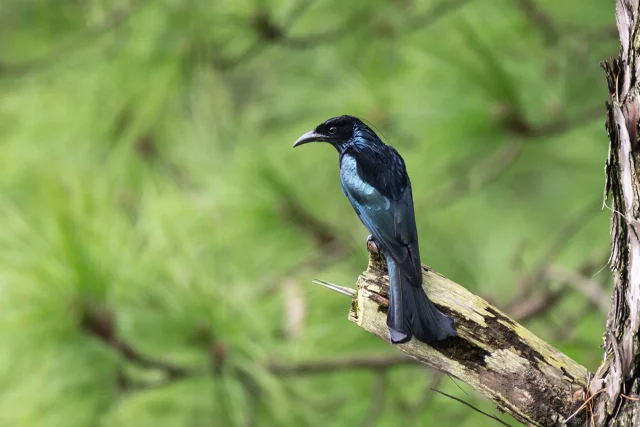
black drongo

Dicrurus macrocercus
  • Home
  • black drongo Details
iconAbout black drongo

Informazioni di base su Black Drongo

Informazioni di base su Black Drongo

Scientific NameDicrurus macrocercus
Status LC Rischio minimo
Size28-28 cm (11-11 inch)
Colors
Black
Blue
TypePerching Birds

Nomi nelle lingue locali

assamese: ফেঁচু
bengali: কালো ফিঙে, রাজকীয় কাক
bhojpuri: भुजइठा, भुजंगा, भुचेंगड़ा, ठाकुरजी
gujarati: કાળો કોસીટ, કાળીયો કોશી
hindi: कोतवाल, भुजंग
kannada: ಕಾಜಾಣ
malayalam: ആനറാഞ്ചി പക്ഷി
marathi: कोतवाल, काळा गोविंद, गोचिडघुम्मा, काळबाण्या, बाणवा (आदिवासी भाग)
nepali: कालो चिबे
oriya: କଜଳପାତୀ
punjabi: ਕਾਲ ਕਲੀਚੀ
sanskrit: अङ्गारक, धूम्याट
tamil: இரட்டைவால் குருவி, கரிக்குருவி

Introduzione

Il Drongo nero (Dicrurus macrocercus) è un piccolo ma straordinariamente audace uccello passeriforme appartenente alla famiglia Dicruridae. Originario dell'Asia meridionale tropicale, questo uccello è facilmente riconoscibile per il suo piumaggio nero lucido e la coda profondamente forcuta. Spesso avvistato appollaiato sui cavi elettrici o sul dorso del bestiame al pascolo, il Drongo nero è un elemento tipico dei paesaggi aperti in tutto il suo vasto areale.

Aspetto fisico

Gli adulti di Drongo nero misurano circa 28 cm di lunghezza. Possiedono un piumaggio interamente nero lucido che brilla alla luce del sole, accentuato da una piccola macchia bianca alla base del becco. La loro caratteristica distintiva è la coda ampia e profondamente forcuta. Mentre gli adulti hanno iridi marrone scuro, i giovani appaiono più brunastri con macchiettature bianche sul ventre e sulla zona ventrale.

Habitat naturale

Il Drongo nero prospera in una varietà di habitat aperti, tra cui savane, terreni agricoli e boschi radi. Si trova frequentemente vicino a fonti d'acqua e insediamenti umani, dal livello del mare fino a 2.000 metri di altitudine. La sua preferenza per le aree aperte gli consente di utilizzare posatoi scoperti per la caccia.

Alimentazione

Principalmente insettivoro, il Drongo nero si nutre di una vasta gamma di prede:

  • Insetti: Formiche, termiti, locuste, grilli, coleotteri, api, falene e farfalle.
  • Piccoli vertebrati: Occasionalmente consuma piccoli rettili, uccelli e persino pipistrelli.
  • Nettare: Svolge un ruolo vitale nell'impollinazione nutrendosi del nettare dei fiori.

Riproduzione e nidificazione

La stagione riproduttiva si svolge solitamente da febbraio ad agosto. Costruiscono nidi a forma di coppa nella biforcazione di un ramo, spesso in alto su un albero. Specie di uccelli più piccole e meno aggressive scelgono spesso di nidificare vicino ai Dronghi neri per beneficiare della loro feroce protezione contro i predatori.

Comportamento

Conosciuto come "re dei corvi", questa specie è famosamente aggressiva. Non esitano a picchiare in picchiata uccelli molto più grandi, come corvi o rapaci, per difendere il proprio territorio. Sono anche abili mimici, capaci di produrre una vasta gamma di richiami, incluso un suono a due note che ricorda lo sparviere shikra.

Stato di conservazione

Il Drongo nero è attualmente classificato come Rischio minimo dalla IUCN a causa della sua ampia popolazione e distribuzione. Tuttavia, in alcune isole del Pacifico dove è stato introdotto, è diventato una specie invasiva, minacciando la biodiversità locale.

Fatti interessanti

  1. Sono spesso visti cavalcare sul dorso del bestiame per catturare gli insetti sollevati dagli animali.
  2. La loro natura aggressiva protegge altri uccelli più piccoli che nidificano nelle vicinanze dai predatori.
  3. Possono imitare i richiami dei falchi per spaventare altri uccelli e tenerli lontani dal cibo.
  4. La specie era precedentemente considerata la stessa del drongo codaforcuta africano.

Consigli per i birdwatcher

Per avvistare un Drongo nero, cercalo su posatoi ben visibili come cavi telefonici, recinzioni o rami spogli in campi aperti. Sono più attivi durante le prime ore del mattino e nel tardo pomeriggio. Ascolta i loro richiami acuti e metallici o il mimetismo di altri uccelli per individuarli rapidamente.

Conclusione

Il Drongo nero è un affascinante esempio di coraggio e adattabilità aviaria. Che si tratti di eseguire manovre acrobatiche aeree per catturare insetti o di scacciare un predatore dieci volte più grande di lui, questo "re dei corvi" rimane una delle specie più carismatiche ed essenziali dell'ecosistema asiatico.

Mappa di distribuzione e areale

Official Distribution Data provided by
BirdLife International and Handbook of the Birds of the World (2025)

Domande frequenti (FAQ) su Black Drongo

For most pets, a yearly checkup is recommended to monitor their overall health, update vaccinations, and catch early signs of illness. Senior pets or those with chronic conditions may require more frequent visits.

For most pets, a yearly checkup is recommended to monitor their overall health, update vaccinations, and catch early signs of illness. Senior pets or those with chronic conditions may require more frequent visits.

For most pets, a yearly checkup is recommended to monitor their overall health, update vaccinations, and catch early signs of illness. Senior pets or those with chronic conditions may require more frequent visits.

For most pets, a yearly checkup is recommended to monitor their overall health, update vaccinations, and catch early signs of illness. Senior pets or those with chronic conditions may require more frequent visits.

For most pets, a yearly checkup is recommended to monitor their overall health, update vaccinations, and catch early signs of illness. Senior pets or those with chronic conditions may require more frequent visits.

For most pets, a yearly checkup is recommended to monitor their overall health, update vaccinations, and catch early signs of illness. Senior pets or those with chronic conditions may require more frequent visits.

For most pets, a yearly checkup is recommended to monitor their overall health, update vaccinations, and catch early signs of illness. Senior pets or those with chronic conditions may require more frequent visits.

For most pets, a yearly checkup is recommended to monitor their overall health, update vaccinations, and catch early signs of illness. Senior pets or those with chronic conditions may require more frequent visits.

For most pets, a yearly checkup is recommended to monitor their overall health, update vaccinations, and catch early signs of illness. Senior pets or those with chronic conditions may require more frequent visits.

For most pets, a yearly checkup is recommended to monitor their overall health, update vaccinations, and catch early signs of illness. Senior pets or those with chronic conditions may require more frequent visits.

For most pets, a yearly checkup is recommended to monitor their overall health, update vaccinations, and catch early signs of illness. Senior pets or those with chronic conditions may require more frequent visits.

For most pets, a yearly checkup is recommended to monitor their overall health, update vaccinations, and catch early signs of illness. Senior pets or those with chronic conditions may require more frequent visits.

For most pets, a yearly checkup is recommended to monitor their overall health, update vaccinations, and catch early signs of illness. Senior pets or those with chronic conditions may require more frequent visits.

For most pets, a yearly checkup is recommended to monitor their overall health, update vaccinations, and catch early signs of illness. Senior pets or those with chronic conditions may require more frequent visits.

For most pets, a yearly checkup is recommended to monitor their overall health, update vaccinations, and catch early signs of illness. Senior pets or those with chronic conditions may require more frequent visits.

For most pets, a yearly checkup is recommended to monitor their overall health, update vaccinations, and catch early signs of illness. Senior pets or those with chronic conditions may require more frequent visits.

For most pets, a yearly checkup is recommended to monitor their overall health, update vaccinations, and catch early signs of illness. Senior pets or those with chronic conditions may require more frequent visits.

For most pets, a yearly checkup is recommended to monitor their overall health, update vaccinations, and catch early signs of illness. Senior pets or those with chronic conditions may require more frequent visits.

For most pets, a yearly checkup is recommended to monitor their overall health, update vaccinations, and catch early signs of illness. Senior pets or those with chronic conditions may require more frequent visits.

For most pets, a yearly checkup is recommended to monitor their overall health, update vaccinations, and catch early signs of illness. Senior pets or those with chronic conditions may require more frequent visits.

For most pets, a yearly checkup is recommended to monitor their overall health, update vaccinations, and catch early signs of illness. Senior pets or those with chronic conditions may require more frequent visits.

For most pets, a yearly checkup is recommended to monitor their overall health, update vaccinations, and catch early signs of illness. Senior pets or those with chronic conditions may require more frequent visits.

For most pets, a yearly checkup is recommended to monitor their overall health, update vaccinations, and catch early signs of illness. Senior pets or those with chronic conditions may require more frequent visits.

For most pets, a yearly checkup is recommended to monitor their overall health, update vaccinations, and catch early signs of illness. Senior pets or those with chronic conditions may require more frequent visits.

For most pets, a yearly checkup is recommended to monitor their overall health, update vaccinations, and catch early signs of illness. Senior pets or those with chronic conditions may require more frequent visits.

For most pets, a yearly checkup is recommended to monitor their overall health, update vaccinations, and catch early signs of illness. Senior pets or those with chronic conditions may require more frequent visits.

For most pets, a yearly checkup is recommended to monitor their overall health, update vaccinations, and catch early signs of illness. Senior pets or those with chronic conditions may require more frequent visits.

For most pets, a yearly checkup is recommended to monitor their overall health, update vaccinations, and catch early signs of illness. Senior pets or those with chronic conditions may require more frequent visits.

For most pets, a yearly checkup is recommended to monitor their overall health, update vaccinations, and catch early signs of illness. Senior pets or those with chronic conditions may require more frequent visits.

For most pets, a yearly checkup is recommended to monitor their overall health, update vaccinations, and catch early signs of illness. Senior pets or those with chronic conditions may require more frequent visits.

For most pets, a yearly checkup is recommended to monitor their overall health, update vaccinations, and catch early signs of illness. Senior pets or those with chronic conditions may require more frequent visits.

For most pets, a yearly checkup is recommended to monitor their overall health, update vaccinations, and catch early signs of illness. Senior pets or those with chronic conditions may require more frequent visits.

For most pets, a yearly checkup is recommended to monitor their overall health, update vaccinations, and catch early signs of illness. Senior pets or those with chronic conditions may require more frequent visits.

For most pets, a yearly checkup is recommended to monitor their overall health, update vaccinations, and catch early signs of illness. Senior pets or those with chronic conditions may require more frequent visits.

For most pets, a yearly checkup is recommended to monitor their overall health, update vaccinations, and catch early signs of illness. Senior pets or those with chronic conditions may require more frequent visits.

For most pets, a yearly checkup is recommended to monitor their overall health, update vaccinations, and catch early signs of illness. Senior pets or those with chronic conditions may require more frequent visits.

For most pets, a yearly checkup is recommended to monitor their overall health, update vaccinations, and catch early signs of illness. Senior pets or those with chronic conditions may require more frequent visits.

For most pets, a yearly checkup is recommended to monitor their overall health, update vaccinations, and catch early signs of illness. Senior pets or those with chronic conditions may require more frequent visits.

For most pets, a yearly checkup is recommended to monitor their overall health, update vaccinations, and catch early signs of illness. Senior pets or those with chronic conditions may require more frequent visits.