Eurasian Dotterel Distribution Map & Range
The distribution map for this species will be available soon.
We are working with our official data partners to update this information.

Sign in with your Google account to access all features

| Scientific Name | Eudromias morinellus |
|---|---|
| Status | LC Least Concern |
| Size | 20-22 cm (8-9 inch) |
| Colors |
Brown
White
|
| Type |
Waders

|
| Family | Plovers |
The Eurasian Dotterel (Eudromias morinellus) is a fascinating species of wader that captivates bird enthusiasts with its unique appearance and remarkable life cycle. Belonging to the plover family, this small, charismatic bird is renowned for its breeding behavior, which bucks the traditional trends found in many avian species. Unlike many other waders that inhabit coastal mudflats, the Dotterel is primarily a bird of the high mountains and arctic tundra, showcasing an incredible resilience to harsh, cold environments. Its scientific name, morinellus, is derived from the Greek word for 'foolish,' a moniker earned due to the bird’s historical lack of fear toward humans, which unfortunately made it an easy target for hunters in the past. Today, the Eurasian Dotterel remains a subject of intense study for ornithologists, particularly due to its complex migratory patterns and the specific ecological niches it occupies. Understanding this bird provides deep insights into the fragility of alpine ecosystems and the far-reaching impacts of climate change on migratory species across the globe.
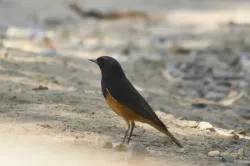
Standing at a modest 20-22 cm in length, the Eurasian Dotterel is a compact and distinctively patterned shorebird. Its plumage is a masterclass in camouflage, specifically adapted for the rocky, lichen-covered landscapes it calls home. The primary color is a rich, earthy brown, which dominates the upperparts, including the back and wings, featuring distinct buff-colored edges that provide effective cover against mountain terrain. A defining feature of the adult is the bold, stark white stripe that runs above the eye and across the crown, contrasting sharply with its dark cap. The underparts are equally striking, characterized by a deep chestnut-red belly that is bordered by a white patch on the throat and chest. During the breeding season, the female is typically more brightly colored than the male, a characteristic known as reverse sexual dimorphism. In winter, the plumage becomes much duller and more muted, favoring a grayish-brown hue that blends seamlessly with the winter landscape, making them significantly harder to spot during non-breeding months.
The Eurasian Dotterel is highly specialized in its habitat selection, favoring the high-altitude landscapes of the arctic and alpine tundra. During the breeding season, they are found on stony plateaus, ridges, and barren mountain tops, often at elevations where vegetation is sparse and primarily limited to mosses, lichens, and low-growing shrubs. These environments are characterized by extreme weather conditions, including high winds and cold temperatures, which the Dotterel navigates with ease. Outside of the breeding season, they migrate to more temperate regions, often frequenting dry, short-grass pastures, fallow fields, and open steppes. They avoid dense forests and urbanized areas, preferring wide-open spaces that provide excellent visibility to detect potential predators from a distance.
As a specialized wader, the Eurasian Dotterel’s diet consists primarily of invertebrates, which it skillfully hunts on the ground. Its foraging technique involves a stop-start motion typical of plovers, where it runs quickly, pauses to scan the surface, and then pecks at its prey. Their diet is largely composed of insects such as beetles, flies, grasshoppers, and various larvae, as well as spiders and small worms. During the breeding season, they may also supplement their intake with small seeds or berries found in the tundra. Their ability to find food in nutrient-poor alpine environments is critical for their survival, and they are known to be highly opportunistic when resources become temporarily abundant during the short arctic summer.
The breeding biology of the Eurasian Dotterel is one of the most intriguing aspects of its life history. They exhibit a form of polyandry, where the traditional gender roles are reversed. It is the female that is more brightly colored and initiates courtship, while the male takes on the primary responsibility of incubating the eggs and caring for the chicks. Once the female lays a clutch of three eggs in a shallow, unlined scrape on the rocky ground, she may leave the male to defend the nest and raise the brood alone, potentially moving on to pair with another male. This strategy allows the species to maximize reproductive output in the short, demanding window of the arctic summer, ensuring that at least some offspring survive the harsh conditions of their high-altitude breeding grounds.
Eurasian Dotterels are known for their relatively calm and confiding nature. Unlike many other migratory shorebirds that are skittish and prone to sudden flight, the Dotterel often remains stationary or walks slowly when approached. This behavior is likely an evolved response to their tundra environment, where staying still provides excellent camouflage against predators like foxes or birds of prey. They are social birds during migration and wintering, often forming small flocks known as 'trips.' These groups move in coordinated fashion, communicating with soft, melodic whistles. Their flight is strong and direct, allowing them to traverse vast distances between their northern breeding grounds and their southern wintering ranges with remarkable efficiency.
The Eurasian Dotterel is currently classified as a species of 'Least Concern' globally, but its populations are fragmented and localized, making them vulnerable to environmental changes. Their reliance on specific high-altitude ecosystems puts them at significant risk from climate change, as rising temperatures alter the vegetation and food availability in their tundra homes. Additionally, human disturbance in alpine areas, such as tourism and infrastructure development, can disrupt their sensitive nesting periods. Ongoing research and habitat protection efforts are essential to ensure that these unique birds continue to thrive in their rugged, mountain habitats for future generations.
For birdwatchers hoping to spot the Eurasian Dotterel, patience and preparation are key. Because they favor remote, high-altitude alpine plateaus, you will likely need to hike to reach their breeding grounds. The best time to observe them is during the peak of the breeding season when they are most active. Use high-quality binoculars and a spotting scope, as these birds blend perfectly into the rocky, lichen-covered terrain. Move slowly and avoid making sudden movements; because of their confiding nature, you may be able to get quite close if you remain quiet and respectful. Always check local birding databases or contact regional ornithological societies to identify known 'stop-over' sites during their migration, as this is often the most reliable way to catch a glimpse of these elusive, beautiful waders.
The Eurasian Dotterel stands as a remarkable testament to evolutionary adaptation, thriving in environments that would be considered hostile by most other species. From their unique role-reversed breeding system to their incredible migratory journeys across continents, they represent the complexity and beauty of the avian world. As we continue to study their behavior and distribution, it becomes increasingly clear that the survival of the Dotterel is inextricably linked to the health of our alpine and tundra ecosystems. By protecting these delicate habitats and maintaining a deep appreciation for the natural history of such species, we ensure that the 'foolish' bird—which is actually quite brilliant in its survival strategies—continues to grace our mountain landscapes. Whether you are a dedicated ornithologist or a casual nature observer, witnessing a Eurasian Dotterel in its natural habitat is an unforgettable experience. It serves as a poignant reminder of the necessity of conservation and the importance of preserving the wild, remote corners of our planet for the diverse species that call them home. Let us continue to monitor, study, and cherish these magnificent birds, ensuring they remain a part of our natural heritage for many years to come.
We are working with our official data partners to update this information.
Tag:



Birds have their own beautiful world, we should not interfere in it. We should enjoy this beauty. Its beauty should be captured in the camera but be careful not to disturb them.
Tap a language to switch instantly.
Tap a language to switch instantly.