

Not available
Semipalmated Plover
Charadrius semipalmatus
Last update: 10 May 2026
Read in:
English
Español
Português
हिन्दी
বাংলা
தமிழ்
മലയാളം
मराठी
ગુજરાતી
తెలుగు
French
Deutsch
Русский
日本語
简体中文
Italiano
Tiếng Việt
العربية
ಕನ್ನಡ
ਪੰਜਾਬੀ
Semipalmated Plover Basic Information
| Scientific Name | Charadrius semipalmatus |
|---|---|
| Status | LC Least Concern |
| Size | 17-19 cm (7-7 inch) |
| Colors |
Brown
White
|
| Type |
Waders

|
| Family | Plovers |
Introduction
The Semipalmated Plover (Charadrius semipalmatus) is a charming and resilient shorebird belonging to the plover family. As a small, energetic wader, it is a familiar sight to birdwatchers across North America, particularly along coastal regions and inland wetlands during migration. Named for the partial webbing between its toes—a characteristic feature that distinguishes it from its close relative, the Ringed Plover—this species is a master of the shoreline.
These birds are known for their distinct stop-and-start foraging behavior, which makes them fascinating to observe in their natural environment. Breeding primarily in the high Arctic tundra, they undertake impressive long-distance migrations to spend their winters in warmer climates as far south as South America. Understanding the life cycle of the Semipalmated Plover provides valuable insights into the health of wetland ecosystems. Whether you are a seasoned ornithologist or a casual backyard birder, the Semipalmated Plover offers a delightful look into the lives of migratory shorebirds that bridge the gap between northern breeding grounds and southern coastal wintering sites.
Physical Appearance
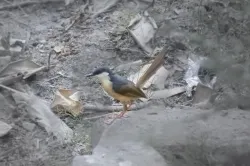
The Semipalmated Plover is a small, compact shorebird, typically measuring between 17 and 19 centimeters in length. Its plumage is characterized by a sophisticated palette of earthy tones, primarily featuring a brown upper body that provides excellent camouflage against the sands and mudflats where it feeds. This brown coloration is contrasted by a clean white underside, creating a stark, elegant appearance.
Key diagnostic features include a single, dark breast band that distinguishes it from other similar species. The face is adorned with a bold black mask that extends across the forehead, contrasting sharply with its white throat and eyebrows. Its bill is relatively short, orange at the base with a black tip, perfectly adapted for picking small invertebrates from the surface. The legs are a vibrant yellow-orange, adding a splash of color to its otherwise neutral tones. In flight, a thin white wing stripe becomes visible, a subtle but helpful mark for identification. Juveniles appear slightly duller, often lacking the intense black markings of the adults, but they retain the characteristic stocky shape and small stature that define the species.
Habitat
The Semipalmated Plover is a highly migratory species that utilizes diverse habitats throughout its lifecycle. During the breeding season, it favors the open, treeless landscapes of the Arctic tundra, specifically nesting in areas with sparse vegetation, gravelly bars, or near coastal lagoons and river deltas. These areas provide the necessary visibility for detecting predators while offering access to the insect-rich environment required to raise chicks.
During migration and the non-breeding season, these plovers are primarily coastal birds. They congregate on sandy beaches, mudflats, tidal estuaries, and salt marshes. Their ability to thrive in these transitional zones is essential for their survival, as these areas provide an abundant supply of food during their arduous journeys across the continent.
Diet
As a specialized wader, the Semipalmated Plover follows a diet consisting almost exclusively of small invertebrates found in wet substrates. Their foraging style is unique; they utilize a 'run-stop-peck' technique, where they sprint a short distance, pause to scan the ground, and then quickly strike at prey exposed on the surface. Their diet includes a variety of marine worms, small crustaceans such as amphipods and isopods, and a wide array of insects, including flies and beetles found along the tideline.
During the breeding season, their diet shifts slightly to include more terrestrial insects, such as midges and larvae, which are abundant in the tundra. This dietary flexibility allows them to sustain their high-energy lifestyle across varying environments.
Breeding and Nesting
Breeding for the Semipalmated Plover occurs in the short, intense summer of the Arctic. They are ground nesters, choosing sites that are often slightly elevated to avoid flooding. A typical nest is a shallow scrape in the sand, gravel, or moss, sometimes lined with small pebbles or shell fragments to provide insulation for the eggs.
The female usually lays four buff-colored eggs with dark brown spots, which provide excellent camouflage against the tundra floor. Both parents take turns incubating the eggs for approximately three to four weeks. Once hatched, the precocial chicks are able to feed themselves almost immediately, though they remain under the watchful eyes of the parents for protection. If a predator approaches, the adults will often perform a 'broken-wing' display to lure the threat away from the vulnerable nest or brood.
Behavior
Semipalmated Plovers are highly active and alert birds. They are often seen in small groups during migration, though they maintain their individual foraging space. They are territorial during the breeding season, with males performing aerial displays and vocalizations to defend their nesting area from intruders. Their characteristic 'run-stop-peck' behavior is not just a feeding strategy but also a way to maintain constant situational awareness.
When disturbed, they are quick to take flight, often emitting a soft, melodic 'chu-weet' call. They are also known for their impressive endurance, capable of flying thousands of miles between their Arctic breeding grounds and their wintering ranges in South America.
Conservation Status - LC Least Concern
The Semipalmated Plover is currently classified as a species of Least Concern by the IUCN. However, like many shorebirds, they face ongoing challenges due to habitat loss and degradation. Coastal development, pollution, and the impacts of climate change on the Arctic tundra threaten their breeding success and migratory stopover sites. Conservation efforts are focused on protecting critical wetland habitats and minimizing human disturbance on nesting beaches. Monitoring population trends is vital to ensure that this resilient little bird continues to thrive across its vast migratory range.
Interesting Facts
- The name 'Semipalmated' refers to the small webs between their toes, which help them walk on soft mud.
- They are master camouflagers, blending perfectly into the gravel and sand of their nesting grounds.
- Adults will feign injury to distract predators from their chicks.
- They undergo one of the longest migrations of any shorebird, traveling from the Arctic to South America.
- Unlike many other birds, their chicks are precocial and can forage for food hours after hatching.
- Their 'run-stop-peck' behavior is a signature trait that makes them easy to identify for birders.
- They are highly social during migration, often joining mixed-species flocks of other shorebirds.
Tips for Birdwatchers
To successfully spot a Semipalmated Plover, focus your efforts on mudflats and sandy beaches during spring or fall migration. Because they are small and blend in so well with their surroundings, using a high-quality pair of binoculars or a spotting scope is essential. Approach the shoreline slowly and quietly to avoid flushing the birds.
Watch for their distinct movement pattern; if you see a bird that runs, stops abruptly, and then pecks at the ground, you have likely found a plover. Checking the breast band is the best way to confirm identification. Early morning or late afternoon light often provides the best visibility for observing their subtle plumage details and behaviors.
Pro-Tip: To spot this bird in dense forest canopy, a 8x42 binoculars or telescope is highly recommended.
- [Check out our top recommended gear here]
Conclusion
The Semipalmated Plover is a testament to the incredible endurance and adaptability of migratory shorebirds. From the rugged beauty of the Arctic tundra to the sun-drenched mudflats of the southern coast, this species navigates vast distances, playing a crucial role in the ecosystems it inhabits. Its unique physical traits, such as the partially webbed toes and striking facial markings, make it a favorite subject for ornithologists and bird enthusiasts alike. Observing these birds in their natural element reminds us of the delicate balance required to maintain global biodiversity.
As we continue to monitor the status of the Semipalmated Plover, it is important to remember that our actions have direct consequences for their survival. Protecting our coastal wetlands and supporting conservation initiatives are essential steps in ensuring that future generations can witness the remarkable migration of these small, spirited waders. Whether you are checking them off your life list or studying their complex breeding behaviors, the Semipalmated Plover remains a fascinating and essential component of the avian world. By valuing these birds and their habitats, we contribute to a broader effort of environmental stewardship that benefits countless other species sharing the same migratory pathways and ecosystems.
Tag:

200 Follower
is a writer who draws. He’s the Bestselling author of “Number of The Year”. Donec vitae tortor efficitur, convallis lelobortis elit.
Recent Posts





Subscribe For Daily Newsletter


