Not available
Sykess Lark
Galerida deva
Last update: 09 Mar 2026
Read in:
English
Español
Português
हिन्दी
বাংলা
தமிழ்
മലയാളം
मराठी
ગુજરાતી
తెలుగు
French
Deutsch
Русский
日本語
简体中文
Italiano
Tiếng Việt
العربية
ಕನ್ನಡ
ਪੰਜਾਬੀ
Sykess Lark Basic Information
| Scientific Name | Galerida deva |
|---|---|
| Status | LC Least Concern |
| Size | 12-14 cm (5-6 inch) |
| Colors |
Brown
White
|
| Type |
Perching Birds

|
| Family | Larks |
Sykess Lark Names In Other Languages
| bengali | সাইকসের চন্দনা, দেভা ভরত |
|---|---|
| bhojpuri | चिरचिटवा, चुलबुली |
| gujarati | નાની ચંડુલ, સિક્સની ચંડુલ |
| hindi | छोटी लवा, देव लवा |
| kannada | ಸೈಕ್ಸ್ ಲಾರ್ಕ್ |
| malayalam | സൈക്സ് വാനമ്പാടി |
| marathi | देव चंडोल |
| portuguese | COTIO-DE-SYKES |
| spanish | Alondra de Sykes |
| tamil | சின்ன வானம்பாடி |
| telugu | కొండ పిచుక, దేవ పిచుక |
Introduction
The Sykes's Lark, scientifically known as Galerida deva, is a fascinating member of the Alaudidae family, primarily found in the Indian subcontinent. Named after Colonel William Henry Sykes, this small, nondescript bird is a master of camouflage, perfectly adapted to the arid and semi-arid landscapes it calls home. As a member of the perching birds category, it displays unique behavioral traits that distinguish it from other ground-dwelling larks. While often overlooked due to its subtle plumage, the Sykes's Lark is a vital component of its ecosystem, contributing to the biodiversity of the scrublands and agricultural fields it inhabits. Understanding this species requires a deep dive into its unique biology, from its melodic vocalizations to its specialized feeding habits. This guide provides a comprehensive overview of the Sykes's Lark, exploring its appearance, behavior, and the conservation efforts required to ensure its continued presence in the wild, making it a rewarding subject for both amateur bird enthusiasts and professional ornithologists alike.
Physical Appearance
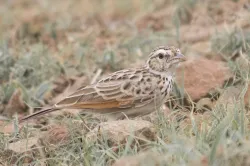
The Sykes's Lark is a small, compact bird, typically measuring between 12 and 14 cm in length. Its plumage is a masterpiece of cryptic coloration, primarily consisting of various shades of brown and sandy buff, which allows it to blend seamlessly with the dry, earth-toned environments it frequents. The feathers on its upperparts are streaked with darker brown, providing excellent camouflage against soil and withered vegetation. In contrast, the underparts are significantly lighter, often featuring a creamy or white hue that helps break up the bird's silhouette when viewed from below. One of the most distinctive features of the Galerida deva is its relatively short, stout bill, which is perfectly adapted for foraging on the ground. The bird also possesses a modest crest, which can be raised or lowered depending on its state of alertness or during courtship displays. Its wings are broad and rounded, and the tail is relatively short with white outer feathers, which are often visible during flight, acting as a key diagnostic feature for birdwatchers attempting to identify this elusive species in the field.
Habitat
The Sykes's Lark is primarily a bird of the open country, showing a distinct preference for arid and semi-arid regions across India. It is frequently encountered in dry, stony scrublands, rocky plateaus, and fallow agricultural fields where the vegetation is sparse and low-lying. Unlike species that thrive in dense forests, the Sykes's Lark requires open spaces to forage effectively and detect potential predators. It avoids areas with high humidity or thick canopy cover, instead favoring landscapes that mimic its natural, sun-drenched environment. During the hotter parts of the day, it may seek shelter under low shrubs or rocks to thermoregulate, showcasing its high level of adaptation to harsh, water-scarce terrains.
Diet
As a primarily ground-foraging species, the Sykes's Lark has a varied diet that consists largely of seeds, grains, and small insects. During the breeding and post-breeding seasons, its dietary requirements shift to include a higher proportion of protein, which it obtains by hunting for beetles, ants, grasshoppers, and small caterpillars. This insect-heavy diet is crucial for the development of nestlings. Foraging usually occurs in the early morning or late afternoon, when the bird walks methodically across the ground, using its sharp eyesight to locate food items. Its stout bill is ideal for cracking open tough seeds and probing the soil for larvae, allowing it to survive in environments where food sources might be ephemeral or difficult to access.
Breeding and Nesting
The breeding season of the Sykes's Lark is closely tied to the monsoon cycle, which ensures an abundance of food for the growing chicks. The nest is a simple, cup-shaped structure built directly on the ground, usually concealed at the base of a small bush or a clump of grass to protect it from the elements and predators. Both parents participate in the construction, using dry grass, roots, and fine plant fibers. The female typically lays a clutch of two to four eggs, which are pale with darker speckles. Both parents share the responsibilities of incubation and feeding the young. Once hatched, the chicks grow rapidly, fledging within a couple of weeks, after which they remain under parental care for a short period before becoming independent in the vast, open scrublands.
Behavior
Behaviorally, the Sykes's Lark is known for its terrestrial nature and its distinct, melodic song, often delivered during a brief flight display. It is generally a shy and elusive bird, preferring to run or crouch when disturbed rather than immediately taking flight. When it does fly, it exhibits a characteristic undulating pattern before landing back on the ground. During the breeding season, the male performs elaborate aerial displays to attract females and establish territory. They are often found in pairs or small family groups, maintaining a vigilant watch over their surroundings, which is a necessary survival strategy in the exposed landscapes they inhabit.
Conservation Status - LC Least Concern
Currently, the Sykes's Lark is classified as a species of Least Concern on the IUCN Red List. However, this does not mean it is immune to environmental pressures. The primary threats to this bird include habitat loss due to the expansion of human infrastructure, intensive agricultural practices that remove necessary scrub cover, and the degradation of arid grasslands. Conservation efforts should focus on preserving these critical habitats and maintaining the ecological balance of the Indian plains. Protecting the mosaic of fallow fields and scrubland is essential to ensure that this resilient bird continues to thrive in its native range.
Interesting Facts
- The Sykes's Lark belongs to the family Alaudidae, which includes all lark species worldwide.
- It is endemic to India, making it a special sighting for international birdwatchers.
- The bird's crest is a diagnostic feature used to signal to other members of the flock.
- It primarily nests on the ground, making it vulnerable to ground-dwelling predators.
- The white outer tail feathers are a primary identification trait when the bird is in flight.
- It possesses a remarkable ability to blend into rocky terrains, making it hard to spot when stationary.
- The song of the Sykes's Lark is often described as a soft, trilling whistle.
- It plays a significant role in pest control by consuming various agricultural insects.
Tips for Birdwatchers
For birdwatchers hoping to spot the Sykes's Lark, patience is key. Because of its excellent camouflage, it is often easier to hear the bird before you see it. Visit dry, rocky, or scrub-covered areas during the early morning hours when activity is highest. Use a pair of high-quality binoculars to scan the ground for movement, as the bird often remains motionless to avoid detection. If you hear a trilling song, stop and wait quietly; the male may perform a flight display, revealing its position. Always maintain a respectful distance to avoid disturbing nesting pairs, and try to photograph the bird against natural backgrounds to document its unique adaptation to its environment.
Pro-Tip: To spot this bird in dense forest canopy, a 8x42 binoculars or telescope is highly recommended.
- [Check out our top recommended gear here]
Conclusion
The Sykes's Lark (Galerida deva) serves as a poignant reminder of the beauty found in the often-overlooked corners of our natural world. As a dedicated inhabitant of the Indian scrublands, this small perching bird exemplifies the evolutionary wonders of adaptation, from its cryptic brown and white plumage to its specialized ground-foraging behaviors. Throughout this guide, we have explored the intricate details of its life cycle, habitat requirements, and the challenges it faces in an ever-changing landscape. While it currently maintains a stable population, the continued survival of the Sykes's Lark is intrinsically linked to the preservation of the open, arid environments that support it. For the birding community, observing this species provides a deeper appreciation for the complex ecological webs that exist within our grasslands and agricultural zones. We encourage birdwatchers and conservationists alike to continue documenting and protecting these unique birds, ensuring that future generations can witness the subtle charm of the Sykes's Lark in its natural habitat. By fostering a greater understanding of species like Galerida deva, we contribute to the broader mission of global avian conservation and the appreciation of the incredible biodiversity that defines our planet.
Tag:

200 Follower
is a writer who draws. He’s the Bestselling author of “Number of The Year”. Donec vitae tortor efficitur, convallis lelobortis elit.
Recent Posts





Subscribe For Daily Newsletter