
Warning: Undefined variable $by_location in /home/odescxjtd641/public_html/beefound.in/bird-details.php on line 874
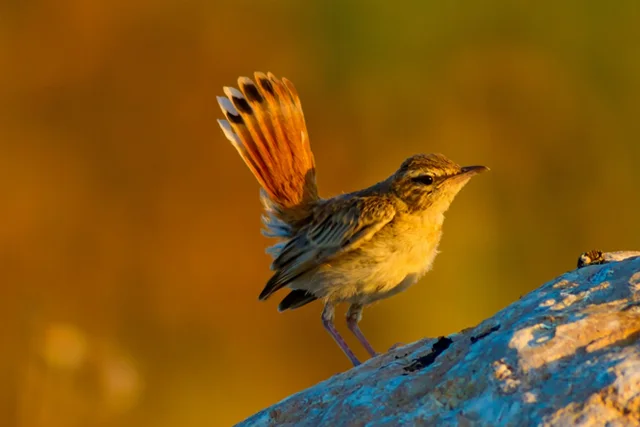
Buff-streaked Chat
Campicoloides bifasciatus
Last update: 15 Jul 2026
Read in:
English
Español
Português
हिन्दी
বাংলা
தமிழ்
മലയാളം
मराठी
ગુજરાતી
తెలుగు
French
Deutsch
Русский
日本語
简体中文
Italiano
Tiếng Việt
العربية
ಕನ್ನಡ
ਪੰਜਾਬੀ
Buff-streaked Chat Basic Information
| Scientific Name | Campicoloides bifasciatus |
|---|---|
| Status | LC Least Concern |
| Size | 16-17 cm (6-7 inch) |
| Colors |
Brown
Orange
|
| Type |
Perching Birds

|
| Family | Old World Flycatchers and Chats |
Introduction
The Buff-streaked Chat (Campicoloides bifasciatus) is a distinctive and charismatic member of the perching bird family, primarily found in the rugged, high-altitude landscapes of Southern Africa. Often overlooked by casual observers due to their preference for remote, rocky terrain, these birds are a prized sighting for avid ornithologists and bird enthusiasts alike. Belonging to the family Muscicapidae, the Buff-streaked Chat is recognized for its unique plumage and specific behavioral traits that set it apart from other chat species. As a species that thrives in the cooler, mountainous regions, it serves as an indicator of the health of these specialized ecosystems. Understanding this bird requires a deep dive into its life cycle, dietary needs, and the environmental pressures it faces in its native range. This guide provides a comprehensive overview of the Buff-streaked Chat, offering insights into why this species is so fascinating to study and observe in the wild.
Physical Appearance
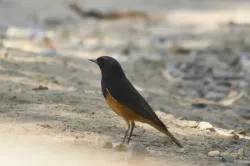
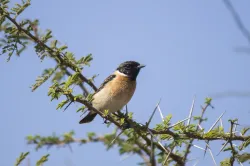
Measuring approximately 16 to 17 centimeters in length, the Buff-streaked Chat is a compact and well-proportioned perching bird. Its primary coloration is a rich, earthy brown, which provides excellent camouflage against the rocky outcrops and grasslands it inhabits. The most striking feature of the male is the vibrant orange-buff streaking that runs across its wings and breast, creating a beautiful contrast against its darker plumage. The secondary color, a warm orange, often manifests as a bold patch or wing bar that becomes particularly visible during flight. Females and juveniles generally exhibit more muted tones, with less distinct streaking, which helps them remain inconspicuous during nesting periods. The bird possesses a strong, slender beak, perfectly adapted for foraging on small insects found among rocks and low vegetation. Its dark, alert eyes and upright posture, often seen perched on a high stone or fence post, give it a dignified and observant appearance that is characteristic of the chat family.
Habitat
The Buff-streaked Chat is a habitat specialist, favoring the high-altitude grasslands and rocky mountainous regions of Southern Africa. They are commonly found in the Drakensberg range, as well as the highveld areas of South Africa, Lesotho, and parts of Eswatini. These birds prefer environments characterized by open, rolling hills, boulder-strewn slopes, and rocky escarpments where they can find vantage points for hunting. Unlike forest-dwelling birds, the Buff-streaked Chat avoids dense woodlands, preferring the sparse, grassy cover that allows them to scan the landscape for prey. Their ability to survive in these often harsh, wind-swept environments highlights their resilience and specialized adaptation to high-elevation biomes.
Diet
The diet of the Buff-streaked Chat consists primarily of invertebrates, making them essential insectivores within their ecosystem. They are opportunistic hunters, feeding on a variety of small beetles, ants, grasshoppers, and spiders that inhabit the rocky crevices and grasslands. They utilize a 'sit-and-wait' strategy, perching prominently on a rock or a shrub to scan the ground for movement. Once prey is identified, they quickly swoop down to capture it before returning to their perch. Occasionally, they may also consume small seeds or berries, particularly during the winter months when insect activity decreases. This diverse diet allows them to maintain energy levels throughout the year despite the fluctuating food availability in high-altitude environments.
Breeding and Nesting
Breeding for the Buff-streaked Chat typically occurs during the spring and summer months when insect populations are at their peak. They are known for their meticulous nest-building habits, often choosing sheltered locations such as deep rock crevices, holes in the ground, or gaps under large boulders to protect their brood from predators and harsh weather. The nest is a cup-shaped structure constructed from fine grasses, rootlets, and lined with softer materials like feathers or animal hair. The female usually lays a clutch of two to four eggs, which she incubates for approximately two weeks. Both parents are actively involved in the rearing process, bringing a constant supply of insects to the nestlings. This cooperative effort ensures the survival of the chicks in the often unpredictable mountain climate, with fledglings typically leaving the nest after about three weeks.
Behavior
The Buff-streaked Chat is a territorial and highly vigilant bird, often seen standing upright on elevated rocks or fence posts. They are generally solitary or found in pairs, maintaining well-defined territories that they defend vigorously against intruders. Their flight is typically short and direct, often accompanied by soft, melodic calls that help them communicate with their mates. During the breeding season, males perform display flights to attract females and establish their dominance. Despite their shy nature, they can be surprisingly bold when protecting their nesting sites. Their habit of flicking their wings and tails is a common behavior, often serving as a signal to other birds or as a way to flush out hidden prey from the grass.
Conservation Status - LC Least Concern
Currently, the Buff-streaked Chat is listed as a species of Least Concern by the IUCN, as it maintains a stable population across its range. However, they are not immune to environmental threats. Habitat degradation due to overgrazing, agricultural expansion, and the encroachment of invasive plant species in the highveld can negatively impact their nesting sites and food supply. While their remote habitat provides some level of protection from human development, climate change poses a long-term risk to these high-altitude specialists. Continued monitoring of their population trends is essential to ensure that these unique birds remain a common sight in the African highlands.
Interesting Facts
- The Buff-streaked Chat is endemic to Southern Africa, meaning it is found nowhere else in the world.
- Despite its name, the 'buff' color is actually a complex mix of orange and brown tones.
- They are known to be surprisingly resilient against the freezing temperatures of high-altitude winters.
- The male's display flight involves rising vertically into the air before descending in a slow, fluttering motion.
- They often use the same nesting site year after year, provided it remains undisturbed.
- Their sharp, alert posture is often used by other small animals as a warning signal for approaching predators.
Tips for Birdwatchers
For birdwatchers hoping to spot the Buff-streaked Chat, patience and the right location are key. Focus your efforts on high-altitude rocky grasslands, particularly in the Drakensberg region during the spring and summer months. These birds are most active in the early morning and late afternoon when they are busy foraging. Use a good pair of binoculars to scan fence posts, large boulders, and rocky outcrops, as these are their preferred perches. They are relatively shy, so approaching slowly and quietly will increase your chances of getting a clear view. Listen for their distinctive, thin calls, which often precede the visual sighting of the bird. Bringing a field guide specific to Southern African birds will help you distinguish them from other chat species that may inhabit similar environments.
Pro-Tip: To spot this bird in dense forest canopy, a 8x42 binoculars or telescope is highly recommended.
- [Check out our top recommended gear here]
Conclusion
The Buff-streaked Chat (Campicoloides bifasciatus) is a remarkable example of nature's adaptation to high-altitude environments. From its striking orange-streaked plumage to its specialized 'sit-and-wait' hunting tactics, every aspect of this bird's life is finely tuned to survive in the rugged landscapes of Southern Africa. As birdwatchers and conservationists, we play a vital role in appreciating and protecting these species. By understanding their habitat requirements and breeding behaviors, we can better advocate for the preservation of the delicate ecosystems they call home. Whether you are a professional ornithologist or a hobbyist photographer, the Buff-streaked Chat offers a rewarding challenge and a beautiful glimpse into the avian diversity of the African continent. We encourage everyone to take the time to observe these birds in their natural environment, respecting their space while enjoying the unique beauty they bring to the mountain slopes. As we continue to study the Buff-streaked Chat, we gain not only knowledge about a single species but also a greater appreciation for the complex, interconnected web of life that defines our natural world. Let us ensure that these magnificent birds continue to thrive for generations to come.

200 Follower
is a writer who draws. He’s the Bestselling author of “Number of The Year”. Donec vitae tortor efficitur, convallis lelobortis elit.
Recent Posts




Subscribe For Daily Newsletter