Perching Birds
avatar
Photo by Admin
Not available

Red-tailed Wheatear

Oenanthe chrysopygia

Last update: 09 Mar 2026

Red-tailed Wheatear Basic Information

Scientific NameOenanthe chrysopygia
Status LC Least Concern
Size14-15 cm (6-6 inch)
Colors
Greyish-brown
Rufous
Type
Perching Birds
type
FamilyOld World Flycatchers and Chats

Introduction

The Red-tailed Wheatear (Oenanthe chrysopygia) is a fascinating species of perching bird that captivates ornithologists and birdwatchers alike with its distinctive appearance and resilient nature. As a member of the Muscicapidae family, this bird is well-adapted to the rugged landscapes it calls home. Often referred to as the Afghan Wheatear or sometimes confused with the Desert Wheatear due to its subtle coloration, the Red-tailed Wheatear possesses a unique character that sets it apart within its genus. These birds are primarily found in arid and rocky regions, where their cryptic plumage serves as an effective camouflage against the harsh terrain. Despite their relatively small size, they exhibit a bold personality, often seen perched atop prominent rocks or scrubby bushes, scanning their environment with keen eyes. Understanding the Red-tailed Wheatear requires an appreciation for its evolutionary adaptations, which allow it to thrive in environments where food and water sources can be sparse. This guide provides a comprehensive overview of this remarkable avian species, from its physical characteristics to its complex social behaviors and conservation needs.

Physical Appearance

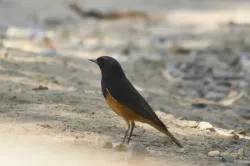
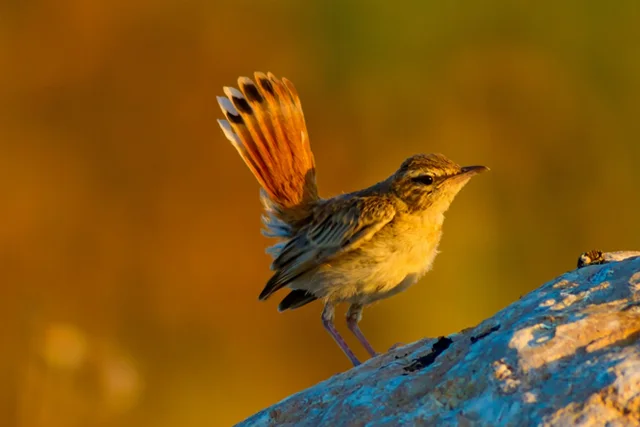
Measuring approximately 14 to 15 centimeters in length, the Red-tailed Wheatear is a compact yet robust bird, perfectly proportioned for its active lifestyle. Its primary coloration is a sophisticated, muted greyish-brown, which provides excellent concealment against the rocky outcrops and sandy soils of its native habitat. The most distinguishing feature, from which it derives its common name, is the vibrant rufous coloration found on its rump and tail coverts. This splash of color is particularly noticeable when the bird is in flight or when it performs its characteristic tail-flicking display. The wings are dark, often showing a brownish hue that contrasts with the lighter body feathers. The bird has a slender, pointed bill, typical of insectivorous species, and dark, expressive eyes framed by a subtle mask-like pattern. Juveniles may appear more mottled, gradually developing the characteristic adult plumage as they mature. The overall structure is typical of the Oenanthe genus, featuring long, strong legs that support efficient movement across uneven ground, and a posture that is almost always alert and upright, reflecting its status as a sentinel of the rocky wastes.

Habitat

The Red-tailed Wheatear is a specialist of arid and semi-arid landscapes. It is most frequently encountered in rugged, rocky terrain, including hillsides, stony plains, and desert wadis. These birds prefer environments with sparse vegetation, where they can utilize rocks and low-lying shrubs as vantage points for foraging and territory defense. Their distribution spans across regions of Western and Central Asia, including parts of the Middle East, where they are often found in high-altitude rocky slopes during the breeding season. Unlike some wheatears that prefer flat sandy deserts, the Red-tailed Wheatear has a distinct preference for areas that offer structural complexity, providing essential cover from predators and harsh environmental conditions. During migration, they may be found in a wider variety of open habitats, but they consistently return to their preferred rocky strongholds when it is time to establish breeding territories.

Diet

As an insectivorous species, the Red-tailed Wheatear plays a vital role in controlling insect populations within its habitat. Its diet consists primarily of a diverse range of small invertebrates, including beetles, ants, grasshoppers, caterpillars, and various spiders. The bird employs a 'sit-and-wait' foraging strategy, utilizing rocks or elevated perches to spot prey moving on the ground. Once a target is identified, it quickly descends to capture the insect before returning to its perch. Occasionally, it may also engage in short, agile flights to catch flying insects in mid-air. During colder months or periods when insect activity is reduced, they may supplement their diet with small seeds or berries, demonstrating a degree of opportunistic flexibility that supports their survival in fluctuating desert environments. Their efficient foraging behavior ensures they maintain the high energy levels required for their active daily routines.

Breeding and Nesting

The breeding season of the Red-tailed Wheatear is a period of intense activity and social display. These birds are typically monogamous, with pairs establishing and defending territories against intruders. The nesting process begins with the selection of a secure site, which is almost exclusively located in crevices, rock cavities, or sometimes in abandoned burrows of small mammals. The nest itself is a cup-shaped structure constructed from a mix of dried grasses, twigs, moss, and animal hair, lined with softer materials to insulate the eggs and chicks. The female is primarily responsible for the construction of the nest, while the male focuses on guarding the perimeter and performing elaborate song flights to reinforce pair bonds. A typical clutch consists of 3 to 5 eggs, which are incubated by the female for approximately two weeks. Both parents are involved in the provisioning of the nestlings, working tirelessly to bring a steady supply of insects to the growing brood until they fledge.

Behavior

The behavior of the Red-tailed Wheatear is characterized by a high degree of alertness and agility. They are highly territorial, often engaging in vigorous displays to ward off other birds of their kind. A common behavior observed is the 'tail-flicking' action, which is often accompanied by sharp, rhythmic vocalizations. During the breeding season, males perform spectacular song flights, rising into the air with rapid wingbeats before gliding back down to a perch, all while singing a complex, melodious song. They are ground-dwelling birds for the most part, showing great proficiency in hopping and running across rocky surfaces. Their cryptic nature makes them somewhat elusive, but their curious and bold temperament often leads them to investigate intruders, making them a rewarding subject for patient observers.

Conservation Status - LC Least Concern

The Red-tailed Wheatear is currently classified as a species of Least Concern by major conservation organizations. While its population is stable, it faces localized threats primarily from habitat degradation and climate change, which can impact the availability of its insect prey. Overgrazing by livestock in arid regions can also reduce the quality of nesting sites and foraging grounds. Continued monitoring of their population trends is essential to ensure that their rocky habitats remain intact. Conservation efforts focusing on preserving the integrity of desert and mountain ecosystems will indirectly benefit this species, ensuring it remains a vibrant part of its native range for future generations.

Interesting Facts

  1. The Red-tailed Wheatear is known for its remarkable ability to mimic the calls of other birds in its environment.
  2. Despite its small size, it is a long-distance migrant in many parts of its range.
  3. The bird's rufous tail is a key diagnostic feature used to distinguish it from other similar-looking wheatear species.
  4. They are highly adapted to high-altitude environments, sometimes nesting above 2,000 meters.
  5. Their scientific name, chrysopygia, literally translates to 'golden-rumped,' referring to their distinctive coloration.
  6. These birds are often seen 'anting,' a behavior where they rub insects on their feathers to use the formic acid as a pesticide.

Tips for Birdwatchers

To successfully spot the Red-tailed Wheatear, patience and the right equipment are essential. Focus your efforts on rocky slopes, desert wadis, or mountainous regions during the early morning or late afternoon when the birds are most active. Use a high-quality pair of binoculars to scan the tops of prominent rocks and dry shrubs, as these are their preferred vantage points. Pay close attention to any movement on the ground; their greyish-brown plumage can make them nearly invisible until they flick their tails. If you hear a series of melodic but sharp calls, remain still and scan the surrounding area. Since they are territorial, they may fly toward you to investigate if you remain calm and quiet. Always maintain a respectful distance to avoid disturbing their nesting or foraging activities, and consider using a spotting scope for detailed observations without causing stress to the bird.

Pro-Tip: To spot this bird in dense forest canopy, a 8x42 binoculars or telescope is highly recommended.
- [Check out our top recommended gear here]

Conclusion

The Red-tailed Wheatear (Oenanthe chrysopygia) is a testament to the evolutionary ingenuity required to thrive in some of the world's most challenging environments. Through its specialized diet, cryptic coloration, and complex territorial behaviors, it has secured its place in the rugged landscapes of Asia and the Middle East. For the dedicated birdwatcher, encountering this species offers a unique glimpse into the life of a bird that perfectly mirrors the resilience of the rocky deserts it calls home. As we continue to study and protect these avian wonders, we gain a deeper understanding of the delicate balance within desert ecosystems. Whether you are a professional ornithologist or a casual enthusiast, the Red-tailed Wheatear is a species that rewards curiosity with its bold personality and stunning, albeit subtle, beauty. By respecting their habitat and observing their natural behaviors from a distance, we ensure that these remarkable birds continue to thrive. Ultimately, the Red-tailed Wheatear serves as a beautiful reminder of the diversity of life that exists in the seemingly barren corners of our planet, encouraging us to look closer and appreciate the intricate details of the natural world.

Red-tailed Wheatear Distribution Map & Range

Official Distribution Data provided by
BirdLife International and Handbook of the Birds of the World (2025)

Previous
Next

Explore More Species in the Old World Flycatchers and Chats Family

Abyssinian Slaty-flycatcher
13-15 cm
Abyssinian Slaty-flycatcher
Melaenornis chocolatinus
14-16 cm
Abyssinian Wheatear
Oenanthe lugubris
12-13 cm
African Dusky Flycatcher
Muscicapa adusta
African Forest-flycatcher
14-15 cm
African Forest-flycatcher
Fraseria ocreata
14-15 cm
African Grey Flycatcher
Bradornis microrhynchus
Ala Shan Redstart
15-16 cm
Ala Shan Redstart
Phoenicurus alaschanicus
17-19 cm
Amber Mountain Rock-thrush
Monticola erythronotus
20-27 cm
Andaman Shama
Copsychus albiventris
17-19 cm
Angola Cave-chat
Xenocopsychus ansorgei
15-16 cm
Angola Slaty-flycatcher
Melaenornis brunneus
Arabian Wheatear
13-15 cm
Arabian Wheatear
Oenanthe lugentoides
17-19 cm
Archer's Robin-chat
Dessonornis archeri
17-19 cm
Arnot's Chat
Myrmecocichla arnotti
13-15 cm
Ashy Flycatcher
Fraseria caerulescens
Ashy-breasted Flycatcher
14-15 cm
Ashy-breasted Flycatcher
Muscicapa randi
12-14 cm
Asian Brown Flycatcher
Muscicapa dauurica
14-16 cm
Atlas Wheatear
Oenanthe seebohmi
Banggai Jungle-flycatcher
13-14 cm
Banggai Jungle-flycatcher
Cyornis pelingensis
15-17 cm
Bearded Scrub-robin
Tychaedon quadrivirgata
black redstart
15-15 cm
black redstart
Phoenicurus ochruros
15-16 cm
Black Scrub-robin
Cercotrichas podobe
Black Shama
20-23 cm
Black Shama
Copsychus cebuensis
17-19 cm
Black Wheatear
Oenanthe leucura
12-13 cm
Black-and-orange Flycatcher
Ficedula nigrorufa
20-23 cm
Black-backed Forktail
Enicurus immaculatus
Black-banded Flycatcher
13-14 cm
Black-banded Flycatcher
Ficedula timorensis
14-16 cm
Black-eared Wheatear
Oenanthe hispanica
Blackstart
14-16 cm
Blackstart
Oenanthe melanura
Blackthroat
12-14 cm
Blackthroat
Calliope obscura
blue rock thrush
20-20 cm
blue rock thrush
Monticola solitarius
31-35 cm
Blue Whistling-thrush
Myophonus caeruleus
15-17 cm
Blue-and-white Flycatcher
Cyanoptila cyanomelana
Blue-breasted Blue Flycatcher
11-13 cm
Blue-breasted Blue Flycatcher
Cyornis herioti
Blue-capped Redstart
14-16 cm
Blue-capped Redstart
Phoenicurus coeruleocephala
16-18 cm
Blue-capped Rock-thrush
Monticola cinclorhyncha
14-16 cm
Blue-fronted Redstart
Phoenicurus frontalis
13-15 cm
Blue-fronted Robin
Cinclidium frontale
Blue-fronted Warbling-flycatcher
12-14 cm
Blue-fronted Warbling-flycatcher
Eumyias hoevelli
16-18 cm
Blue-shouldered Robin-chat
Cossypha cyanocampter
14-15 cm
Blue-throated Blue Flycatcher
Cyornis rubeculoides
bluethroat
15-15 cm
bluethroat
Luscinia svecica
12-13 cm
Bocage's Akalat
Sheppardia bocagei
Bohm's Flycatcher
12-13 cm
Bohm's Flycatcher
Myopornis boehmi
Bornean Blue Flycatcher
14-15 cm
Bornean Blue Flycatcher
Cyornis superbus
Bornean Shortwing
12-14 cm
Bornean Shortwing
Brachypteryx erythrogyna
Bornean Whistling-thrush
27-30 cm
Bornean Whistling-thrush
Myophonus borneensis
17-19 cm
Boulder Chat
Pinarornis plumosus
16-18 cm
Brown Rockchat
Oenanthe fusca
15-17 cm
Brown Scrub-robin
Tychaedon signata
15-17 cm
Brown-backed Scrub-robin
Cercotrichas hartlaubi
13-14 cm
Brown-breasted Flycatcher
Muscicapa muttui
Brown-chested Alethe
18-20 cm
Brown-chested Alethe
Chamaetylas poliocephala
Brown-chested Jungle-flycatcher
14-15 cm
Brown-chested Jungle-flycatcher
Cyornis brunneatus
15-17 cm
Brown-tailed Chat
Oenanthe scotocerca
Buff-breasted Wheatear
15-17 cm
Buff-breasted Wheatear
Oenanthe bottae
14-16 cm
Buff-rumped Wheatear
Oenanthe moesta
16-17 cm
Buff-streaked Chat
Campicoloides bifasciatus
Buru Warbling-flycatcher
12-14 cm
Buru Warbling-flycatcher
Eumyias additus
Cambodian Blue Robin
13-15 cm
Cambodian Blue Robin
Myiomela cambodiana
16-18 cm
Cape Robin-chat
Dessonornis caffer
19-21 cm
Cape Rock-thrush
Monticola rupestris
15-17 cm
Capped Wheatear
Oenanthe pileata
12-13 cm
Cassin's Flycatcher
Muscicapa cassini
Chapin's Flycatcher
13-15 cm
Chapin's Flycatcher
Fraseria lendu
Chat-flycatcher
17-19 cm
Chat-flycatcher
Agricola infuscatus
20-22 cm
Chestnut-bellied Rock-thrush
Monticola rufiventris
Chestnut-naped Forktail
22-25 cm
Chestnut-naped Forktail
Enicurus ruficapillus
Chinese Blue Flycatcher
15-16 cm
Chinese Blue Flycatcher
Cyornis glaucicomans
Chinese Rubythroat
13-15 cm
Chinese Rubythroat
Calliope tschebaiewi
Chinese Shortwing
11-13 cm
Chinese Shortwing
Brachypteryx sinensis
20-24 cm
Chorister Robin-chat
Cossypha dichroa
Cinnamon-chested Flycatcher
12-13 cm
Cinnamon-chested Flycatcher
Ficedula buruensis
Collared Bush-robin
13-15 cm
Collared Bush-robin
Tarsiger johnstoniae
12-13 cm
Collared Flycatcher
Ficedula albicollis
18-19 cm
Collared Palm-thrush
Cichladusa arquata
15-17 cm
Common Nightingale
Luscinia megarhynchos
13-15 cm
Common Redstart
Phoenicurus phoenicurus
common stonechat
13-13 cm
common stonechat
Saxicola torquatus
Congo Moor Chat
14-16 cm
Congo Moor Chat
Myrmecocichla tholloni
Cryptic Flycatcher
13-14 cm
Cryptic Flycatcher
Ficedula crypta
14-15 cm
Cyprus Wheatear
Oenanthe cypriaca
Damar Flycatcher
11-12 cm
Damar Flycatcher
Ficedula henrici
11-12 cm
Dark-sided Flycatcher
Muscicapa sibirica
Daurian Redstart
14-15 cm
Daurian Redstart
Phoenicurus auroreus
Dayak Blue Flycatcher
15-17 cm
Dayak Blue Flycatcher
Cyornis montanus
14-15 cm
Desert Wheatear
Oenanthe deserti
Dull-blue Flycatcher
13-15 cm
Dull-blue Flycatcher
Eumyias sordidus
13-15 cm
Dusky Blue Flycatcher
Bradornis comitatus
12-13 cm
East Coast Akalat
Sheppardia gunningi
12-14 cm
Equatorial Akalat
Sheppardia aequatorialis
12-14 cm
European Pied Flycatcher
Ficedula hypoleuca
12-14 cm
European Robin
Erithacus rubecula
14-16 cm
Eversmanns Redstart
Phoenicurus erythronotus
Eyebrowed Jungle-flycatcher
11-13 cm
Eyebrowed Jungle-flycatcher
Vauriella gularis
14-16 cm
Familiar Chat
Oenanthe familiaris
12-13 cm
Ferruginous Flycatcher
Muscicapa ferruginea
13-15 cm
Finschs Wheatear
Oenanthe finschii
Fire-crested Alethe
18-20 cm
Fire-crested Alethe
Alethe castanea
Firethroat
13-15 cm
Firethroat
Calliope pectardens
16-18 cm
Fiscal Flycatcher
Sigelus silens
Flores Shortwing
13-14 cm
Flores Shortwing
Brachypteryx floris
17-19 cm
Forest Rock-thrush
Monticola sharpei
Forest Scrub-robin
14-16 cm
Forest Scrub-robin
Tychaedon leucosticta
11-12 cm
Fuerteventura Stonechat
Saxicola dacotiae
16-18 cm
Fujian Niltava
Niltava davidi
Fulvous-chested Jungle-flycatcher
12-13 cm
Fulvous-chested Jungle-flycatcher
Cyornis olivaceus
Furtive Flycatcher
12-13 cm
Furtive Flycatcher
Ficedula disposita
12-14 cm
Gabela Akalat
Sheppardia gabela
Gambaga Flycatcher
11-12 cm
Gambaga Flycatcher
Muscicapa gambagae
14-15 cm
Golden Bush-robin
Tarsiger chrysaeus
11-13 cm
Goulds Shortwing
Heteroxenicus stellatus
Great Shortwing
17-19 cm
Great Shortwing
Heinrichia calligyna
Green-backed Flycatcher
10-12 cm
Green-backed Flycatcher
Ficedula elisae
14-16 cm
Grey Bushchat
Saxicola ferreus
14-15 cm
Grey Tit-flycatcher
Fraseria plumbea
Grey-chested Jungle-flycatcher
13-14 cm
Grey-chested Jungle-flycatcher
Cyornis umbratilis
13-15 cm
Grey-streaked Flycatcher
Muscicapa griseisticta
Grey-throated Tit-flycatcher
12-14 cm
Grey-throated Tit-flycatcher
Fraseria griseigularis
12-14 cm
Grey-winged Akalat
Sheppardia polioptera
14-15 cm
Hainan Blue Flycatcher
Cyornis hainanus
17-18 cm
Herero Chat
Namibornis herero
13-15 cm
Heuglin's Wheatear
Oenanthe heuglinii
14-15 cm
Hill Blue Flycatcher
Cyornis whitei
13-14 cm
Himalayan Bush-robin
Tarsiger rufilatus
14-16 cm
Himalayan Rubythroat
Calliope pectoralis
11-13 cm
Himalayan Shortwing
Brachypteryx cruralis
14-15 cm
Hodgsons Redstart
Phoenicurus hodgsoni
17-19 cm
Hooded Wheatear
Oenanthe monacha
14-15 cm
Humblot's Flycatcher
Humblotia flavirostris
Humes Wheatear
14-16 cm
Humes Wheatear
Oenanthe albonigra
13-15 cm
Indian Blue Robin
Larvivora brunnea
indian robin
19-19 cm
indian robin
Copsychus fulicatus
Indigo Flycatcher
13-15 cm
Indigo Flycatcher
Eumyias indigo
Indochinese Blue Flycatcher
14-16 cm
Indochinese Blue Flycatcher
Cyornis sumatrensis
12-14 cm
Iringa Akalat
Sheppardia lowei
15-17 cm
Isabelline Wheatear
Oenanthe isabellina
14-15 cm
Izu Robin
Larvivora tanensis
14-15 cm
Japanese Robin
Larvivora akahige
Javan Blue Flycatcher
15-17 cm
Javan Blue Flycatcher
Cyornis banyumas
Javan Shortwing
12-14 cm
Javan Shortwing
Brachypteryx montana
Javan Whistling-thrush
28-32 cm
Javan Whistling-thrush
Myophonus glaucinus
14-15 cm
Jerdons Bushchat
Saxicola jerdoni
15-16 cm
Kalahari Scrub-robin
Cercotrichas paena
17-19 cm
Karoo Chat
Emarginata schlegelii
15-17 cm
Karoo Scrub-robin
Tychaedon coryphoeus
11-13 cm
Kashmir Flycatcher
Ficedula subrubra
Kurdish Wheatear
15-17 cm
Kurdish Wheatear
Oenanthe xanthoprymna
16-18 cm
Large Blue Flycatcher
Cyornis magnirostris
20-22 cm
Large Niltava
Niltava grandis
18-19 cm
Large Vivid Niltava
Niltava oatesi
Large-billed Blue Flycatcher
15-17 cm
Large-billed Blue Flycatcher
Cyornis caerulatus
11-13 cm
Lesser Shortwing
Brachypteryx leucophris
11-13 cm
Little Forktail
Enicurus scouleri
Little Grey Flycatcher
11-13 cm
Little Grey Flycatcher
Muscicapa epulata
10-11 cm
Little Pied Flycatcher
Ficedula westermanni
14-15 cm
Little Rock-thrush
Monticola rufocinereus
Little Slaty Flycatcher
11-12 cm
Little Slaty Flycatcher
Ficedula basilanica
17-20 cm
Littoral Rock-thrush
Monticola imerina
Lompobattang Flycatcher
13-14 cm
Lompobattang Flycatcher
Ficedula bonthaina
Lowland Akalat
12-14 cm
Lowland Akalat
Sheppardia cyornithopsis
Luzon Water-redstart
12-13 cm
Luzon Water-redstart
Phoenicurus bicolor
18-20 cm
Madagascar Magpie-robin
Copsychus albospecularis
25-30 cm
Malabar Whistling-thrush
Myophonus horsfieldii
Malay Whistling-thrush
28-32 cm
Malay Whistling-thrush
Myophonus robinsoni
Malaysian Blue Flycatcher
14-15 cm
Malaysian Blue Flycatcher
Cyornis turcosus
Mangrove Blue Flycatcher
13-15 cm
Mangrove Blue Flycatcher
Cyornis rufigastra
Marico Flycatcher
15-16 cm
Marico Flycatcher
Bradornis mariquensis
Matinan Warbling-flycatcher
11-12 cm
Matinan Warbling-flycatcher
Eumyias sanfordi
Mbulu Robin-chat
17-19 cm
Mbulu Robin-chat
Dessonornis mbuluensis
Meratus Blue Flycatcher
13-15 cm
Meratus Blue Flycatcher
Cyornis kadayangensis
Minahasa Shortwing
12-14 cm
Minahasa Shortwing
Heinrichia simplex
17-19 cm
Miombo Rock-thrush
Monticola angolensis
15-16 cm
Miombo Scrub-robin
Tychaedon barbata
17-19 cm
Mocking Cliff-chat
Thamnolaea cinnamomeiventris
17-19 cm
Moorland Chat
Pinarochroa sordida
15-18 cm
Mountain Chat
Myrmecocichla monticola
Mountain Robin-chat
18-20 cm
Mountain Robin-chat
Cossyphicula isabellae
14-15 cm
Mourning Wheatear
Oenanthe lugens
11-12 cm
Moussier's Redstart
Phoenicurus moussieri
13-14 cm
Mugimaki Flycatcher
Ficedula mugimaki
12-14 cm
Narcissus Flycatcher
Ficedula narcissina
14-15 cm
Nicobar Jungle-flycatcher
Cyornis nicobaricus
12-13 cm
Nilgiri Flycatcher
Eumyias albicaudatus
13-15 cm
Nilgiri Sholakili
Sholicola major
Nimba Flycatcher
14-15 cm
Nimba Flycatcher
Melaenornis annamarulae
18-20 cm
Northern Anteater Chat
Myrmecocichla aethiops
18-20 cm
Northern Black-flycatcher
Melaenornis edolioides
14-16 cm
Northern Wheatear
Oenanthe oenanthe
14-15 cm
Okinawa Robin
Larvivora namiyei
Olivaceous Flycatcher
13-14 cm
Olivaceous Flycatcher
Fraseria olivascens
14-16 cm
Olive-backed Forest-robin
Stiphrornis pyrrholaemus
17-19 cm
Olive-flanked Robin-chat
Dessonornis anomalus
13-15 cm
Orange-breasted Forest-robin
Stiphrornis erythrothorax
13-14 cm
Orange-flanked Bush-robin
Tarsiger cyanurus
oriental magpie robin
20-20 cm
oriental magpie robin
Copsychus saularis
Palawan Blue Flycatcher
16-18 cm
Palawan Blue Flycatcher
Cyornis lemprieri
Palawan Flycatcher
11-12 cm
Palawan Flycatcher
Ficedula platenae
13-15 cm
Pale Blue Flycatcher
Cyornis unicolor
Pale Flycatcher
14-16 cm
Pale Flycatcher
Agricola pallidus
14-15 cm
Pale-chinned Flycatcher
Cyornis poliogenys
Pelzeln's Magpie-robin
18-20 cm
Pelzeln's Magpie-robin
Copsychus pica
Philippine Magpie-robin
19-21 cm
Philippine Magpie-robin
Copsychus mindanensis
Philippine Shortwing
12-13 cm
Philippine Shortwing
Brachypteryx poliogyna
Pied Bushchat
13-14 cm
Pied Bushchat
Saxicola caprata
14-15 cm
Pied Wheatear
Oenanthe pleschanka
12-14 cm
Plumbeous Water-redstart
Phoenicurus fuliginosus
8-9 cm
Pygmy Blue Flycatcher
Ficedula hodgsoni
12-13 cm
red breasted flycatcher
Ficedula parva
18-20 cm
Red-capped Robin-chat
Cossypha natalensis
16-18 cm
Red-throated Alethe
Chamaetylas poliophrys
11-13 cm
Red-throated Flycatcher
Ficedula albicilla
12-14 cm
Reunion Stonechat
Saxicola tectes
12-13 cm
Rubeho Akalat
Sheppardia aurantiithorax
Ruck's Blue Flycatcher
14-15 cm
Ruck's Blue Flycatcher
Cyornis ruckii
15-18 cm
Rufous-bellied Niltava
Niltava sundara
Rufous-breasted Blue Flycatcher
12-14 cm
Rufous-breasted Blue Flycatcher
Cyornis camarinensis
12-14 cm
Rufous-breasted Bush-robin
Tarsiger hyperythrus
Rufous-browed Flycatcher
11-13 cm
Rufous-browed Flycatcher
Anthipes solitaris
Rufous-chested Flycatcher
11-12 cm
Rufous-chested Flycatcher
Ficedula dumetoria
11-13 cm
Rufous-gorgeted Flycatcher
Ficedula strophiata
Rufous-headed Robin
13-15 cm
Rufous-headed Robin
Larvivora ruficeps
Rufous-tailed Jungle-flycatcher
13-14 cm
Rufous-tailed Jungle-flycatcher
Cyornis ruficauda
18-20 cm
Rufous-tailed Palm-thrush
Cichladusa ruficauda
13-15 cm
Rufous-tailed Robin
Larvivora sibilans
17-20 cm
Rufous-tailed Rock-thrush
Monticola saxatilis
Rufous-tailed Scrub-robin
15-17 cm
Rufous-tailed Scrub-robin
Cercotrichas galactotes
Rufous-tailed Shama
25-28 cm
Rufous-tailed Shama
Copsychus pyrropygus
Rufous-throated Flycatcher
11-12 cm
Rufous-throated Flycatcher
Ficedula rufigula
Rufous-vented Niltava
16-18 cm
Rufous-vented Niltava
Niltava sumatrana
17-19 cm
Ruppell's Chat
Myrmecocichla melaena
19-21 cm
Ruppell's Robin-Chat
Cossypha semirufa
Russet-backed Warbling-flycatcher
12-14 cm
Russet-backed Warbling-flycatcher
Eumyias oscillans
11-13 cm
Rusty-bellied Shortwing
Brachypteryx hyperythra
14-16 cm
Rusty-breasted Wheatear
Oenanthe frenata
Rusty-flanked Robin-chat
17-19 cm
Rusty-flanked Robin-chat
Dessonornis macclounii
13-14 cm
Rusty-tailed Flycatcher
Ficedula ruficauda
13-15 cm
Ryukyu Flycatcher
Ficedula owstoni
14-15 cm
Ryukyu Robin
Larvivora komadori
sapphire flycatcher
11-11 cm
sapphire flycatcher
Ficedula sapphira
12-13 cm
Semi-collared Flycatcher
Ficedula semitorquata
19-21 cm
Sentinel Rock-thrush
Monticola explorator
18-20 cm
Seychelles Magpie-robin
Copsychus sechellarum
Sharpe's Akalat
11-13 cm
Sharpe's Akalat
Sheppardia sharpei
Shiny Whistling-thrush
30-33 cm
Shiny Whistling-thrush
Myophonus melanurus
Short-tailed Akalat
12-14 cm
Short-tailed Akalat
Sheppardia poensis
17-20 cm
Short-toed Rock-thrush
Monticola brevipes
13-14 cm
Siberian Blue Robin
Larvivora cyane
14-16 cm
Siberian Rubythroat
Calliope calliope
15-17 cm
Sickle-winged Chat
Emarginata sinuata
18-20 cm
Silverbird
Empidornis semipartitus
Slaty-backed Flycatcher
11-12 cm
Slaty-backed Flycatcher
Ficedula erithacus
20-25 cm
Slaty-backed Forktail
Enicurus schistaceus
Slaty-backed Jungle-flycatcher
11-13 cm
Slaty-backed Jungle-flycatcher
Vauriella goodfellowi
11-12 cm
Slaty-blue Flycatcher
Ficedula tricolor
11-12 cm
Small Niltava
Niltava macgrigoriae
Small Vivid Niltava
15-16 cm
Small Vivid Niltava
Niltava vivida
10-12 cm
Snowy-browed Flycatcher
Ficedula hyperythra
Snowy-crowned Robin-chat
20-22 cm
Snowy-crowned Robin-chat
Cossypha niveicapilla
Somali Wheatear
14-15 cm
Somali Wheatear
Oenanthe phillipsi
17-19 cm
Sombre Rockchat
Oenanthe dubia
15-17 cm
Sooty Chat
Myrmecocichla nigra
13-15 cm
Sooty Flycatcher
Artomyias fuliginosa
17-20 cm
Southern Anteater Chat
Myrmecocichla formicivora
19-21 cm
Southern Black-flycatcher
Melaenornis pammelaina
13-15 cm
Spotted Flycatcher
Muscicapa striata
25-28 cm
Spotted Forktail
Enicurus maculatus
17-19 cm
Spotted Palm-thrush
Cichladusa guttata
Sri Lanka Whistling-thrush
20-22 cm
Sri Lanka Whistling-thrush
Myophonus blighi
Sula Jungle-flycatcher
13-14 cm
Sula Jungle-flycatcher
Cyornis colonus
Sulawesi Blue Flycatcher
13-15 cm
Sulawesi Blue Flycatcher
Cyornis omissus
Sumatran Shortwing
13-14 cm
Sumatran Shortwing
Brachypteryx saturata
Sumatran Whistling-thrush
28-30 cm
Sumatran Whistling-thrush
Myophonus castaneus
Sumba Brown Flycatcher
12-14 cm
Sumba Brown Flycatcher
Muscicapa segregata
Sumba Flycatcher
12-13 cm
Sumba Flycatcher
Ficedula harterti
Sumba Warbling-flycatcher
11-12 cm
Sumba Warbling-flycatcher
Eumyias stresemanni
Sunda Blue Robin
13-14 cm
Sunda Blue Robin
Myiomela diana
Sunda Forktail
18-20 cm
Sunda Forktail
Enicurus velatus
12-13 cm
Swamp Flycatcher
Muscicapa aquatica
13-14 cm
Swynnerton's Robin
Swynnertonia swynnertoni
Taiwan Shortwing
12-14 cm
Taiwan Shortwing
Brachypteryx goodfellowi
Taiwan Whistling-thrush
30-32 cm
Taiwan Whistling-thrush
Myophonus insularis
Tanahjampea Blue Flycatcher
14-16 cm
Tanahjampea Blue Flycatcher
Cyornis djampeanus
Tanimbar Flycatcher
12-13 cm
Tanimbar Flycatcher
Ficedula riedeli
Tessmann's Flycatcher
11-12 cm
Tessmann's Flycatcher
Fraseria tessmanni
Thicket Flycatcher
14-15 cm
Thicket Flycatcher
Ficedula luzoniensis
15-17 cm
Thrush Nightingale
Luscinia luscinia
Thyolo Alethe
14-16 cm
Thyolo Alethe
Chamaetylas choloensis
11-12 cm
Tickells Blue Flycatcher
Cyornis tickelliae
Timor Warbling-flycatcher
11-12 cm
Timor Warbling-flycatcher
Eumyias hyacinthinus
14-16 cm
Tractrac Chat
Emarginata tractrac
Turquoise Flycatcher
13-15 cm
Turquoise Flycatcher
Eumyias panayensis
10-12 cm
Ultramarine Flycatcher
Ficedula superciliaris
12-14 cm
Usambara Akalat
Sheppardia montana
Ussher's Flycatcher
12-13 cm
Ussher's Flycatcher
Artomyias ussheri
15-15 cm
variable wheatear
Oenanthe picata
15-17 cm
Verditer Flycatcher
Eumyias thalassinus
Visayan Shama
17-20 cm
Visayan Shama
Copsychus superciliaris
12-14 cm
Whinchat
Saxicola rubetra
White-bellied Blue Flycatcher
13-15 cm
White-bellied Blue Flycatcher
Cyornis pallidipes
White-bellied Bushchat
15-17 cm
White-bellied Bushchat
Saxicola gutturalis
11-13 cm
White-bellied Redstart
Luscinia phaenicuroides
White-bellied Robin-chat
16-18 cm
White-bellied Robin-chat
Cossyphicula roberti
13-15 cm
White-bellied Sholakili
Sholicola albiventris
14-16 cm
White-browed Bush-robin
Tarsiger indicus
14-16 cm
White-browed Bushchat
Saxicola macrorhynchus
12-14 cm
White-browed Forest-flycatcher
Fraseria cinerascens
White-browed Jungle-flycatcher
12-14 cm
White-browed Jungle-flycatcher
Vauriella insignis
20-23 cm
White-browed Robin-chat
Cossypha heuglini
15-17 cm
White-browed Scrub-robin
Cercotrichas leucophrys
White-browed Shama
21-24 cm
White-browed Shama
Copsychus luzoniensis
18-19 cm
White-capped Water-redstart
Phoenicurus leucocephalus
White-chested Alethe
18-20 cm
White-chested Alethe
Chamaetylas fuelleborni
22-24 cm
White-crowned Forktail
Enicurus leschenaulti
White-crowned Robin-chat
21-23 cm
White-crowned Robin-chat
Cossypha albicapillus
17-18 cm
White-crowned Wheatear
Oenanthe leucopyga
13-15 cm
White-eyed Slaty-flycatcher
Melaenornis fischeri
16-18 cm
White-fronted Black-chat
Oenanthe albifrons
12-14 cm
White-gorgeted Flycatcher
Anthipes monileger
20-23 cm
White-headed Robin-chat
Cossypha heinrichi
White-rumped Shama
21-28 cm
White-rumped Shama
Copsychus malabaricus
12-15 cm
White-starred Robin
Pogonocichla stellata
White-tailed Alethe
18-20 cm
White-tailed Alethe
Alethe diademata
17-19 cm
White-tailed Blue Robin
Myiomela leucura
11-13 cm
White-tailed Flycatcher
Cyornis concretus
12-13 cm
White-tailed Stonechat
Saxicola leucurus
12-14 cm
White-throated Bushchat
Saxicola insignis
White-throated Jungle-flycatcher
14-15 cm
White-throated Jungle-flycatcher
Vauriella albigularis
14-16 cm
White-throated Redstart
Phoenicurus schisticeps
White-throated Robin
14-16 cm
White-throated Robin
Irania gutturalis
17-19 cm
White-throated Robin-chat
Dessonornis humeralis
17-20 cm
White-throated Rock-thrush
Monticola gularis
White-vented Shama
25-28 cm
White-vented Shama
Copsychus niger
White-winged Cliff-chat
18-20 cm
White-winged Cliff-chat
Monticola semirufus
15-16 cm
White-winged Redstart
Phoenicurus erythrogastrus
Yellow-breasted Forest-robin
14-16 cm
Yellow-breasted Forest-robin
Stiphrornis xanthogaster
Yellow-eyed Black-flycatcher
13-14 cm
Yellow-eyed Black-flycatcher
Melaenornis ardesiacus
13-15 cm
Yellow-footed Flycatcher
Muscicapa sethsmithi
13-14 cm
Yellow-rumped Flycatcher
Ficedula zanthopygia
Zappey's Flycatcher
13-14 cm
Zappey's Flycatcher
Cyanoptila cumatilis