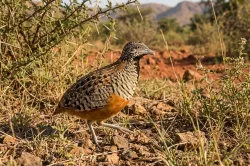
Amazonian Black-tyrant Basic Information
| Scientific Name |
Knipolegus poecilocercus
|
| Status |
LC
Least Concern
|
| Size |
17-18 cm (7-7 inch)
|
| Colors |
|
| Type |
|
| Family |
Tyrant-flycatchers |
Introduction
The Amazonian Black-tyrant, scientifically known as Knipolegus poecilocercus, is a fascinating member of the tyrant flycatcher family (Tyrannidae). This elusive and specialized perching bird is primarily found within the dense, humid lowlands of the Amazon Basin. As a master of its riparian environment, it occupies a unique niche that makes it a sought-after sighting for dedicated ornithologists and birdwatchers venturing into the Neotropics. Unlike some of its more widespread cousins, the Amazonian Black-tyrant is closely tied to water-edge vegetation, often found near rivers and swampy areas where it can hunt effectively. Its dark, somber plumage allows it to blend seamlessly into the shadows of the forest understory or the dense foliage near waterways. Understanding this species requires a deep dive into the complex ecosystems of the Amazon, as its survival is intrinsically linked to the health of these vibrant, water-rich habitats. This bird exemplifies the incredible biodiversity of the region, showcasing the specialized adaptations necessary to thrive in one of the world's most competitive and complex environments.
Physical Appearance
Standing at approximately 17 to 18 centimeters in length, the Amazonian Black-tyrant is a medium-sized perching bird characterized by its sleek and understated elegance. The male is almost entirely black, possessing a deep, glossy coloration that appears almost iridescent under direct sunlight. This dark plumage is its most defining trait, providing excellent camouflage in the shaded, dark environments it typically inhabits. In contrast, the female exhibits a more complex plumage pattern, often displaying grey or brownish tones that help it blend into the surrounding bark and leaves during the nesting period. Its bill is relatively slender, adapted for snatching insects mid-air or from leaf surfaces. The eyes are often dark and alert, reflecting the bird's highly active nature. Their wings are somewhat pointed, facilitating quick, darting flights when pursuing prey. When observed in flight, the wings may reveal faint lighter markings, though these are often difficult to discern without high-quality optics. Overall, its physical form is perfectly streamlined for agility, allowing it to navigate through tangled branches with remarkable precision and speed, which is a hallmark of the tyrant flycatcher group.
Habitat
The Amazonian Black-tyrant is predominantly found in the lush, riverine habitats of the Amazon Basin. It shows a strong preference for areas near slow-moving water, such as river islands, oxbow lakes, and the dense, swampy forests known as igapó or várzea. These environments provide the necessary humidity and insect density required for the bird to thrive. It is rarely found far from water, as it relies on the specific vegetation found in these riparian zones for both cover and hunting perches. The dense shrubbery and hanging vines found in these habitats allow the bird to remain hidden from predators while keeping a watchful eye on potential prey moving along the water's surface or within the foliage.
Diet
As a member of the tyrant flycatcher family, the Amazonian Black-tyrant is an insectivore with a highly specialized diet. It feeds primarily on a wide variety of small insects, including flies, beetles, dragonflies, and moths. Its hunting strategy involves sitting on a prominent, low-hanging branch near the water, patiently scanning for movement. Once an insect is spotted, the bird launches into a swift, acrobatic flight to capture the prey in mid-air before returning to its perch to consume it. This 'sally-flycatching' behavior is efficient and allows the bird to exploit the abundant insect life that thrives in the humid, water-rich environments of the Amazon rainforest.
Breeding and Nesting
Breeding habits of the Amazonian Black-tyrant are relatively secretive, contributing to the limited data available on their reproductive cycle. Like many other flycatchers, they typically construct cup-shaped nests hidden deep within the dense vegetation of their riverine habitats. These nests are often lined with soft materials such as moss, spider silk, and fine plant fibers to provide insulation and protection for the eggs. Both parents are involved in the process, though the female is primarily responsible for the incubation of the eggs. They are highly territorial during the breeding season, often aggressively defending their chosen nesting spot from other birds. Once the chicks hatch, both parents work tirelessly to provide a constant supply of insects, ensuring the rapid growth and survival of their brood in the competitive Amazonian ecosystem.
Behavior
The behavior of the Amazonian Black-tyrant is defined by its constant alertness and energy. It is an active bird, frequently seen darting between branches or making short, rapid flights over water to intercept insects. Despite its active nature, it can be remarkably difficult to observe due to its tendency to remain in the shadows of the middle and lower forest strata. It is generally solitary, often found alone or in pairs during the breeding season. It is not known for long-distance migrations, preferring to remain within its home range throughout the year, provided the habitat conditions remain suitable for food and shelter.
Conservation Status
-
LC
Least Concern
Currently, the Amazonian Black-tyrant is not considered to be at immediate risk of extinction, though its population is closely tied to the preservation of the Amazon rainforest. The primary threat to this species is the ongoing destruction of riparian habitats due to deforestation, water pollution, and human expansion. As a specialist that relies on specific river-edge ecosystems, any significant alteration to these areas can have a detrimental effect on local populations. Protecting the integrity of Amazonian waterways and maintaining corridors of natural vegetation are essential steps for the long-term conservation of this unique and beautiful bird species.
Interesting Facts
- The Amazonian Black-tyrant is part of the diverse Tyrannidae family, which is the largest family of birds in the Americas.
- Its scientific name, Knipolegus poecilocercus, reflects its unique evolutionary history within the genus.
- This species is highly specialized for life near water, rarely straying into deep, dry upland forests.
- Males and females show distinct coloration differences, a common trait known as sexual dimorphism in many flycatchers.
- They are known for their sharp, alert movements, which help them evade larger predators in the dense forest understory.
- Birdwatchers often use their distinct calls to locate them in the thick, noisy environment of the Amazon rainforest.
Tips for Birdwatchers
For birdwatchers hoping to spot the Amazonian Black-tyrant, the best strategy is to focus on river-edge habitats early in the morning or late in the afternoon when insect activity is at its peak. Utilizing a boat to navigate slow-moving rivers or oxbow lakes provides the best vantage point for scanning the low-hanging branches of riverside trees. Bring high-quality binoculars or a spotting scope, as the bird’s dark plumage can be difficult to pick out against the dark foliage. Patience is key; remain quiet and observe the movement of branches near the water. Learning their vocalizations prior to your trip will significantly increase your chances of identifying them, as they are often heard before they are seen.
Conclusion
The Amazonian Black-tyrant (Knipolegus poecilocercus) stands as a testament to the specialized evolutionary paths taken by avian species within the vast Amazonian basin. By occupying a specific niche near water-rich environments, this bird has adapted to thrive in a competitive and ever-changing landscape. Its sleek black plumage, agile flight, and insectivorous diet make it a classic example of a tyrant flycatcher perfectly suited to its surroundings. While it remains a somewhat elusive figure to the casual observer, for the serious ornithologist, it represents the intricate beauty of the rainforest's hidden corners. As we continue to learn more about the Amazonian Black-tyrant, it becomes increasingly clear that its survival is deeply intertwined with the preservation of its fragile riverine habitat. We must prioritize the protection of these riparian corridors to ensure that future generations can continue to witness this remarkable bird in its natural state. Whether you are a scientist documenting its behavior or a birdwatcher seeking a rare glimpse, the Amazonian Black-tyrant offers a rewarding experience that highlights the incredible complexity and diversity of Neotropical birdlife. By respecting its habitat and understanding its needs, we contribute to the broader effort of conserving the magnificent biodiversity of the Amazon for years to come.
Amazonian Black-tyrant Distribution Map & Range
The distribution map for this species will be available soon.
We are working with our official data partners to update this information.