Black-chested Tyrant Distribution Map & Range
The distribution map for this species will be available soon.
We are working with our official data partners to update this information.

Sign in with your Google account to access all features


| Scientific Name | Taeniotriccus andrei |
|---|---|
| Status | LC Least Concern |
| Size | 16-18 cm (6-7 inch) |
| Colors |
Brown
Black
|
| Type |
Perching Birds

|
| Family | Tyrant-flycatchers |
The Black-chested Tyrant (Taeniotriccus andrei) is a fascinating and elusive member of the diverse tyrant flycatcher family. Often overlooked due to its preference for dense, shaded understories within tropical rainforests, this perching bird represents a unique evolutionary lineage within its genus. As a species primarily found in specific regions of South America, it has captured the interest of ornithologists and dedicated birdwatchers alike. Its taxonomy and behavior provide valuable insights into the ecological complexities of the Neotropics. Understanding this bird requires patience and a keen ear, as its vocalizations are often the only clue to its presence in the thick canopy. Throughout this guide, we will explore the intricate life cycle, physical traits, and environmental challenges faced by the Black-chested Tyrant, shedding light on why this species is a vital component of its ecosystem and why its preservation remains a priority for conservationists worldwide.
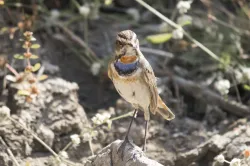
The Black-chested Tyrant is a medium-sized bird, typically measuring between 16 and 18 cm in length. Its plumage is a masterclass in subtle, earthy tones, dominated by a rich, warm brown on the mantle, wings, and tail. This brown coloration provides excellent camouflage against the bark and shadowed leaves of its forest home. The most striking feature, as its common name suggests, is the bold black chest patch, which contrasts sharply with its lighter underparts. This distinctive marking is often used for identification in the field. The bird possesses a strong, slightly flattened bill, characteristic of tyrant flycatchers, which is perfectly adapted for catching insects on the wing or snatching them from foliage. Its eyes are often dark and alert, set against a face that may exhibit subtle markings depending on the specific subspecies. Overall, the Black-chested Tyrant displays a compact, sturdy build, designed for agility in dense vegetation.
The Black-chested Tyrant is primarily a bird of the humid lowland tropical forests. It shows a strong preference for the dense understory and mid-story levels of mature, undisturbed rainforests. Unlike species that thrive in open fields or agricultural landscapes, this tyrant flycatcher requires the structural complexity provided by primary forest vegetation. It is frequently associated with areas containing abundant vines, tangled branches, and high moisture levels, which support a diverse array of insect prey. The bird is highly sensitive to habitat fragmentation and deforestation, making it a specialized inhabitant of pristine forest patches. Its reliance on specific micro-habitats within the forest architecture makes it particularly vulnerable to any changes in the local environment, such as logging or canopy thinning.
As an insectivore, the diet of the Black-chested Tyrant consists almost exclusively of small arthropods. It is an opportunistic forager, utilizing a variety of hunting techniques to secure its meals. The bird is frequently observed performing short, rapid sallies from a perch to snatch flying insects out of the air. Additionally, it skillfully gleans spiders, beetles, caterpillars, and other small insects from the undersides of leaves and along twigs. Its foraging behavior is methodical; it will often sit motionless on a branch for long periods, scanning the surrounding foliage with intense focus before making a sudden, precise strike. This specialized feeding strategy allows it to occupy a specific niche within the competitive environment of the rainforest, minimizing direct competition with other insectivorous bird species.
Breeding behavior for the Black-chested Tyrant is largely dictated by seasonal rainfall patterns, which influence the availability of insect prey. During the nesting season, pairs become more territorial, often defending a specific patch of forest against intruders. The nest itself is a well-constructed, cup-shaped structure, typically woven from fine plant fibers, moss, and spider silk to ensure it remains hidden among the dense foliage. These nests are often positioned in the fork of a branch, providing both stability and protection from predators. The female usually takes the lead in incubation, while the male remains nearby to guard the territory and provide food. Once the eggs hatch, both parents participate in the demanding task of feeding the chicks, which require a high-protein diet of insects to support their rapid growth before fledging.
The behavior of the Black-chested Tyrant is characterized by its secretive and solitary nature. It is not typically seen in large flocks, preferring to move through the forest either alone or in pairs. When moving through the vegetation, it displays remarkable agility, hopping between branches and maneuvering through thick tangles with ease. It is a highly vocal bird, though its songs are often soft and easily lost amidst the cacophony of the rainforest. These vocalizations serve as essential tools for territory defense and mate attraction. Although it is a relatively sedentary bird, it can be quite aggressive toward other small birds that encroach upon its immediate foraging area, exhibiting the classic, spirited personality associated with the tyrant flycatcher family.
Currently, the Black-chested Tyrant is listed under categories that reflect its dependence on stable forest ecosystems. While it is not always classified as critically endangered, it faces significant threats from habitat loss due to agricultural expansion, logging, and infrastructure development. Because it is a specialist of primary tropical forests, the degradation of these environments directly impacts its survival. Conservation efforts focusing on the protection of large, contiguous forest tracts are essential to ensuring the long-term viability of this species. Monitoring populations and preserving corridors between forest fragments are key strategies to prevent local extinctions of this unique bird.
For birdwatchers hoping to spot the Black-chested Tyrant, patience is your greatest asset. Because this bird prefers the dense, dark understory, it can be incredibly difficult to locate. Focus your efforts on the early morning hours, when the bird is most active and vocal. Use a high-quality pair of binoculars and learn to identify its distinct calls beforehand, as you are much more likely to hear it before you see it. When scanning the foliage, look for movement in the mid-story, particularly near areas with thick vines or tangled vegetation. Avoid making sudden movements or loud noises, as this bird is inherently shy. Recording its vocalizations or using a playback device (sparingly) can sometimes help draw it out, but always prioritize the bird's well-being by keeping your distance and minimizing any stress to the individual.
The Black-chested Tyrant (Taeniotriccus andrei) serves as a poignant reminder of the hidden biodiversity thriving within the world's tropical rainforests. Its specific physical adaptations, from its cryptic brown plumage to its specialized insect-hunting techniques, highlight the evolutionary success of tyrant flycatchers in complex environments. While this species remains a challenge for even the most experienced birdwatchers to observe, the pursuit of finding one offers a rewarding glimpse into the intricate life of a Neotropical specialist. However, the future of the Black-chested Tyrant is inextricably linked to the health of its habitat. As deforestation continues to threaten primary forests across South America, the need for robust conservation policies and habitat protection becomes increasingly urgent. By valuing and protecting the habitats that support species like the Black-chested Tyrant, we ensure the survival of countless other organisms that rely on these vital ecosystems. Whether you are an ornithology enthusiast or a casual nature lover, understanding the life of this bird is a step toward appreciating the fragile, interconnected web of life that defines our planet's most diverse landscapes.
We are working with our official data partners to update this information.
Tag:

Birds have their own beautiful world, we should not interfere in it. We should enjoy this beauty. Its beauty should be captured in the camera but be careful not to disturb them.
Tap a language to switch instantly.
Tap a language to switch instantly.