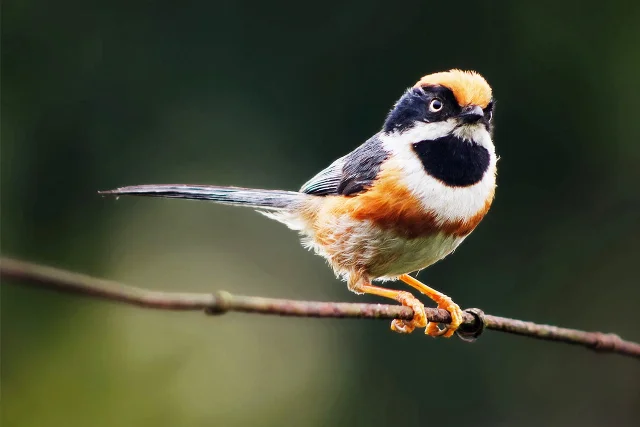
White-ringed Flycatcher Basic Information
| Scientific Name |
Conopias albovittatus
|
| Status |
LC
Least Concern
|
| Size |
14-16 cm (6-6 inch)
|
| Colors |
|
| Type |
|
| Family |
Tyrant-flycatchers |
Introduction
The White-ringed Flycatcher (Conopias albovittatus) is a fascinating member of the tyrant flycatcher family, known for its distinctive appearance and active lifestyle within the dense canopies of its tropical range. Often overlooked by casual observers due to its preference for high foliage, this species is a true gem for dedicated ornithologists and bird enthusiasts alike. Measuring between 14 and 16 centimeters, this small yet energetic perching bird plays a vital role in its ecosystem by regulating insect populations. As a neotropical species, it occupies a specific niche within the humid forests of Central and South America. Understanding the life cycle, behaviors, and environmental requirements of the White-ringed Flycatcher provides valuable insights into the biodiversity of tropical ecosystems. This guide explores every facet of this remarkable bird, from its striking plumage to its complex nesting strategies, offering a comprehensive look at what makes this species so essential to its native habitat.
Physical Appearance
The White-ringed Flycatcher is characterized by its compact, agile build and vibrant, yet camouflaged, color palette. Measuring 14 to 16 centimeters in length, it presents a classic flycatcher silhouette with a slightly peaked crown. Its primary coloration is a rich, earthy brown across the upperparts, which serves as effective camouflage against the dark branches and shadows of the forest canopy. The secondary colors include a striking yellow underside, which provides a vivid contrast to its darker back and wings. The most defining feature, which gives the species its common name, is the prominent white ring around the eye and the distinct white stripes bordering its dark crown. These markings are not merely decorative; they serve as critical diagnostic tools for identification in the field. Its bill is relatively short but sturdy, perfectly adapted for snatching insects in mid-air or off foliage. The combination of these colors—brown, yellow, and white—makes the White-ringed Flycatcher a visually appealing subject for bird photographers and a unique study in avian adaptation.
Habitat
This species is primarily found in the humid lowland forests of Central and South America. The White-ringed Flycatcher prefers the upper levels of the canopy, where it remains hidden among dense leaves and epiphytes. It is rarely seen on the forest floor, as it relies on the vertical structure of the trees for hunting and protection. These birds are most commonly associated with primary and secondary growth forests, as well as the edges of clearings where sunlight promotes a higher density of insects. They are sensitive to habitat fragmentation, requiring large, continuous tracts of forest to thrive. Protecting these diverse tropical environments is essential for the continued survival of the species, as they rely on the intricate architecture of the canopy for nesting sites and foraging grounds.
Diet
As an insectivore, the White-ringed Flycatcher primarily consumes a diet consisting of small to medium-sized arthropods. Its hunting strategy involves active foraging, where it scans the surrounding foliage for movement before launching short, precise flights to capture prey. It is frequently observed gleaning insects from the undersides of leaves or hovering briefly to snatch a moth or beetle from a branch. Occasionally, it may also supplement its diet with small fruits or berries when insect populations are low. This dietary flexibility allows it to maintain its high energy levels throughout the day. By consuming a large volume of insects, the White-ringed Flycatcher acts as a natural pest controller, contributing to the overall health and vitality of the forest ecosystem.
Breeding and Nesting
The breeding season of the White-ringed Flycatcher is a period of intense activity and vocalization. These birds are known for their elaborate courtship displays, which often involve rhythmic singing and synchronized flights between potential mates. They construct intricate, cup-shaped nests, typically positioned high in the forks of canopy trees to minimize the risk of predation. The nest is woven from fine plant fibers, moss, and spider silk, ensuring a durable and insulated environment for the eggs. Both the male and female participate in the construction of the nest and the subsequent care of the chicks. Usually laying a small clutch of eggs, the parents work tirelessly to provide food for the hatchlings, demonstrating a high level of parental investment that is crucial for the survival of the offspring in the competitive tropical environment.
Behavior
The White-ringed Flycatcher is a highly active and territorial species. They are often seen moving rapidly through the canopy, constantly checking their surroundings for both food and potential threats. While they are generally solitary or found in pairs, they can be vocal, using a series of sharp, melodic chirps to communicate with others and establish their territory. They exhibit a bold demeanor, often chasing away larger birds that encroach upon their favored hunting perches. This assertive behavior is a testament to their competitive nature. Their flight is agile and direct, allowing them to navigate the dense forest canopy with ease, a necessary skill for a bird that spends its entire life in the treetops.
Conservation Status
-
LC
Least Concern
Currently, the White-ringed Flycatcher is classified as a species of Least Concern by major conservation organizations. However, this status does not imply that they are immune to environmental threats. Like many tropical birds, the primary danger to their population is the ongoing loss of forest habitat due to deforestation and land-use changes. As they depend specifically on dense, undisturbed canopy layers, the removal of large trees poses a significant risk to their long-term stability. Continued monitoring of their population trends is vital to ensure that their habitat remains protected, allowing them to continue their important role in the neotropical ecosystem.
Interesting Facts
- The White-ringed Flycatcher is named for the distinctive white stripes that frame its dark crown.
- They are expert aerial hunters, capable of capturing insects in mid-flight with remarkable precision.
- Despite their small size, they are fiercely territorial and will defend their canopy perch against larger intruders.
- Their yellow underparts are most visible during their active, darting flight patterns.
- They play a crucial role in forest health by controlling insect populations in the high canopy.
- These birds are notoriously difficult to spot from the ground, often requiring binoculars to distinguish from other similar flycatcher species.
Tips for Birdwatchers
For birdwatchers hoping to catch a glimpse of the White-ringed Flycatcher, patience and high-quality optics are essential. Because they inhabit the upper canopy, it is recommended to visit areas with elevated observation platforms or forest edges where the canopy is more accessible. Bring a good pair of binoculars or a spotting scope, as the bird's brown and yellow coloration can blend surprisingly well with the dappled light of the forest. Listen for their unique, sharp vocalizations, which are often the first indicator of their presence. Early morning is the best time for observation, as the birds are most active while foraging. Keep a respectful distance to avoid disturbing their natural behaviors, and consider using a field guide specific to the neotropics to help with positive identification among other flycatcher species.
Conclusion
The White-ringed Flycatcher (Conopias albovittatus) is a quintessential example of the specialized and vibrant bird life found within the neotropical canopy. From its striking white-ringed markings to its agile, insectivorous lifestyle, this bird is a testament to the evolutionary marvels of the tyrant flycatcher family. While it is currently considered stable in its conservation status, the reliance of this species on undisturbed, high-canopy forest reminds us of the fragility of these habitats. For the birdwatcher, spotting this elusive creature provides a rewarding challenge, offering a glimpse into the complex social and survival dynamics that play out high above the forest floor. Whether you are a scientist studying avian behavior or a hobbyist seeking to expand your life list, the White-ringed Flycatcher remains a captivating subject. By appreciating and protecting the environments that support such unique biodiversity, we ensure that these remarkable birds continue to thrive in their natural homes for generations to come. Their presence is a reminder of the intricate beauty of our natural world and the importance of preserving the wild spaces they call home.
White-ringed Flycatcher Distribution Map & Range
The distribution map for this species will be available soon.
We are working with our official data partners to update this information.