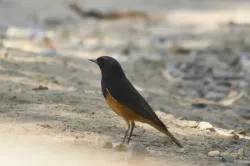
Rufous-tailed Flatbill Basic Information
| Scientific Name |
Ramphotrigon ruficauda
|
| Status |
LC
Least Concern
|
| Size |
15-17 cm (6-7 inch)
|
| Colors |
|
| Type |
|
| Family |
Tyrant-flycatchers |
Introduction
The Rufous-tailed Flatbill (Ramphotrigon ruficauda) is a fascinating and often elusive member of the Tityridae family, commonly found within the dense, lush rainforests of South America. As a member of the perching birds group, this species is highly adapted to the complex vertical structure of the tropical canopy. While it might not be the most famous bird in the neotropics, it holds a special place in the hearts of ornithologists and birdwatchers due to its unique vocalizations and subtle beauty. These birds are generally solitary, preferring the dim light of the understory and mid-story levels where they hunt for insects with remarkable precision. Understanding the Rufous-tailed Flatbill requires a deep appreciation for the biodiversity of the Amazon basin, as this species serves as a vital indicator of forest health. By examining its behavior, diet, and nesting habits, we gain a better understanding of how specialized avian species navigate the challenges of life in one of the world's most competitive ecosystems. Whether you are a seasoned birder or a nature enthusiast, the Rufous-tailed Flatbill offers a rewarding study in evolutionary adaptation.
Physical Appearance
Measuring between 15 to 17 centimeters in length, the Rufous-tailed Flatbill is a small yet distinctively shaped bird. Its primary plumage is characterized by a rich, earthy brown coloration, which provides excellent camouflage against the bark of trees and the shadows of the forest floor. This is complemented by vibrant olive tones across its wings and mantle, helping it blend into the leafy backdrop of its habitat. The most striking feature of the bird, as its name suggests, is its rufous-colored tail, which stands out against its otherwise muted body. The head is relatively large in proportion to its body, featuring a broad, flat bill that is perfectly adapted for snatching aerial prey. The eyes are often dark and alert, conveying a sense of constant vigilance. When observed in flight or while perched, the contrast between the brownish-olive upperparts and the lighter, often yellowish or buffy underparts creates a sophisticated color palette. Males and females are generally similar in appearance, lacking the dramatic sexual dimorphism seen in many other tropical species, making identification a challenge for the untrained eye.
Habitat
The Rufous-tailed Flatbill is primarily a bird of the humid lowland rainforests. It is most frequently encountered in the Amazon Basin, spanning across countries like Brazil, Peru, Colombia, and Venezuela. This bird demonstrates a strong preference for primary forests, particularly those with dense undergrowth and tall trees that provide a thick canopy cover. You will rarely find them in open areas or highly degraded secondary forests. Instead, they favor the dense mid-story levels where they can remain concealed from predators while keeping a watchful eye on potential prey. Their reliance on high-quality, undisturbed forest ecosystems makes them particularly sensitive to habitat fragmentation and deforestation, which are significant threats to their long-term survival in the region.
Diet
As an insectivore, the Rufous-tailed Flatbill plays an essential role in the forest ecosystem by helping to regulate insect populations. Its diet consists primarily of small insects and arthropods, which it captures using a technique known as 'sally-gleaning.' This involves the bird launching itself from a stationary perch to snap up prey from the underside of leaves or branches before returning to its original position. Their broad, flat bills are highly specialized for this purpose, allowing them to grasp soft-bodied insects with ease. Occasionally, they may also consume small spiders or larvae. By maintaining this strict insectivorous diet, the Rufous-tailed Flatbill helps keep the canopy ecosystem in balance, preventing outbreaks of herbivorous insects that could otherwise damage forest vegetation.
Breeding and Nesting
The breeding habits of the Rufous-tailed Flatbill are as intriguing as the bird itself. Unlike many other perching birds that build open cup-shaped nests, these birds are known to utilize cavities for nesting, often choosing abandoned holes in trees or natural crevices. This behavior offers significant protection against predators and the harsh elements of the tropical climate. During the breeding season, which typically coincides with the peak of food availability, the pair will work together to select a suitable site. The female is primarily responsible for the incubation of the eggs, while the male remains vigilant, defending the territory and providing food to the female. The nesting process is relatively quiet and secretive, as the birds attempt to draw as little attention as possible to the location of their offspring. Once the chicks hatch, both parents share the responsibility of foraging to ensure the rapid growth and survival of the young until they are ready to fledge.
Behavior
The Rufous-tailed Flatbill is known for its shy and retiring nature. It is not a bird that seeks the spotlight; instead, it prefers to spend its time sitting motionless on a branch, waiting for the perfect moment to strike at passing insects. This 'sit-and-wait' predatory style makes them difficult to spot unless you are familiar with their specific vocalizations or patience-based observation techniques. They are generally solitary outside of the breeding season. Communication is primarily achieved through short, sharp whistles or trills that can be heard echoing through the dense foliage. Despite their quiet demeanor, they are highly territorial and will vigorously defend their chosen hunting grounds against intruders of the same species or even smaller competitors.
Conservation Status
-
LC
Least Concern
Currently, the Rufous-tailed Flatbill is classified as a species of Least Concern by major conservation organizations. However, this status does not imply that they are immune to environmental pressures. Because they are strictly tied to primary rainforest habitats, they are highly vulnerable to the ongoing destruction of the Amazonian landscape. As forests are cleared for agriculture, logging, and infrastructure, the available territory for these birds shrinks, potentially leading to local population declines. Ongoing research and monitoring are essential to ensure that their habitat remains intact and that they can continue to thrive in their natural environment for generations to come.
Interesting Facts
- The Rufous-tailed Flatbill is part of the Tityridae family, which includes some of the most specialized birds in the Neotropics.
- Its broad, flat bill is an evolutionary adaptation specifically designed for catching insects in mid-air.
- They are masters of camouflage, often remaining completely still for long periods to avoid detection.
- Unlike many other flycatchers, they prefer to nest in tree cavities rather than open structures.
- Their vocalizations are often the best way to locate them in the dense canopy.
- They play a crucial role in pest control by consuming large quantities of canopy-dwelling insects.
- The rufous tail feathers act as a key field mark for birdwatchers trying to distinguish them from other similar-looking species.
Tips for Birdwatchers
For birdwatchers hoping to spot the Rufous-tailed Flatbill, patience is your greatest asset. Because they are naturally shy, you should avoid sudden movements and loud noises. Focus your attention on the mid-story of the forest, specifically looking for birds that remain perched for long periods. Learning their call is highly recommended, as hearing them is often the first indication of their presence. Using a high-quality pair of binoculars and a camera with a good zoom lens will significantly improve your chances of identifying them. Visit known forest trails early in the morning when the birds are most active. Bringing a local guide who is familiar with the specific forest patch can also be a game-changer in finding this elusive species.
Conclusion
The Rufous-tailed Flatbill is a remarkable example of the specialized life found within the Amazonian rainforest. From its distinct brown and olive plumage to its clever insect-catching techniques, every aspect of this bird reflects its adaptation to the tropical canopy. While it may not be the most colorful or vocal bird, its presence is a testament to the complexity and health of the ecosystem it inhabits. As we continue to learn more about the Rufous-tailed Flatbill, it becomes increasingly clear that conservation efforts must prioritize the protection of primary forests to ensure the survival of such unique species. For birdwatchers, encounters with this bird are a reward for patience and careful observation, offering a glimpse into the quiet, hidden life of the rainforest. By appreciating the role that small, specialized birds like the Rufous-tailed Flatbill play in our world, we can foster a greater commitment to preserving the natural habitats that make our planet so diverse. Whether you are observing them in the wild or studying their behavior through research, the Rufous-tailed Flatbill remains a compelling subject that highlights the intricate beauty of the avian world and the urgent need for environmental stewardship in the face of ongoing global change.
Rufous-tailed Flatbill Distribution Map & Range
The distribution map for this species will be available soon.
We are working with our official data partners to update this information.