Franklin's Gull Basic Information
| Scientific Name | Larus pipixcan |
|---|
| Status |
LC
Least Concern
|
| Size | 35-38 cm (14-15 inch) |
|---|
| Colors |
|
| Type |
|
| Family | Gulls, Terns, Skimmers |
|---|
Introduction
The Franklin's Gull (Larus pipixcan) is a fascinating species of small gull that captures the interest of birdwatchers and ornithologists alike due to its remarkable migratory journey and distinct aesthetic. Named in honor of the Arctic explorer Sir John Franklin, this seabird is primarily known for its extensive travels between its breeding grounds in the northern prairies of North America and its wintering sites along the coasts of South America. Unlike many other gull species that are strictly coastal, the Franklin's Gull often spends a significant portion of its life in inland marshes and prairies, making it a unique study in avian adaptability. These birds are highly social and are often observed in large, noisy colonies during the breeding season. Understanding the life cycle of the Franklin's Gull provides deep insights into the ecological health of the wetland ecosystems they inhabit. As a migratory marvel, they cover thousands of miles annually, showcasing incredible endurance and navigation skills that remain a subject of active scientific research and admiration within the global birding community.
Physical Appearance
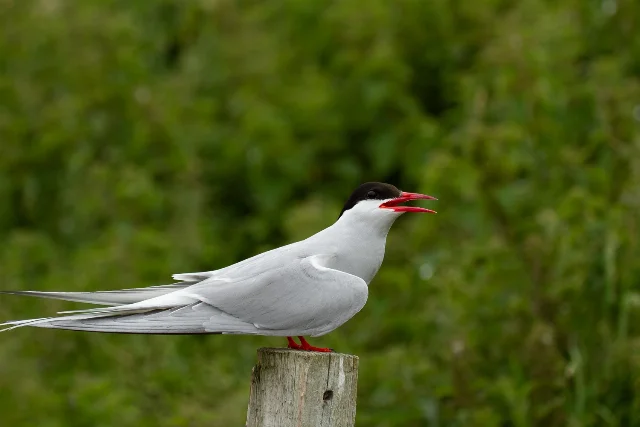
The Franklin's Gull is a compact and elegant seabird, measuring approximately 35-38 cm in length. Its plumage is characterized by a sophisticated palette, with a primary color of soft, slate grey on its back and wings, contrasted sharply by a crisp, snowy white underbelly and neck. During the breeding season, the adult Franklin's Gull develops a striking, dark black hood that covers the head, extending down to the nape, which serves as a key identifying feature. The wings display a beautiful pattern with white tips and a distinctive black subterminal band. Their bills are relatively short and deep, usually displaying a dark red or brownish-red hue, which complements their dark, reddish legs. In non-breeding plumage, the black hood fades significantly, leaving a dusky, mottled appearance around the eyes and nape. Juveniles possess a more muted, brownish-grey coloration with a less defined pattern, gradually molting into the classic adult plumage over a period of two years. This distinctive transition makes them a rewarding subject for birders who enjoy tracking the maturation of avian species in the wild.
Habitat
The habitat of the Franklin's Gull is diverse, reflecting its migratory nature. During the breeding season, these birds are primarily found in the interior marshes and prairie potholes of North America, particularly in the northern United States and southern Canada. They prefer shallow, freshwater wetlands with emergent vegetation, which provides essential cover for their nesting activities. As the seasons change, they embark on a long-distance migration, moving toward the coastal regions of South America, specifically along the Pacific coast from Peru to Chile. During this time, they frequent coastal lagoons, estuaries, and sometimes even offshore waters, demonstrating a remarkable ability to transition between freshwater inland environments and saline marine habitats.
Diet
The Franklin's Gull is an opportunistic feeder with a varied diet that changes based on its location and the time of year. While breeding in inland prairies, these birds are frequently seen following farm equipment, scavenging for insects such as grasshoppers, crickets, and beetles that are stirred up from the soil. This behavior makes them highly beneficial to local farmers. In addition to terrestrial insects, they also consume aquatic invertebrates, small fish, and crustaceans when foraging in marshes. During their migration and wintering periods along the coast, they shift their focus to marine prey, including small fish, mollusks, and various marine worms, displaying impressive versatility in their foraging strategies.
Breeding and Nesting
Breeding for the Franklin's Gull is a highly synchronized event that occurs in large, dense colonies located within remote, shallow marshes. The nests are typically constructed as floating platforms made of reeds, grasses, and other available aquatic vegetation, anchored to emergent plants to keep them stable above the water level. A typical clutch consists of two to three eggs, which are incubated by both parents over a period of approximately three weeks. The colonial nesting strategy provides a layer of protection against predators, as the sheer number of birds can effectively deter threats. After hatching, the chicks are semi-precocial and remain in or near the nest for several weeks, being fed by both adults until they are ready to fledge and begin their first long-distance migration.
Behavior
Franklin's Gulls are highly gregarious and social birds, often seen in large flocks that move in coordinated, swirling patterns. Their vocalizations are distinct, consisting of a series of harsh, grating calls that become particularly intense within nesting colonies. They are exceptionally agile flyers, often performing complex aerial maneuvers while foraging for insects on the wing. Unlike many other gull species, they are not typically aggressive toward humans, but they are fiercely protective of their nests, often mobbing potential predators that wander too close to their colony. Their migratory behavior is one of their most impressive traits, as they travel thousands of miles between their northern breeding grounds and southern wintering sites.
Conservation Status - LC
Least Concern
The conservation status of the Franklin's Gull is generally considered to be of Least Concern, although they face localized threats that require ongoing monitoring. The primary challenge for this species is the loss and degradation of wetland habitats, which are crucial for their breeding success. Climate change, which can alter the water levels in prairie potholes, also poses a significant risk to their nesting sites. Agricultural expansion and the use of pesticides can impact their food supply, specifically the insect populations they rely on during the breeding season. Continued protection of wetland ecosystems is essential to ensure the long-term survival of this migratory species.
Interesting Facts
- They are often called 'Prairie Pigeons' because they frequently forage in agricultural fields.
- They possess one of the longest migration routes of any gull species, traveling from Canada to Chile.
- Their breeding plumage includes a distinct black hood that disappears in the winter.
- They are highly beneficial to agriculture as they consume vast amounts of crop-destroying insects.
- The species was named after Sir John Franklin, a famous Arctic explorer.
- They nest on floating platforms made of reeds rather than on solid ground.
- They are known to follow tractors and plows to catch insects exposed by the machinery.
Tips for Birdwatchers
For birdwatchers hoping to spot the Franklin's Gull, timing and location are everything. During the spring and fall migration, look for them near large inland lakes, reservoirs, or even freshly plowed fields, where they often congregate in large numbers to feed. In their breeding range, visiting protected wetland refuges during the late spring is your best bet for observing nesting behavior. Using high-quality binoculars or a spotting scope is highly recommended, as they can be restless and move frequently. Pay close attention to the wing patterns, specifically the white tips, to distinguish them from other similar-looking gull species. Patience is key when watching a flock, as their behavior can change rapidly depending on food availability and local weather conditions.
Conclusion
In conclusion, the Franklin's Gull (Larus pipixcan) is a remarkable example of avian adaptation and endurance. From their unique nesting habits in the prairie wetlands of North America to their incredible trans-hemispheric migration to the coasts of South America, these birds embody the resilience required to thrive in changing environments. Their role as a natural pest controller in agricultural lands highlights the interconnectedness between avian species and human activity. While their current conservation status remains stable, the continued protection of their vital wetland habitats is paramount. For birdwatchers, the opportunity to observe these social and agile seabirds is a rewarding experience that highlights the beauty of migratory patterns. By studying and appreciating the Franklin's Gull, we gain a better understanding of the complexities of the natural world and the importance of preserving the diverse habitats that support such a wide array of life. Whether you are a casual observer or a dedicated ornithologist, the Franklin's Gull offers endless fascination and serves as a vital indicator of ecological health across their expansive range. We must remain committed to safeguarding these environments so that future generations can continue to witness the breathtaking migrations of this iconic species.
Franklin's Gull Distribution Map & Range
The distribution map for this species will be available soon.
We are working with our official data partners to update this information.