
Not available
Greater Crested Tern
Thalasseus bergii
Last update: 06 Mar 2026
Read in:
English
Español
Português
हिन्दी
বাংলা
தமிழ்
മലയാളം
मराठी
ગુજરાતી
తెలుగు
French
Deutsch
Русский
日本語
简体中文
Italiano
Tiếng Việt
العربية
ಕನ್ನಡ
ਪੰਜਾਬੀ
Greater Crested Tern Basic Information
| Scientific Name | Thalasseus bergii |
|---|---|
| Status | LC Least Concern |
| Size | 45-49 cm (18-19 inch) |
| Colors |
White
Grey
|
| Type |
Seabirds

|
| Family | Gulls, Terns, Skimmers |
Introduction
The Greater Crested Tern, scientifically identified as Thalasseus bergii, is a magnificent and highly recognizable member of the Laridae family. As one of the larger species of terns, it commands attention with its graceful flight and distinct maritime presence. This seabird is widely distributed across the tropical and subtropical coastal regions of the Old World, ranging from the Atlantic coast of South Africa, around the Indian Ocean, to the central Pacific and Australia. Ornithologists often admire the species for its resilience and adaptability to various marine environments.
Known for its striking appearance and loud, raucous calls, the Greater Crested Tern plays a vital role in the marine ecosystem as a mid-level predator. It is often seen patrolling the shorelines or resting on sandbars in large, social groups. Its presence is frequently used by researchers as an indicator of the health of local fish populations. Whether you are a professional researcher or a casual birdwatcher, understanding the nuances of this bird provides deep insight into the complex dynamics of coastal avian life.
Physical Appearance
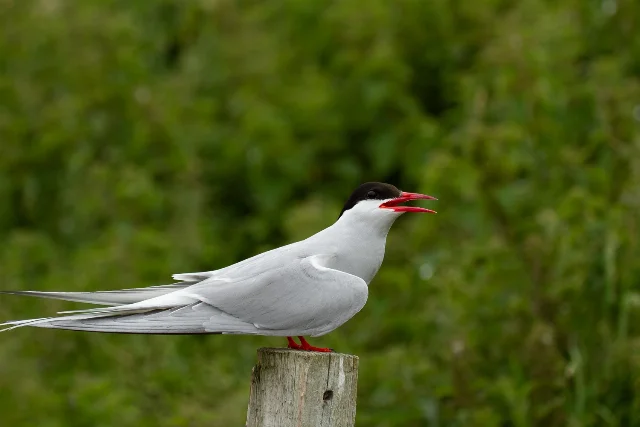
The Greater Crested Tern is a large, elegant seabird, typically measuring between 45 and 49 cm in length. Its most defining characteristic is its long, sharp, lemon-yellow bill, which contrasts beautifully against its sleek plumage. The primary color of the body is a brilliant, clean white, which covers the neck, underparts, and the front of the face. In contrast, the secondary color is a sophisticated pale grey, which adorns the upper wings and the back (mantle). This bicolored appearance provides excellent camouflage when seen from above against the ocean surface or from below against the bright sky.
One of the most notable features of this species is the shaggy black crest on its crown, which gives the bird its name. During the breeding season, this crest is solid black and extends from the forehead to the nape. In the non-breeding season, the forehead becomes white, leaving the black crest more concentrated at the back of the head. Their eyes are dark and bead-like, providing sharp vision for hunting. Their legs and webbed feet are typically black, aiding in their occasional movements on sandy substrates and rocky outcrops.
Habitat
The Greater Crested Tern is strictly a maritime species, rarely found far from the coast. Its preferred habitat includes tropical and subtropical sandy beaches, rocky shores, coral reefs, and estuaries. These birds are highly dependent on the availability of offshore islands and isolated sandbanks for roosting and breeding, as these locations offer protection from land-based predators. They are frequently observed in sheltered bays and lagoons where the water is calm enough to spot prey near the surface. While they are primarily coastal, they have been known to forage several kilometers out at sea, particularly in areas where upwelling currents bring nutrient-rich waters and fish to the surface.
Diet
As specialized piscivores, the diet of the Greater Crested Tern consists almost entirely of small fish. They are particularly fond of surface-schooling species such as anchovies, sardines, and pilchards. Occasionally, they will supplement their diet with squid or small crustaceans found in the upper layers of the ocean. Their hunting technique is a spectacle of nature: they fly at moderate heights above the water, hovering momentarily when they spot a target, and then perform a swift, vertical plunge-dive to snatch the fish with their powerful yellow bills. They usually swallow their prey whole while in flight or shortly after returning to a perch. This efficient hunting method allows them to sustain high energy levels required for long-range coastal travel.
Breeding and Nesting
Breeding for the Greater Crested Tern is a highly social and synchronized event. These birds are colonial nesters, often forming massive colonies that can number in the thousands. The nesting site is typically a simple scrape in the sand, coral rubble, or short grass on offshore islands. This minimalist approach to nesting is compensated for by the sheer density of the colony, which provides safety in numbers. A single egg is usually laid, which is cryptically colored with blotches of brown and grey to blend into the ground. Both parents share the responsibility of incubation, which lasts about 25 to 30 days. Once hatched, the chicks are precocial and soon gather in large groups called crèches, which are guarded by a few adults while the other parents forage for food.
Behavior
The behavior of the Greater Crested Tern is characterized by high sociability and vocal communication. They are rarely seen alone, preferring the company of their own species or other seabirds like Silver Gulls. Their vocalizations are loud and grating, often described as a harsh 'kree-akt,' which they use to maintain contact within the flock or to defend nesting territories. They are exceptionally strong fliers, capable of navigating through high winds with ease. During the day, they spend a significant amount of time preening their feathers to maintain waterproofing, which is essential for their plunge-diving lifestyle. At night, they congregate in large communal roosts on secluded beaches or sandbars, staying alert for potential nocturnal threats.
Conservation Status - LC Least Concern
Currently, the Greater Crested Tern is classified as Least Concern by the IUCN Red List. This status is due to its extremely large range and relatively stable population numbers. However, they are not without threats. Habitat destruction of offshore islands, human disturbance at nesting sites, and the depletion of fish stocks due to overfishing are ongoing concerns for ornithologists. In some regions, pollution and oil spills also pose a significant risk to their health. Conservation efforts focus on protecting key breeding islands and ensuring that coastal developments do not interfere with their natural foraging and nesting grounds.
Interesting Facts
- The Greater Crested Tern is one of the most widely distributed tern species in the world, spanning three oceans.
- Their yellow bill is so distinctive that it is often the first feature used by birdwatchers for identification.
- They are known to follow fishing boats to scavenge on discarded bycatch, showing a high level of behavioral flexibility.
- Despite their size, they are incredibly agile in the air and can perform acrobatic maneuvers to steal food from other birds.
- The 'crèche' system for chicks allows parents to forage further away, knowing their young are protected by the group.
- They can live for over 20 years in the wild, provided they survive the vulnerable juvenile stage.
Tips for Birdwatchers
For birdwatchers looking to spot the Greater Crested Tern, the best strategy is to visit coastal piers, jetties, or sandy spits during the early morning or late afternoon. These are the peak times for foraging activity. Using a pair of high-quality 8x42 or 10x42 binoculars is recommended to see the details of the black crest and yellow bill from a distance. Look for their distinctive plunge-diving behavior, which is a clear giveaway of their identity. If you are near a breeding colony, always maintain a respectful distance to avoid causing stress to the birds or the chicks. A spotting scope can be particularly helpful for observing roosting groups on distant sandbars without disturbing them.
Pro-Tip: To spot this bird in dense forest canopy, a 8x42 binoculars or telescope is highly recommended.
- [Check out our top recommended gear here]
Conclusion
In conclusion, the Greater Crested Tern (Thalasseus bergii) is a remarkable example of avian adaptation to the marine environment. From its striking white and grey plumage to its specialized hunting techniques and complex social structures, it remains a subject of great interest for both scientists and nature enthusiasts. Its ability to thrive across vast geographical distances highlights its success as a species, yet it serves as a reminder of the fragility of our coastal ecosystems. As we continue to face global environmental challenges, the protection of seabirds like the Greater Crested Tern becomes increasingly important.
By safeguarding their habitats and ensuring the health of our oceans, we ensure that future generations can witness the graceful dive and hear the wild calls of these beautiful birds along our shores. Whether you encounter them on a remote tropical island or a busy coastal pier, the Greater Crested Tern is a testament to the beauty and resilience of the natural world. Their presence enriches the biodiversity of our planet and provides a vital link in the marine food web that must be preserved.

200 Follower
is a writer who draws. He’s the Bestselling author of “Number of The Year”. Donec vitae tortor efficitur, convallis lelobortis elit.
Recent Posts






Subscribe For Daily Newsletter