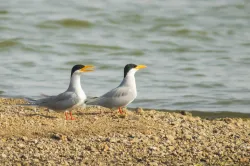
Lava Gull Basic Information
| Scientific Name |
Larus fuliginosus
|
| Status |
VU
Vulnerable
|
| Size |
42-45 cm (17-18 inch)
|
| Colors |
|
| Type |
|
| Family |
Gulls, Terns, Skimmers |
Introduction
The Lava Gull (Larus fuliginosus) stands as one of the most enigmatic and rarest gull species on the planet. Endemic exclusively to the volcanic archipelago of the Galapagos Islands, this unique seabird represents a specialized evolutionary path that has adapted to a harsh, isolated environment. Unlike many of its cousins that roam vast coastal regions, the Lava Gull is a sedentary species, rarely venturing far from its island home. Ornithologists hold this bird in high regard not only for its distinct coloration, which allows it to blend seamlessly into the dark volcanic rocks of its habitat, but also for its precarious population numbers. As a solitary nester that does not congregate in large colonies, the Lava Gull is a challenging find for even the most dedicated birdwatchers. Its presence in the Galapagos is a testament to the archipelago's role as a living laboratory of evolution, where specific pressures have sculpted a bird that is perfectly in tune with its rugged, igneous surroundings. Understanding the Lava Gull is essential for grasping the fragile biodiversity of this iconic UNESCO World Heritage site.
Physical Appearance
Standing at a modest size of 42-45 cm, the Lava Gull possesses a striking and somber plumage that serves as its primary camouflage. The species is characterized by its uniform, dark slate-grey to sooty-grey body coloration, which transitions into a darker, almost blackish hue on its head and primary wing feathers. This monochromatic appearance provides an exceptional advantage when resting upon the dark, jagged lava flows that define the Galapagos coastline. The bird features a distinctive white eye-ring, which contrasts sharply against its dark head, and a bill that is primarily black with a subtle reddish tinge near the tip. Its legs and feet are a dark, fleshy color, further aiding in its cryptic nature. Juveniles exhibit a mottled brown appearance, which eventually molts into the sophisticated dark grey adult plumage over several years. The overall build of the Lava Gull is robust and sturdy, indicating a life spent navigating the turbulent, nutrient-rich currents that surround the islands. Its physical form is a masterclass in environmental adaptation, where every shade of grey and black serves a specific survival purpose in a sun-drenched, volcanic landscape.
Habitat
The Lava Gull is strictly endemic to the Galapagos Islands, meaning it is found nowhere else on Earth. Its habitat is inextricably linked to the volcanic nature of the archipelago. These birds are almost exclusively found along rocky coastlines, sandy beaches, and sheltered bays that feature dark lava rock formations. Unlike other gulls that may seek out inland freshwater sources or vast open oceans, the Lava Gull remains tethered to the coastal fringe. They prefer areas with minimal human disturbance, often choosing isolated stretches of shoreline where they can forage and rest undisturbed. Because they are not migratory, they occupy these specific coastal niches year-round, making their habitat requirements quite narrow and vulnerable to localized environmental changes.
Diet
The diet of the Lava Gull is remarkably opportunistic, reflecting the diverse marine life of the Galapagos. They are primarily scavengers and predators, feeding on a wide variety of items washed up on the shore or found in the shallows. Their menu includes small fish, crustaceans, mollusks, sea urchins, and even the eggs or chicks of other seabirds. They are frequently observed patrolling the shoreline, utilizing their sharp eyesight to spot prey among the tide pools or discarded remains from other predators. Additionally, they are known to scavenge near human settlements and fishing docks, demonstrating a clever adaptability that allows them to supplement their natural intake with human-provided scraps when available.
Breeding and Nesting
Unlike most gull species that nest in large, crowded colonies, the Lava Gull is a solitary nester. This behavior is likely an adaptation to avoid competition and reduce the risk of predation. During the breeding season, a pair will establish a territory on a secluded beach or rocky outcrop, often hidden among boulders to protect their single or double-egg clutch. The nest itself is a simple scrape in the sand or gravel, sometimes lined with bits of seaweed or debris. Both parents share incubation duties, which typically last around 30 days. The chicks are semi-precocial and remain under the watchful eye of the adults for several weeks. Because of their low reproductive rate and solitary nesting habits, the population growth for this species remains slow, making each successful fledgling a significant event for the survival of the species.
Behavior
Lava Gulls are quiet and somewhat elusive compared to their more boisterous relatives. They are generally solitary or found in pairs, rarely forming large groups. Their behavior is characterized by a high degree of territoriality, as they defend their chosen stretch of coastline from intruders. They are highly intelligent, often observed watching other animals, such as sea lions or pelicans, to capitalize on their hunting efforts. When threatened, they may perform subtle displays, but they are generally non-aggressive. Their flight is graceful and deliberate, typically staying low over the water or hugging the coastline, which keeps them well-hidden against the dark volcanic backdrop of their island home.
Conservation Status
-
VU
Vulnerable
The Lava Gull is currently classified as Vulnerable by the IUCN. With a total population estimated at only a few hundred breeding pairs, they are considered one of the rarest gulls in the world. The primary threats to their survival include habitat degradation, predation by introduced species like cats and rats, and the potential for oil spills or pollution in the Galapagos marine reserve. Conservation efforts are focused on habitat protection and strict control of invasive species to ensure that these unique birds continue to thrive in their natural environment.
Interesting Facts
- The Lava Gull is the rarest gull species in the world.
- They are strictly endemic to the Galapagos Islands.
- Unlike most gulls, they nest in solitary pairs rather than large colonies.
- Their dark plumage is a perfect camouflage against volcanic lava rocks.
- They are highly opportunistic scavengers, often stealing food from other birds.
- The species was first described by the famous ornithologist John Gould in 1841.
- Lava Gulls are known to be very quiet, rarely vocalizing compared to other gull species.
Tips for Birdwatchers
For birdwatchers visiting the Galapagos, spotting a Lava Gull requires patience and a sharp eye. Because they are solitary, you will not find them in the large, noisy flocks typical of other gulls. Focus your search along the rocky, volcanic shorelines, particularly in areas with limited human activity. Early morning or late afternoon are the best times, as the birds are most active when foraging along the tide line. Bring high-quality binoculars to scan the dark rocks, as their camouflage is incredibly effective. Always maintain a respectful distance to avoid disturbing their nesting sites, and remember that these birds are rare—observing them in their natural habitat is a privileged experience.
Conclusion
The Lava Gull is a remarkable example of nature's ability to specialize within isolated ecosystems. As a permanent resident of the Galapagos, its survival is deeply intertwined with the preservation of these unique islands. By understanding the specific needs of the Larus fuliginosus—from its solitary nesting habits to its opportunistic foraging strategies—we gain valuable insight into the delicate balance of island ecology. Protecting the Lava Gull is not merely about saving a single species; it is about maintaining the integrity of the Galapagos biodiversity that continues to fascinate scientists and nature enthusiasts alike. As we face global environmental challenges, the story of the Lava Gull serves as a poignant reminder of the fragility of endemic species. Through continued research, habitat monitoring, and responsible tourism, we can ensure that this dark-winged sentinel continues to patrol the volcanic shores of the Galapagos for generations to come. Whether you are a seasoned ornithologist or a casual bird lover, the Lava Gull remains a must-see highlight of any trip to this enchanted archipelago, representing the quiet, enduring beauty of one of the world's most rare and specialized seabirds.
Lava Gull Distribution Map & Range
The distribution map for this species will be available soon.
We are working with our official data partners to update this information.