
Not available
Common Gull-billed Tern
Gelochelidon nilotica
Last update: 06 Jul 2026
Read in:
English
Español
Português
हिन्दी
বাংলা
தமிழ்
മലയാളം
मराठी
ગુજરાતી
తెలుగు
French
Deutsch
Русский
日本語
简体中文
Italiano
Tiếng Việt
العربية
ಕನ್ನಡ
ਪੰਜਾਬੀ
Common Gull-billed Tern Basic Information
| Scientific Name | Gelochelidon nilotica |
|---|---|
| Status | LC Least Concern |
| Size | 33-43 cm (13-17 inch) |
| Colors |
White
Grey
|
| Type |
Seabirds

|
| Family | Gulls, Terns, Skimmers |
Introduction
The Common Gull-billed Tern (Gelochelidon nilotica) is a fascinating and distinct member of the Laridae family. Unlike many of its counterparts that plunge-dive into the sea for fish, this species exhibits a unique ecological niche, often behaving more like a gull or even a bird of prey. With a widespread distribution across both tropical and temperate regions, the Gull-billed Tern is a truly cosmopolitan bird. It is easily recognized by its robust build and thick, black bill, which sets it apart from the more slender-looking terns found in similar habitats. Ornithologists often note its versatility, as it successfully colonizes diverse environments ranging from coastal lagoons and salt pans to inland marshes and agricultural fields. Understanding this species requires looking beyond typical seabird behavior, as it has adapted to exploit a vast array of terrestrial and aquatic food sources. Whether you are an experienced birder or a curious nature enthusiast, the Gull-billed Tern offers a compelling case study in avian adaptation and evolutionary success within the global ecosystem.
Physical Appearance
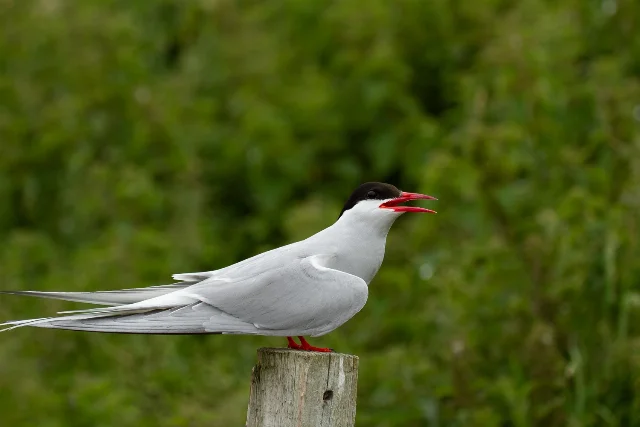
The Common Gull-billed Tern is a medium-sized seabird, typically measuring between 33 and 43 centimeters in length. Its plumage is primarily white, which contrasts elegantly with its grey mantle and upper wings, creating a sleek appearance during flight. The most distinguishing feature of this species is its heavy, black bill, which is noticeably thicker and shorter than that of other terns, resembling the bill of a gull—hence its common name. During the breeding season, adults develop a solid black cap that extends from the forehead to the nape, providing a striking contrast to their white underparts and pale grey wings. Their legs are long and black, well-suited for walking on muddy substrates. In their non-breeding plumage, the black cap fades to a white head with dark smudges around the eyes and ear coverts. Juveniles often exhibit brownish mottling on their upperparts, which gradually transitions to the adult grey and white coloration as they mature, ensuring they are well-camouflaged in their varied nesting environments.
Habitat
The Gull-billed Tern displays remarkable flexibility regarding its habitat choices, occupying both coastal and inland environments. They are frequently found near saline lagoons, estuaries, salt marshes, and tidal mudflats where they forage in shallow waters. However, unlike strictly marine terns, they are also highly adapted to freshwater wetlands, including large lakes, rivers, and seasonally flooded grasslands. In some regions, they have even been observed hunting over agricultural fields and semi-arid desert basins. This wide distribution is facilitated by their ability to nest in colonies on sandy islands, shell banks, or low-lying vegetation. Their preference for open, expansive spaces allows them to maintain a clear line of sight for hunting and predator detection, making them a common sight in diverse, open-country landscapes globally.
Diet
The diet of the Common Gull-billed Tern is exceptionally varied compared to other tern species. While many terns specialize in catching small fish, the Gull-billed Tern is an opportunistic predator. It frequently feeds on insects, including dragonflies, grasshoppers, and beetles, often catching them in mid-air or picking them off the surface of vegetation. They also hunt small crustaceans, amphibians, and occasionally small reptiles or even the eggs and chicks of other ground-nesting birds. By diversifying their food intake, they minimize competition with other tern species and can thrive in environments where fish may be scarce. This insectivorous behavior is a hallmark of the species, demonstrating its unique evolutionary path among the Laridae family.
Breeding and Nesting
Breeding for the Gull-billed Tern is a communal affair, typically occurring in loose colonies that may be shared with other tern or gull species. They construct simple, shallow scrapes on the ground, often lined with small shells, pebbles, or bits of vegetation to keep the eggs dry. A typical clutch consists of two to three creamy-white eggs with dark brown spots, which are incubated by both parents for approximately three weeks. The nesting sites are usually located in areas that provide protection from terrestrial predators, such as isolated sand spits or islands within shallow wetlands. Once hatched, the chicks are semi-precocial and begin to wander near the nest within a few days. Parents remain highly protective, aggressively defending the nesting territory from intruders, including birds of prey and potential mammalian threats, until the chicks are ready to fledge.
Behavior
Behaviorally, the Gull-billed Tern is known for its agility and deliberate hunting style. Unlike the high-speed plunge-diving seen in other terns, this species prefers to hover low over the ground or water, dipping down to snatch prey from the surface. They are highly social birds, often seen communicating with harsh, laughing calls that are distinct and easily recognizable to birders. During the breeding season, they engage in elaborate courtship displays, including fish-carrying flights and synchronized posturing. They are also migratory in many parts of their range, undertaking significant seasonal movements to escape harsh winters or to follow favorable weather conditions for food availability, showcasing their impressive long-distance flight capabilities.
Conservation Status - LC Least Concern
The Common Gull-billed Tern is currently classified as a species of Least Concern by the IUCN. However, they face ongoing threats from habitat loss due to wetland drainage, coastal development, and the degradation of nesting sites. Pollution and human disturbance near nesting colonies can also significantly impact their reproductive success. While their global population remains stable, regional declines have been noted, highlighting the need for continued monitoring and the protection of critical wetlands and coastal zones to ensure this versatile species continues to thrive across its vast international range.
Interesting Facts
- They are one of the few tern species that regularly eat insects as a primary food source.
- Their bill is shaped specifically to aid in catching prey on land, not just in water.
- They do not dive head-first like many other terns but rather 'dip' to grab prey.
- Gull-billed Terns have a very wide global distribution, found on every continent except Antarctica.
- They often nest in mixed colonies alongside other species like Avocets or Slender-billed Gulls for added protection.
- The species name 'nilotica' refers to the Nile River, where they were first described by researchers.
Tips for Birdwatchers
To successfully spot a Common Gull-billed Tern, focus your efforts on coastal lagoons, salt pans, and large freshwater marshes. Use high-quality binoculars to look for their distinctive, heavy black bill, which is the most reliable field mark. Since they often forage over fields or inland, don't limit your search to the shoreline; scan the skies over nearby grasslands as well. They are most active during the early morning and late afternoon. Listen for their signature 'ker-wik' or laughing calls, which often precede a sighting. If visiting a nesting colony, maintain a respectful distance to avoid disturbing the birds and causing them to abandon their nests, as they are sensitive to human presence during the breeding season.
Pro-Tip: To spot this bird in dense forest canopy, a 8x42 binoculars or telescope is highly recommended.
- [Check out our top recommended gear here]
Conclusion
The Common Gull-billed Tern is a testament to nature's ability to adapt and thrive in diverse environments. By diverging from the traditional 'fish-only' diet of its peers and embracing an opportunistic, insectivorous lifestyle, it has carved out a successful existence across the globe. From its striking black-and-white breeding plumage to its unique hunting techniques, this bird remains a favorite among ornithologists and birdwatchers alike. Protecting the wetlands and coastal habitats that these birds depend on is essential for their continued success. As we move forward, the Gull-billed Tern serves as a powerful reminder of the interconnectedness of our global ecosystems. Whether observed in the bustling estuaries of the coast or the quiet marshes of the interior, the presence of these intelligent and hardy birds enriches our natural world. We encourage all bird enthusiasts to take the time to observe their fascinating behaviors in the wild, contributing to our collective knowledge of this remarkable species while ensuring their habitats remain pristine for generations of birdwatchers to come.

200 Follower
is a writer who draws. He’s the Bestselling author of “Number of The Year”. Donec vitae tortor efficitur, convallis lelobortis elit.
Recent Posts




Subscribe For Daily Newsletter